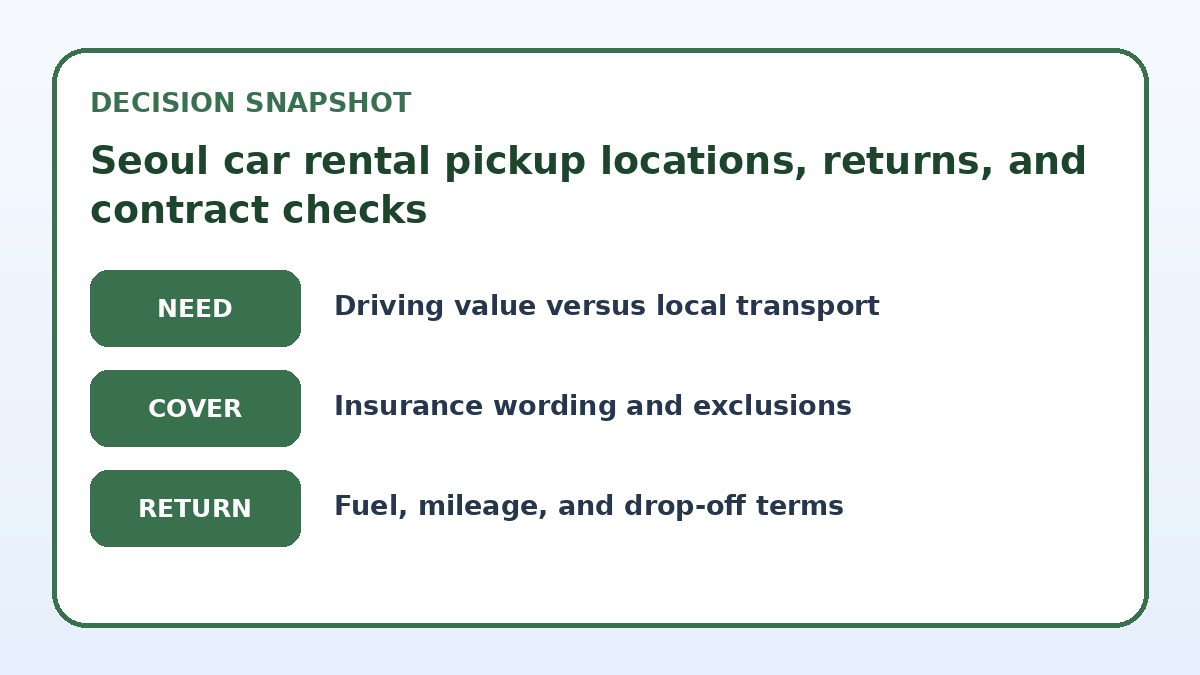
Practical answer: for business travelers in Seoul, choose the pickup and return option that matches your schedule and risk tolerance—airport pickup if time is tight and you need a one-stop handoff, or city-center pickup if you want flexibility and lower daytime congestion. Focus on three contract items before booking: where exactly you collect and drop off the car, what the fuel and mileage rules are, and how the insurer and deposit behave at return. Read those final terms on the supplier’s booking page before confirming. Tradeoffs are simple: convenience often costs more and can limit flexibility, while cheaper options typically require stricter return timing and tighter fuel or mileage limits. This guide explains how to compare those tradeoffs, what to verify at booking, and how to plan returns during Seoul’s traffic patterns and airport procedures so you avoid late fees and unexpected holds on your deposit.
See current options before you compare the details
Availability and final conditions change. Open Trip.com now or keep reading for the practical comparison.
Where to pick up in Seoul: airport versus city locations
Most business travelers choose between Incheon or Gimpo airport pickup and downtown rental desks. Airport desks can be faster after a long flight because they consolidate paperwork and transfer logistics; however, “airport pickup” can mean different meeting points—on-site counters, off-site shuttle desks, or arrivals-level meet-and-greet services. Before you book, verify the supplier’s exact meeting point, how to locate staff on arrival, and whether they run a shuttle from the terminal. This prevents delays handing over documents and keys and helps you estimate the time from landing to driving.
City-center desks put you closer to office districts like Gangnam or Jongno and may avoid airport surcharges, but they can be subject to peak-hour traffic and limited after-hours access. If you arrive outside local business hours or have evening meetings, confirm whether the provider allows after-hours pickup or a key drop. For returns, check if the city location accepts one-way drop-offs to the airport and whether that triggers a one-way fee. Compare total door-to-door time and the supplier’s designated return procedure before deciding.
Understanding return terms and inspection procedures
Return terms govern inspection timing, acceptable fuel level, mileage, and damage adjudication. Many suppliers inspect the car at the return location and record existing damage; insist on a written or photographed record at pickup to avoid disputes. Ask whether the supplier provides a digital condition report or an itemized checklist and how long they retain photos. For business travelers with tight schedules, request a fast-track return option if available, where the inspection is expedited in exchange for confirming fuel and visible condition at the drop-off point.
Also verify how incidental damage and additional charges are processed. Some contracts allow temporary holds on your card for security deposits that remain until inspection clears; others bill and then refund later. If a third-party insurer or company card is used, confirm whose card will be held and who is responsible for follow-up. Know the supplier’s claims window and dispute process so you can escalate through your company’s travel manager quickly if an unexpected charge appears after return.
| Approach | Best for | Tradeoff to check |
|---|---|---|
| Airport pickup and return | Arrivals with tight schedules or single-transfer itineraries | Often more convenient but may include airport fees and longer queues at busy times |
| City-center pickup with airport return | Business stays based in downtown districts who need flexibility | Avoids airport surcharges but adds risk of peak-hour traffic affecting returns |
| After-hours collection and key drop | Evening arrivals or departures when staff aren’t available | Saves time but requires careful photo documentation and acceptance of potential inspection delays |
| One-way drop between locations | Multi-city or outbound travel where convenience outweighs cost | Adds convenience at the cost of possible one-way fees and stricter return checks |
Ready to check the option that fits your plan?
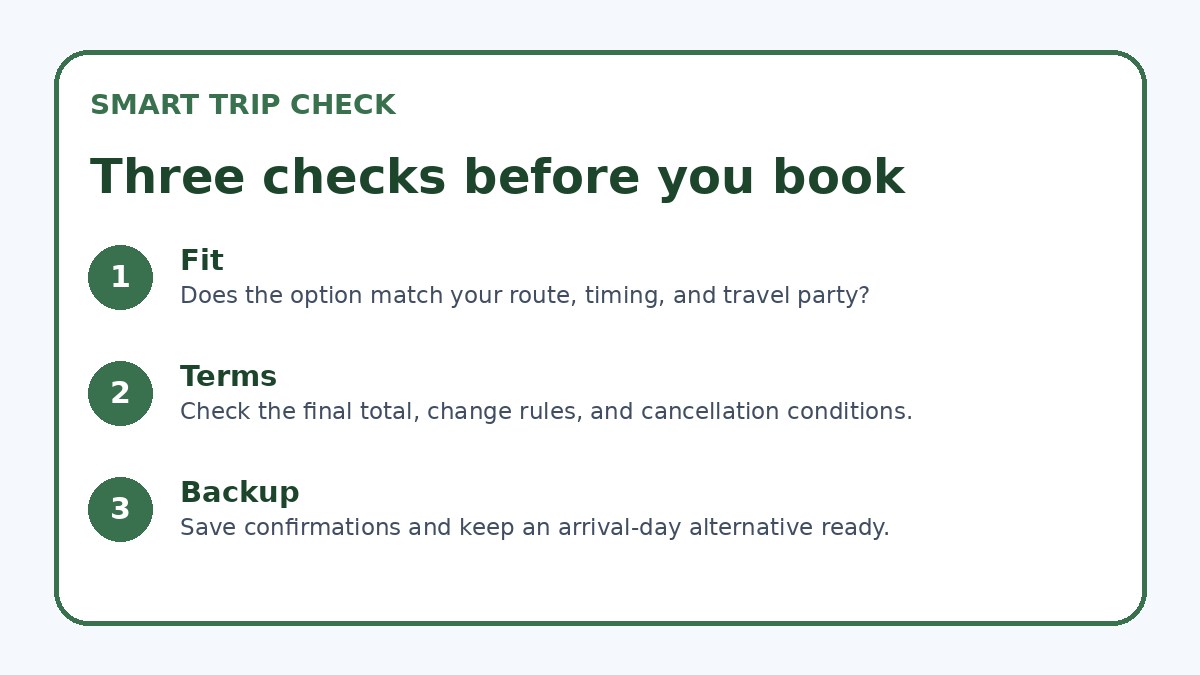
Use your exact dates and traveler details so the provider page can show the current total and conditions.
Fuel, mileage and insurance clauses that affect returns
Fuel policy choices—full-to-full, pre-purchase, or same-to-same—directly affect return behavior. Full-to-full is straightforward: pick up full and return full to avoid fuel surcharges; it requires time to refill before you drop the car. Pre-purchase can save time but often makes refunds complex if you return with leftover fuel. Always check whether the supplier charges a surcharge per liter and whether pump receipts are accepted for verification at handback.
Mileage limits and insurance deductibles also influence rental suitability for business routes around Seoul and to nearby regions. Confirm per-day mileage allowances and fees for excess kilometers if you plan out-of-city travel. For insurance, read exactly what the collision damage waiver covers, whether it excludes certain types of roads or drivers, and whether accepted corporate policies or third-party insurances will be recognized. Before you finalize, verify the deposit size, hold release timeframe, and whether your corporate card can serve as the payment and hold instrument.
Before you book
- Confirm the exact pickup and return address and, for airports, the terminal, counter, or shuttle details shown on the supplier’s booking page.
- Verify the fuel policy (full-to-full, pre-purchase, or same-to-same) and note whether pump receipts are required at return.
- Check mileage limits, excess-kilometer fees, and whether your intended business route crosses those thresholds.
- Read deposit, card-hold, and refund timing language; verify whether a corporate card or personal card will be held.
- Document existing vehicle condition with photos and timestamps at pickup and ensure the supplier issues a condition report.
- Confirm after-hours procedures, late-return grace periods, and the supplier’s dispute/contact process for post-return charges.
Timing returns: traffic, after-hours, and one-way logistics
Seoul’s peak traffic during weekday mornings and evenings can turn a short return into a stress point before a flight or meeting. When scheduling return times, allow cushion for congestion to avoid late-return penalties. If returning to an airport, factor in check-in and security timelines plus any time needed to refuel and complete paperwork. For same-day business itineraries, plan a buffer of at least 60–90 minutes beyond your ideal handoff time and confirm the supplier’s late-return grace period in writing.
After-hours returns and one-way drops require verification: some suppliers accept key drops with recorded odometer and fuel photos, while others require staff to be present and may charge for unsupervised returns. If you need a one-way drop (for example, dropping at Incheon after picking up in the city), check whether the contract allows it, what fee applies, and which terminal or desk handles the final inspection. Always confirm the exact return address, operational hours, and any required documentation to hand to airport staff or to upload after an unattended drop.
Frequently asked questions
Can I return a rental car to a different location in Seoul or to an airport?
Most suppliers allow one-way returns between locations in Seoul and to airports, but one-way drops often carry additional fees and specific drop-off procedures. Before booking, check whether the exact return location you need is permitted and whether the reservation requires advance notification or a different paperwork flow. Verify how the supplier inspects vehicles at that site—some airport desks require staff inspection while others accept unattended key drops with supporting photographs. Confirm these details on the supplier’s final booking page and inform your company travel coordinator if a one-way drop will affect expense handling.
What should I do if the rental company finds damage after I return the vehicle?
If a supplier reports new damage after return, request the documented inspection report and associated photos, and compare them to your pickup and return photos. Most contracts include a claims process and a limited window for disputes; follow that process and notify your company’s travel or procurement team immediately. Keep copies of all correspondence and payment records. If you used a corporate or third-party insurance, inform the insurer and confirm whether they will liaise with the supplier. Always verify the supplier’s dispute timeline and appeal steps before finalizing the booking so you know where to escalate.
How do deposit holds and final billing typically work for business cards?
Deposit holds are commonly placed on the card used at pickup to secure excess liability or unpaid charges; the size and release timing vary by supplier and card issuer. If you use a corporate card, confirm with both your finance team and the rental supplier whether the account permits a hold and whether your company policy requires payment by a specific card type. Ask the supplier how long holds typically remain and whether the final invoice will charge the held amount or process a separate refund. Check the supplier’s final booking page for exact wording about holds and post-rental billing.
Final planning note
For business travelers in Seoul, smart rental choices hinge on matching pickup and return terms to your calendar and risk tolerance. Decide first whether convenience or cost is primary: airport desks save time but can add fees, while city pickups offer flexibility but need careful planning around traffic and hours. Verify fuel, mileage, deposit, and inspection procedures on the supplier’s final booking page before confirming. Document the car at pickup, allow buffers for Seoul traffic, and confirm after-hours or one-way arrangements when needed. Comparing these contract points will prevent surprises and keep your trip on schedule; use a comparison site such as Trip.com if you want a quick view of current availability, then confirm the contractual details with the provider.
Continue planning
Check current options and final conditions
Use the provider page to confirm live availability, the final total, cancellation terms, and every condition that matters to your trip.
This evergreen planning guide was created with AI-assisted drafting and a structured quality review. It does not display live prices, schedules, availability, visa guidance, or provider rankings. Verify current details before booking. Some links are affiliate links; we may earn a commission at no additional cost to you.