If you're traveling to Taipei for business, price alerts can save time and money—if you use them deliberately. Start by creating alerts for the specific routes and dates you need, plus a secondary alert for flexible dates or nearby airports. Set clear decision rules in advance: a price threshold, minimum lead time to book, and acceptable connection or hotel proximity tradeoffs. Avoid reacting to every drop; instead, use alerts to shortlist options and focus your comparison on cancellation rules, total travel time, and loyalty benefits. Make booking decisions only after verifying final cancellation terms, seat or room details, and employer reimbursement rules on the provider’s booking page.
See current options before you compare the details
Availability and final conditions change. Open Trip.com now or keep reading for the practical comparison.
Set alerts that match your business constraints
Business travel rarely allows open-ended flexibility. When you set Taipei travel deals alerts, reflect the firm constraints: meeting dates, required arrival and departure windows, and how much time you need to commute between the airport and your meeting location. Create at least two alerts: one rigid alert for your exact dates with filters for preferred connection times or nonstop flights if available, and a second alert that expands dates or airports by a day or two. This dual approach captures realistic alternatives without encouraging a tempting chase of marginal price drops.
Also, configure alert frequency and delivery method to suit your workflow. If you get dozens of emails, an app notification or a single daily digest is easier to manage. Label or tag alerts so you don’t confuse personal travel with business trips. Finally, document a simple decision rule—such as “book only if fare is X lower than the average alert price and refundable or changeable within Y days”—so alerts act as an informed signal rather than a trigger for impulse booking.
Build a comparison checklist before booking
Price is one line item among many for busy professionals. Use alerts to create a shortlist of two or three competitive options, then run them through a consistent checklist: total travel time including layovers and transfers, reliable arrival time windows for meetings, luggage allowances, seat selection policies, and loyalty program credit. For hotels, consider proximity to meeting venues, breakfast or business facilities, flexible check-in and cancellation terms, and whether the rate qualifies for company reimbursement or corporate discounts.
When comparing alerts, focus on the out-the-door details that affect your day: will an earlier cheaper flight add taxi time or increase risk of delays? Is a lower-rate nonrefundable hotel worth the risk if itinerary changes are likely? Always verify the final terms shown on the provider’s booking page—refundability, change fees, and what’s included in the rate—because alert summaries sometimes omit these critical conditions.
| Approach | Best for | Tradeoff to check |
|---|---|---|
| Strict rule-based alerts (price + time thresholds) | Travelers who need predictable, policy-compliant bookings | May miss small savings outside set thresholds |
| Flexible alerts with broad date windows | Those with some schedule flexibility seeking larger savings | Creates more choices and a greater impulse risk |
| Auto-booking alerts tied to employer rules | Teams with automated travel approval workflows | Requires careful setup to avoid inappropriate auto-purchases |
| Alert shortlist plus manual verification | Professionals balancing savings with control | Takes more time but reduces booking regret |
Ready to check the option that fits your plan?
Use your exact dates and traveler details so the provider page can show the current total and conditions.
Protect yourself from impulse booking psychology
Alerts are designed to prompt action; that’s their point. To avoid impulsive decisions, introduce friction into your booking workflow. Require a second sign-off step: pause for a fixed review period (for example, one business hour), consult your travel policy or a colleague, or use a travel management tool that requires manager approval. That small delay reduces the influence of FOMO and gives you time to confirm whether the option truly meets meeting schedules and company rules.
Another technique is setting an objective financial trigger tied to company reimbursement: only consider bookings where the fare falls below a percentage of your typical business-class or corporate-negotiated rate, or where savings exceed a pre-set threshold after factoring in change fees and transfer costs. Document these rules so they are repeatable and defensible to your finance team if questions arise after booking.
Before you book
- Create two alert sets: exact travel dates and a flexible-date option one or two days either side.
- Set a clear booking rule: minimum lead time and a price threshold that triggers further review.
- Shortlist no more than three options from alerts before deeper comparison to avoid decision fatigue.
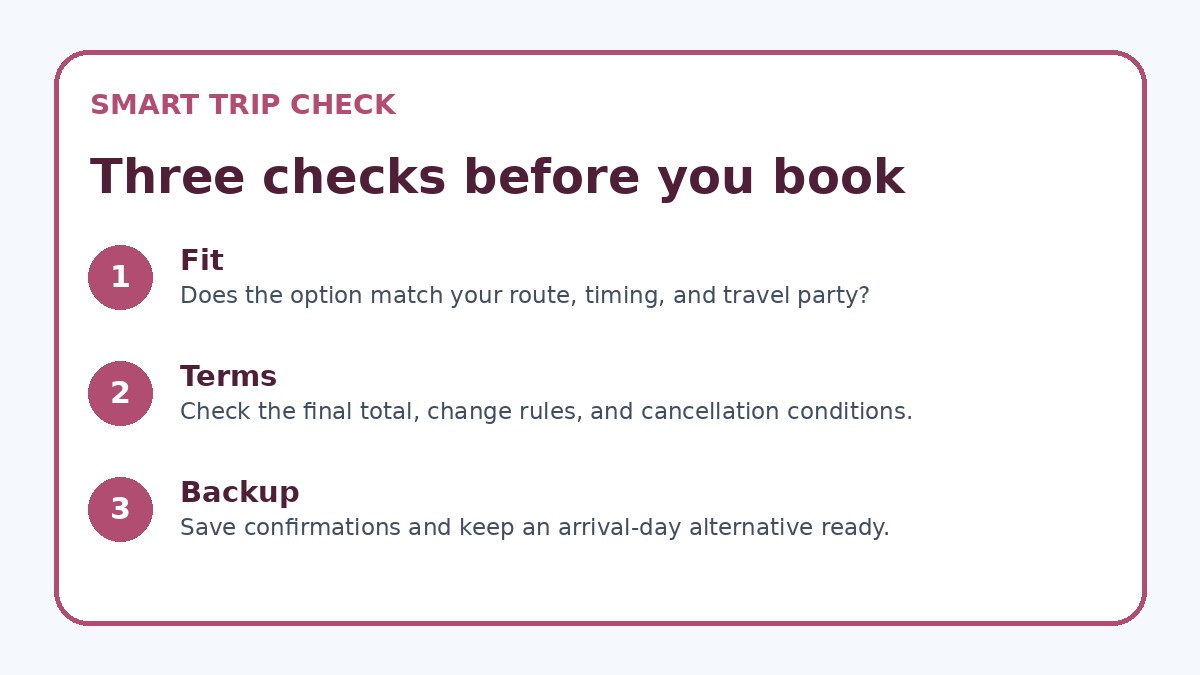
- Verify fare or rate rules on the provider’s booking page: refunds, change fees, baggage, and inclusions.
- Confirm employer reimbursement eligibility and expense codes before finalizing payment.
- Save confirmation and a screenshot of fare/rate rules at booking; record reasons if choosing a nonrefundable option.
Final verification and booking best practices
Before hitting purchase, do four final checks on the provider’s booking page: fare or rate rules (refunds, changes, and expiration), exact flight routing or room type, inclusion of taxes and fees, and loyalty program eligibility. Don’t rely on the alert summary for these details—alerts can be delayed or summarized differently than the live inventory. If your company requires certain suppliers or expense codes, verify them now to ensure smooth reimbursement.
Keep documentation: save the confirmation email and a screenshot of the fare/rate rules at booking time. If you buy a nonrefundable fare as a cost-saving tactic, note the tradeoff and set a calendar reminder to revisit whether a paid change or ancillary purchase (like flexible ticket upgrades or reservation insurance) would be prudent given the meeting’s strategic importance.
Frequently asked questions
How far in advance should I set Taipei travel deals alerts for a business trip?
Set alerts as soon as dates are known; for business trips, starting alerts 6–8 weeks out often captures early fare trends, while a second alert 2–3 weeks before travel tracks last-minute movements. The optimal window depends on your flexibility and how critical arrival times are. If your meeting schedule is rigid, prioritize monitoring the exact-date alert; if you can shift by a day, keep the flexible alert active. Regardless of timing, rely on defined decision rules rather than reacting to each alert.
Are nonrefundable fares worth it for business travelers to Taipei?
Nonrefundable fares can be cheaper but increase risk if plans change. Consider the meeting importance, likelihood of reschedule, and whether your employer allows fare changes or pays change fees. If savings are substantial and itinerary is fixed, a nonrefundable fare plus ancillary protections (flexible ticket upgrades or travel insurance that covers business reasons) might be reasonable. Always verify change and refund terms on the booking page before purchase and document why you chose the nonrefundable option for expense transparency.
Can price alerts help me find better hotel deals in Taipei without impulse booking?
Yes—use alerts to track rate drops for specific room types at hotels near your meeting venue. Create separate alerts for refundable and nonrefundable rates and set a decision threshold based on total cost, commute time, and cancellation policy. Add a mandatory pause for approval if booking for your company, and compare whether a slightly higher refundable rate reduces stress and potential rebooking costs. Always confirm final cancellation terms and what amenities or breakfast are actually included on the hotel’s booking page.
Final planning note
Price alerts are a practical tool for business travelers to Taipei when paired with disciplined decision rules. Treat alerts as a sourcing mechanism—not an automatic booking trigger—and use them to create a small, vetted shortlist. Verify the final fare or rate rules on the provider’s booking page, confirm employer reimbursement eligibility, and add a brief approval or pause step to avoid impulsive purchases. With clear thresholds for price, timing, and flexibility, alerts help you capture meaningful savings while keeping your itinerary reliable and aligned with company policy.
Continue planning
Check current options and final conditions
Use the provider page to confirm live availability, the final total, cancellation terms, and every condition that matters to your trip.
This evergreen planning guide was created with AI-assisted drafting and a structured quality review. It does not display live prices, schedules, availability, visa guidance, or provider rankings. Verify current details before booking. Some links are affiliate links; we may earn a commission at no additional cost to you.