
If you’re booking Dubai travel deals for the first time, the practical rule is: prioritize the cancellation flexibility you actually need, not the cheapest headline fare. Start by deciding how likely your plans are to change—if there’s any doubt, choose an option with free cancellation or easy date changes, even if it costs a bit more. Where refundable or flexible terms matter most is flights and prepaid hotels or tours. For hotels and tours that require prepayment, read the provider’s cancellation and modification section on the final booking page; for flights, verify rules for refunds, fee-free changes, and how credits are issued. This article explains tradeoffs, how to compare options, and the exact provider details to verify before you click pay, so you can book Dubai with confidence and avoid surprises later.
See current options before you compare the details
Availability and final conditions change. Open Trip.com now or keep reading for the practical comparison.
Why cancellation flexibility matters for first-time Dubai visitors
First-time visitors often face more uncertainty—flight schedule tweaks, connecting travel needs, visa timing, or last-minute itinerary changes. Flexible cancellation protects your budget and reduces stress when plans shift. A refundable hotel rate or a flight that allows fee-free changes gives you breathing room to adjust arrival days, extend stays, or manage unexpected delays without losing the full cost of the booking. Think of flexibility as insurance: you’re paying either directly (a higher fare) or indirectly (risk of losing money if you need to cancel).
When deciding how much flexibility to buy, estimate the likelihood and cost of a change. If your plans are fixed—approved leave, confirmed events—nonrefundable options can save money. If any part is subject to change—connecting travel from another country, pending visa timing, or health concerns—choose options that explicitly permit free or low-cost changes within a timeframe that suits your planning horizon.
How to read and compare cancellation terms
Don’t rely on marketing labels like “flexible” or “refundable” without checking details. Look for explicit elements: the cut-off time for free cancellation, the size of any admin or service fees, whether taxes and supplier fees are returned, and whether refunds are issued to the original payment method or as travel credit. For flights, verify how changes affect ticket validity, whether rebooking requires fare difference payment, and how airline waivers (for events or seasonal flexibility) are applied.
Compare across offers by standardizing the time window and cost of changing or canceling. For example, compare the full refund deadline (days before arrival), the flat or percentage fee charged after that, and whether mid-trip changes are allowed. Keep a short comparison table for each flight and hotel option you like, noting the exact cancellation wording and where the provider’s final policy is displayed—on the supplier’s booking page, terms and conditions, or a confirmation email.
| Approach | Best for | Tradeoff to check |
|---|---|---|
| Book refundable fares and free-cancel hotels | Travelers with uncertain schedules or those who need peace of mind | Higher upfront cost but simpler refunds and fewer disputes |
| Choose lower nonrefundable deals and add insurance | Cost-focused travelers with moderate change risk | Lower price but claims depend on insurance terms and documented reason |
| Mix flexible flights with cheaper hotels | Those prioritizing flight changes (long-haul) while saving on lodging | Saves money if hotel stays remain unchanged; lodging losses still possible if plans shift |
| Book nonrefundable package for a locked itinerary | Fully confirmed travel with no expected changes | Best for savings when plans are fixed, but high cost if cancellations or modifications are needed |
Ready to check the option that fits your plan?
Use your exact dates and traveler details so the provider page can show the current total and conditions.
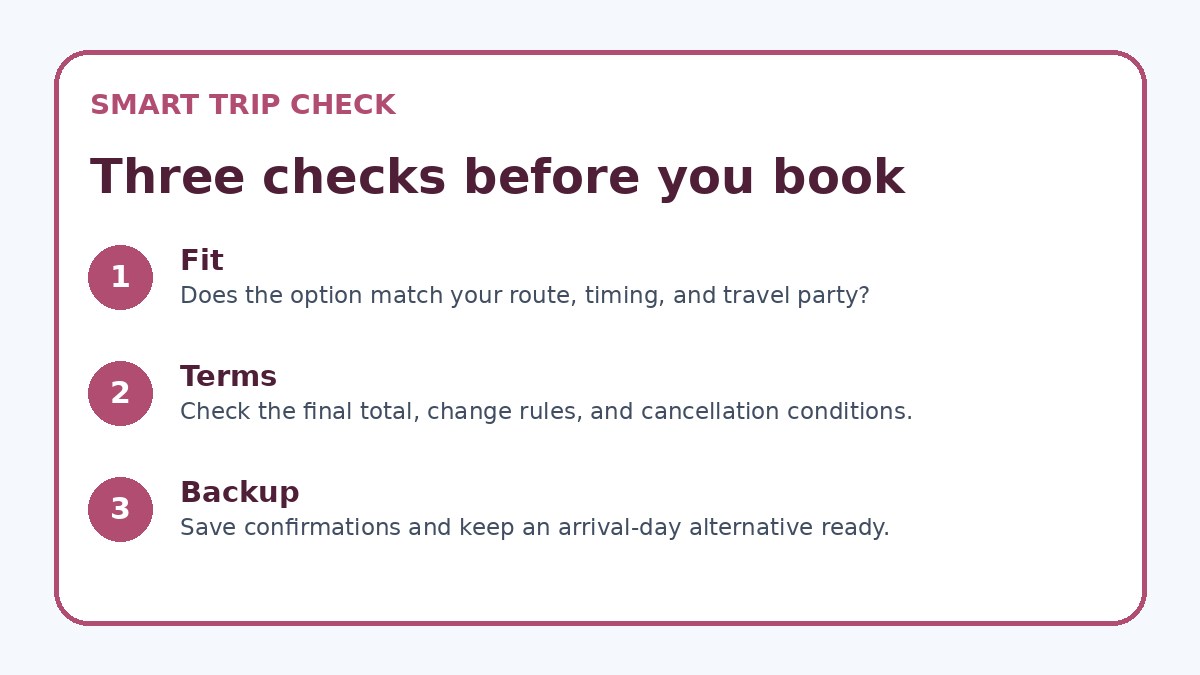
Tradeoffs: when to accept restricted fares and when to pay more
Accepting a more restrictive fare can be reasonable if your plans are immovable, you’re trying to reduce costs, or the difference for refundable rates is large. Restricted fares and nonrefundable hotel rates are usually cheaper but carry a greater risk: if you cancel, you may lose the entire prepaid amount. When saving is important, make contingency plans—buy a small travel insurance policy that covers cancellations for specified reasons, or book refundable options for the most expensive, hardest-to-replace parts of your trip (such as long-haul flights).
Pay extra for flexibility when uncertainty is high: incoming connecting flights, variable work commitments, or when travelling in a group where others’ changes affect your schedule. Also consider the complexity of the itinerary—multi-leg trips, combining airlines, or separate hotel and flight bookings often make refunds more complicated. If you need to change dates, flexible options often let you rebook without proving the reason, which simplifies last-minute adjustments.
Before you book
- Decide how likely your travel dates or companions will change and set a flexibility budget before searching deals.
- On each booking page, copy or screenshot the cancellation clause, noting deadlines, fees, and refund method.
- Confirm whether refunds are issued to the original payment method, as travel credit, or not at all, and write down any expiration dates.
- For flights, check if fare rules allow free changes within a short window after booking and whether fare differences apply later.
- For third-party tours or transfers, contact the local supplier to confirm their refund and rebooking steps before prepaying.
- Compare the total refundable liability (fare + taxes + fees) between options to decide if paying for flexibility is worth the premium.
What to verify on the provider’s final booking page
Always read the provider’s final booking page before you confirm: that is where the operative cancellation and change terms appear. Verify the exact deadlines for free cancellation, who handles refunds (the airline, hotel, or an online travel agency), whether cancellation triggers a service or processing fee, and the refund method. If a third-party marketplace is involved, confirm policies with the actual supplier because marketplaces may have different practices when mediating refunds.
Also check how changes are processed—online, by phone, or through an agent—and the evidence you’ll need (booking reference, original payment method). Note any nonrefundable taxes or local fees, and whether travel credits have expiry dates. If you’re unsure, capture screenshots of the final terms and save confirmation emails; these records help when disputing fees or requesting refunds with providers or your payment card issuer.
Frequently asked questions
Can I rely on travel insurance instead of booking refundable rates for Dubai?
Travel insurance can cover many unexpected cancellations, but it’s not a substitute for flexible bookings in every case. Policies vary in covered reasons, required documentation, and claim deadlines. Insurance often excludes voluntary changes or some common events, and the claims process can take time. For high-cost items like long-haul flights, consider both: buy flexible fares where the premium is modest, and add insurance for specific risks (medical emergencies, trip interruption) where coverage gaps exist. Always read what the insurer requires for proof before relying solely on a policy.
How do I handle a refund dispute if the supplier refuses to follow the stated policy?
Start by documenting everything—booking confirmations, screenshots of the cancellation policy at booking time, any emails or chat transcripts, and payment records. Contact the supplier calmly and request a written explanation for the refusal. If you booked through an OTA, escalate to that platform’s customer service while keeping the supplier in the loop. If that fails, use your credit card issuer’s chargeback process, supplying your evidence and correspondence. For larger sums, consumer protection bodies or a small claims court in the supplier’s jurisdiction can be avenues, but check local procedures and timescales first.
Should I prioritize refundable hotels or refundable flights when budget forces a choice?
Prioritize the element of your trip that would be most expensive or hardest to replace: often that’s the long-haul flight. Flights typically carry higher out-of-pocket loss if cancelled or rebooked, and change fees can be steep. If flights are fixed and inexpensive to change, but hotel nights are numerous and costly, prioritize refundable accommodation instead. Assess the relative financial exposure: multiply the potential loss (price) by the likelihood of needing a change, and buy flexibility where that product is highest.
Final planning note
Cancellation flexibility is a practical tool—not a luxury—especially for first-time visitors to Dubai who face uncertainties around connections, visas, or plans. Make an explicit decision before you search: how much unpredictability can you accept and what’s your budget for flexibility? Compare exact cut-off times, fees, refund methods, and whether credits expire. Use refundable options for the most financially risky parts of the trip, supplement with insurance if it fills important gaps, and always save screenshots of the booking terms. Doing this work up front turns Dubai travel deals from a gamble into a manageable decision.
Continue planning
Check current options and final conditions
Use the provider page to confirm live availability, the final total, cancellation terms, and every condition that matters to your trip.
This evergreen planning guide was created with AI-assisted drafting and a structured quality review. It does not display live prices, schedules, availability, visa guidance, or provider rankings. Verify current details before booking. Some links are affiliate links; we may earn a commission at no additional cost to you.