
If you’re traveling to Seoul on business, the single most useful habit before clicking book is totaling the full trip cost—not just the headline fare. That means adding airport transfers, luggage fees, seat selection, ground transport, meals above per diem, and any schedule or meeting-related convenience costs. For multi-night trips factor in hotel taxes, incidental deposits, and the cost of staying near meeting venues versus commuting. When comparing package deals or corporate rates, check cancellation and change fees and whether breakfast, Wi‑Fi, and meeting-room credits are included. This upfront arithmetic prevents surprises that eat into time and margins, and gives you a defensible number to submit to finance or an approving manager.
See current options before you compare the details
Availability and final conditions change. Open Trip.com now or keep reading for the practical comparison.
Build a complete cost checklist before you search
Start by listing every expense that will occur between departure and return. For Seoul business travel, that begins with the airfare category you need: basic economy restrictions often exclude seat selection and changes. Add carry-on and checked baggage if your company does not prepay them. Next, estimate airport transfers—limousine bus, AREX train, express taxi, ride-share or car hire—and whether you will need an early-morning taxi for a meeting. Include domestic flights or intercity rail if your itinerary covers other Korean cities. Finally, let corporate per diems and meal reimbursements guide whether you should budget for higher-than-usual client dinners or late-night work meals.
Don’t forget non-obvious costs that can accumulate: mobile roaming or a local SIM, portable Wi‑Fi, printing, last-minute dry cleaning or laundry for back-to-back meetings, and incidental hotel deposits or minibar charges. If your itinerary requires meeting-room access or extended office hours, consider co-working pass fees or hotel business-centre charges. Add a contingency line for schedule changes that force earlier or later transport and potential overnight stays. Tallying these items before you compare suppliers makes package comparisons meaningful and helps you choose the lowest total cost for your needs rather than the lowest sticker price.
How to compare flight options realistically
When evaluating flights to Seoul, compare options on the criteria that matter to a business traveler: total journey time, number and length of connections, change and cancellation flexibility, and the true baggage allowance. A cheaper connecting itinerary can look attractive until you factor in missed-day productivity or the need for an extra night. Note that basic fares sometimes ban changes or seat assignments; if work requires flexibility, a refundable or semi-flexible fare may be cheaper in the event of a canceled meeting. Also compare the airport you’ll use: Inbound flights land at different Seoul-area airports with varying transfer times and costs to the city and meeting locations.
Be explicit about what you must verify on the provider’s booking page: whether the fare includes checked baggage, the exact change and cancellation penalties, how long the lowest fare holds, and whether seat selection is included or paid. If you value predictable arrival times for meetings, weigh direct flights against one-stop options that may be cheaper but add uncertainty. For multi-leg journeys, confirm minimum connection times and whether the airline protects you through missed connections or requires self-transfer between separate tickets—this detail changes the risk calculus for low-cost connections.
| Approach | Best for | Tradeoff to check |
|---|---|---|
| Lowest headline fare | Travelers with fixed, non-changeable schedules and tight budgets | May exclude baggage and flexibility, increasing total cost if changes occur |
| Flexible/refundable fare | Those whose meetings may shift or who need same-day changes | Higher upfront cost but reduces risk of expensive last-minute changes |
| Central hotel with higher nightly rate | Tight schedules where travel time to meetings is costly | Higher nightly expense but saves commute time and taxi costs |
| Cheaper outlying hotel plus transport | Longer stays where lower nightly cost offsets commuting | More time and uncertain transit costs; may reduce billable hours |
Ready to check the option that fits your plan?
Use your exact dates and traveler details so the provider page can show the current total and conditions.
Choosing where to stay: location versus nightly rate
For business trips in Seoul, location often matters as much as nightly rate. Staying close to your meeting district reduces transfer time, taxi expense, and the possibility of delays in rush hour. However, central hotels can carry higher nightly rates and stricter cancellation policies. Balance the daily cost differential against lost productive hours in transit. If the meeting schedule is compact or you have recurring sessions across several days, the productivity value of proximity frequently outweighs modest rate savings at a cheaper, outlying property.
When comparing accommodations, verify what’s included on the final booking page: breakfast, Wi‑Fi speed limits, business-center access, laundry or pressing credits, and local taxes or service charges. Also check the hotel’s cancellation window and whether corporate rates require prepayment. If your employer reimburses actuals, keep receipts and note any incidental deposit requirements. Consider hotels with flexible check-in/out policies if flight times are irregular, and weigh the cost of an extra night versus arriving very early or departing late on the same day as your flights.
Before you book
- Add airport transfer costs to your airfare comparison and check exactly which Seoul airport the itinerary uses.
- Confirm baggage allowance and seat selection rules on the airline’s final booking page before assuming any fees are included.
- Compare hotel location relative to your meetings and estimate daily commute time and taxi or subway costs.
- Decompose any package into included and excluded items and price the excluded items individually to compare true totals.
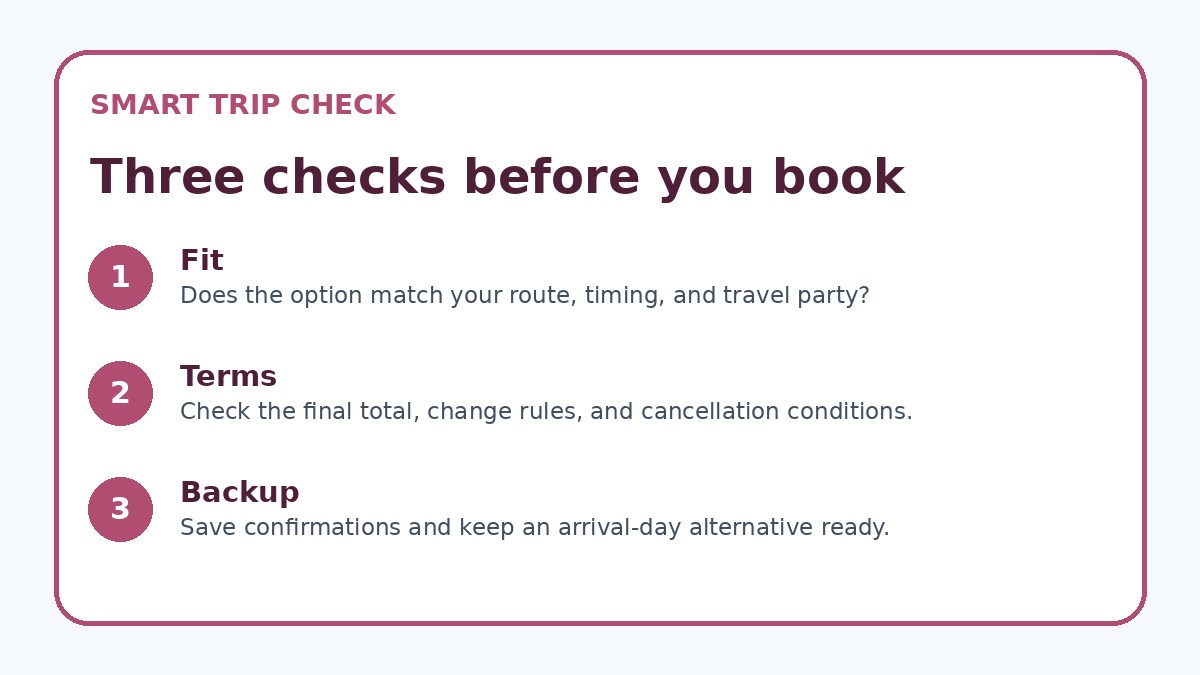
- Check cancellation, change, and refund rules on the provider’s final checkout page for all bookings you consider.
- Record receipts and itemize incidental expenses (meals, laundry, Wi‑Fi upgrades) for accurate expense reporting and reimbursement.
Packages, corporate rates and what to confirm at booking
Package deals or corporate-negotiated rates can simplify booking but require careful reading. Some packages bundle transfer and breakfast but exclude optional extras like Wi‑Fi or meeting-room access. Others present attractive per-night rates but add non-refundable clauses that increase risk if meetings move. When evaluating a package, create a side-by-side total that decomposes the bundle into components: base fare or rate, included services, and excluded or optional costs you’re likely to incur. This lets you see whether a package truly saves money versus separate bookings that match your actual needs.
Always verify on the final booking page the cancellation/refund policy, whether taxes and service charges are included, what happens if dates change, and whether the deal allows name changes or uses non-transferable tickets. If booking through a travel management company or corporate portal, confirm whether their prices are commissions-included or net rates and how amendments are handled. If you use a public comparison engine, remember to cross-check the provider’s terms and any additional fees that appear after you proceed to checkout—those final terms determine your real exposure, not the comparative headline price.
Frequently asked questions
How should I factor per diem rules into choosing a Seoul hotel and flights?
Start by reviewing your company per diem and reimbursement policy: know what meals and incidentals it covers and whether a higher nightly rate requires preapproval. If per diem covers meals only, a hotel that includes breakfast can reduce out-of-pocket spending; conversely, if you need client dinners above per diem, budget those separately. For flights, consider whether flexible fares or earlier arrivals reduce meal expenses by allowing more time for cheap, on-site options. Present the total cost difference to your manager with receipts or a simple spreadsheet so approvals can be quick and transparent.
Is it better to book a package or arrange flights and hotels separately for business travel to Seoul?
It depends on the package contents and your itinerary flexibility. Packages can save time when they bundle transfers and breakfast, but they may exclude items you’ll actually pay for, like Wi‑Fi or late check-out. Booking separately lets you tailor choices—such as direct flights or a centrally located hotel—to minimize time losses between meetings. Before deciding, itemize the components of the package and price each excluded element separately; also verify amendment and cancellation terms on the provider’s final booking page to measure your risk exposure.
What transport options should I compare when estimating total trip cost in Seoul?
Compare the full range: airport express trains and buses, scheduled airport transfer services, taxis and rideshares, and private car hires. For each option, estimate both cost and journey time to your hotel and primary meeting locations, and factor in rush-hour increases in taxi time. If you plan multiple daily trips across the city, a public-transport pass or localized ride-share budget may be cheaper than repeated taxis. Verify on the provider’s page whether transfer services include meet-and-greet or waiting-time rules that could change charges.
Final planning note
For business travelers to Seoul the best booking choice is the one with the lowest total expected cost for your schedule and risk tolerance, not necessarily the cheapest headline price. Do the arithmetic: add transfers, bags, incidental costs, and the value of time saved by staying closer to meetings. Always verify change and cancellation rules and the exact list of included items on the provider’s final booking page. Present your total to finance or an approving manager with receipts or a brief cost breakdown; that transparency speeds approvals and leaves less room for surprises during the trip.
Continue planning
Check current options and final conditions
Use the provider page to confirm live availability, the final total, cancellation terms, and every condition that matters to your trip.
This evergreen planning guide was created with AI-assisted drafting and a structured quality review. It does not display live prices, schedules, availability, visa guidance, or provider rankings. Verify current details before booking. Some links are affiliate links; we may earn a commission at no additional cost to you.