If your main worry is getting around Bali efficiently, start by picking the neighborhood that matches your typical daily route—not by star rating or glossy pool photos. Kuta, Seminyak, Canggu, Nusa Dua and Ubud each give you different travel realities: some put you next to nightlife and taxis, others sit near beaches with fewer car options, while Ubud centers on inland drives to temples and rice terraces. For a first-time visitor, the simplest decision is: choose the area closest to the things you’ll do most often, then check transport options from that neighborhood. In practice that means mapping your planned activities and measuring the likely daily friction—transfer time, taxi availability, traffic and whether you’ll rent a scooter or rely on drivers. Later sections explain how to match room type and party size to transport choices and what booking terms to verify before confirming a stay.

Check live stays in the areas that fit
Use your dates and party size to compare current rooms after you narrow the neighborhood fit.
Neighborhood fit: match area vibe to your trip plan
Choose the neighborhood first by listing your top three activities—beach days, temple visits, dining, or nightlife—and locating them on a map. If most items cluster in southern Bali (beaches, sunset dining, beach clubs), prioritize areas like Kuta, Seminyak or Canggu for shorter taxi rides and more frequent transport options. If your plan focuses on cultural sites and rice terraces, central Ubud reduces repetitive inland drives. For a mix—say, one or two beach days plus central cultural tours—pick a base with straightforward day-trip access and accept a couple longer transfers.
Also consider operational factors that shape a neighborhood’s fit: traffic patterns (morning and evening peaks), how dense taxi or ride-hail supply is, and whether the streets are scooter-friendly. Areas with narrow lanes and less public transport mean you’ll likely depend on hotel-arranged drivers or private transfers. If mobility is a concern, pick neighborhoods with straightforward road layouts and reliable taxi availability rather than quieter hamlets that look idyllic but require extra logistics.
Choose an area-selection strategy
| Area approach | Best for | Tradeoff to check |
|---|---|---|
| Choose the busiest tourist hub (Kuta/Seminyak) | First-timers who want easy taxi access and many dining options | High traffic and noise; longer waits for private drivers during peak times |
| Base in Canggu for expat-style cafes and beaches | Travelers seeking a hip scene with scooter-friendly streets | Less reliable taxis; may need a scooter or arranged transfers for long trips |
| Stay in Nusa Dua or southern resort area | Families and those wanting resort shuttles and quieter beachfronts | Farther from cultural sites and some southern attractions; more time in transfers |
| Settle in Ubud for culture and inland day trips | Visitors prioritizing temples, rice terraces, and a calmer inland base | More driving needed for beaches and evening dining outside the town center |

Daily-route friction: measuring real travel time and hassle
Distance alone doesn’t capture travel hassle—time lost in traffic and the frequency of available rides do. Before you finalize an area, test a few sample routes during different times of day using an online map app: airport to hotel, hotel to your most common attraction, and hotel to dining areas for the evening. Note estimated travel times and whether the app suggests driving routes that cut through congested junctions. For first-time visitors, plan for peak-hour slowdowns and leave margin for transfers, especially when you need to be somewhere at a specific time, such as sunrise temple visits or evening reservations.
Think about how you will handle daily last-mile challenges: luggage on narrow sidewalks, cramped local taxis, and luggage storage during early check-in or late checkout times. If you foresee many short outings, a neighborhood with easy foot access to cafes and shops reduces the number of motorized trips. Conversely, if you plan half-day excursions to dispersed sites, staying near a reliable driver network or a hotel that organizes tours will lower daily friction and let you relax between activities.
Now compare like with like
Keep the same dates, guests, room needs, and cancellation preferences while you compare the final choices.
Room and party needs: pick lodging that reduces transfers
Your party size and the amount of luggage strongly influence whether a compact hotel room or a villa makes sense. Solo travelers or couples often benefit from centrally located small hotels or guesthouses near ride-hail hotspots—faster to hop in a taxi and cheaper to run errands. Families and groups carrying more bags should prioritize properties that offer airport transfers, on-site parking for hired cars, and rooms configured for family use to avoid moving between multiple locations. A single well-located villa can be preferable to several rooms in different neighborhoods because it reduces the number of transfers and consolidates logistics.
Also consider mobility and accessibility: ground-floor rooms, elevators, and short walking distances to transport pick-up spots matter when traveling with children, older adults, or lots of luggage. If you plan to rent a scooter for flexibility, ensure the property has secure parking and rental pick-up nearby. When a hotel advertises transfers or shuttle services, verify those features on the booking page and in direct messages, since levels of service and scheduling vary by property and season.
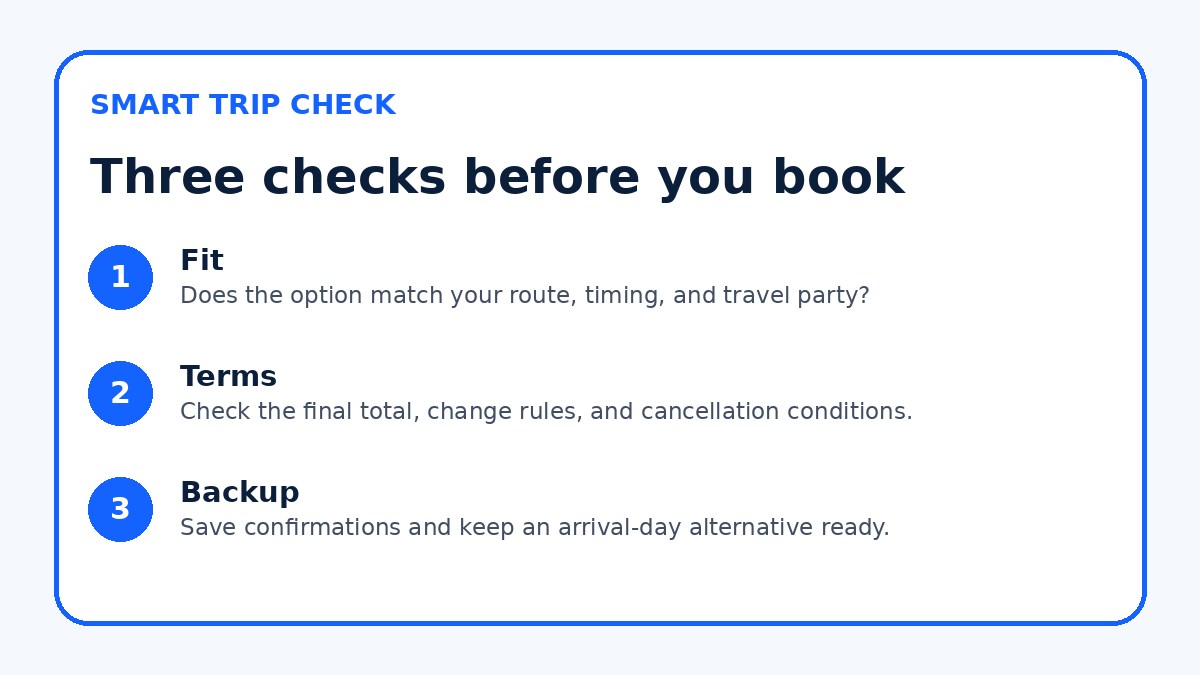
Hotel booking check before payment
- Map your five most likely daily destinations and time each route during both morning and evening on a mapping app.
- Confirm airport transfer availability, pick-up instructions, and any extra fees directly with the hotel before booking.
- Check whether ride-hailing apps have active drivers in your chosen neighborhood at the times you’ll travel.
- Request photos or descriptions of arrival areas and luggage handling if you plan to arrive late or early.
- Ask the hotel about secure parking or scooter storage if you intend to rent vehicles during your stay.
- Verify the property’s cancellation, late-check-in, and luggage-storage policies on the final booking page and save screenshots or confirmations.
Booking terms and final checks before you confirm
Before you click reserve, verify the precise terms that affect your transport plans: official airport transfer availability and cost, whether the property will hold late arrivals, flexible check-in/out options, luggage storage policy, and refundable versus non-refundable rates. Confirm what the property explicitly includes in any quoted transfer—pick-up location details, whether child seats are supplied, and how cancellations are handled. If a hotel lists shuttle schedules or public transport stops nearby, check that the schedules match the times you’ll need them.
When provider-specific facts could change, always verify them on the hotel’s final booking page and in a direct message to the property if needed. If you rely on app-hail services, compare how active those apps are in your chosen area at different times of day. You can use Trip.com once to compare current availability and transport notes, but treat that information as a snapshot and confirm with the property for anything critical to your itinerary.
Hotel Guide questions travelers ask
How do I decide between staying near the beach or in Ubud for a short first trip?
Decide by what you want to do most days. If you picture mornings on the sand and evenings at beachside restaurants, choose a southern beachfront neighborhood to reduce daily transfers. If your aim is temples, rice terraces and walking through town, Ubud places you closer to inland sites, saving travel time on cultural days. For a mixed plan, pick one hub and accept a single longer day trip each way, or split your stay into two bases if you prefer shorter daily travel and don’t mind one extra hotel move.
Are ride-hailing apps reliable across Bali or should I book hotel transfers?
Ride-hailing apps work well in many parts of southern Bali and larger towns, but their availability drops in quieter or more rural neighborhoods. If your schedule includes early departures, remote temples, or late arrivals, pre-booking a hotel transfer or private driver gives predictability and can reduce stress. For spontaneous short trips in busy districts, app-hail is usually convenient and cheaper. Always verify on the booking page whether the hotel lists transfer services and read recent guest comments about pickup reliability when available.
What room features should I prioritize if transport is a main concern?
Prioritize ground-floor access or elevator availability if you’ll be handling heavy luggage or traveling with people who need accessible routes. Request a room near the reception or designated pick-up point to shorten walking to rides and speed transfers. For groups, a villa or suite that accommodates everyone avoids splitting across rooms and reduces internal transfers. If you plan to rent vehicles, confirm secure parking and easy loading areas; if relying on shuttles, check the hotel’s shuttle schedule and whether it matches your arrival and departure times.
Final decision note
Choosing where to stay in Bali comes down to mapping how you’ll actually move each day and picking the neighborhood that minimizes repetitive transfers. Start by plotting your primary activities, test sample routes for real-world travel times, and match the room type to your group’s luggage and accessibility needs. Before booking, confirm airport transfers, pick-up logistics, parking or shuttle arrangements, and cancellation terms directly with the property. If you want to compare availability quickly, use a booking site such as Trip.com as a snapshot, but always verify transport-critical details with the hotel. With these checks you can shortlist an area confidently and open live inventory knowing which tradeoffs you accept.
Continue planning
Check current options and final conditions
Use the provider page to confirm live availability, the final total, cancellation terms, and every condition that matters to your trip.
This evergreen planning guide was created with AI-assisted drafting and a structured quality review. It does not display live prices, schedules, availability, visa guidance, or provider rankings. Verify current details before booking. Some links are affiliate links; we may earn a commission at no additional cost to you.