If you need to book San Francisco to Vancouver flights for business, start by confirming three things: which airports and connection patterns a given itinerary uses, the total door-to-door travel time including local transfers, and the fare rules that affect changes and refunds. With those in hand you can weigh schedule fit against price and loyalty benefits. This article gives a practical pre-booking checklist you can use in ten minutes, then explains tradeoffs—when a longer but cheaper routing makes sense, how to prioritize seat selection and baggage, and exactly where to verify final boarding, entry, and cancellation conditions on the airline’s booking page. Use the checklist to make a confident, company-compliant booking and to brief colleagues or assistants who may finalize the reservation.
See current options before you compare the details
Availability and final conditions change. Open Trip.com now or keep reading for the practical comparison.
Choose the right itinerary for your schedule
Business travel is usually about predictability. When choosing San Francisco to Vancouver flights focus first on departure and arrival windows that match your meetings rather than the lowest headline fare. A slightly higher-priced nonstop or single-connection itinerary that arrives within your preferred window can be worth the premium because it reduces risk from missed connections and local transfer delays. Consider the time of day: early-morning departures leave room for same-day returns on light schedules, while late-afternoon arrivals may work better if you have evening meetings or prefer to travel after the business day.
Don’t forget ground logistics. Airports, traffic patterns, and typical security wait times affect whether a flight labeled as faster actually saves time door-to-door. Estimate transit time to and from each airport option and add buffer for check-in and security, especially if you have equipment or need lounge access. If multiple routings meet your time constraints, prioritize the one with the simplest connection pattern (or none) and the shortest layover margin to reduce potential disruption.
Understand fare rules, fees and corporate policy fit
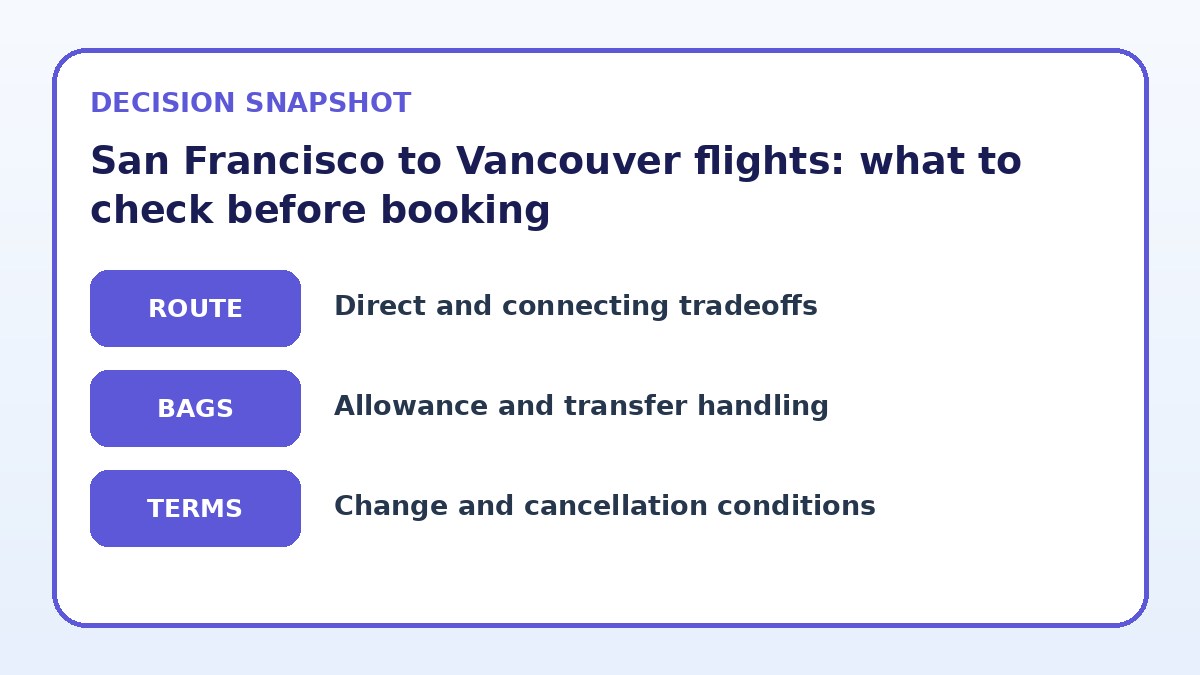
Check the fare class and what’s included before you click book. Business travelers should verify change and refund penalties, whether seat selection is free, and the baggage allowance tied to the fare class. Some low fares appear attractive but charge for essentials like a carry-on or assigned seat; those add-on costs can erase savings and complicate expense reporting. Also confirm whether the itinerary earns applicable frequent-flyer credit or qualifies for corporate negotiated rates. Your company may require refundable fares or flexible change policies—match the ticket to those rules.
When provider-specific facts could change, always verify the airline’s final booking page for exact terms and conditions. The carrier’s booking page will display baggage allowances, upgrade eligibility, and any specific restrictions tied to the fare you’re considering. If you rely on a travel management company or a third-party aggregator such as Trip.com, use their results to compare options, but perform a final check on the airline’s own site for policy confirmation and contact details in case you need to modify the reservation.
| Approach | Best for | Tradeoff to check |
|---|---|---|
| Nonstop flights | Minimal connection risk and fastest door-to-door time when schedules align | Often higher base fare and limited departure times compared with connecting alternatives |
| Single-connection flights with short layovers | Lower fares while keeping total travel time reasonable | Greater sensitivity to delays and less recovery time if the first leg is late |
| Single-connection flights with long layovers | Reduced risk of missed connections and easier transfers for checked baggage | Longer total travel time and less efficient for tight business schedules |
| Flexible/refundable fares | Travelers with uncertain schedules or high change likelihood | Higher upfront cost that may exceed the value of anticipated changes for stable itineraries |
Ready to check the option that fits your plan?
Use your exact dates and traveler details so the provider page can show the current total and conditions.
Balance comfort, productivity and cost
For business trips decide whether in-flight productivity or resting matters more. If you need to work en route, prioritize flights with consistent Wi-Fi options, power outlets, and seating that supports a laptop; consider upgrading to seats with extra space. If arriving well-rested is critical for a meeting, a nonstop or a flight with a comfortable connection window is usually worth the extra fare. Evaluate seat pitch and cabin class availability, but verify on the airline’s booking page what’s included with each fare and what costs extra so you can budget accurately.
Think beyond the cabin: lounge access, priority security and boarding, and baggage handling can save time and stress, often more valuable than the ticket price difference for a short trip. If your company limits spending, decide what to trade off: is saving an hour on the ground worth an upgrade that reduces delay risk? If your employer reimburses changes, flexible tickets may justify a higher up-front cost to avoid last-minute expense headaches.
Before you book
- Confirm departure and arrival airports, whether the itinerary is nonstop or involves connections, and estimate door-to-door transit time including local transfers.
- Review the fare class on the airline’s final booking page to verify change/cancellation rules, baggage allowance, seat selection policies and upgrade eligibility.
- Compare total travel time and reliability rather than airborne time alone; prioritize simpler routings if your meeting schedule is tight.
- Decide whether lounge access, priority security, or seat upgrades are worth the incremental cost and check how those services are purchased with your fare.
- Verify passport and any entry or transit requirements for Canada for your nationality, and have digital copies of travel documents ready.
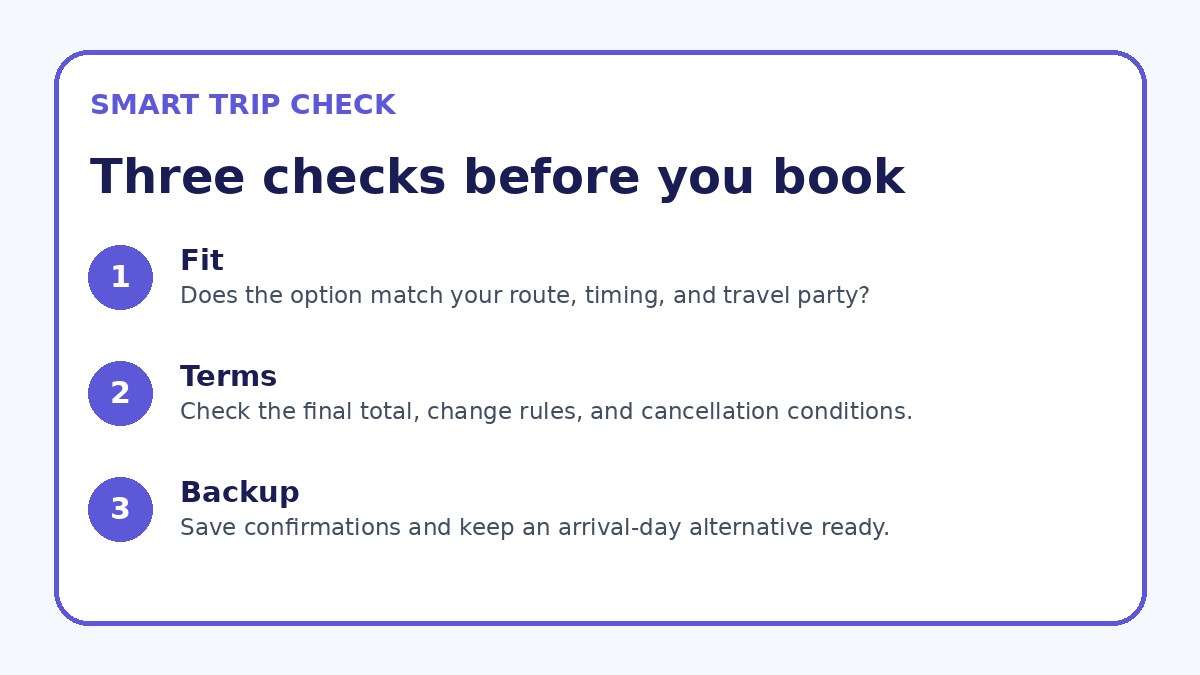
- Record at least one contingency option (alternate same-day flights or later connections) and save carrier contact details from the airline’s booking page.
Prepare documents, transfers and contingency plans
Before booking, confirm passport validity and any entry or transit requirements for Canada; requirements can vary with nationality and may change. Make a brief plan for transfers: which airport terminal you’ll use, estimated taxi or rideshare times, and how you’ll travel from Vancouver airport to your meeting or hotel. Keep digital copies of itinerary, boarding passes, and any required documentation accessible. If you have valuable gear, specify insurance and handling instructions in your travel notes.
Also establish a simple contingency plan: choose options with reasonable connection buffers, note alternative same-day flights, and record the carrier’s change policy in your calendar entry. If you expect changes to your schedule, prioritize tickets that allow fee-free or low-fee modifications. Share essential details with a colleague or assistant—flight number, local contact, and a backup arrival option—so someone else can assist if needed. Confirm emergency contact numbers and check the airline’s final booking page for customer service options.
Frequently asked questions
Should I always prefer nonstop flights from San Francisco to Vancouver for business travel?
Not always. Nonstops reduce the risk of missed connections and typically shorten total travel time, which is valuable for tight meeting schedules. However, they can be more expensive or offer less convenient departure/arrival times. If a nonstop doesn’t fit your calendar, a single-connection itinerary with a reasonable layover can be a good compromise—just ensure the layover allows buffer for delays and baggage transfer. Compare the door-to-door time, not only the airborne time, and check fare rules for change flexibility before booking.
What fare features should I prioritize when my company reimburses flights?
Focus on features that reduce operational risk and post-booking hassles: flexible change terms, included checked baggage, seat selection, and the ability to earn or redeem loyalty benefits if relevant. Even if cost limits matter, an otherwise low fare that charges for essentials can cause expense and time overhead. Verify the fare class and its inclusions directly on the airline’s booking page so you can document the ticket against your company policy and anticipate any out-of-pocket fees for upgrades or extras.
How should I plan transfers and local logistics around Vancouver arrival?
Estimate ground travel time from the arrival terminal to your meeting location or hotel and add a buffer for customs and baggage claim. Decide on ground transport—rideshare, taxi, shuttle or rental car—based on meeting locations and luggage. If you need reliable timing, pre-book a car or schedule a rideshare pickup window that accommodates customs processing. Include the transport plan and a backup option in your itinerary and confirm pickup details and terminal information on the airline’s final booking page so you and colleagues know expected handoff points.
Final planning note
Booking San Francisco to Vancouver flights for business is about aligning schedule reliability, fare flexibility and total travel time. Use the checklist to confirm airports, connections, fare rules and required documents before completing a purchase. When tradeoffs arise—time versus cost, nonstop versus connection, refundable versus basic—you can make a reasoned choice by comparing door-to-door time, corporate policy constraints and the value of time saved by upgrades or priority services. Always verify carrier-specific baggage, seating and change conditions on the airline’s final booking page, and consider using a comparison tool like Trip.com to surface options before you confirm with the airline.
Continue planning
Check current options and final conditions
Use the provider page to confirm live availability, the final total, cancellation terms, and every condition that matters to your trip.
This evergreen planning guide was created with AI-assisted drafting and a structured quality review. It does not display live prices, schedules, availability, visa guidance, or provider rankings. Verify current details before booking. Some links are affiliate links; we may earn a commission at no additional cost to you.