If you’re a solo traveler deciding among Barcelona hotels, start by picking the one non-negotiable factor for your trip: proximity to the sights you value most or a quieter, more comfortable room to recharge. For short stays focused on walking Gaudí routes or nightlife, choose a centrally located hotel even if rooms are compact. For longer stays, late departures, or a need for focused downtime, prioritize a room with better soundproofing, workspace, and a larger bathroom even if it means a slightly longer commute to major attractions. This article lays out the tradeoffs—commute time, safety at night, public transport access, and the comforts that matter most to solo guests—so you can compare options and check the right details on the hotel’s booking page before you book.
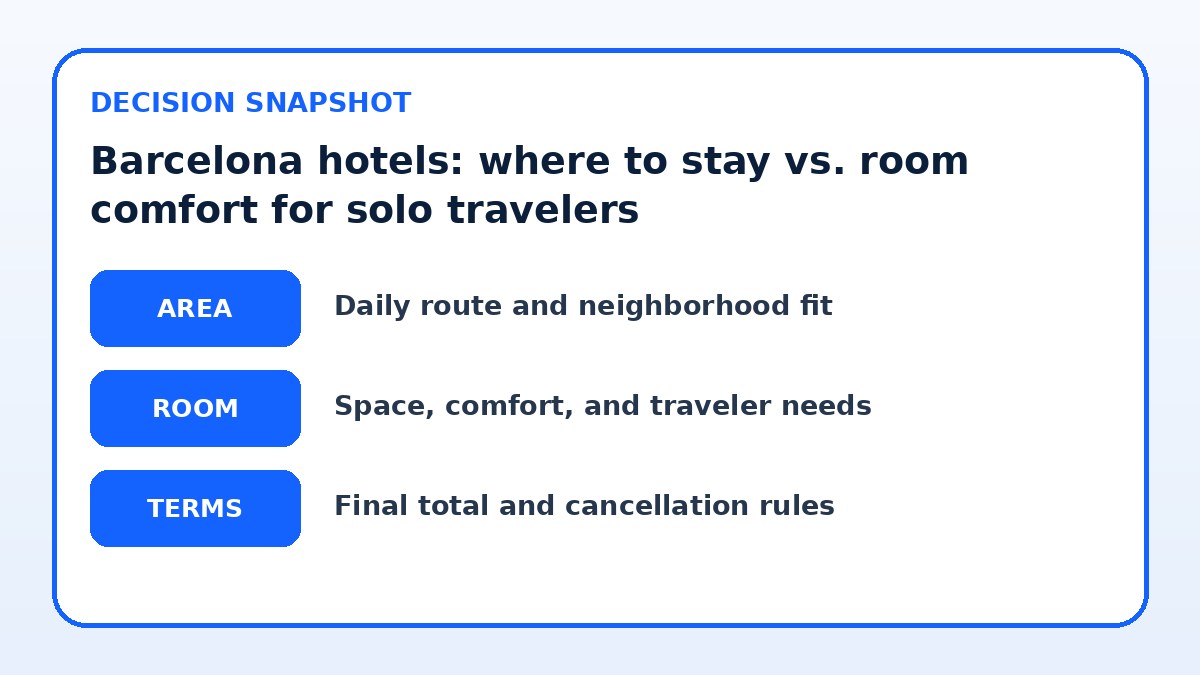
See current options before you compare the details
Availability and final conditions change. Open Trip.com now or keep reading for the practical comparison.
Deciding what matters first: location or room comfort?
Start by listing how you’ll spend most days in Barcelona. If your plan centers on sightseeing in the Gothic Quarter, Born, or along Passeig de Gràcia, cutting commute time to a minimum will let you squeeze more into short visits. Central hotels mean you can return midday to drop purchases or freshen up, join evening food or music scenes easily, and reduce reliance on taxis. Accept that inner-city rooms are often smaller and more likely to face busy streets; check for soundproofing and high-floor options when booking.
If your trip includes remote work, late-night travel logistics, or a low tolerance for noise and tight spaces, prioritize room comfort. Look for rooms with a clear workspace, reliable lighting, good Wi-Fi, and a restful bed. A quieter neighborhood—Eixample’s residential sections, Sant Antoni, or parts of Gràcia—often offers larger rooms and calmer streets, but adds transit time to central landmarks. Knowing which activities are fixed and which are flexible helps you decide which tradeoff is acceptable for your Barcelona stay.
How to evaluate neighborhoods for solo travelers
Neighborhood choice affects safety perception, nighttime options, and daily logistics. Central areas offer convenience: you’ll be close to museums, restaurants, and public transport, which matters if you prefer walking and spontaneity. Residential neighborhoods feel calmer and can be better for sleeping and longer stays, but won’t give the instant bustle of tourist hubs. When comparing areas, check typical foot traffic at night and daytime bustle; quieter streets may feel safer to solo travelers returning late, while busier streets offer more options if plans change.
Don’t assume every block within a neighborhood is the same. Look at maps for nearby metro or tram stops, and note how many transfers are required to reach the main attractions you want. Also review practical details like proximity to pharmacies, supermarkets, and 24-hour transport options. If you’re arriving or leaving late, verify how easy night travel will be from your chosen area. These are the pragmatic differences that turn a comfortable room in a distant neighborhood into a costly daily inconvenience—or a centrally located small room into a highly efficient base.
| Approach | Best for | Tradeoff to check |
|---|---|---|
| Central small room in tourist area | Short city breaks and nightlife-focused solo travelers | Less space and more noise, but minimal walking time to major sights |
| Larger room in quieter residential area | Longer stays or travelers needing rest and workspace | Longer daily commutes to central attractions |
| Mid-distance hotel near a metro line | Balanced travelers who want comfort and easy transport | Some walking or transfers required, depends on metro efficiency |
| Boutique or guesthouse with social spaces | Solo travelers who want to meet others without sacrificing comfort | Fewer standard hotel amenities and possible variability in privacy |
Ready to check the option that fits your plan?
Use your exact dates and traveler details so the provider page can show the current total and conditions.

Room features that matter most for solo comfort
For solo travelers, specific room features make a big difference. Soundproofing and quality blackout curtains protect sleep; a comfortable bed and adjustable room temperature make recovery from long walking days easier. If you work or plan long evenings in your room, prioritize a desk, chair, and reliable Wi-Fi. A well-lit bathroom with good water pressure and a secure lock adds convenience and privacy. These comforts weigh heavier than decorative extras when you’re traveling alone and set the tone for your whole trip.
Also consider storage and layout: a single traveler benefits from easy luggage access and a clear path to the door for coming and going frequently. Look for rooms with a small safe or lockable drawer for valuables and check whether the hotel offers luggage hold for early arrival or late departures. If you value social opportunities, hotels with a shared lounge, breakfast area, or rooftop terrace provide low-effort ways to meet people without forcing you into expensive group activities.
Before you book
- Map daily routes from the hotel to your must-see sites and time the metro or tram transfers you’ll need.
- Confirm bed type, room size, and whether the photos match the exact room offered on the booking page.
- Check recent guest comments specifically for noise, Wi-Fi reliability, and the hotel’s neighborhood safety at night.
- Verify check-in/out times and whether the property offers luggage storage for early arrivals or late departures.
- Ask the hotel about soundproofing, blackout curtains, and heating/cooling control if rest is a priority.
- Compare cancellation policies across booking channels and confirm final terms on the hotel’s official page before paying.
Practical steps to compare and pick with confidence
When comparing Barcelona hotels, create a short checklist: neighborhood, distance to the metro, room size and bed type, noise control, and cancellation or check-in flexibility. Use map view on booking sites to measure walking times to your key destinations rather than relying on neighborhood names alone. Read recent guest photos and verified comments that specifically mention noise, Wi-Fi reliability, and cleanliness—these are more actionable than star ratings. For final confirmation, always verify exact room photos, bedding configuration, and total cancellation or check-in policies on the hotel’s official booking page.
If you want a fast balance between comfort and location, search for hotels near a major metro line outside the busiest tourist blocks—this often gives larger rooms without sacrificing transit convenience. Consider booking a refundable rate while you finalize plans so you can change if you find a better fit. If comparing options on aggregator sites, remember to cross-check the property’s own site for direct policies and amenities. Trip.com is an example of a platform you can use to compare current availability, but verify final terms on the hotel’s page before confirming.
Frequently asked questions
How central should I stay in Barcelona for a 3-night solo trip?
For a 3-night visit, staying within easy walking distance of at least one major attraction or a well-connected metro line saves time. Choose a hotel near a central hub if you want to maximize sightseeing and evening options, accepting smaller rooms and more activity outside. If you prefer a quieter base, pick a nearby residential area with a direct metro connection that still allows quick trips into the center. Time saved by being central can matter a lot on short itineraries; map your priorities before booking.
What room comforts are worth paying extra for when traveling alone?
Prioritize a comfortable bed, effective soundproofing or a high floor, reliable Wi-Fi, and good lighting for reading or working. A private bathroom with consistent hot water and a secure lock are must-haves for solo travelers. If you value downtime, look for blackout curtains and temperature controls. These features improve sleep and daily productivity more than decorative upgrades; spending slightly more on them can make the whole trip more restful and enjoyable.
How can I balance safety and social opportunities when choosing a hotel?
Choose neighborhoods with regular foot traffic and nearby 24-hour transport options for safer late returns, while opting for hotels that offer common spaces like lounges or breakfast rooms to meet others. Hostels or guesthouses provide social options but vary widely in privacy and amenities—read recent reviews for safety and staff responsiveness. If security is critical, prioritize a hotel with a staffed reception, secure entry systems, and positive mentions of staff helpfulness in guest reports.
Final planning note
Choosing among Barcelona hotels as a solo traveler comes down to the single decision you make first: prioritize location for maximum sight-seeing and nightlife flexibility, or prioritize room comfort to recharge and work. Both approaches are valid; the practical middle path is to pick a property near reliable public transport so you can afford a more comfortable room without losing too much time to travel. Before you book, map your route needs, inspect recent guest comments for noise and Wi-Fi, and confirm room details and cancellation terms on the hotel’s booking page. With those checks in place, you’ll have a stay that fits how you want to experience Barcelona.
Continue planning
Check current options and final conditions
Use the provider page to confirm live availability, the final total, cancellation terms, and every condition that matters to your trip.
This evergreen planning guide was created with AI-assisted drafting and a structured quality review. It does not display live prices, schedules, availability, visa guidance, or provider rankings. Verify current details before booking. Some links are affiliate links; we may earn a commission at no additional cost to you.