If you need to be productive and punctual, plan the Auckland to Wellington transport day around your meeting schedule and the parts you can control: departure window, baggage handling, and onward transfer arrangements. Start by choosing whether speed, flexibility, or cost predictability matters most for that day — that single decision narrows choices and the exact preparations you’ll make. Pack a compact work kit, confirm your onward transport at both ends, and build buffer time for check-in and unexpected delays. Below you’ll find clear steps to prepare, what to check on provider pages before booking, and the tradeoffs to weigh when deciding between flights, rail-plus-ride combinations, or driving. Follow the checklist for a smoother business travel day and use the comparison rows to match the approach to your priorities.
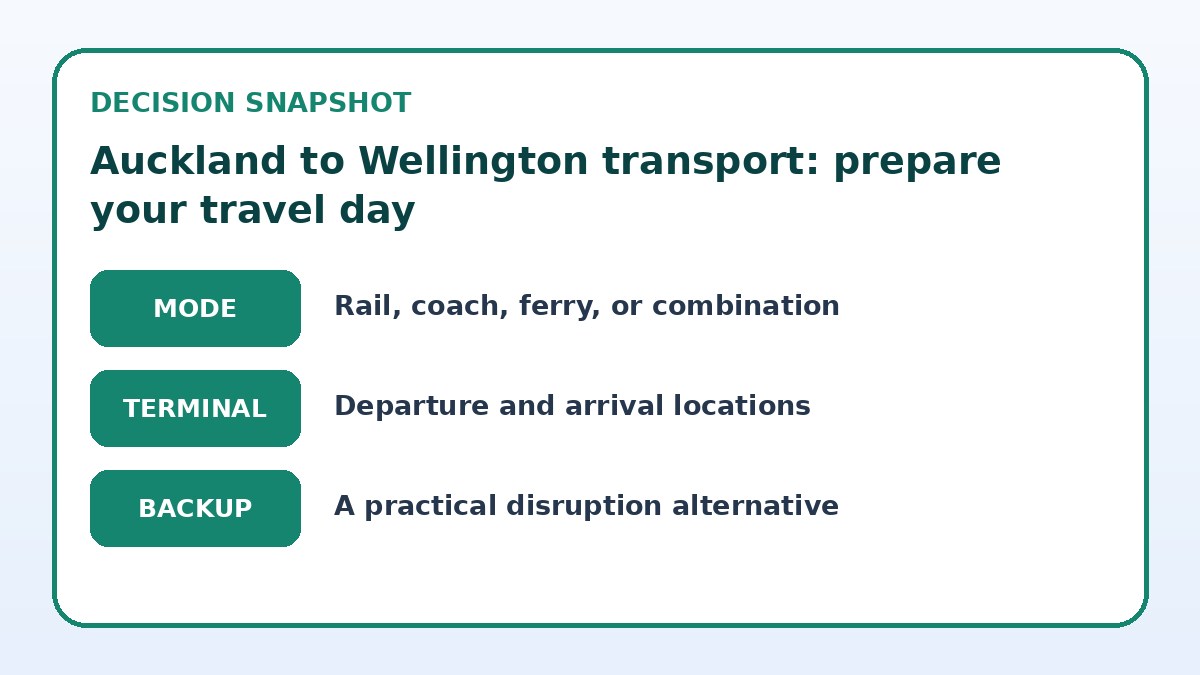
See current options before you compare the details
Availability and final conditions change. Open Trip.com now or keep reading for the practical comparison.
Choosing the transport approach for the day
Begin by matching your meeting schedule to the characteristics of each transport approach. If arrival time and minimum travel time are crucial, higher-frequency air connections typically offer the shortest door-to-door window but require airport processing time and potential variability at security and luggage handling. If you value fewer transfers and a steadier work environment, a combination of intercity train or coach portions with a private car for first/last mile can be more predictable, though it may take longer overall. Consider how much continuous work you need to perform en route—short intense windows favor quick flights; longer stretches benefit from rail or road where you can set up a laptop more comfortably.
Also think about contingencies and flexibility policies before you commit. Business travelers often need to change plans at short notice; check fare flexibility or rebooking options on the provider’s booking page. If flexibility is limited, factor extra buffer time around important appointments or choose a more resilient itinerary with multiple daily departures. Lastly, weigh the friction of transfers: more legs mean more points of failure. Choosing a simpler plan with fewer handoffs can reduce stress on a tight business day.
Packing and productivity hacks for the travel day
Design a compact travel kit that makes working away from the office seamless. Include a slim laptop or tablet, a fast-charging cable and adapter, a reliable power bank, and noise-cancelling earbuds. Put essential documents—digital and a printed backup—in a single folder or app with offline access. A small toiletry refresh kit and a change of shirt can make a difference if you’re moving directly to meetings on arrival. Keep all items in an easily reachable carry piece to avoid wasting time digging through checked baggage or larger suitcases during short turnarounds.
Plan your in-transit work to match realistic interruptions. Break tasks into blocks that fit likely travel windows: quick triage and email on short legs, focused work for longer stretches with reliable Wi-Fi, and offline tasks for periods with poor connectivity. Use calendar blocks to protect work time and notify colleagues of limited availability during transit. When relying on public transport, bring local maps or an offline navigation app for the final mile and confirm portable hotspot options or data-roaming for uninterrupted access if airport or station Wi-Fi is unreliable.
| Approach | Best for | Tradeoff to check |
|---|---|---|
| Fastest arrival (priority on arrival time) | Tight meeting schedules where every minute counts | Higher processing overhead and greater sensitivity to airport delays and security queues |
| Fewest handoffs (simplicity and reliability) | Reducing stress and transfer risk on important workdays | May increase total travel time compared with direct air options |
| Flexible booking (changeable fares) | Frequent schedule changes or uncertain meeting times | Usually higher fare or limited seat availability for preferred times |
| Cost-conscious approach (efficient spend) | Travel with strict budgets or standard corporate rates | Less flexibility and potentially longer travel windows or extra transfers |
Ready to check the option that fits your plan?
Use your exact dates and traveler details so the provider page can show the current total and conditions.
Verifying bookings and arrival logistics
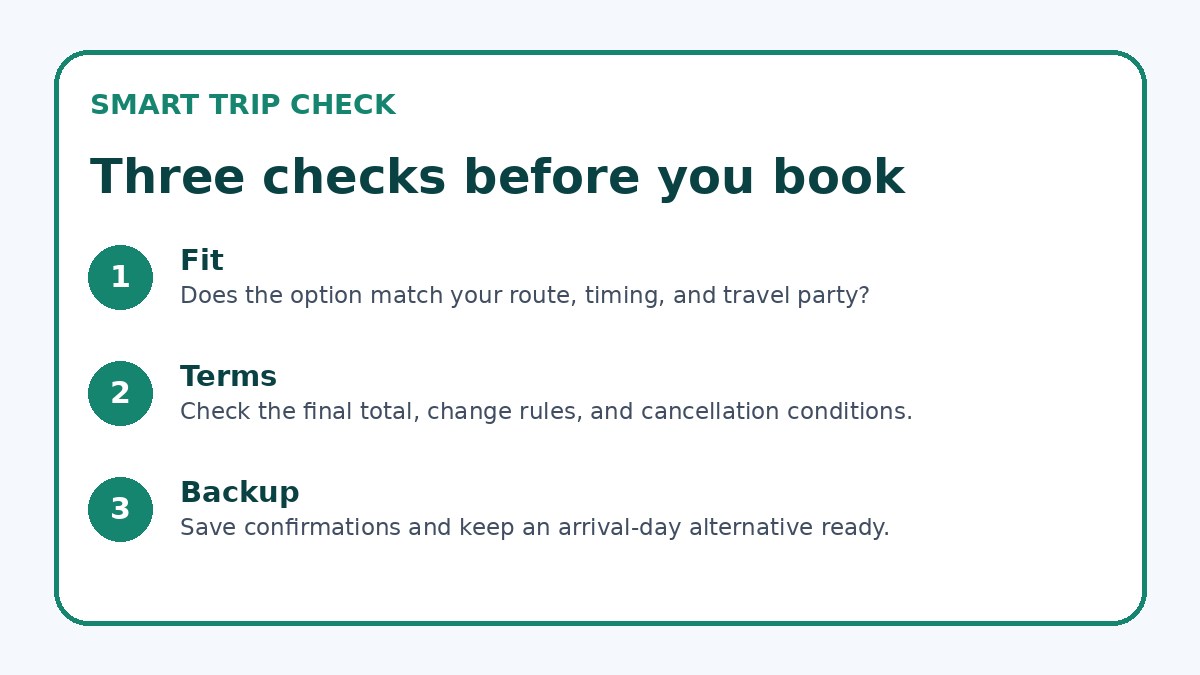
Before you finalize bookings, verify the details that affect your travel day. On the provider’s booking page check baggage inclusion rules, boarding or check-in cutoffs, and the exact pickup and drop-off locations at terminals or stations. If you choose a flight, compare direct versus connecting options and look at total door-to-door travel time rather than just airborne time. For rail or coach components, confirm station names and where trains stop—some services use alternative stations or require a short transfer. If you booked through an agent or aggregator, confirm the same details on the operator’s own site to catch any last-minute operational notices.
Sort the last-mile logistics once you know your arrival time. Book or pre-arrange a taxi, rideshare, or hotel shuttle if staying close to the central business district; for meetings in less-central locations, consider a booked car to avoid delays. If you plan to hire a car on arrival, verify the pick-up counter location at the airport or station and allow extra time for paperwork. Finally, save emergency contacts and local office numbers in your phone and calendar entry for easy reference in case of changes or missed connections.
Before you book
- Pick the primary travel priority (arrival time, flexibility, cost, or simplicity) and use it to shortlist options before comparing providers.
- Pack a carry-on work kit with charger, power bank, headphones, offline copies of files, and a printed meeting brief.
- Verify baggage rules, check-in/boarding cutoffs, and exact station/terminal pickup points on the operator’s booking page.
- Pre-book last-mile transport (taxi, rideshare or hotel transfer) to match your expected arrival window and avoid on-the-spot delays.
- Allow conservative buffer time in your calendar for security, transfers, and potential delays—reschedule meetings if buffers can’t be met.
- Save all confirmation numbers, receipts and local contact numbers in one app folder and notify colleagues of your en-route availability.
Risk management and expense handling
Build realistic buffers for the unexpected: airport security queues, road congestion, or service disruptions. Rather than assuming an ideal timetable, model a best-case and a conservative scenario for each leg and choose schedules that keep important meetings reachable in the conservative case. If your company reimburses travel, confirm per-diem and allowable expenses ahead of booking so you can select compliant options. Consider travel insurance or corporate policies that cover rebooking fees if your role often requires last-minute changes.
Keep receipts and a record of changes during the travel day for expense reports and post-trip reconciliation. Use a single app or folder to store electronic receipts and booking confirmations; photograph paper receipts as a backup. If you anticipate large or unusual expenses—premium lounges, private transfers, or extra baggage—clear those in advance with travel or finance teams. Clear pre-approval reduces interruptions while traveling and prevents disputes later when reconciling costs.
Frequently asked questions
Should I choose a direct flight or a flight with a connection for a business day between Auckland and Wellington?
Compare door-to-door time rather than just airborne time. A direct flight usually reduces the number of critical handoffs, simplifying ground logistics and lowering the risk of missed meetings. However, connections can increase schedule options and sometimes offer better timings. Check total transfer times, minimum connection windows, and whether luggage needs to be re-checked. Always confirm connection policies and rebooking rules on the airline’s booking page before purchasing, and build a conservative buffer for arrival.
How much buffer time should I leave between an Auckland departure and an important meeting in Wellington?
There isn’t a universal rule—pick a buffer based on your tolerance for risk and the complexity of your itinerary. For air travel that includes check-in and baggage, a larger buffer is sensible; for a simple train-plus-short car ride, you can reduce it slightly. Assess factors including peak airport or road congestion, required check-in times, and whether you need to change clothes or freshen up. If the meeting cannot be delayed, allow extra margin or choose an earlier service to protect against unforeseen delays.
What should I verify on provider pages before completing a booking for Auckland to Wellington transport?
Confirm baggage allowances, refund and rebooking policies, precise pickup/drop-off locations, and any required check-in times. If wifi or onboard power is important, verify availability and whether it’s complimentary or paid. For combined itineraries, confirm whether a single ticket covers all legs or if separate tickets require you to collect luggage and check in again. When in doubt, cross-check details on the operator’s site and supporting documentation; Trip.com can be used as one place to compare current options, but always verify critical operational details on the provider’s own pages.
Final planning note
For business travelers, the right Auckland to Wellington transport choice begins with a clear priority: arrival time, flexibility, simplicity, or cost. Make that decision first, then align packing, bookings and last-mile arrangements to reduce friction on the travel day. Verify operational details on the provider’s page, pre-book ground transport for punctual arrivals, and keep conservative buffers for the unpredictable. With a compact work kit, confirmed logistics and an expense plan, you’ll reduce stress and increase the odds of arriving ready to perform. Use the comparison table and checklist here to pick the approach that fits your commitments and tolerance for risk.
Continue planning
Check current options and final conditions
Use the provider page to confirm live availability, the final total, cancellation terms, and every condition that matters to your trip.
This evergreen planning guide was created with AI-assisted drafting and a structured quality review. It does not display live prices, schedules, availability, visa guidance, or provider rankings. Verify current details before booking. Some links are affiliate links; we may earn a commission at no additional cost to you.