Short answer: a continuous rail journey from Seoul to Tokyo is not a straightforward, single-train option; rail can be part of a rewarding overland-plus-ferry route, but for most first-time visitors a flight or a flight-plus-rail plan will be faster and simpler. If you prioritize scenic overland travel, flexibility to stop in Busan and Kyushu, and dislike airports, combining trains with an international ferry is a meaningful alternative. If your priority is maximizing time in Tokyo and minimizing transfers, flying into a Tokyo-area airport and then using Japan’s rail network to travel within the country is typically the least complex choice. Read on for clear tradeoffs, decision criteria, and practical steps to check whether a rail-inclusive itinerary actually fits your schedule and travel style.
Why a straight rail trip isn’t a simple option
Geography and infrastructure mean you can’t board one continuous train from Seoul and arrive in Tokyo. Travelers who want to prioritize rail must plan a multi-leg route that mixes South Korea’s rail network with a maritime crossing into Japan, then Japan’s intercity trains onward. That extra sea leg introduces schedules, weather sensitivity, and separate booking processes. For a first-time visitor, these are real frictions: you’ll manage border controls, separate tickets or reservations, and potentially overnight waits between connections.
Thinking of rail in principle is useful because both countries have excellent train systems for getting around once you’re on land. But a first-time traveler should compare the total door-to-door time, number of transfers, and complexity of connections. If your trip window is short or you dislike multiple changes, the apparent romance of an all-rail journey can quickly become logistical stress. Use the rest of this guide to decide if the experience justifies that extra complexity.
Common rail-inclusive routes to consider
A practical rail-inclusive approach starts with high-speed or conventional trains inside South Korea to a southern port city, then an international ferry to Japan, followed by Japan’s intercity trains to Tokyo. This is appealing if you want to see coastal scenery and add stops in Busan or Kyushu. Keep in mind the ferry leg means checking sailing frequency, seasonal variations, and whether night ferries or daytime crossings better match your sleep and sightseeing plans.
An alternative is a mixed approach: fly between Seoul and a Japanese gateway city and use rail to explore Japan. This reduces cross-border complications while still letting you enjoy Japan’s train experience. For either approach, balance the number of nights you want to spend traveling versus exploring. If you have a week or less, minimizing travel legs preserves sightseeing time; if you have more flexibility, the overland-plus-ferry route becomes more attractive.
| Approach | Best for | Tradeoff to check |
|---|---|---|
| Fly direct then use Japan rail | travelers who prioritize speed, simplicity, and maximizing time in Tokyo | loses the overland scenic experience and additional country stops offered by rail-plus-ferry |
| Train in Korea + ferry + Japan rail | travelers who value the journey, want to stop in Busan or Kyushu, and enjoy multi-modal travel | requires managing ferry schedules, border crossings, and more transfers that lengthen travel time |
| Fly to a nearby Japanese gateway, then explore by rail | a balance between efficiency and on-the-ground rail experience within Japan | still involves an international flight segment and potentially higher airport transit time |
| Skip international ferry; focus on domestic rail only | travelers who prefer straightforward transport and want to avoid maritime logistics | forfeits the overland/kayaking scenic alternative and cross-country travel feel between Korea and Japan |
How to decide based on time, budget, and experience
Start with how many full days you can dedicate to travel versus in-city exploration. If you have only a few days in Tokyo, favor options with fewer transfers and less transit time. Next, ask how much you value the journey itself: are you booking travel partly for the scenic route and on-the-ground stops? If yes, rail-plus-ferry can be rewarding. If your priority is efficient onward travel or maximizing time in Tokyo, flying and then using Japan’s rail network is often the better choice.
Budget considerations are personal and changeable; the total cost of a rail-plus-ferry plan can compare favorably with flights if you book smartly, but it also depends on ferry cabin choices, peak-season pricing, and add-ons like reserved seats or seat classes on domestic trains. Finally, factor in comfort and luggage handling: multiple transfers mean handling bags more often, while flights tend to consolidate the international leg into fewer moves.
Before you book
- List your total available days and mark how many you will accept as travel days versus full exploration days.
- Check ferry operators’ official pages for sailing frequency, required reservations, and embarkation procedures on your intended dates.
- Compare total door-to-door time for flight vs train-plus-ferry, including transfers, immigration, and time to reach city centers.
- Confirm luggage policies and reserved-seat requirements for each leg—train and ferry—before buying any tickets.
- Decide how many intermediate stops you want (for example Busan or Kyushu) and map transport connections between station and port.
- If you use a third-party site like Trip.com to compare availability, still complete the final booking and verification on the service provider’s official site.
Practical checks and booking priorities
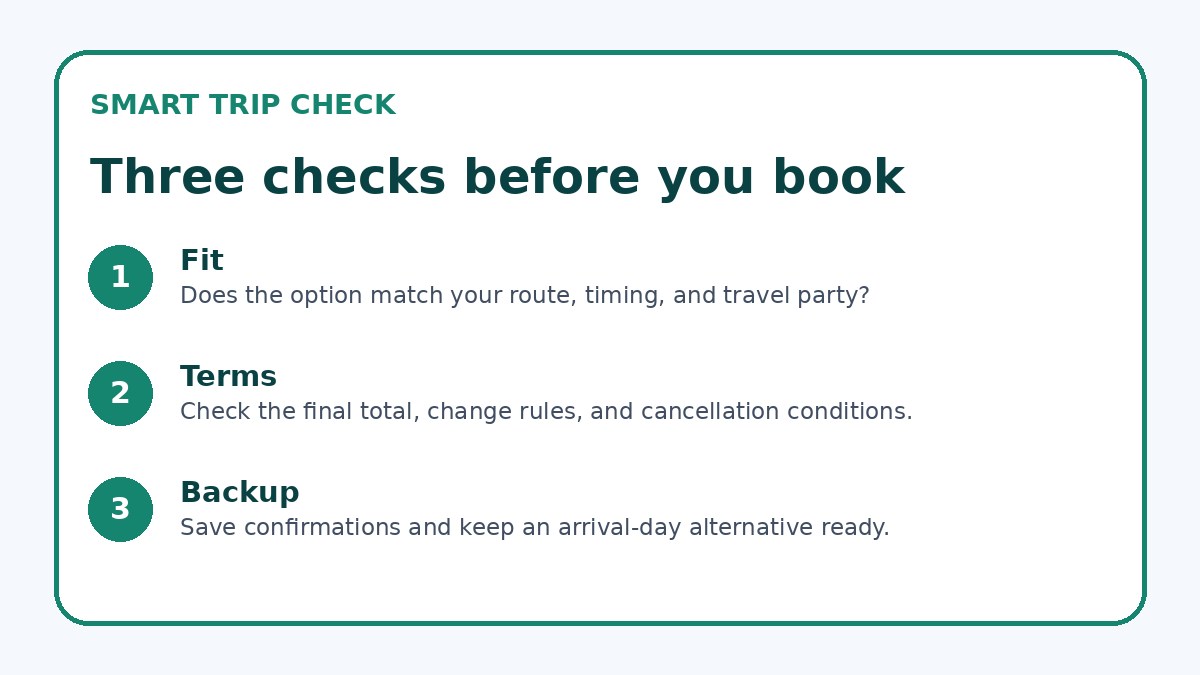
Before committing, verify three things on provider pages: ferry sailing schedules and availability on your dates, reservation requirements for the ferry and any resourced trains, and the exact border-crossing process (which port authority handles immigration and when to be ready). Confirm luggage policies for ferries and trains; some services require advance reservation for large items or have limited space.
Also compare total door-to-door travel time including getting to and from ports or airports, transit times between rail stations and ferry terminals, and buffer time for immigration. If you use an intermediate stop such as Busan, check local transport connections rather than assuming short walk times. For current availability and cross-checking options, you may optionally look on a multiservice booking site like Trip.com, but always finalize and confirm critical details on the operator’s official site.
Frequently asked questions
Can I travel from Seoul to Tokyo entirely by land and sea without flying?
Yes, but not on a single continuous train. A no-fly itinerary requires traveling by train within South Korea to a port city such as Busan, taking an international ferry to a port in Japan (commonly in Kyushu), and then using Japan’s rail network to travel to Tokyo. That combined approach is feasible but involves separate bookings, immigration formalities at the ports, and variable ferry schedules. It is best for travelers who value the journey itself and can allow extra time for transfers; verify ferry timetables and reservation rules on the operator’s official site before committing.
Is the rail-plus-ferry route more scenic or more stressful than flying?
It depends on what you find rewarding. The rail-plus-ferry route can be very scenic—coastal train segments, harbor approaches, and time on deck offer a different travel rhythm from air travel. However, it also introduces logistical stressors: coordinating multiple tickets, handling luggage across transfers, and vulnerability to weather-related ferry cancellations. For first-time visitors who prioritize simplicity, flying may reduce stress. If scenery and pacing are important and you’re comfortable with more complex logistics, the mixed route can be worth it.
How should I split my time if I choose a rail-inclusive itinerary?
Plan with realistic travel-day expectations. Allocate at least one overnight or a long daytime buffer for the ferry leg and potential delays. If you have a short trip, minimize transfers to preserve sightseeing time; on a longer trip, schedule planned stops—Busan is a common Korean stop, and Kyushu offers logical entry points into Japan. Always factor in the time needed for immigration and transfers between stations and ports, and have a flexible day in your schedule to absorb any unexpected timing shifts.
Final planning note
For most first-time visitors with limited time, flying into Tokyo and then relying on Japan’s rail system for internal travel provides the clearest, least complicated experience. Rail can still be an excellent part of the journey if you have extra time and want to combine Korean trains with an international ferry to enjoy coastal and island scenery; expect more planning, separate reservations, and the need to manage transfers and immigration carefully. Use the checklist above to evaluate how much travel time you’re willing to spend en route, confirm schedules and luggage rules on operator pages, and choose the approach that balances your desire for a memorable journey with your tolerance for logistical complexity.
Continue planning
Check current options and final conditions
Use the provider page to confirm live availability, the final total, cancellation terms, and every condition that matters to your trip.
This evergreen planning guide was created with AI-assisted drafting and a structured quality review. It does not display live prices, schedules, availability, visa guidance, or provider rankings. Verify current details before booking. Some links are affiliate links; we may earn a commission at no additional cost to you.