
If you're a first-time visitor to Jeju and traveling with children, renting a car is the most flexible way to see the island at your family's pace. Practical first step: decide where you'll base yourselves (east for museums and Seongsan; west for beaches and family resorts; central for short drives). Next, choose a vehicle size that fits your group and luggage, confirm child-seat options, and plan one primary route per day to avoid long back-to-back drives. This article gives direct planning steps up front—what to compare before you book a car and accommodation—then explains tradeoffs like driving longer vs. staying central. I'll also outline safety, pick-up/drop-off tips, and how to build a kid-friendly pace so everyone enjoys Jeju without feeling rushed.
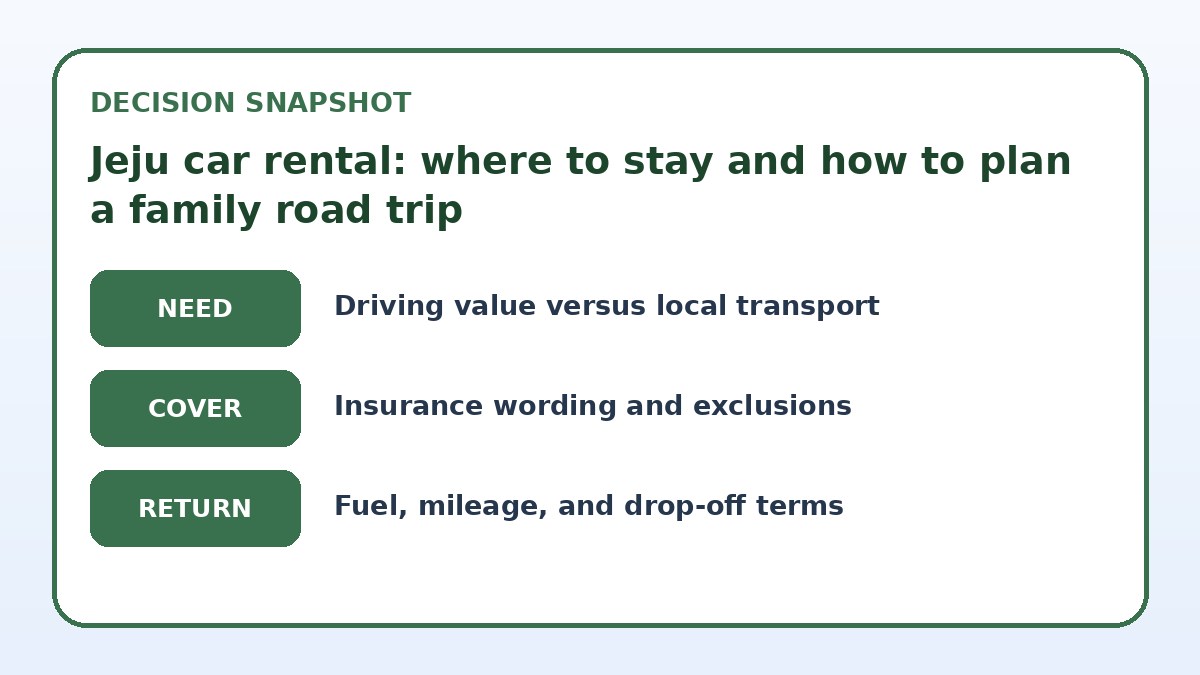
See current options before you compare the details
Availability and final conditions change. Open Trip.com now or keep reading for the practical comparison.
Choosing where to stay: base locations and family tradeoffs
Jeju’s compact size still supports different travel rhythms. If you prefer shorter drives and easy beach access, choosing a western or southern base places family-friendly beaches and resort clusters within a short reach. An eastern base near Seongsan gives straightforward access to sunrise viewpoints and quieter rural roads but means longer drives to western attractions. Central Jeju reduces daily driving on average, making it a sensible compromise for families who want to switch directions without lengthy transfers.
When deciding, weigh accommodation layout and services: look for rooms or suites with a small kitchenette and space for a stroller or travel cot, and check whether hotels or guesthouses offer onsite laundry or meal options for picky eaters. Also consider the first and last travel day—if your ferry or flight timing is early or late, choose lodging near the main port or airport to limit stressful transfers. Ultimately, pick the base that minimizes the driving pattern you and your children find most manageable.
Selecting the right car and child-safety arrangements
For family comfort choose a car with generous rear legroom and cargo capacity for strollers and luggage. A compact SUV or mid-size wagon often balances maneuverability and space, but the tradeoff is slightly higher fuel use and a different parking footprint. Ask the rental provider about the number of anchors for child seats and whether they supply certified child seats in the sizes you need. If your children are small, bring a familiar car seat to ensure fit and comfort; otherwise reserve seats through the provider and confirm that the model meets your safety expectations.
Check pickup logistics for car seats: some companies require advance booking for child seats and may have limited stock, so verify availability on the provider’s final booking page before you commit. Also compare automatic versus manual transmission options depending on who will drive—automatic is simpler for most drivers in unfamiliar surroundings. Finally, review fuel policy, roadside assistance options, and whether winter or wet-weather tires are standard for the season you visit; these operational details should be confirmed directly with the rental company.
| Approach | Best for | Tradeoff to check |
|---|---|---|
| Stay western/southern base and do day drives | Families prioritizing beach time and resort comforts | Longer drives to eastern sights and sunrise viewpoints |
| Stay eastern base near Seongsan | Families wanting quieter roads and sunrise access | Less convenient access to bustling western beaches and museums |
| Central Jeju base with daily clockwise/counter drives | Families who want balanced daily driving times | No immediate proximity to the island’s busiest beachfronts |
| Bring your own child seat vs. rent one | Bring your own for familiar fit and guaranteed safety | Extra baggage hassle; rented seats reduce luggage but require advance confirmation |
Ready to check the option that fits your plan?
Use your exact dates and traveler details so the provider page can show the current total and conditions.
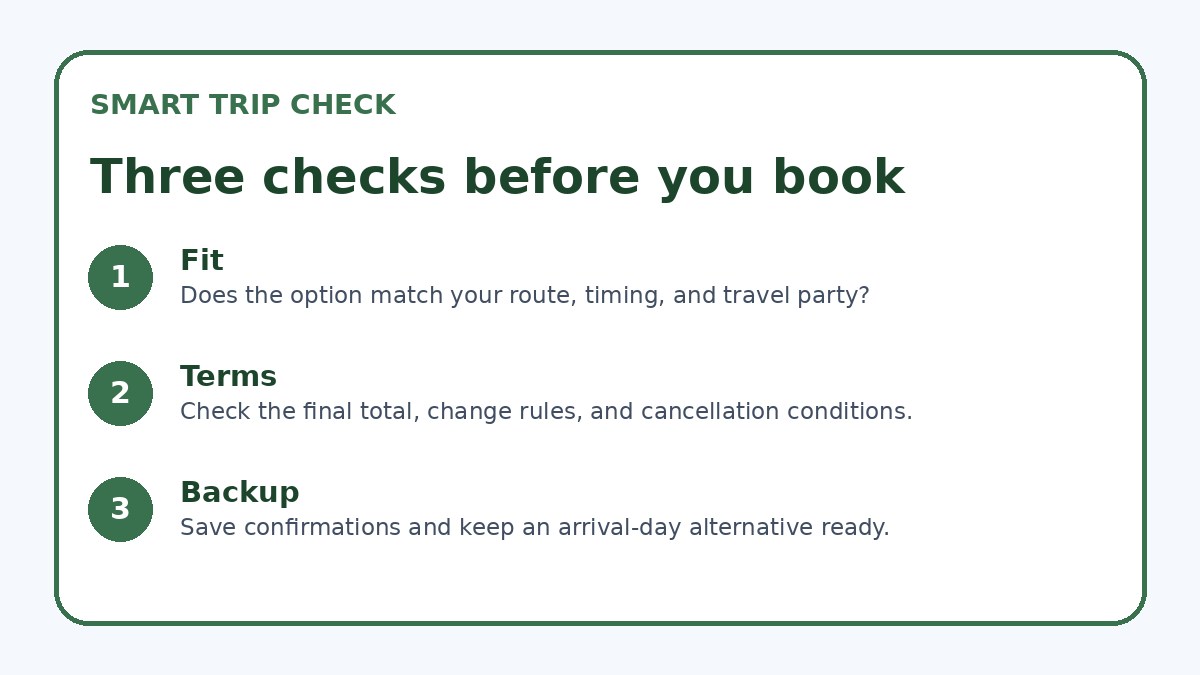
Planning daily routes with kids in mind
Structure each day around short driving loops rather than long point-to-point transfers. Aim for one main attraction mid-morning, a relaxed lunch and play break, and a second easy stop or beach time before returning to base. Include playgrounds, short nature walks, and museums with hands-on exhibits to break up museum or driving monotony. Keep one flexible afternoon each trip for naps, rain, or spontaneous play—this buffer keeps the schedule family-friendly and reduces pressure to fit too much into each day.
When plotting distances, factor in realistic travel time including stops and traffic near popular destinations. For younger children, avoid multiple transitions between car and activity; consolidate nearby sights into a single outing. Use offline maps or a pre-downloaded route plan in case of patchy signal, and identify easily reachable medical facilities and convenience stores along your planned routes. Having a few backup indoor options avoids wasted time when weather or children’s moods change unexpectedly.
Before you book
- Choose a base area (west, central, or east) and map one realistic day loop for each day of your stay.
- Select a car size that fits people, luggage, stroller, and any sports gear; confirm exact boot dimensions if you have unusual equipment.
- Reserve child seats in advance or pack a certified seat, and verify anchorage type and installation instructions with the rental provider.
- Confirm pickup and drop-off locations, opening hours, and any one-way drop fees on the provider’s final booking page.
- Download offline maps and save a shortlist of family-friendly rest stops, playgrounds, and medical clinics along planned routes.
- Take photos of the rental car at pickup showing existing damage and fuel level; repeat the photos at drop-off and keep receipts for any refueling.
Pickup, drop-off, and practical on-the-ground tips
At pickup, perform a quick vehicle inspection with a photo record of any existing scratches or dents; check tire condition, lights, and that the child seat anchorage works correctly. Ask the agent to demonstrate operation of features you’ll use frequently—sliding doors, child locks, and GPS or smartphone mount options. Confirm the emergency number for roadside assistance and how to reach local support if you need help re-securing a child seat or changing a tire.
On the road, observe local driving norms and speed limits, and be realistic about where you’ll park—some scenic spots have limited, uneven parking that complicates getting children in and out. Plan meal stops at family-friendly restaurants or markets that allow flexible portions. Before returning the car, refill to the agreed level if required, remove all child equipment and personal items, and take final photos at the drop-off to document the car’s condition and fuel level in case of disputes.
Frequently asked questions
Do I need an international driver’s license to rent a car in Jeju?
Driver-document requirements depend on your nationality and the rental company's policy. Many countries' visitors must carry a recognized international driving permit alongside their home license; others may be accepted with the home license and passport. Before booking, check the rental provider’s stated ID and license rules on their final booking page and confirm any translation needs. Also check with your embassy or a trusted travel resource for entry-specific driving rules you should follow while on Jeju.
How long should I plan driving each day with small children?
For comfort and less stress, aim for no more than 1–2 hours of total driving between major stops each day, broken into shorter chunks with regular breaks. Plan a main morning activity, a relaxed lunchtime break where kids can move freely, and a short second stop in the afternoon. Reserve at least one flexible afternoon or half-day for naps, weather changes, or spontaneous rest. This rhythm reduces tantrums and keeps sightseeing enjoyable without rushing.
What should I verify about child seats and installation before pickup?
Confirm the exact type and size of child seat offered by the rental company, whether it is forward- or rear-facing, and the model year if safety standards matter to you. Ask how the seat secures—seatbelt-only or ISOFIX/LATCH anchors—and request a demonstration at pickup. If you plan to bring your own seat, verify that it fits the vehicle model you’re renting and that the provider permits third-party seats. Always inspect and test the installed seat before leaving the lot.
Final planning note
A family road trip in Jeju can be delightfully flexible with a rented car, but good decisions before departure make the difference between relaxed days and stressful transfers. Start by choosing a base that matches your family’s pace—west or south for beach time, east for calm rural drives, or central to split distances evenly. Reserve an appropriate vehicle and confirm child-seat arrangements, and plan daily loops with time buffers and familiar play stops. Verify all pickup, drop-off, and child-safety details on the rental provider’s booking page before you finalize. If you want to compare availability and current provider terms in one place, you can check Trip.com, then always confirm final conditions directly with the rental company.
Continue planning
Check current options and final conditions
Use the provider page to confirm live availability, the final total, cancellation terms, and every condition that matters to your trip.
This evergreen planning guide was created with AI-assisted drafting and a structured quality review. It does not display live prices, schedules, availability, visa guidance, or provider rankings. Verify current details before booking. Some links are affiliate links; we may earn a commission at no additional cost to you.