
If your flight to Busan lands late and you’re hauling extra suitcases, the immediate decisions are simple but important: choose a nearby neighborhood or a transfer method that minimizes walking, juggling, and wait time. Prioritize accommodations offering easy vehicle access, late check-in, and luggage storage, and favor transfers that let you avoid multiple changes or long waits in the dark. The trade-offs are predictable: a hotel close to transport hubs can cost more or be noisier, while a further hotel may require a daytime move or an expensive last leg. This guide gives practical steps to make that call, lists the questions to verify with providers, and compares typical overnight transfer approaches so you can choose what matters most—time, cost, or convenience—before you book.
See current options before you compare the details
Availability and final conditions change. Open Trip.com now or keep reading for the practical comparison.
Decide your priority: time, effort, or cost
When you arrive late with extra luggage, deciding your priority simplifies choices. If you want to minimize time and effort, choose an option with as few handoffs as possible: direct door-to-door transfer or a hotel within a short taxi ride. If saving money is more important, you may accept more walking, use night buses where available, or choose a hotel a bit farther from the airport that offers lower nightly rates. Be realistic about how much walking, stair-climbing, or carrying you and your luggage can tolerate after a long journey.
Another factor is flexibility: some travelers prefer the certainty of a pre-booked transfer so they can land and move immediately, others prefer the freedom to choose a taxi on arrival. Also factor in luggage size—oversized suitcases or sports equipment can turn a short walk into a logistical hassle. Weigh these elements against your arrival hour, how tired you expect to be, and whether someone in your group can help. Your choice should reduce physical strain and the chance of delays or missed connections later.
Transfer options to consider for late-night arrivals
Door-to-door transfers (private cars or pre-booked rides) remove most handling: the driver meets you at the terminal, helps with bags, and takes you straight to your hotel. This is the simplest option when you have heavy luggage and arrive during hours when public transport is limited. When considering this approach, check the provider’s meeting point policy, wait-time rules, and whether they can handle oversized items. For provider-specific details, always verify pickup instructions and terms on the final booking page before you confirm.
Public transport or shared shuttles can be OK if you’re traveling light despite having extra bags, because they may involve stairs, narrow doors, or crowded platforms. Night buses or rail options sometimes run less frequently and can require transfers. If you choose public transport, map the full route including interchanges and station exits to avoid being stranded with heavy luggage. For those who prefer split decisions, another compromise is a taxi from the airport to a central hub where you can more easily access hotels or luggage storage facilities.
| Approach | Best for | Tradeoff to check |
|---|---|---|
| Pre-booked private transfer | Travelers who want minimal handling and direct door-to-door service | Higher cost and need to verify pickup details on the booking page |
| Metered taxi or rideshare on arrival | Flexible travelers who want a straightforward single-leg ride | Variable wait times and possible difficulty finding a large-vehicle taxi late at night |
| Public transport and night buses | Budget-conscious travelers who can manage luggage and transfers | May involve stairs, transfers, and longer walks with heavy bags |
| Stay near airport or major station overnight | Those who want to minimize late-night travel after arrival | May be less central for daytime plans; check late-check-in and luggage storage policies |
Ready to check the option that fits your plan?
Use your exact dates and traveler details so the provider page can show the current total and conditions.
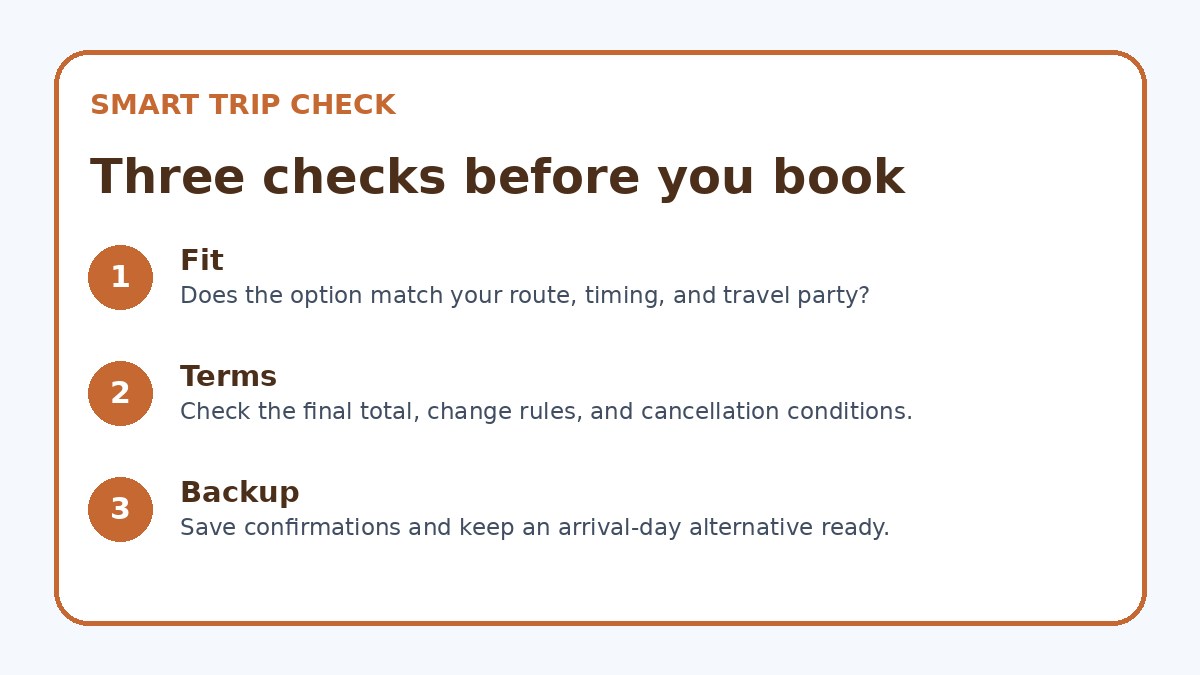
Choosing where to stay after a late arrival
Look for hotels that explicitly offer late check-in or 24-hour reception and that confirm arrivals after midnight. A hotel within a short taxi distance of the airport or a main transport hub reduces the chance of a complicated last leg. Consider accommodations that advertise luggage storage so you can drop bags and move to a more central location by day if needed. Read recent guest notes about access from the airport and what to expect at night—and always confirm the property’s actual late-arrival procedure on its booking page.
Also evaluate neighborhood characteristics: some areas are quieter at night and more walkable from a drop-off, while others are busier or better connected when daytime services resume. If you value convenience the next morning, staying near a major station or transit corridor might save time. Conversely, if you prefer a calmer night after a long trip, a slightly more residential location with easy taxi access could be preferable. Match the hotel’s arrival instructions and luggage policies to your planned transfer method before booking.
Before you book
- Confirm your flight terminal and provide your flight number to any pre-booked transfer so the driver can monitor delays.
- Ask your hotel to confirm late check-in procedures and whether they hold luggage securely after you check out.
- Measure or estimate your suitcases and ask providers if their vehicles or services accommodate oversized items.
- Map the full route from terminal to hotel including station exits, stairs, and elevator locations for public-transport options.
- Save contact numbers for your transfer provider, your hotel, and a local taxi firm in your phone and a printed note.
- Pack a small overnight bag with essentials and valuables so you don’t need to unpack heavy luggage immediately.
Prepare and verify before you book or travel
Confirm pickup points, terminal names, and any meeting-point instructions with your chosen transfer provider. Providers sometimes require flight numbers, arrival terminals, or a phone number for last-minute changes—enter these accurately. If you’ll use public transport, check whether station elevators, ramps, and escalators are available along the whole route and whether transfer times leave a comfortable buffer. When provider-specific facts could change (schedules, meeting points, or vehicle types), verify them on the provider’s final booking page or contact the hotel directly.
Pack a small, accessible overnight bag with essentials so you don’t need to open large suitcases on arrival. Label bags with your contact details and keep phone numbers and reservation confirmations readily accessible. If you think you’ll want to move hotels after a night, confirm the first property’s luggage-hold policy. Finally, consider comparing options on a booking site such as Trip.com to see current availability and conditions, but treat the platform as a starting point and re-check provider pages for final terms.
Frequently asked questions
Is it safer to pre-book a private transfer to Busan if I arrive late with heavy luggage?
Pre-booking a private transfer reduces uncertainty and physical handling: the driver meets you, assists with bags, and takes you directly to your accommodation. It can be especially helpful if you’re fatigued or traveling alone. However, be sure to confirm pickup details, wait-time policies, and whether the vehicle accommodates large suitcases on the provider’s final booking page. If you prefer flexibility or want to compare on-the-ground options, have a backup—such as the local taxi numbers—saved before you land.
Can I rely on night buses or trains for an arrival after midnight with a lot of luggage?
Night buses or late rail services may be available but often run less frequently and can involve transfers, which is cumbersome with heavy bags. Stations and platforms sometimes lack elevators or have limited staffing at night, increasing carrying and waiting. If you consider public transport, map every transfer point and check station accessibility in advance. For a smoother experience, balance these practical constraints against your tolerance for carrying luggage and the availability of taxis or pre-booked pickups at that hour.
What should I ask my hotel before booking for a late-night arrival with extra baggage?
Ask whether the hotel offers 24-hour or late check-in and what the arrival procedure is after standard reception hours. Confirm whether they provide luggage storage (duration and any fees) and whether the entrance and drop-off area are suitable for taxis or shuttle vans with large suitcases. If you expect a very late or unpredictable arrival, request clear instructions on how to contact staff on arrival and whether they supply a bell or intercom. Always verify their answers on the hotel’s booking page or by phone to ensure there are no surprises.
Final planning note
Late-night arrivals to Busan with extra luggage demand planning that reduces carrying, waiting, and stress. Start by deciding whether time, comfort, or cost is your top priority, then choose a nearby hotel, a direct transfer, or a public-transport route that matches that priority. Verify pickup points, vehicle size limits, and hotel late-check-in and luggage policies on provider pages before booking. Pack a small overnight bag, save key contact numbers, and have a backup plan in case the first option proves impractical. With a few confirmations and a clear priority, your late arrival can be handled smoothly so you’re ready to enjoy Busan the next day.
Continue planning
Check current options and final conditions
Use the provider page to confirm live availability, the final total, cancellation terms, and every condition that matters to your trip.
This evergreen planning guide was created with AI-assisted drafting and a structured quality review. It does not display live prices, schedules, availability, visa guidance, or provider rankings. Verify current details before booking. Some links are affiliate links; we may earn a commission at no additional cost to you.