For most business travelers making the New York City to Boston trip, the most practical option is the one that minimizes door-to-door time, luggage friction, and transfer uncertainty — not necessarily the fastest seat-to-seat mode. Start by mapping where your meetings are in each city, how much luggage or tech you must carry, and whether you need flexibility for same-day returns or schedule shifts. That shortlist will usually narrow choices to a direct train for downtown-to-downtown ease, a coach for low overhead and simple boarding, or a combined flight-plus-rail option if your origin or destination is closer to an airport. This article lays out how to weigh terminal fit, luggage and transfer friction, timing flexibility, and a realistic disruption backup so you can pick the most practical itinerary for work.

Terminal fit: where each mode drops you off and how that matters
Think first about where your meetings are located. Trains typically arrive in city-center stations that are convenient for downtown offices and hotels; that reduces taxi time and the need to navigate airport terminals. Coaches usually serve central bus terminals or curbside stops that can also be close to business districts but may require a short local transfer depending on exact itineraries. Flights land at airports which are generally outside downtown; include the time and hassle of airport security, check-in (if required), and ground transport when comparing total door-to-door time.
Consider also the terminal layout and how it handles business travel needs like quick exits and connectivity. A central rail terminal often has taxi ranks, rideshare pickup zones, and public transit right outside the doors, which can speed onward travel. Bus terminals may offer fewer amenities but simpler boarding; curbside services can be fastest if they stop near your departure point. Airports provide many transport choices but add predictable overhead: airport-to-office transfers and the rhythm of arrivals and departures can make them less practical unless they match your starting or ending locations closely.
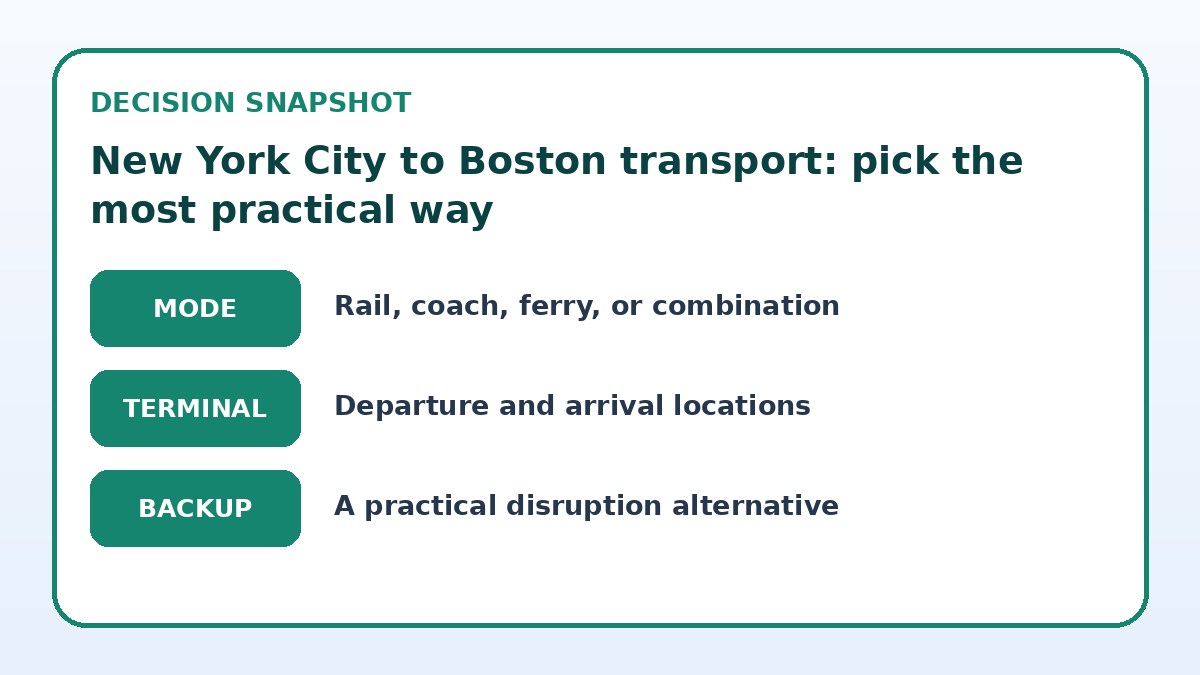
Choose the end-to-end journey plan
| Journey approach | Best for | Friction to check |
|---|---|---|
| Rail-focused door-to-door | Downtown-to-downtown trips and travelers needing onboard workspace | Limited flexibility if service is disrupted; check alternative departures and station connections |
| Coach-focused straightforward plan | Low-prep travel with simple boarding and modest luggage needs | Longer ride times and fewer high-frequency departures than rail during peak windows |
| Air plus surface links | Origin or destination near an airport or when time savings outweigh airport overhead | Higher door-to-door overhead and more steps: check transfers and security times closely |
| Multimodal, contingency-first approach | High-stakes itineraries needing confirmed backups and flexible same-day options | Requires more planning and sometimes higher fees for changeable tickets |
Check live intercity options
Look beyond the ride itself and compare terminals, transfers, luggage, and arrival fit.
Luggage and transfer friction: how much gear are you carrying?
Business travelers vary from carry-on-only to those hauling a roller bag plus presentation materials and tech. Trains generally handle moderate luggage with fewer restrictions and allow you to keep items nearby, which reduces anxiety and saves time at the station. Coaches can be very practical for one or two checked bags and often have exterior storage, but loading and unloading can add minutes at each end. Flights impose the most formal baggage rules and potential fees; if your trip requires quick movement between meetings, the extra steps of bag drop and reclaim can be a real delay.
Also think about transfers between modes. If your itinerary includes a short cab or subway hop, having compact luggage makes that transfer painless. When planning mixed-mode routes, pick connections that minimize carrying heavy items up stairs or through crowded concourses. If you rely on rideshare, confirm luggage capacity relative to what you carry. For crucial presentations, place backups (digital and physical) in your carry-on and keep chargers and adapters in the one bag you’ll keep close at hand.
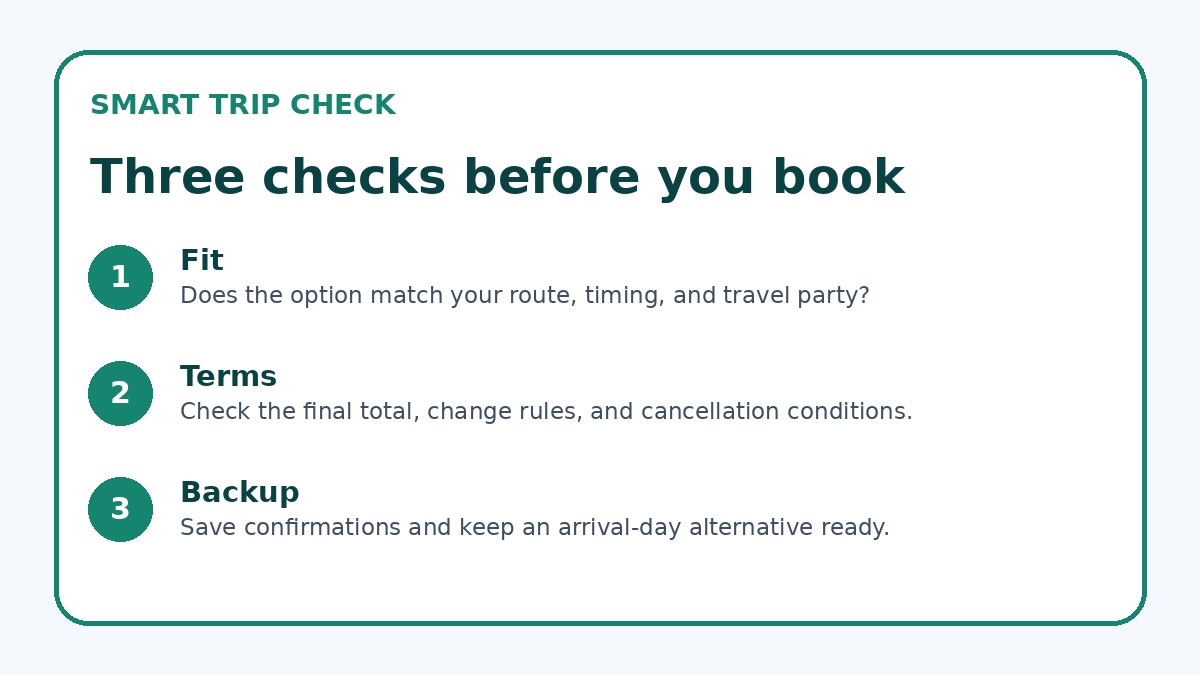
Timing flexibility: same-day returns, meeting buffers, and schedule certainty
If you need to travel and return the same day, look for modes with frequent departures and reliable travel windows. Trains on busy corridors often offer multiple options throughout the day—useful for morning outbound and late-evening returns—while coaches may have fewer departures but sometimes more flexible walk-up availability. Flights can be frequent too, but their airport overhead and vulnerability to weather or security delays make them less predictable for tight business schedules unless you allow generous buffers.
When comparing options, account for check-in and recommended arrival windows for each mode and add contingency time for city traffic at both ends. For important meetings, target itineraries that give you a comfortable buffer before the appointment and a recovery window afterward in case of small delays. If your plan includes a connecting surface link, choose connections with realistic transfer time rather than minimal theoretical layovers—practicality beats an aggressive schedule you’ll constantly worry about.
Compare the practical alternatives
Use the final page to confirm what is actually offered on your dates and save a workable fallback.
Intercity travel checklist
- Map your exact start and end addresses and estimate door-to-door time for each mode including transfers.
- Decide how much luggage and tech you’ll carry and choose the mode that minimizes handling steps.
- Check departure frequency for trains and coaches during your travel window and note fallback options.
- Review carrier booking pages for baggage rules, boarding requirements, and change/cancellation policies.
- Plan a single realistic contingency you can activate quickly if your primary option is delayed.
- Confirm last-mile transport at arrival (taxi ranks, rideshare pickup spots, or hotel shuttles) before booking.
Disruption backup: practical alternatives and what to verify before booking
Always prepare a realistic backup. For train or coach travel, identify the next few departures you could take and note alternative pickup or drop-off options nearby. If flying, check later same-day flights and quick surface alternatives that would get you downtown if your flight is rerouted. A practical backup often means pre-checking refundable or changeable fares for at least one leg, or choosing a booking channel that allows easy same-day switches. Don’t overbook expensive flexibility; pick one contingency that’s affordable and fast.
Before booking any option, verify the provider’s final booking page for cancellation and change policies, baggage rules, boarding requirements (including early arrival) and connection advisories. If you plan to use a third-party comparison site like Trip.com, treat it as a starting point and always confirm details on the carrier’s own page. Also confirm local pickup points for rideshares or taxis at arrival terminals so your backup plan doesn’t stall waiting for transport pickup.
Rail & Intercity Transport questions travelers ask
Is the train usually faster door-to-door than flying between New York City and Boston?
Not always. Seat-to-seat travel time on a train can be competitive with flying, but door-to-door speed depends on where you start and finish in each city and on airport processing time. For downtown origins and destinations, rail often wins because it avoids airport transfers and security lines. If either endpoint is closer to an airport or if you can take a nonstop flight with short ground transfers, flying may be comparable. Compare total door-to-door estimates—station-to-office versus airport-to-office—before deciding.
How do I choose between a direct rail service and one that requires a connection?
Prefer direct services when you need the least transfer risk and the simplest logistics; they reduce the chance of missed connections and cut transfer stress. If you’re evaluating a connecting rail itinerary, make sure connection times are realistic, account for platform changes or station navigation, and have a fallback if the first leg is delayed. Sometimes a slightly longer direct route is worth the scheduling certainty; other times a fast connecting option may be practical if you’ve allowed comfortable transfer buffers.
What practical backup should I prepare for a same-day business trip?
Identify one quick alternative you can realistically use if your primary plan fails. For example, note the next two train or coach departures and the nearest airport options. Keep a rideshare app and local taxi numbers ready, and consider a flexible ticket for one leg so you can rebook without lengthy calls. Store digital copies of your documents and meeting materials in the cloud so delays won’t stop your meeting. Finally, communicate realistic arrival windows to meeting hosts in case you need to switch plans.
Final decision note
Choosing the most practical New York City to Boston transport option depends less on nominal speed and more on minimizing total door-to-door friction. Start by matching terminals to meeting locations, assess how much luggage handling you can tolerate, and build a timetable with reasonable buffers. Favor direct rail for downtown convenience, pick coaches for low-prep trips, and use air only when airport proximity or onward connections justify the added overhead. Always verify carrier policies and connection details on the booking page, and keep one affordable backup ready so a delay doesn’t derail your business day.
Continue planning
Check current options and final conditions
Use the provider page to confirm live availability, the final total, cancellation terms, and every condition that matters to your trip.
This evergreen planning guide was created with AI-assisted drafting and a structured quality review. It does not display live prices, schedules, availability, visa guidance, or provider rankings. Verify current details before booking. Some links are affiliate links; we may earn a commission at no additional cost to you.