
If you're a couple planning a stay in New York City, the single most useful decision is choosing the right booking flexibility for your priorities. Opting for a fully refundable rate gives you changeability and peace of mind when plans shift, while semi‑flexible or nonrefundable prepaid rates often lower upfront cost but limit changes. Before you click Reserve, decide how likely your travel dates will change, how important price is versus certainty, and whether you prefer the security of on‑site payment or the savings of advance payment. This article compares the common flexibility options, explains when each fits a couple’s travel style, and lists the exact details to verify on the hotel’s final booking page so you won’t be surprised on arrival.
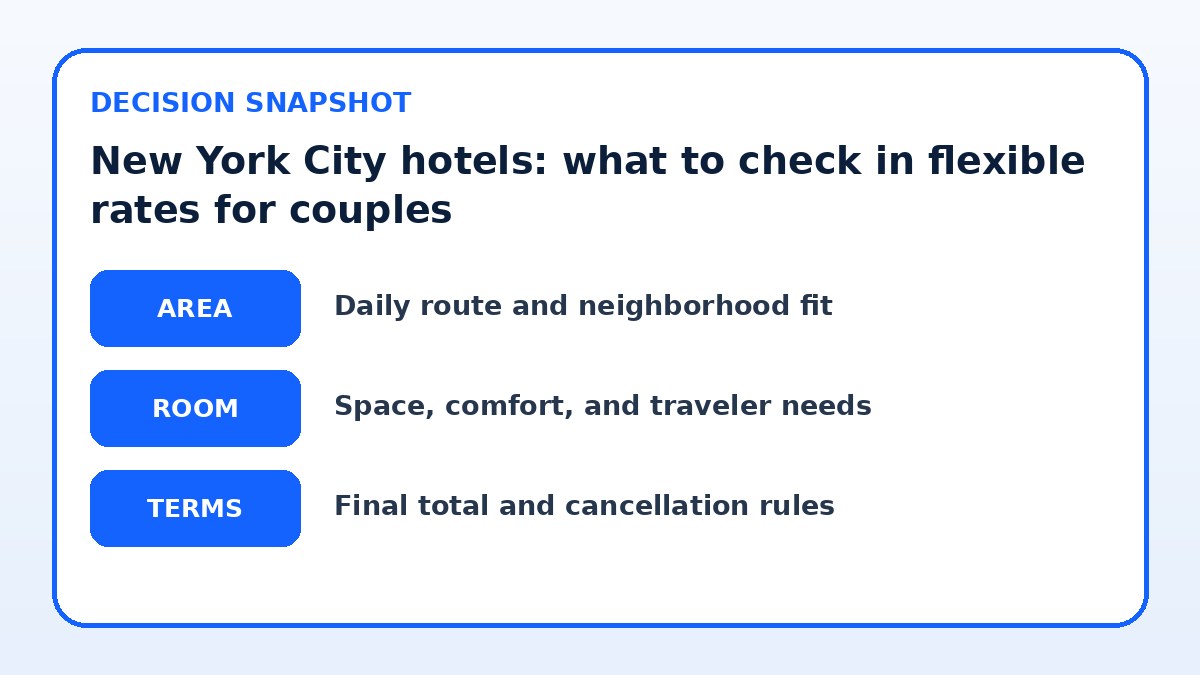
See current options before you compare the details
Availability and final conditions change. Open Trip.com now or keep reading for the practical comparison.
Understand the main flexible booking types
Hotels generally offer three broad categories: fully refundable, semi‑flexible (sometimes called partially refundable or changeable with penalties), and prepaid nonrefundable. Fully refundable bookings usually let you cancel without charge up to a stated cutoff—often 24 to 72 hours before arrival—though the exact window varies by property. Semi‑flexible rates may allow changes with a fee or convert to a voucher for future use; they are useful for couples who want some protection without paying the full refundable rate.
Prepaid, nonrefundable rates require payment at booking and are rarely refundable except for special circumstances the hotel lists. They can be the cheapest per night but lock in names, dates, and often the room type. Couples should check whether the prepaid option allows name corrections, date transfers, or credits; many prepaids do not permit simple swaps. Always verify cancellation windows, whether taxes and fees are refundable, and if a credit card hold or deposit is taken on arrival for incidentals.
How to decide what matters for your trip
Start by assessing how firm your dates are. If one partner has a flexible work schedule or your trip hinges on a weather‑dependent event, prioritize refundable or semi‑flexible options even if they cost more. If your travel dates are tied to nonchangeable commitments—like a wedding date you must attend—prepaid rates can be a reasonable choice because the lower cost offsets the low likelihood of changes. Couples should also weigh the emotional cost of uncertainty: a small extra nightly fee for full flexibility can be worthwhile to avoid stress if plans might shift.
Next, consider the financial tradeoffs beyond nightly rate: preauthorization holds for incidentals, resort fees that are charged on site, and whether breakfast or other amenities included with the rate are refundable. If one partner prefers an itinerary heavy with day trips and the other prefers downtime at the room, factor how cancellations or late check‑out requests will be handled. Finally, check loyalty program benefits—free cancellation windows and member rates sometimes offer better flexibility without the highest public rate.
| Approach | Best for | Tradeoff to check |
|---|---|---|
| Fully refundable rate | Couples who expect possible date changes or want stress‑free plans | Higher nightly rate and potential on‑site incidental holds |
| Semi‑flexible / partially refundable | Couples seeking a balance between cost savings and moderate protection | May include cancellation fees, vouchers, or limited change windows |
| Prepaid nonrefundable rate | Couples with fixed plans who prioritize lower upfront cost | Little to no recourse for changes; names or dates often locked |
| Split bookings (mix refundable and prepaid nights) | Couples who want partial protection while capturing some savings | More complex management and potential rate differences when rebooking |
Ready to check the option that fits your plan?
Use your exact dates and traveler details so the provider page can show the current total and conditions.

What to verify on the hotel’s final booking page
Always confirm a few exact items before completing payment. Look for the precise cancellation deadline (date and local time), whether the rate requires full prepayment or a deposit, and if taxes and service charges are refundable. If the rate mentions a credit or voucher for a future stay in lieu of cash refunds, read the voucher terms: expiration, blackout dates, and transferability. Verify whether the hotel requires a credit card pre‑authorization for incidentals and how much the hold will be; that hold affects your available credit while you’re in town.
Also check name‑change, date‑change, and date‑transfer policies—the wording matters. Some “changeable” rates let you move dates but charge a rate difference; others treat changes as cancellations. For promotional or package rates that include extras (breakfast, parking, or shows), confirm whether those extras remain valid if you modify the reservation or if they are forfeited. If anything on the booking page is unclear, use the hotel contact details provided to get clarification and request written confirmation of any exceptions.
Before you book
- Confirm the exact cancellation deadline with date and local time on the hotel’s final booking page.
- Verify whether taxes, resort fees, and breakfast charges are refundable under the selected rate.
- Check if the rate requires full prepayment, a deposit, or only a credit‑card guarantee on arrival.
- Ask about name changes, date transfers, and whether a rate difference applies when modifying dates.
- Confirm the amount and release timing of any credit‑card hold for incidentals on arrival.
- If booking via a third party, call the hotel to confirm identical terms before final payment.
Strategies for couples to reduce risk and save money
Mix flexibility and savings by splitting the difference: book the initial nights on a refundable rate and prepay later nights if you expect dates to firm up during the trip. That approach protects you early on while capturing savings for the stay’s more certain portion. Another tactic is to reserve a refundable room and monitor prices—if a lower prepaid rate appears, rebook the cheaper option and cancel the refundable reservation within the allowed window. Keep in mind rebooking often requires paying the prepaid rate in full, so check that refunds will be processed in time if you change your mind.
Consider travel insurance if one or both partners are traveling for reasons that could change suddenly (work, illness, or family matters). Insurance can reimburse nonrefundable hotel costs when policy conditions are met; read exclusions carefully to ensure the common scenarios you worry about are covered. Finally, when using third‑party sites to compare availability—including Trip.com as one option—always cross‑check the hotel’s official site or call the property to confirm the final terms before committing payment.
Frequently asked questions
Can couples change the name on a prepaid hotel reservation if one traveler needs to substitute?
Policies differ widely: some prepaid reservations permit name corrections while others lock the booking to the original guest. Before you book, check the hotel’s stated policy on name changes and whether the change requires written consent or a fee. If the policy is unclear on the third‑party booking page, call the hotel directly and request written confirmation. For peace of mind, consider booking a refundable rate if name flexibility is essential, or buy travel insurance that covers unforeseen substitutions where allowed.
If we book a refundable rate and prepay later nights, can we merge or transfer those reservations?
Merging two separate bookings depends on the hotel’s front‑desk procedures; some hotels will combine reservations into one folio at check‑in, others treat them separately. If you want a single invoice or to use loyalty points on the entire stay, call the hotel ahead to ask whether they can link reservations and whether any rate rules change. Be prepared that a prepaid night’s terms (like nonrefundability) usually remain in effect even if the reservations are combined.
How do I weigh hotel flexibility against flexible flight or event tickets?
Think of each part of the trip as linked but separate risks: flexible flights reduce one source of disruption, but inflexible hotel rates can still leave you out of pocket. Prioritize flexibility where change is most likely: if your airline offers easy free changes but your hotel does not, favor a refundable hotel to match that flexibility. Conversely, if flights are fixed and unlikely to change, a prepaid hotel rate may be acceptable. Use the hotel’s cancellation window to align with any event or flight change deadlines.
Final planning note
Couples planning a New York City stay should pick a booking flexibility that matches how firm their dates and priorities are. Fully refundable rates buy peace of mind at a premium; semi‑flexible options reduce risk while cutting some cost; prepaid rates save money but increase exposure to change. Use the checklist above before you confirm payment, and don’t hesitate to contact the hotel to clarify ambiguous wording on the booking page. If you compare offers on third‑party sites, including Trip.com as one reference, always confirm final terms with the hotel so both partners can relax and enjoy the city.
Continue planning
Check current options and final conditions
Use the provider page to confirm live availability, the final total, cancellation terms, and every condition that matters to your trip.
This evergreen planning guide was created with AI-assisted drafting and a structured quality review. It does not display live prices, schedules, availability, visa guidance, or provider rankings. Verify current details before booking. Some links are affiliate links; we may earn a commission at no additional cost to you.