For a short family stay in Toronto the practical choice is a compact base that reduces daily transit and offers family-friendly room options. Prioritize a neighbourhood with convenient subway or streetcar access, nearby grocery or pharmacy, and a mix of dining options—so you spend less time travelling and more time at attractions. A single well-located hotel saves a lot of time on mornings and naps, but the right tradeoffs depend on your kids’ ages, whether you need kitchen facilities, and how much urban noise you can tolerate. This guide lays out the easiest neighbourhoods for families, explains how to balance convenience and comfort, and gives a checklist of what to verify before you book. Use it to compare options logically—then confirm room layout, transit proximity, and cancellation details on the provider’s booking page (you can also compare availability on Trip.com if you like).
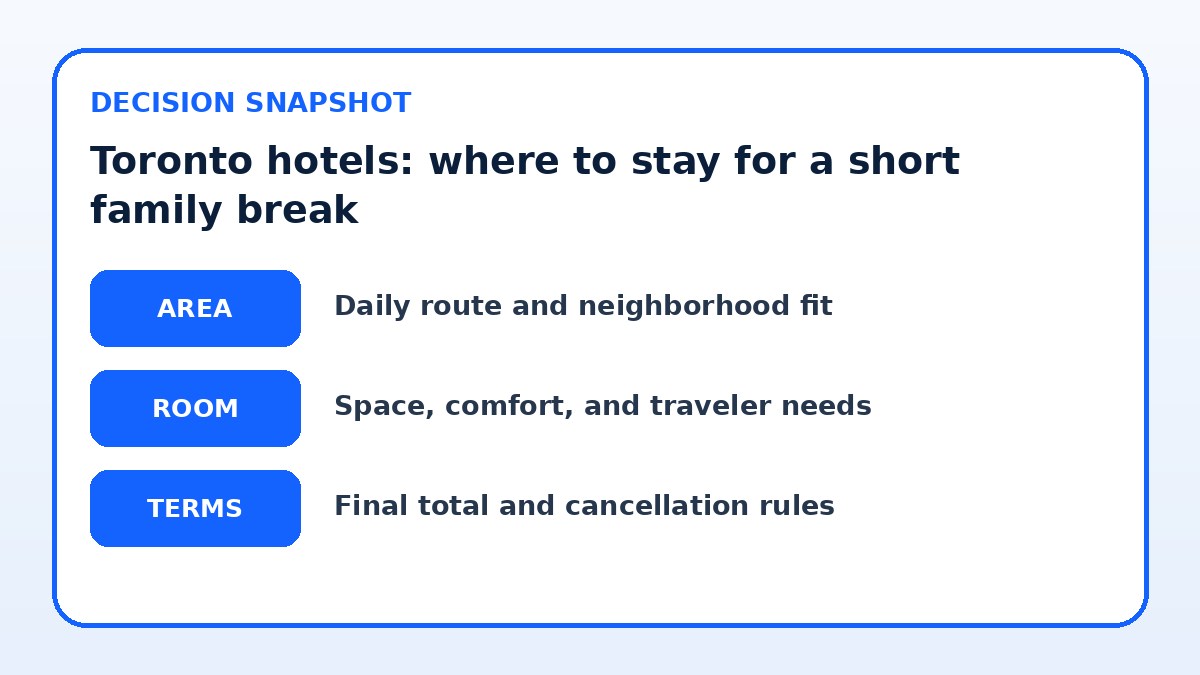
See current options before you compare the details
Availability and final conditions change. Open Trip.com now or keep reading for the practical comparison.
Which neighbourhood to use as your base
For a short family visit, central neighbourhoods near subway lines are the most practical. Downtown pockets along the Yonge–University line, the Entertainment District near King Street, and the area around Union Station put you close to major museums, the waterfront, and frequent transit. These clusters let you reach attractions with short rides or manageable walks, reducing the number of times you pack strollers or wrangle children into cabs. Prioritise spots where the subway or a major streetcar line is within a few blocks—transit reliability matters when timing is tight.
If quieter streets matter, look a little north of the core in neighbourhoods with easy subway access rather than staying in the busiest tourist blocks. Areas west toward Liberty Village or east along Queen Street East offer family-friendly cafés and parks while still being straightforward to reach by transit. For families travelling by rail, a base near Union Station keeps luggage transfers simpler; if you have light luggage and prefer a slower pace, riverside and harbourfront hotels provide easy access to playgrounds and waterfront paths.
Room types and amenities to prioritise
For short stays with kids, room layout matters more than square footage. Look for rooms with two beds, sofa beds, or connecting rooms if privacy for adults matters. Requesting a rollaway can work, but rollaways reduce floor space and may not be available in every room type; always confirm the exact sleeping configuration and whether cribs are complimentary. Kitchenettes or rooms with a small fridge and microwave can save stress for snack time and quick breakfasts, especially when schedules are tight and restaurants are busy.
Pay attention to practical on-site amenities: a 24-hour front desk, laundry or same-day laundry service, and easy luggage hold can transform a short visit. An on-site eatery or grab-and-go market is convenient for late arrivals. If your child is sensitive to noise, ask about room orientation and whether the hotel offers quieter upper floors or soundproofing. Finally, check whether the property has accessible entrances and elevators if you’re travelling with a stroller or mobility needs.
| Approach | Best for | Tradeoff to check |
|---|---|---|
| Central subway-side hotel | Maximizing sightseeing time and short transit rides | Higher street noise and potentially higher nightly rates |
| Quieter residential hotel near transit | Naptime-friendly stays and calmer evenings | A few extra minutes of travel to major attractions |
| Suite or family room with kitchenette | Eating on your own schedule and managing snacks | Larger rooms can be more expensive and less available on short notice |
| Budget hotel or motel farther out | Saving cost when you plan to be out most of the day | Longer daily commutes and less flexibility with naps or breaks |
Ready to check the option that fits your plan?
Use your exact dates and traveler details so the provider page can show the current total and conditions.

Transit and transfers: simplify your days
Toronto’s transit network is central to picking a short-stay base. Hotels along subway lines reduce uncertainty and walking distance; streetcar-served areas are often fine for short hops but can be slower during peak traffic. For airport transfers, compare hotels that advertise shuttle services, proximity to Union Station, or easy taxi and rideshare pickup spots. If you plan to use public transit frequently, check how close the hotel is to the nearest subway or major streetcar stop and whether elevators and ramps are available for strollers.
When booking, verify the hotel’s directions for reaching the nearest transit connection and any recommended pedestrian routes—these are often more practical than relying on broad map pins. For intercity arrivals by train, a hotel within easy walking distance of Union Station cuts transfer time significantly. If you expect evening returns with tired kids, pick a base with straightforward, well-lit walkways from transit stops and consider bringing a compact stroller that’s easy to fold on board public vehicles.
Before you book
- Confirm the exact bed configuration and request photos or a floor plan for the room you will book.
- Verify transit proximity: measure walking time to the nearest subway or major streetcar stop from the hotel address.
- Check the hotel’s luggage hold policy and whether early check-in or late checkout is possible if you need flexibility.
- Ask whether cribs, rollaways, or connecting rooms are available and whether there is an extra charge for them.
- Look for on-site or nearby grocery and pharmacy options and note opening hours for arrival planning.
- Read recent guest comments about noise and elevator wait times and confirm any cleanliness or accessibility concerns on the booking page.
Tradeoffs: noise, price, and convenience
Balancing noise, cost, and convenience is the core decision for a short family stay. Hotels right in the busiest districts are convenient for attractions but can be noisy and busier in lobbies and elevators. Moving a few blocks away typically lowers noise and can reduce cost, but may add five to twenty minutes to travel times between attractions. When time is limited, favour a central location even if it costs a bit more—every saved transit trip can be reclaimed as family time.
If you prioritise quiet and space, expect to sacrifice some walkability to certain attractions; choosing a quieter residential street often means a simpler, calmer hotel experience for naptimes and early bedtimes. Conversely, if your family prefers to minimize walking and maximize quick returns to the room, accept the higher activity levels of central hotels. Weigh how many mornings and evenings you will use the hotel as a base—short stays with intense sightseeing often benefit more from proximity than from slightly larger rooms.
Frequently asked questions
Is downtown Toronto the best place to stay with kids for a short visit?
Downtown is often the most practical base for short family visits because it shortens travel times to major attractions, museums, and the waterfront. Shorter transit rides mean easier returns for naps and quick meal breaks. However, downtown hotels can be busier and noisier; if your children need quiet evenings, consider a nearby neighbourhood that still has direct subway access. Ultimately, weigh the value of saved transit time against daytime convenience and your family’s tolerance for urban activity.
How important is it to have a kitchenette or fridge in a short-stay hotel?
A small fridge or kitchenette can be very helpful for families on short trips—storing milk, reheating simple meals, and keeping snacks on hand reduces the need to dine out constantly. For a stay of just a few nights, a fridge and microwave often provide most of the practical benefits of a full kitchen without extra cost. If you rely on bottle prep, special dietary needs, or late arrivals, prioritise a kitchenette and confirm appliance availability on the hotel’s booking page before you commit.
Should we prioritize hotels close to Union Station or near the attractions?
If your trip involves rail arrivals or easy airport rail transfers, a hotel near Union Station saves time and simplifies luggage handling. If most of your plans focus on specific attractions—museums, aquarium, or harbourfront—staying near those sites can reduce daily transit and walking. For short stays, proximity to major transit hubs or to the specific attractions you want to visit is more important than a central address; map your top priorities and pick the base that minimizes the most frequent trips.
Final planning note
For short family stays in Toronto, practicality matters more than novelty. Pick a hotel that cuts transit time to your must-see sights, offers the right sleeping layout, and provides basic in-room conveniences like a fridge or easy luggage handling. Decide whether you prefer the minute-by-minute convenience of a central subway-side hotel or the calmer rhythm of a quieter neighbourhood with quick transit links—both work well, but they shift how your days feel. Before you book, verify bed layouts, transit walking times, noise expectations, and the hotel’s policies on cribs and luggage on the provider’s final booking page. Comparing availability on a site like Trip.com can help, but always confirm the specific room and cancellation details directly with the hotel.
Continue planning
Check current options and final conditions
Use the provider page to confirm live availability, the final total, cancellation terms, and every condition that matters to your trip.
This evergreen planning guide was created with AI-assisted drafting and a structured quality review. It does not display live prices, schedules, availability, visa guidance, or provider rankings. Verify current details before booking. Some links are affiliate links; we may earn a commission at no additional cost to you.