
Practical answer first: for families looking at Rome travel deals, target the shoulder-season windows—late March to mid-May and mid-September to early November—then pick weeks that avoid local school holidays and major events. Those windows usually give milder weather than winter, smaller daytime crowds than peak summer, and more availability for family apartments and guided tours. Once you pick candidate weeks, compare refundable versus changeable flight fares, family-room and apartment options rather than single hotel rooms, and timed-entry tickets for the Colosseum and Vatican to minimize queueing with children. Work out travel days to avoid long travel segments on transit-heavy days, and confirm baggage rules and infant/child seating directly with carriers.
See current options before you compare the details
Availability and final conditions change. Open Trip.com now or keep reading for the practical comparison.
Why shoulder seasons suit families in Rome
Families need predictable rhythms—time to see key sites, naps or rest for younger kids, and flexibility for sudden changes. Shoulder seasons deliver more of that predictability by lowering daytime peak crowds and improving availability for apartments, family rooms, and small-group tours. Less pressure on restaurants and attractions typically means staff can be more helpful with strollers, high chairs, and special requests, while clearer access to museums and sites reduces stressful waits. The weather is often mild enough for outdoor walking and piazza time without the intense heat and long queuing that summer brings.
That said, shoulder seasons are not empty. Weekends, local festivals, and school breaks still cause spikes, so expect tradeoffs. You will often find tour operators running family-focused itineraries at these times, and transportation options such as regional trains and day-trip ferries are generally reliable. The practical takeaway: use shoulder-season timing to secure accommodation with space and a kitchen, and book high-demand timed-entry tickets early so daily logistics remain calm for everyone.
How to evaluate Rome travel deals for family needs
Start by listing what matters for your family: single-level sleeping, kitchenette, washing machine, quiet neighborhood, stroller accessibility, or close public transport. When comparing deals, prioritize properties that explicitly list family amenities and verify those features on the booking page. For flights, check changeability, seat selection options, and whether you can reserve bassinet or extended-legroom seats for long legs. Look at itinerary timing—late-night arrivals or early transfers create strain; a midday arrival with easy transit options often beats an overnight rush for families.
Also compare the full door-to-door time and the number of transfer steps. A cheaper flight with multiple long connections may be more stressful and costly when factoring childcare needs, meals, and missed sleep. For accommodation, a slightly higher nightly rate that includes breakfast, laundry, or easier transit access can save money and hassle overall. And when deals mention timed-ticket packages, read the terms: confirm entry windows, cancellation rules, and if child tickets are free or need registration.
| Approach | Best for | Tradeoff to check |
|---|---|---|
| Early shoulder-season (late March–April) | Families wanting fewer tourists and spring blooms with cooler, changeable weather. | Some attractions or outdoor amenities may open later in the season; plan indoor alternatives. |
| Late shoulder-season (September–early November) | Families who prefer warmer days and more consistent outdoor activity options. | Schools resume in some places and local events can still raise crowds on weekends. |
| Family apartments or aparthotels | Families needing space, a kitchen, and flexibility for naps and meal routines. | You may sacrifice hotel services like daily housekeeping or on-site childcare. |
| Family rooms in centrally located hotels | Families valuing concierge help, breakfast included, and quick access to metro lines. | Less living space and fewer cooking facilities can increase food costs. |
Ready to check the option that fits your plan?
Use your exact dates and traveler details so the provider page can show the current total and conditions.
Planning daily routines and sightseeing with children
Map your days around one major attraction in the morning, a relaxed lunch or park time, and a shorter activity in the afternoon. Rome’s layout rewards this rhythm—the Colosseum or Vatican in the morning when light and energy are good, a picnic in Villa Borghese or an indoor playground for midafternoon rest, then a casual neighborhood stroll and gelato near your lodging. Reduce transit legs by clustering sites by neighborhood; long cross-town transfers with children are tiring and reduce enjoyment.
Reserve timed-entry tickets for high-demand sites well in advance after you choose dates, and plan buffer time for security checks and restroom stops. If you hire a guide, request a family-focused pace and ask about stroller-friendly routes. Build flexible downtime into each day so small delays or tantrums don't derail the schedule. Finally, keep a short list of backup indoor activities—child-friendly museums, aquariums, or an easy café or bookstore—so rainy days or overtired kids still feel like a win.
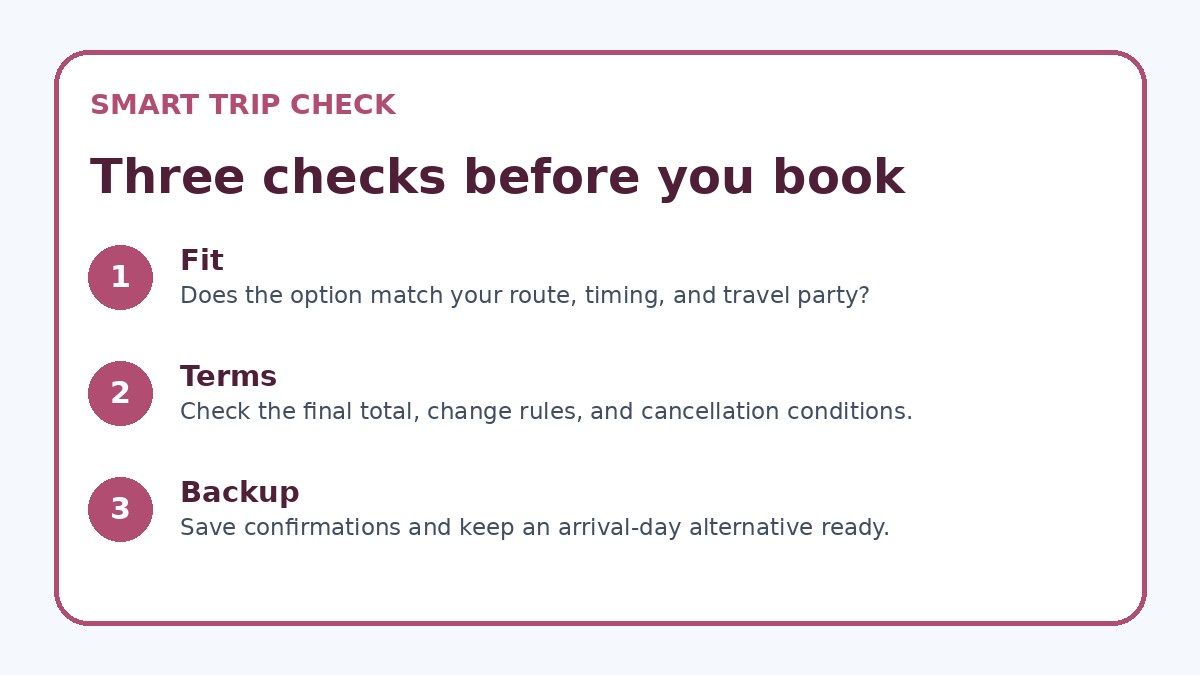
Before you book
- Choose two shoulder-season week options and check both your country’s and Italy’s school holiday calendars to avoid peak family travel times.
- Compare refundable flight fares and change fees; screenshot the carrier’s final terms for baggage, seating, and infant policies.
- Select three accommodation options (apartment, aparthotel, hotel family room) and confirm sleeping layouts, elevator access, and cot availability.
- Book timed-entry tickets for Colosseum and Vatican after you lock travel dates; save confirmation emails and note exact entry windows.
- Plan one low-key backup day (park, indoor play space, or family museum) and locate nearby pharmacies and pediatric clinics.
- Confirm arrival logistics: best route from airport or station with luggage/stroller, transfer options, and whether your accommodation offers early check-in or luggage hold.
Booking checks and what to verify before finalizing
Before you commit to any Rome travel deals, verify a short checklist directly on provider pages: refundable/change policies, exact sleeping arrangements, whether cribs or extra beds are free, and the final total with taxes and city fees included. If you book an apartment, check floor level and elevator access for strollers. For flights, confirm baggage dimensions and infant allowances, and for trains verify the luggage policy and station access. When transfers or private cars are part of the deal, confirm vehicle size, child-seat availability, and exact pickup logistics.
Also watch for overlapping rules that affect families: timed-entry passes that require the names and ages of children, age limits for child fares, or guided tours that enforce minimum ages for safety reasons. Where provider details could change, make a habit of bookmarking the provider’s final booking page and taking screenshots of key terms. Trip.com is a reasonable place to compare current availability and conditions, but always cross-check the supplier’s own page for the definitive policy and final price before you pay.
Frequently asked questions
Are Rome shoulder-season travel deals actually cheaper for families?
Shoulder seasons often reduce pressure on accommodation availability and can widen options for family-sized apartments and mid-priced hotels, which may lead to better value. However, whether a deal is cheaper depends on many moving parts—flight demand, local events, and whether the fare includes flexible change rules or baggage. To know if a deal suits your family, compare total door-to-door costs (fares, transfers, city fees) and factor in the convenience of space and services like kitchen access. Always verify final totals and cancellation policies on the provider’s booking page before paying.
How do I pick which shoulder-season dates are best if my children have school schedules?
Start with your children’s fixed school dates and identify windows where you can travel without missing critical classes or exams. Then cross-reference those windows with Italian school calendars and major local events—weekend festivals raise crowds—and choose midweek travel to reduce congestion. If you must travel during a common break, aim for early or late days within that break to avoid peak arrival and departure days. Finally, look for flights with family-friendly schedules and accommodations offering flexible check-in or luggage storage.
What are the smartest family-specific upgrades to consider when booking Rome travel deals?
Prioritize space and flexibility: an apartment or family room with a kitchenette and laundry reduces eating-out and keeps routines. Flexible airfare or low-change-fee tickets give peace of mind with kids. Consider paying a bit more for a centrally located lodging to cut transit time and keep afternoons calm. For sightseeing, book small-group or family-focused tours and timed-entry tickets to avoid long waits. Verify child age policies, stroller access, and any required name registration for children on the provider’s booking page before confirming.
Final planning note
Planning Rome travel deals around shoulder seasons gives families a strong chance of balancing pleasant weather, manageable crowds, and better accommodation options. The key is to choose dates that avoid both Italian and home-country school holidays, compare accommodation types for space and services, and verify flight flexibility and timed-entry ticket rules before booking. Build daily schedules that prioritize one big attraction plus quiet downtime, and keep backup indoor activities ready. Do the verification work—screenshots and double-checks on provider pages—so the trip is governed by reliable terms rather than hope. With a little advance planning, Rome becomes a family-friendly city where mornings of art and history and afternoons of piazza play coexist comfortably.
Continue planning
Check current options and final conditions
Use the provider page to confirm live availability, the final total, cancellation terms, and every condition that matters to your trip.
This evergreen planning guide was created with AI-assisted drafting and a structured quality review. It does not display live prices, schedules, availability, visa guidance, or provider rankings. Verify current details before booking. Some links are affiliate links; we may earn a commission at no additional cost to you.