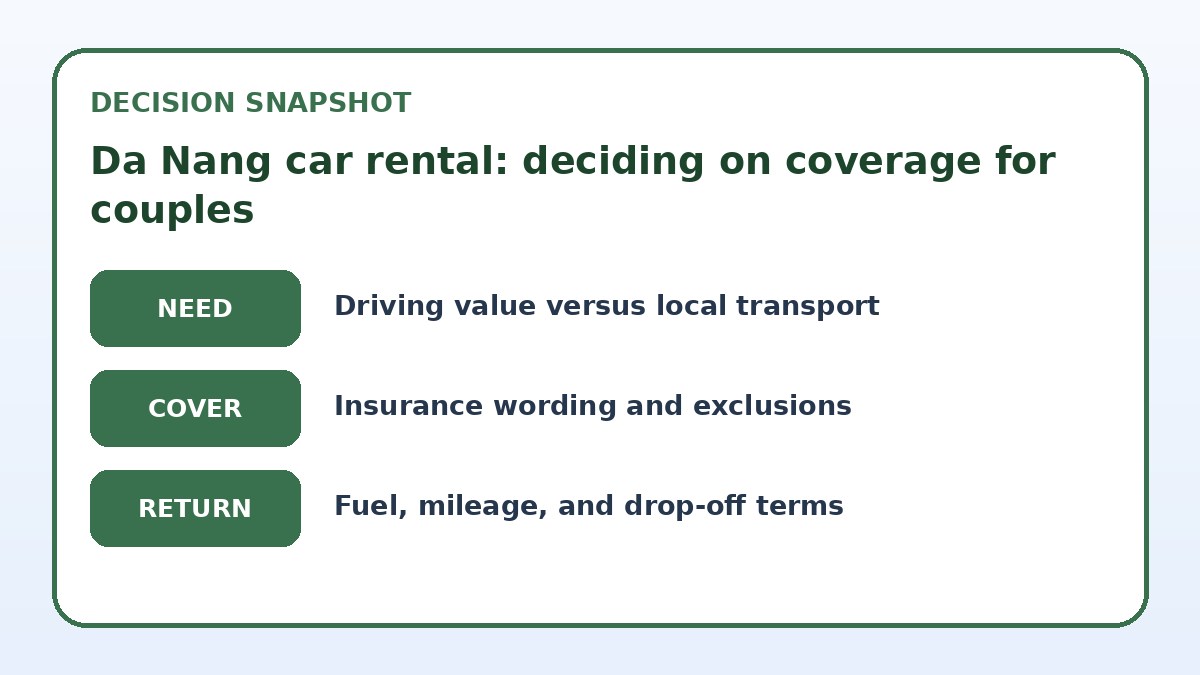
Practical answer first: before you book a Da Nang car rental as a couple, read the insurer and rental contract to confirm who is covered (named drivers versus additional drivers), the collision damage waiver (CDW) wording, liability limits, the excess amount you’re responsible for after a claim, and any exclusions for specific drivers, roads, or driving behaviors. Also verify whether your credit card or travel insurance can reduce or remove the excess and whether the company requires you to pre-authorize a security deposit on arrival. These points determine the real cost and risk on the road, not just the advertised rate. Below I explain the tradeoffs and decision criteria that help couples balance cost, peace of mind, and convenience while driving around Da Nang.
See current options before you compare the details
Availability and final conditions change. Open Trip.com now or keep reading for the practical comparison.
Who is covered and how to list drivers
When a couple books a car in Da Nang, the most common insurance wording issue is who the policy actually covers. Many quotes list a single ‘primary’ driver by default; that person is the one whose record and documents were checked. If your partner plans to drive even briefly, they must be added as an additional or named driver in the rental agreement. Adding a driver typically requires presenting their license and ID at pickup and may incur an extra daily fee. If you don’t add them and they drive, the insurer or rental company can deny a claim after any accident, leaving you both financially exposed.
Check whether the policy differentiates between ‘named drivers’ and ‘any competent driver’; the latter is less common in Vietnam and often more expensive. Some vendors permit ‘secondary’ drivers without fee if they meet age and license criteria, but you must verify this in writing — ideally on the booking confirmation or final rental contract. Also confirm whether the rental firm accepts foreign driving licences or requires an International Driving Permit (IDP) for certain nationalities. If the rental conditions are ambiguous, get a written clarification from the provider before you arrive to avoid surprises at the counter.
Collision damage waiver, excess, and how credit cards interact
Collision Damage Waiver (CDW) wording is central to the risk you actually carry. CDW often limits your liability for damage to the vehicle but rarely eliminates it entirely; almost every CDW has an excess (also called deductible). The excess is the maximum amount you would pay upfront after a covered incident before the insurer pays the remainder. Couples should compare quoted excesses against optional ‘super CDW’ or ‘zero-excess’ cover the rental company sells. Selling zero-excess reduces your immediate financial exposure but increases the daily rate — weigh how comfortable you are paying higher rental costs versus potential out-of-pocket expense after an accident.
Many credit cards offer car rental insurance that can cover damage or theft and sometimes waive the rental company’s excess. However, card-provided coverage frequently has precise wording: it might be secondary to the rental company’s policy (you must claim with the provider first), exclude certain vehicle types, or require you decline the rental firm’s CDW at pickup. Before relying on a card, read the issuer’s terms and ensure they explicitly cover rentals in Vietnam, cover both drivers, and mention whether they reimburse the excess or only cover remaining costs after the primary insurer. Keep screenshots or printed policy pages to show the agent at pickup.
| Approach | Best for | Tradeoff to check |
|---|---|---|
| Buy zero-excess from the rental company | Couples who want peace of mind and predictable outlay | Higher daily rental rate but minimal financial risk after damage |
| Rely on credit card rental insurance | Couples with premium cards that include comprehensive rental cover | May require declining vendor CDW; coverage terms and claim timing can be restrictive |
| Keep base CDW and buy local third-party insurance | Cost-conscious couples willing to manage claim paperwork | Lower upfront cost but potential delays and coverage gaps during claims |
| Decline extras and self-insure (pay excess if needed) | Couples comfortable accepting financial risk for lower daily rates | Potentially large unexpected expense after an accident |
Ready to check the option that fits your plan?
Use your exact dates and traveler details so the provider page can show the current total and conditions.
Liability, third-party cover and real-world exclusions
Rental companies typically include third-party liability as part of the package, but limits and wording vary. Liability coverage protects you if you damage someone else’s property or injure another person. Pay attention to caps and whether the rental firm’s insurance meets Vietnamese minimums for third-party liability. Even where minimums are met, the policy may not cover legal costs or non-accidental events. If you plan longer drives outside Da Nang’s urban area — to Hai Van Pass or nearby provinces — check the policy for geographic exclusions and whether you’re allowed to use ferry crossings or certain mountain roads.
There are also common behavioral exclusions: driving under the influence, off-road use, or using the vehicle for hire or racing typically void cover. If you plan special activities (surfboards on a roof rack, towing, or driving on beach tracks), confirm these are permitted and insured. For couples, it’s easy to overlook small practicalities — for example, letting a friend move heavy luggage while you drive. That act might be excluded under ‘unauthorised users’ or non-standard use clauses. Always read the clause titled ‘exclusions’ and ask the provider to explain anything unclear in plain language.
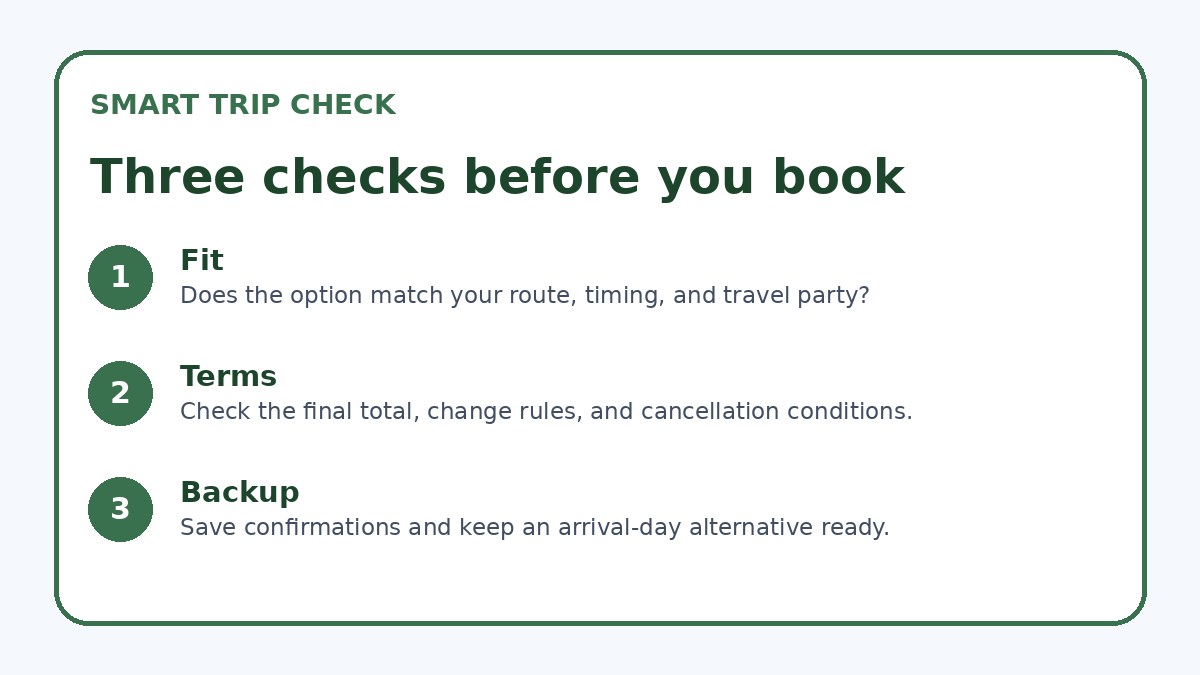
Before you book
- Confirm all drivers who will operate the vehicle are named on the rental contract and have acceptable licences or IDPs.
- Ask the provider for the exact excess amount, then check whether your credit card or travel insurance can reduce or reimburse it.
- Get written clarification on exclusions such as off-road driving, ferry crossings, alcohol limits, and use of roof racks.
- Verify the deposit hold amount and the expected timeframe for release on the booking page or contract before payment.
- Take timestamped photos and video of the car (interior and exterior) at pickup and again at return, including odometer and fuel level.
- Save copies or screenshots of any insurer or credit card policy wording that you plan to rely on and show them at pickup if needed.
Deposit holds, claims process and what to document
Rental contracts often require a security deposit or pre-authorisation on a credit card that covers the excess and any incidental charges. The wording should state the maximum hold amount, when it’s released, and the timeframe for refund after you return the car. Couples should prepare a card with sufficient available credit or discuss alternate deposit options early. If the contract is vague about hold duration, ask for specifics and get them in writing. Also clarify who signs as the contracting party; if only one partner’s card is used for the hold, the other driver might face practical difficulties getting charges reversed if needed.
In the event of damage or an accident, the contract should outline the claims process: who you must notify, the timeframe for filing a report, requirements for police reports, and whether you need to seek a repair estimate from approved garages. Take photos and video of the car at pickup and return (including odometer and fuel level) and keep copies of all receipts and documents. If police or third parties are involved, obtain official reports. Documenting everything protects you and speeds dispute resolution. If the rental company says to report damage within 24 hours, save the message or email as proof you followed that instruction.
Frequently asked questions
If my partner drives briefly and isn’t on the contract, will a claim be denied?
Often, yes. Many rental contracts and insurers require all regular drivers to be named. If your partner drives and is not listed, the rental firm may deny claims for damages or injuries, leaving the contracting party liable for full costs. Some companies offer a short-term or single-day additional-driver option, but it must be processed before the incident occurs. For certainty, add both partners as named drivers at pickup and get that confirmation in writing; if that’s not possible, ask the provider to explain the risks and any temporary cover options.
Can a credit card completely replace the rental company’s CDW in Da Nang?
It depends. Some premium credit cards provide primary or secondary coverage for rental damage and theft, but the specific terms vary and may exclude Vietnam or certain vehicle categories. Card policies often require you to decline the rental company’s CDW to activate card benefits, and they can limit coverage to cardholders only. Before relying on a card, read the issuer’s policy for geographical and driver restrictions, required documentation, claim timeframes, and whether the card reimburses the vendor’s excess or only covers remaining losses after the vendor’s insurer pays.
What paperwork should we insist on seeing at pickup to avoid disputes later?
At pickup, insist on the final rental contract showing named drivers, the exact excess amount, any optional covers you purchased, and the deposit hold. Ask the agent to initial any pre-existing damage entries on the vehicle report and provide a copy of that report. If the provider references insurance terms, request a printed or digital copy of the insurer’s wording or a clear link. Also retain all receipts for fuel and extras, and record the agent’s name and the time of checkout; this evidence is crucial if a dispute arises after you return the car.
Final planning note
For couples planning a Da Nang car rental, clear insurance wording is not a luxury — it’s the difference between a manageable incident and a stressful financial hit. Prioritise confirming who is named on the policy, the exact excess, relevant exclusions, and how deposits are handled. Compare the daily cost of rental-company zero-excess cover with the potential benefits and caveats of credit-card insurance, and document everything at pickup and return. When in doubt, ask the rental company for written clarification of any ambiguous clause and save that communication. A little extra attention before you sign gives you freedom to enjoy Da Nang’s coastline and nearby drives with far less worry.
Continue planning
Check current options and final conditions
Use the provider page to confirm live availability, the final total, cancellation terms, and every condition that matters to your trip.
This evergreen planning guide was created with AI-assisted drafting and a structured quality review. It does not display live prices, schedules, availability, visa guidance, or provider rankings. Verify current details before booking. Some links are affiliate links; we may earn a commission at no additional cost to you.