If you travel to Jeju for work and want to use price alerts without making impulsive bookings, set rules before you monitor alerts and treat alerts as data rather than commands. Decide which parts of the trip are flexible (dates, seat class, hotel area) and which are firm (meeting times, fixed events). Create alerts only for options that meet your nonnegotiables—arrival window, refundable or changeable fare, and proximity to your meeting location. Use a short review routine when an alert pings: check total travel time, cancellation terms on the provider’s final booking page, and whether a schedule change would disrupt meetings. That process lets you capture savings when they meaningfully match your constraints and avoid booking because a price looks attractive in isolation.
Design alerts around meeting constraints
Business travel to Jeju often hinges on a narrow window: morning meetings, evening departures, or ground transport that must align with your schedule. Before creating alerts, write down absolute time constraints and acceptable airport options (for example, arrivals before midday or departures after meetings). Only create alerts for flights and hotels that fit those constraints. This prevents notification fatigue from irrelevant prices and reduces the temptation to book a lower fare that would force awkward schedule changes.
Next, decide how flexible you can be on connection and buffer times. If you need a guaranteed morning arrival, exclude itineraries with tight connections or long overnight layovers even if they appear cheaper. For hotels, set distance or commute-time boundaries from your meeting location and filter alerts accordingly. Treat these operational constraints as gating criteria: an alert that violates them is noise, not an opportunity.
Define booking rules that prevent impulse decisions
Impulse bookings happen when a low price is presented without context. To avoid that, create clear booking rules that must be met before you can click confirm: acceptable fare family (refundable or changeable), maximum number of stops, required baggage allowance, and approval from your travel manager if applicable. Put these rules somewhere visible—your phone notes or the alert description—so when a notification arrives you can quickly check compliance rather than react on emotion.
Also set a decision timetable: a short internal hold period (for example, one to two hours) in which you run a quick checklist comparing schedules and terms, and then make a decision. If your company allows trip holds or a corporate travel portal supports temporary holds, use those to avoid committing during an emotional reaction to a good-looking fare.
| Approach | Best for | Tradeoff to check |
|---|---|---|
| Immediate booking on alert | Travelers with fixed nonrefundable schedules who must lock seats quickly | Higher chance of paying penalties if plans change and little time to compare total trip costs |
| Hold-and-verify routine | Business travelers balancing cost savings with schedule certainty | May lose a very low fare during the verification window but reduces impulse errors |
| Wait for corporate approval | Employees required to follow company procurement and approval rules | Slower booking process that can miss rapid fare fluctuations; better policy alignment |
| Use refundable/changeable-only alerts | Those who prioritize flexibility and minimizing risk to meetings | Typically shows fewer low headline fares; higher apparent cost for added flexibility |
Compare total trip costs and risks, not just fares
When an alert arrives, calculate the total door-to-door cost: fare, baggage fees, airport transfers on Jeju, local taxi or rental-car needs, and any time-costs from schedule changes. Business travelers often value reliability and time more than the smallest fare difference. A lower ticket price that adds a tight connection or an inconvenient layover can cost you more in stress, potential meeting delays, or the need for an extra night’s hotel stay.
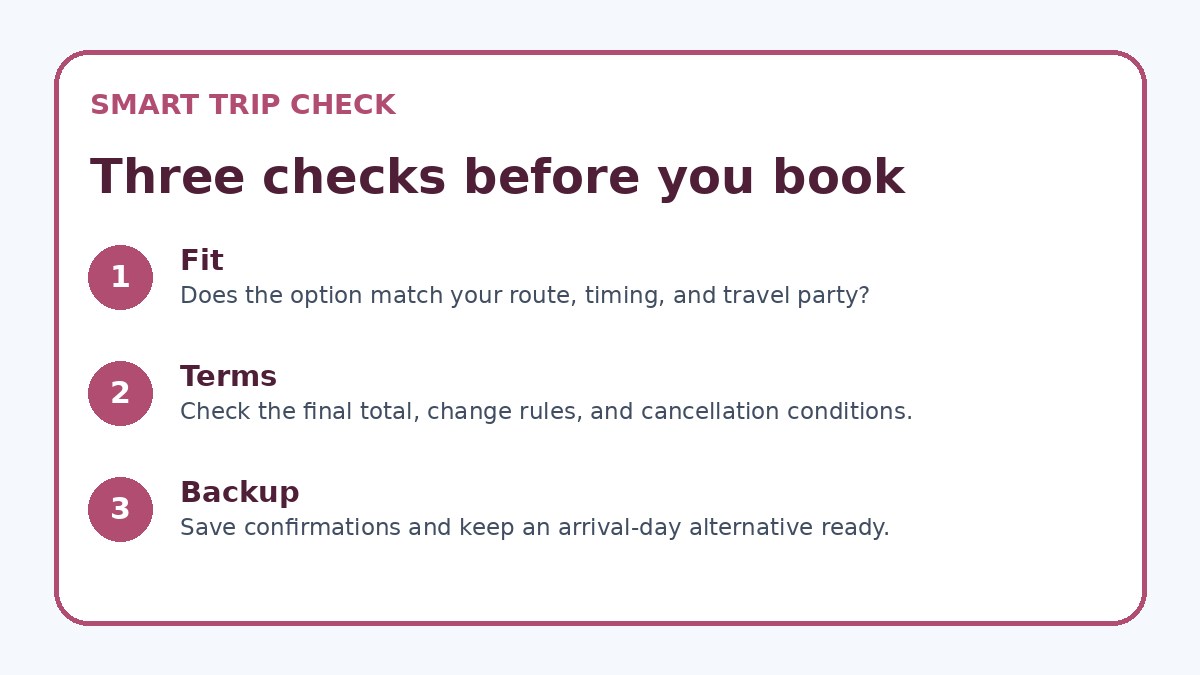
Equally important is checking the provider’s final booking page for cancellation or change rules. Airfares and hotels can present different terms in the booking flow than in the alert. Verify what penalties, change fees, or credit policies apply, and consider whether your corporate travel policy will reimburse or require pre-approval for nonrefundable purchases. If you use third-party aggregators, cross-check the provider’s own terms before booking.
Before you book
- Before creating an alert, list nonnegotiable travel times and acceptable airports for Jeju arrivals and departures.
- Configure each alert to include your required fare family (refundable or free-change) and baggage allowance.
- When an alert appears, immediately open the provider’s final booking page and confirm cancellation and change terms.
- Calculate door-to-door time and total cost including transfers, local transport, and any potential extra hotel night.
- Run the alert through your company’s approval process if required before completing a nonrefundable purchase.
- If not booking immediately, set a firm hold window (for example, two hours) and remove the alert if it no longer fits.
Set a repeatable workflow and tools for discipline
Turn alert management into a brief, repeatable workflow: (1) verify constraints match, (2) compare full trip costs, (3) confirm change/refund terms on the provider page, (4) consult any corporate travel approvers, and (5) book or decline. Keep this checklist on your phone so you can run through it while the alert is fresh. Automate when possible: use calendar blocks to mark when you’ll travel, integrate alerts with your company travel policy, and filter notifications to reduce distraction.
Choose helpful tools but avoid over-alerting. Limit the number of active alerts to those likely to produce actionable options, and set frequency caps so you see only the best matches. If you want a second opinion before committing, forward the alert to a trusted colleague or your travel manager. Small routines and deliberate pauses reduce impulse risk while still letting you benefit from price movements for Jeju travel deals.
Frequently asked questions
How many price alerts should I run for a single Jeju business trip?
Limit active alerts to a small, focused set—typically two to four—that reflect realistic alternatives: preferred time slots, one alternative day, and one alternative airport or hotel zone. Too many alerts create noise and increase the temptation to chase marginal savings. Prioritize alerts that meet your nonnegotiables and cycle out others as dates firm up. If you use a corporate travel tool, align alerts with policy-approved classes to simplify approval and reconciliation.
What specific terms should I check on a provider’s booking page before deciding?
Always verify the ticket or room’s change and cancellation terms listed on the provider’s final booking page, including any administrative or partner fees that may apply. Check baggage allowances, seat selection costs, and whether transfers or ground arrangements are bundled or separate. Confirm whether the fare requires immediate payment or offers a hold, and whether the supplier’s stated schedule matches your meeting times. If anything is unclear, contact the provider or your corporate travel desk for written confirmation before booking.
Can price alerts work with company travel policies and approvals?
Yes—price alerts can be integrated into a policy-compliant workflow by setting alert parameters to only show policy-approved fare classes and by routing alert notifications to the travel manager or approver. Establish a documented decision and hold process that satisfies your procurement rules, such as a required internal approval step before buying nonrefundable fares. This keeps the speed benefits of alerts while ensuring bookings meet company rules and expense reimbursement requirements.
Final planning note
Price alerts are a powerful tool for business travelers going to Jeju when used with discipline and clear rules. The goal is to convert alerts into informed options: set strict itinerary constraints, require acceptable refund/change terms, and always verify the provider’s final booking conditions before committing. Use a short, repeatable verification workflow and involve corporate approvers when needed. That approach preserves the potential savings of monitoring Jeju travel deals while preventing the stress and cost of impulse bookings that don’t align with your work priorities.
Continue planning
Check current options and final conditions
Use the provider page to confirm live availability, the final total, cancellation terms, and every condition that matters to your trip.
This evergreen planning guide was created with AI-assisted drafting and a structured quality review. It does not display live prices, schedules, availability, visa guidance, or provider rankings. Verify current details before booking. Some links are affiliate links; we may earn a commission at no additional cost to you.