If you and your partner are planning Sydney, the practical choice comes down to how you want to spend your time and what you want to see. For most couples staying inside central Sydney and planning a few day trips, public transport is convenient and removes parking headaches. If your trip prioritises flexible drives to coastal towns, wineries or national parks beyond the metro area, renting a car gives freedom. This guide compares the two approaches on convenience, cost drivers, pace, and experience. Read the quick tradeoffs first, then use the decision checklist and questions to arrive at the option that matches your itinerary, comfort level with urban driving, and appetite for scenic detours.
Practical convenience: moving around the city
Public transport in Sydney centres on trains, buses, light rail and ferries that converge on the CBD and inner suburbs. For couples staying in central neighbourhoods like the CBD, Surry Hills, Pyrmont or Circular Quay, many attractions are a short walk from a train station or ferry wharf. Ferries add a scenic element that can be part of the experience rather than just a route; they link the city’s harbour precincts and provide easy access to waterfront dining without worrying about parking. Using public transport avoids searching for short-term parking and the mental load of urban driving.
Driving gives you a single, continuous base of mobility with room for luggage and spontaneous stops, which is useful if your plan includes outlying beaches, rural wineries, or multiple national parks. However, in dense inner-city areas driving can slow you down because of congestion, restricted parking zones and one-way streets. For short hops inside the CBD, driving rarely saves time and often adds parking costs and walking from distant lots. Couples should weigh convenience of a private vehicle against the potential friction of inner-city parking and traffic.
Costs and budget considerations
When comparing costs, think beyond the headline car rental rate. A rental includes fuel, parking, possible tolls, insurance add-ons, and the cost of any congestion or restricted-zone fees applicable to your route. For a short city-focused trip where you will mostly use trains, trams, and ferries, pay-as-you-go public transport or a travel card can be more economical, especially when you factor in not paying for parking. Couples can split transit fares and add a few ride-shares for late nights, which keeps the budget predictable without the unpredictability of parking search times.
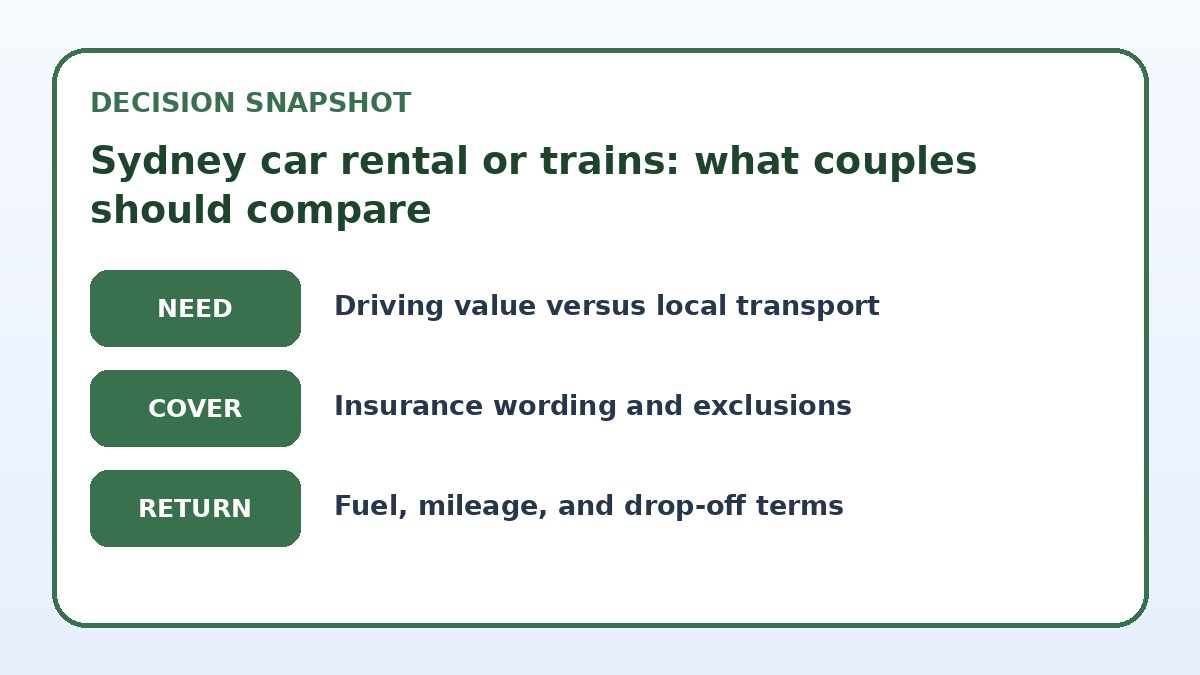
Renting can make sense when you plan multiple day trips reaching areas where public transport is slow or infrequent. To make a fair comparison, estimate fuel consumption for expected driving distances, look up typical parking options at destinations you plan to visit, and consider whether insurance waivers or extra driver fees apply. Always check the rental provider’s final booking page for fuel policies, insurance coverage options, mileage limits, and any age-related or credit-card requirements before booking, and compare those to the likely public transport fares and taxi or rideshare expenses for your itinerary.
| Approach | Best for | Tradeoff to check |
|---|---|---|
| Public transport (trains, buses, ferries) | Couples staying in central Sydney who want a relaxed, walkable trip with scenic harbour links and no parking hassles. | Less flexibility for remote day trips and depends on service frequency and last-run schedules for late nights. |
| Car rental for self-drive | Couples planning flexible day trips to national parks, coastal towns, wineries or multiple dispersed sights in one day. | Adds parking, fuel, tolls and navigation responsibilities; urban driving can be slower and more stressful. |
| Public transport plus occasional rideshare | Couples who want the cost savings of transit with the convenience of door-to-door service for late evenings or awkward transfers. | Higher per-ride cost for rideshares can add up if used frequently; still limited for lengthy rural excursions. |
| Hybrid: short-term rental for specific days | Couples who mainly use transport in the city but want a car for one or two day trips without renting for the whole stay. | Requires careful scheduling and extra effort to pick up and drop off the vehicle; consider rental location and opening hours. |
Experience and flexibility for couples
Public transport encourages a relaxed pace that’s useful for couples who want to linger at cafes, museums or waterfront promenades without managing a car. It also lets both partners enjoy drinks without concerns about driving, and opens up spontaneous walking routes through neighbourhoods not easily reached by car. Taking ferries or scenic light-rail lines can become part of the romantic experience, offering different vantage points of the harbour and a leisurely rhythm between sights. Public transport can simplify evenings when you want to enjoy nightlife without worrying about driving back to a remote accommodation.
A rental car gives couples the flexibility to chase sunset viewpoints, synchronise photo stops, and access lesser-known beaches or rural wineries on your own schedule. If you value privacy, a car can function as a mobile base for picnic supplies, beach gear, or extra layers for changing weather. But driving together also adds the task of navigation, decisions about who drives, and shared responsibility for parking and tolls. Think about whether your ideal trip emphasizes relaxed exploration or the freedom to cover greater geographic range in a single day.
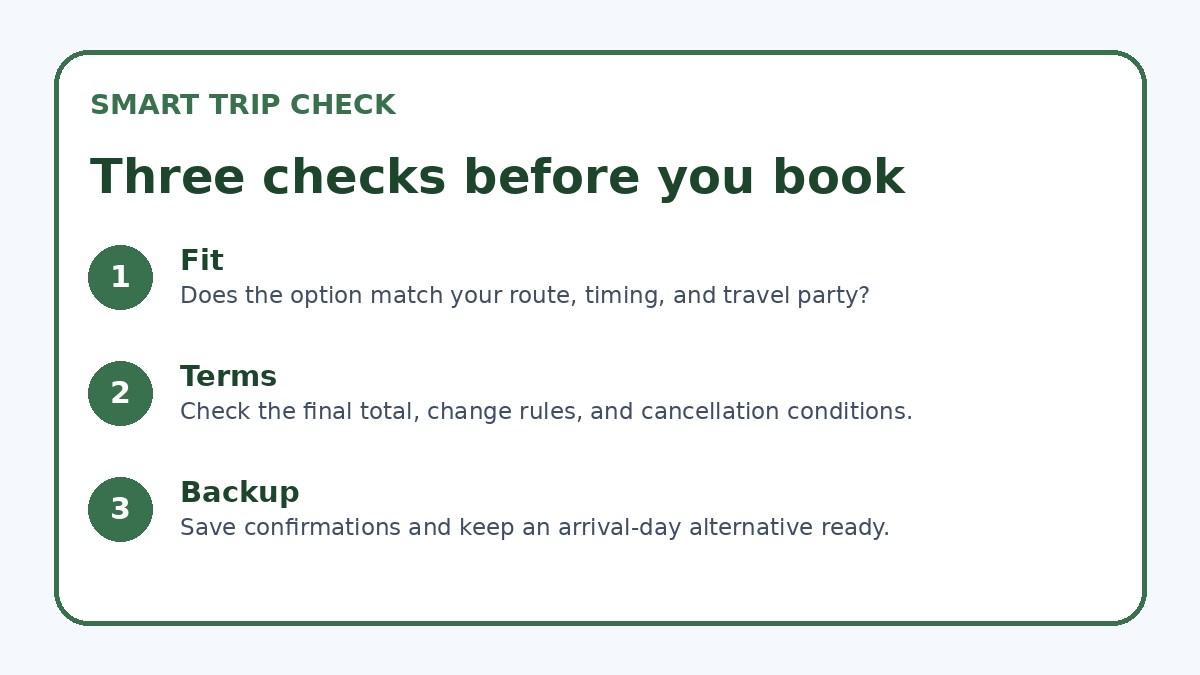
Before you book
- List your top 3 must-see destinations and mark whether each is best reached by car or public transport.
- Check public transport timetables for trains, ferries and light rail on the routes you plan to use and note last service times for nights out.
- Estimate parking availability and likely parking costs near any hotels, restaurants or attractions you plan to drive to.
- Review rental terms on the provider’s final booking page for insurance options, fuel policy, mileage limits and roadside assistance.
- Decide if you need an extra driver and confirm any additional driver fees or identification requirements before booking.
- If driving, plan toll routes and set up a local payment method or tag to avoid unexpected toll fines.
Safety, comfort and local driving context
Public transport in Sydney follows established routes and tends to be reliable in the metro area, reducing the stress of unfamiliar roads. Trains and ferries operate on fixed lines, so you only need to check timetables and last trains or ferries if you’ll be out late. For couples concerned about late-night safety, planning your return route and knowing the app-based options for rideshare can provide peace of mind. Using public transport reduces exposure to local driving rules you may not know and lowers the chance of accidentally entering restricted zones or wrong-way streets.
Driving in Australia means left-hand traffic and sometimes narrow suburban streets; if one partner is not used to this, allow time to acclimatise in low-pressure settings before tackling busy highways. Also consider weather and seasonal conditions for coastal or mountain drives, and whether you are comfortable handling roadside stops for photos or car issues. If you choose to rent, verify exactly what roadside assistance and insurance are included on the provider’s final booking page and whether an international driver’s licence or other documentation is required.
Frequently asked questions
Can a couple rely solely on public transport to see Sydney’s main sights?
Yes—many of Sydney’s headline attractions, including the Opera House, The Rocks, Darling Harbour, Bondi and major museums, are accessible via trains, buses, and ferries combined with walking. Public transport is especially effective if you base yourself in or near the CBD and focus on harbour and inner-city neighbourhoods. For attractions farther afield, like certain national parks or remote beaches, public transport may involve multiple transfers or long travel times, so check route frequency and total travel duration when planning day trips.
What factors should influence whether we rent a car for part of our stay?
Decide based on itinerary density and distance: if you want to visit places that are distant from regular train or ferry lines—such as remote coastal villages, some lookout points in national parks, or dispersed wineries—a car will save time and let you stick to your schedule. Also consider your tolerance for urban driving, the availability of parking, and whether you prefer the convenience of door-to-door travel. If you’re unsure, renting only for specific day trips gives flexibility without committing to the full-stay costs and responsibilities of a car.
How do we compare total travel costs between renting a car and using public transport?
Create a simple spreadsheet that lists travel legs, estimated distances, and likely transport modes. For a rental, include the base rental rate, estimated fuel, parking fees at destinations, tolls and insurance add-ons. For public transport, add likely fares for trains, buses, ferries, and occasional rideshares where needed. Don’t forget indirect costs like time spent finding parking or waiting for connections—convert those into a value that matches your travel priorities. Use the rental provider’s final booking page for exact fees and Trip.com or other booking tools to compare availability and options.
Final planning note
For couples, the right choice between Sydney public transport and a rental car depends on what you value most: a relaxed, walkable city rhythm or the freedom to chase distant vistas on your own schedule. If your plans stay largely within central Sydney and nearby harbour or beach spots, public transport keeps logistics simple and lets you focus on the experience. If your ideal trip includes multiple rural or coastal day trips, a car provides flexibility—just budget for parking, fuel and insurance. Use the checklist to test your itinerary, verify rental terms on the provider’s booking page, and consider a hybrid approach if you want the best of both worlds.
Continue planning
Check current options and final conditions
Use the provider page to confirm live availability, the final total, cancellation terms, and every condition that matters to your trip.
This evergreen planning guide was created with AI-assisted drafting and a structured quality review. It does not display live prices, schedules, availability, visa guidance, or provider rankings. Verify current details before booking. Some links are affiliate links; we may earn a commission at no additional cost to you.