
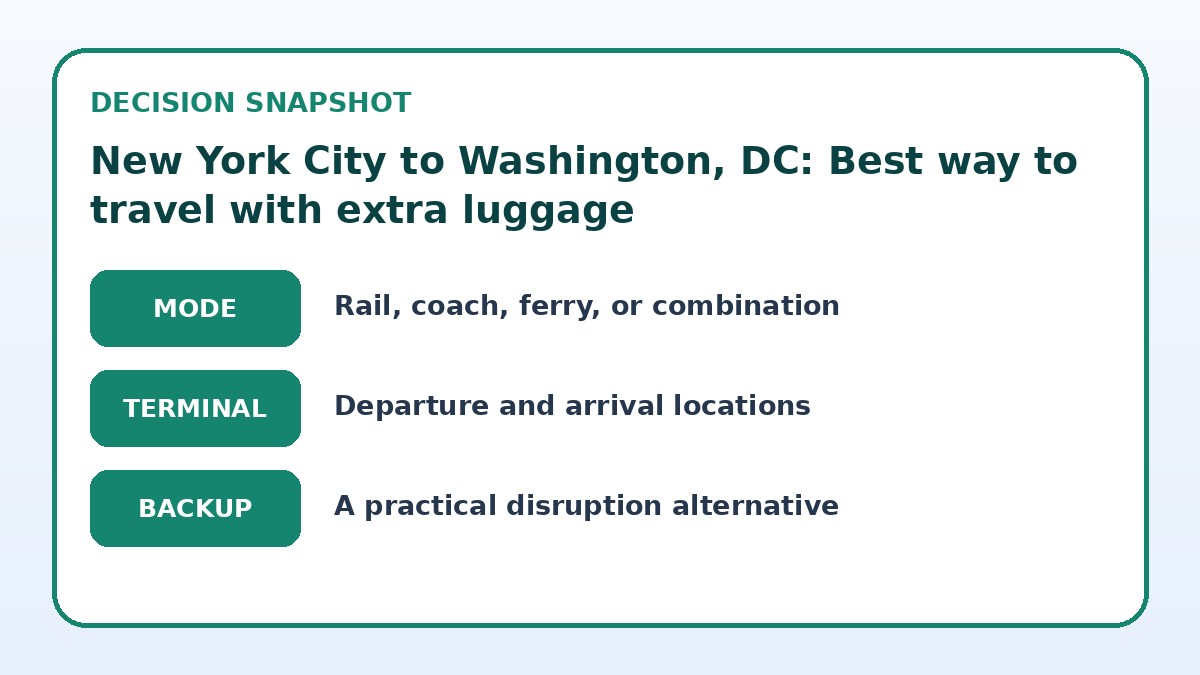
If you’re traveling from New York City to Washington, DC with oversized or multiple bags, the most practical overall option is generally an intercity train with generous onboard luggage allowances and easy station access—provided you can handle the short walk or elevator transfer at both terminals. Trains typically avoid airport waits, let you keep bags nearby during the journey, and reduce the logistics of airline-style check-in. That said, the right choice depends on exactly how much luggage you have, your mobility, door-to-door time, budget flexibility, and tolerance for handling bags in transit hubs. Below I explain tradeoffs between trains, buses, flights, and driving, plus clear decision criteria and a short checklist of the specifics to verify on any provider’s booking page before you buy.
How trains handle extra luggage — practical advantages
Trains offer a straightforward luggage experience: you carry bags to the platform, store them in overhead racks, dedicated luggage areas, or beside your seat, and disembark without waiting at baggage claim. Stations in both New York City and Washington, DC are centrally located, which shortens the last-mile distance compared with airports. If you have oversized suitcases, instrument cases, or multiple pieces, the ability to keep them with you on board reduces the risk of lost baggage and removes fees or rules tied to airline weight limits.
Before booking, inspect station and train-specific details: whether the train has designated luggage racks, how much space is available in the car types you’ll book, and whether stations have elevators, ramps, or long platform walks. Also verify carry-on size guidance and any published limits. For very heavy items, consider booking a seat near a door for easier loading or ask the operator about assistance services; always check the provider’s final booking page for the latest luggage rules and accessibility services.
Driving and rideshares — when control matters more than time
Driving gives you total control over packing, handling, and timing, which is attractive if you’re moving many pieces or oddly shaped items that won’t fit in standard luggage compartments. You avoid multiple transfers, you can lock bags in the trunk, and you can make intermediate stops if needed. For groups splitting costs, a rental car or personal vehicle can be a cost-effective, door-to-door solution when you factor in convenience and the ability to transport more than a couple of large suitcases.
Weigh that against traffic unpredictability, parking costs, and the effort of long drives. Route congestion around city centers can add stress, and finding accessible parking near a downtown hotel or station may be time-consuming. If you plan to rent a vehicle, verify trunk sizes and vehicle policies for additional roof or hitch storage; for rideshares or scheduled shuttles, confirm luggage limits and any extra fees on the operator’s booking page before finalizing.
| Approach | Best for | Tradeoff to check |
|---|---|---|
| Intercity train (central stations) | Travelers wanting minimal transfers and hands-on bag control. | May require short platform walks and checking train luggage policies. |
| Driving or rental car | Large groups or very bulky/oddly shaped items needing trunk space. | You handle parking, traffic, and possibly higher city-center costs. |
| Flights (airports) | Travelers with few checked bags prioritizing flight time. | Adds security, check-in, and baggage-claim stages with potential fees. |
| Intercity bus | Budget-conscious travelers with wheeled luggage and flexible schedules. | Luggage stored in cargo holds and slower loading/unloading times. |
Flights and buses — speed and cost versus luggage handling
Flying can be time-efficient for a small amount of luggage if you’re close to an airport and willing to accept checked-bag logistics and security time. However, air travel increases the number of handoffs: you must check bags, wait at baggage claim, and transfer between airport and city — each stage introduces potential delays or extra fees tied to weight or piece counts. If your bags are heavy or you have many items, airline fees and the hassle of moving suitcases between terminals can outweigh the shorter flight time.
Intercity buses are often the most budget-friendly land option and usually accept additional luggage for a fee or within generous piece-count rules, but loading and unloading is done at curbside compartments and may involve longer waits. Buses can be fine if you have sturdy, wheeled suitcases and are comfortable with lift-and-lower handling. Always confirm maximum dimensions, piece limits, and whether bags stay with you on board; check the provider’s final booking page or Trip.com for current baggage policies and seat type details before buying.
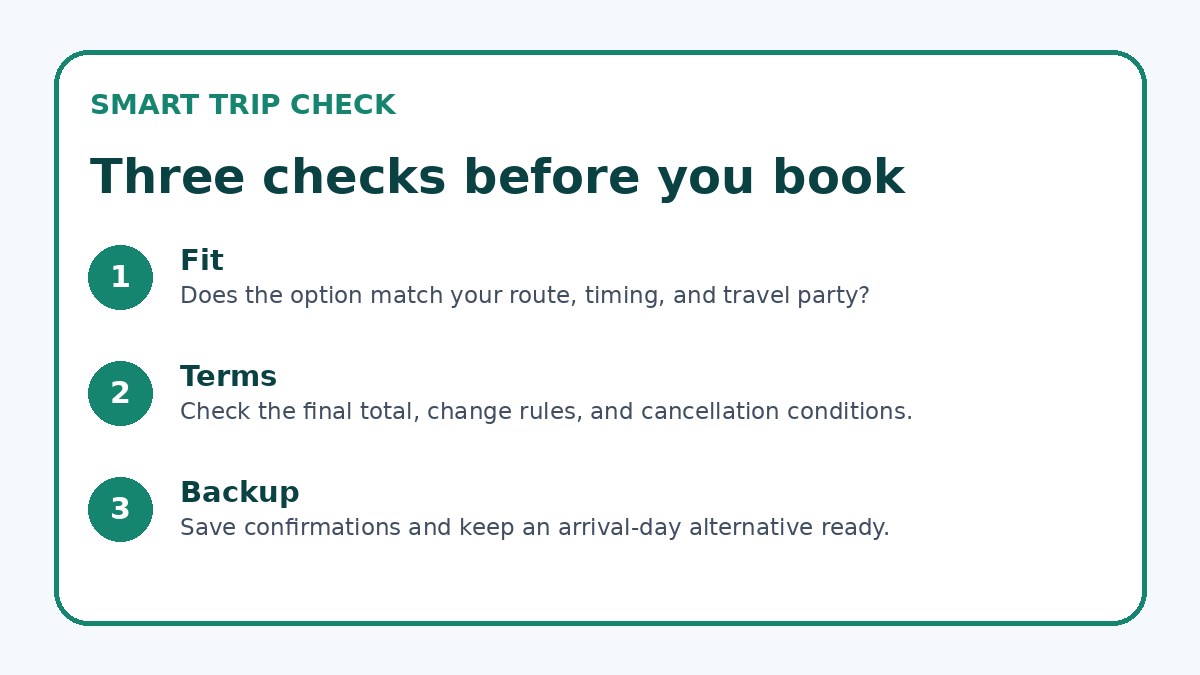
Before you book
- Count and measure every piece of luggage, noting weight estimates and any fragile or awkward items.
- Check the specific operator’s baggage allowance, size limits, and extra-fee policy on the final booking page.
- Confirm station or airport access: elevator locations, distance from curb to platform, and porter/assistance availability.
- Estimate door-to-door travel time including transfers, parking or taxi time, and any scheduled boarding windows.
- If driving, verify rental trunk space or vehicle type; if using rideshares, confirm their luggage limits in the app before booking.
- Pack a compact dolly or collapsible cart and secure fragile items to minimize handling issues during transfers.
Decision checklist: match luggage needs to door-to-door plans
Start by quantifying your luggage: count pieces, note dimensions and weights, and record any unusually shaped or fragile items. Then estimate door-to-door time for each mode, factoring in transfers, check-in, security, and expected downtown access. If minimizing transfers and keeping bags with you is the priority, lean toward trains or driving. If you need absolute fastest travel and have minimal luggage, consider flights provided airport access is quick for you.
Also compare accessibility needs and assistance services: if you require porters, elevators, or mobility aids, contact operators in advance and verify support options on the booking page. Think about risk tolerance for handling: if you want fewer touches and lower chance of damage, prioritize options where you keep bags in your sight. Finally, account for overall cost versus convenience: extra fees for checked bags, parking, or bus luggage surcharges can shift which option is most practical once tallied.
Frequently asked questions
Is taking the train from New York to Washington better than flying if I have a lot of luggage?
For most travelers with multiple or heavy bags, trains are often more practical because you keep your luggage with you throughout the journey, avoid airport transfers, and typically have less aggressive size or weight-based fees. Trains run between central city stations, which lowers last-mile hassle. That said, verify that your chosen train service has adequate onboard storage and that the station layouts are manageable for loading and unloading. If you require guaranteed space for a very large item, contact the operator directly and confirm any special arrangements on their booking page.
How should I handle oversized or oddly shaped items when moving between the cities?
Oversized items are easiest to move by private car or rental, because you control loading and can use roof or hitch options if necessary. If you must use public transport, contact the carrier in advance to ask about special baggage acceptance, whether the item can be stowed safely on board, and if advance notification or extra fees are required. Train operators sometimes allow non-standard items with prior notice, and some bus lines restrict such cargo. Always get confirmation on the provider’s final booking or customer-service page before you travel.
Can I rely on a rideshare or shuttle if I have many large suitcases?
Rideshares and shuttles can work for moderate amounts of luggage but check limits first: standard rideshare cars have limited trunk space, and some services offer larger vehicle options for an added fee. Shuttle services may advertise luggage allowances but often enforce piece or dimension limits at pickup. To avoid surprises, book a vehicle type appropriate for your load, confirm luggage policies in the app or with the operator, and be prepared to upgrade or arrange a second vehicle if the driver cannot safely accommodate all items.
Final planning note
Choosing the most practical option between New York City and Washington, DC when you have extra luggage boils down to tradeoffs between control, transfers, and time. Trains usually provide the best balance for most people: centralized stations, onboard storage, and fewer handoffs. Driving or hiring a large vehicle offers the most flexibility for oversized items but brings traffic and parking considerations. Flights are sensible only when luggage is light and speed matters; buses are economical but less convenient for many large pieces. Use the checklist above, confirm exact baggage rules and accessibility information on the operator’s booking page, and consider comparing options on Trip.com if you want a quick side-by-side of current services before booking.
Continue planning
Check current options and final conditions
Use the provider page to confirm live availability, the final total, cancellation terms, and every condition that matters to your trip.
This evergreen planning guide was created with AI-assisted drafting and a structured quality review. It does not display live prices, schedules, availability, visa guidance, or provider rankings. Verify current details before booking. Some links are affiliate links; we may earn a commission at no additional cost to you.