
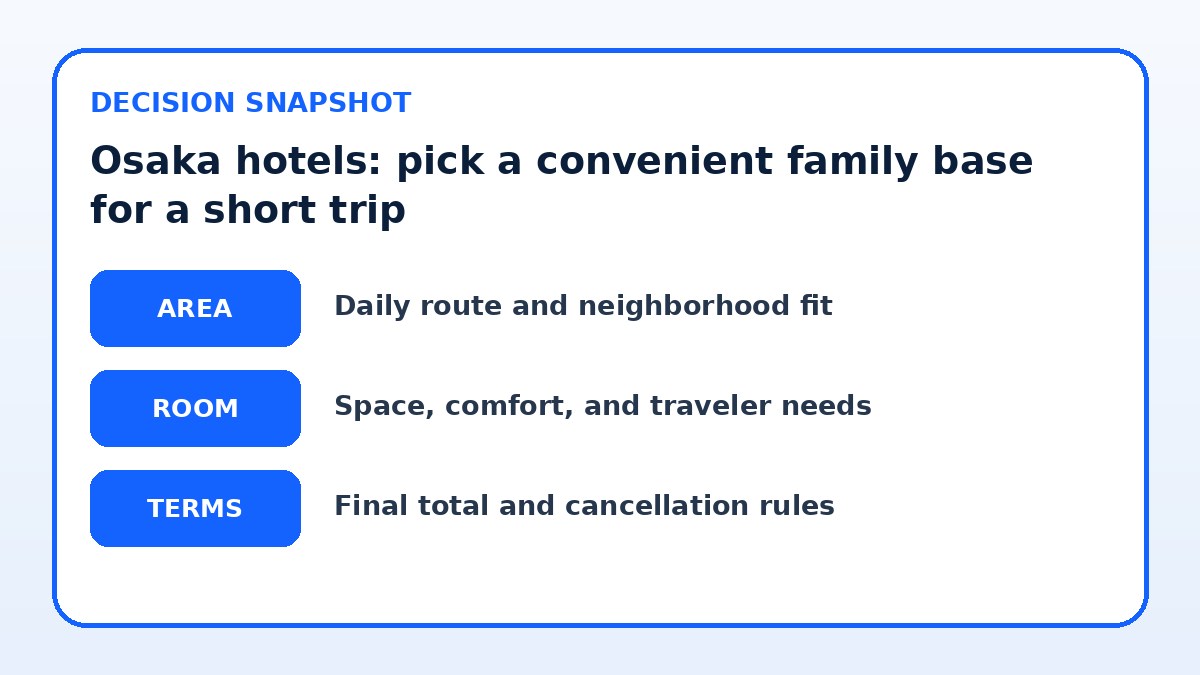
If you have only a few nights in Osaka with kids, pick a hotel that reduces transit hassle and gives reliable daily routines. For most families the practical choice is a central, well-connected neighborhood — think a 10–20 minute train ride from the main airport transfer line, short walks to food and convenience stores, and easy access to one or two major attractions you actually plan to visit. That cuts wasted time, lets you return for naps or breaks, and keeps mealtimes predictable. This guide explains how to weigh location, room layout, and family-friendly services for short stays, plus the small verifications to make on a hotel’s booking page (room capacity, bedding plans, luggage storage, cancellation rules and any extra fees). I’ll also outline tradeoffs you'll face so you can choose what matters most to your family.
Which neighbourhoods make sense for a short family stay
For a short stay with children you want a neighborhood that balances transport convenience with everyday practicality. Areas near major stations such as Umeda (north), Namba (south) and Tennoji (southeast) are common choices because they give quick access to local trains, direct metro lines and a variety of restaurants and shops. Being close to a major station rarely means staying in the most expensive hotel tier — smaller business hotels and family rooms are available near these hubs, and the shorter transit times offset paying a bit more for location.
If your family has a specific must-see (Universal Studios Japan, Osaka Aquarium, or a day trip to Kyoto), consider staying in the nearest well-connected district rather than central Osaka. That can reduce daily transfer time, especially with young children. For very short stays that include a late arrival or early departure, also check which districts have straightforward airport or shinkansen transfers so you aren’t stuck with complicated connections while jet-lagged.
Room types and layouts that make family life easier
Room layout is one of the most practical decisions for families. Look for rooms described as family rooms, triple rooms, or suites; interconnecting rooms are ideal if you need privacy while keeping children nearby. Avoid assuming a ‘sofa bed’ will be comfortable enough—ask whether the sofa converts to a full mattress and confirm mattress sizes and bedding arrangements on the hotel’s booking page. For toddlers, check whether the property supplies cribs, child beds, or plug-in night lights.
Beyond beds, evaluate space for luggage, a small living area, and a table where you can manage snacks or wipeable crafts. Kitchenettes or rooms with a small fridge and microwave are especially useful for reheating baby food, storing milk or keeping snacks handy. If you plan laundry during a brief stay, check whether the hotel offers coin laundries, in-room washer/dryer units, or a nearby public launderette — those conveniences can be a real time-saver on short trips.
| Approach | Best for | Tradeoff to check |
|---|---|---|
| Stay near a major hub (Umeda/Namba/Tennoji) | Families wanting minimal transit time and flexible access across the city | Smaller rooms and more crowded streets versus convenience |
| Base near a single attraction (USJ or Aquarium) | Families focused on one key destination to reduce daily travel | Less central for other attractions and fewer evening dining choices |
| Choose a larger room farther out | Families needing space for luggage and activities inside the room | Longer daily commutes and more time spent on trains |
| Book a business hotel with family rooms | Short stays where simplicity and efficiency matter most | Fewer family-specific amenities like play spaces or kitchenettes |

Services and amenities worth prioritizing for a short stay
Not all family-friendly amenities are equally valuable on a short trip. Prioritize luggage storage, a simple breakfast option or nearby casual dining, and a front desk that can help with quick ticketing or directions. If a hotel advertises babysitting, cot availability, or play areas, ask whether these require advance reservation and whether there are age restrictions. Confirm any additional fees linked to these services on the provider’s booking page so there are no surprises.
Other practical amenities to value are 24-hour reception and easy check-in/out options, which reduce stress when flights are delayed or plans change. Free Wi‑Fi and accessible power outlets matter for keeping entertainment and devices charged on long travel days. If you’ll be out exploring for long stretches, a hotel that offers basic toiletries and fast housekeeping can make turnovers feel effortless even during a short stay.
Before you book
- Confirm maximum room capacity and exact bedding configuration on the hotel’s booking page before selecting a room type.
- Check luggage storage policy and whether early check-in or late checkout is possible or requires advance notice.
- Verify whether cribs, rollaway beds or extra linens are free or incur a fee and reserve them in advance if needed.
- Look up the nearest station exits, convenience stores and casual family restaurants within a five to ten minute walk.
- Ask the hotel how they handle missed connections and whether there is a 24-hour front desk for late arrivals.
- Compare transport options from your arrival point (train, express bus, taxi) and estimate door-to-door travel with luggage.
Tradeoffs: location, space, cost and family needs
Short stays force tradeoffs. Choosing a hotel closer to attractions or your arrival route often reduces transport time but can mean smaller rooms and fewer in-room facilities. Conversely, cheaper hotels farther away may offer larger rooms but add travel time and complexity with luggage and tired children. Decide whether you value saved time and convenience over square footage. For families who plan to rest between activities, proximity and easy returns usually win.
Also weigh the impact of meal options: a hotel with included breakfast or on-site casual dining shortens morning routines, but staying near a lively neighborhood gives you more evening choices and the chance to sample street-level dining. Evaluate what your family wants from downtime — some prefer in-room relaxation space, others need a quick place to sleep between packed days. Use those priorities to justify spending a bit more for convenience or stretching for a bigger room if restability is the priority.
Frequently asked questions
Should we pick Osaka hotels near the station or closer to specific attractions?
If your stay is short and you have young children, being near a major station usually reduces daily stress because it shortens transfers and gives predictable options for food and pharmacy access. If your trip revolves around one obvious draw — for example, Universal Studios Japan — basing closer to that attraction minimizes the single-day commute and lets everyone rest sooner. Compare the saved commuting minutes against room size and dining choices to decide which location meets your family’s priorities.
How do I know a room’s configuration is actually suitable for our family?
Don’t rely only on generic labels like ‘family room’ or ‘triple room.’ Look for explicit descriptions of bed sizes and arrangements, photos that show usable floor space, and notes about sofa-beds and interconnecting rooms. When in doubt, ask the hotel directly through the booking platform or email to confirm whether the layout meets your needs. Also verify any extra-person fees, crib availability, and whether housekeeping schedules will work with your nap and bedtime routines.
What paperwork or booking checks should parents make before finalizing?
Review the hotel’s cancellation and modification policies on the booking page and check whether child stays are included or need to be added separately. Confirm identity and deposit requirements, any extra fees for additional guests or services, and whether the hotel requires credit-card preauthorization. If you’ll need airport transfers, child seats or special assistance, arrange those in writing before arrival. For current availability and options you can compare listings on platforms like Trip.com, but always verify the final terms on the hotel’s own booking confirmation page.
Final planning note
For a short family stay in Osaka, prioritize minimizing transit time and simplifying daily routines: a hotel near a major station or close to your primary attraction will save time and stress. Focus on room layout, luggage handling and reliable basic services (breakfast, 24-hour reception, nearby food options) rather than extras you won’t use in a brief visit. Before you commit, confirm bedding configurations, storage and cancellation terms on the booking page so the property’s facts match your family’s needs. With those checks done, you’ll have more time to enjoy Osaka’s neighborhoods and leave travel logistics to the hotel.
Continue planning
Check current options and final conditions
Use the provider page to confirm live availability, the final total, cancellation terms, and every condition that matters to your trip.
This evergreen planning guide was created with AI-assisted drafting and a structured quality review. It does not display live prices, schedules, availability, visa guidance, or provider rankings. Verify current details before booking. Some links are affiliate links; we may earn a commission at no additional cost to you.