If you’re heading to Kuala Lumpur for the first time, the practical choice is to match your booking approach to what matters most: convenience and bundled protection (package), or flexibility and bespoke control (separate bookings). A package often bundles flights, a hotel, and sometimes transfers or tours into a single reservation and one payment flow. Separate bookings let you pick each component—airline, hotel, airport transfer, and activities—often resulting in a tailored schedule and granular cost control. Below I’ll walk you through the tradeoffs—time saved versus time invested, refund and change policies, how to compare connection options, and what to verify before you hit purchase. Use this to decide whether a package simplifies your first trip or if building your own Kuala Lumpur travel deals gives you the best fit.
What a package includes and when it makes sense
Package deals typically combine at least two travel elements—commonly flight plus hotel—with optional extras such as airport transfers, breakfast, or guided excursions. For a first-time visitor to Kuala Lumpur, packages can save time in the planning stage: you enter travel dates once, choose from pre-curated options, and receive one confirmation. This convenience is especially helpful if you prefer a hands-off booking experience, are short on planning time, or want the reassurance of one supplier handling disputes between components.
Packages can also help with logistics: bundled transfers mean you don’t need to coordinate arrivals or worry about missing a prebooked pick-up if flights change, provided the package explicitly includes protected connections. However, not all packages cover every eventuality—read the terms to see how they handle flight delays, cancellations, or missed transfers. If you require particular neighborhoods, special room types, or specific airlines, check that the package allows those choices before committing.
When separate bookings are the smarter choice
Booking flights, hotels, transfers, and tours separately gives you maximum freedom to choose exact flight times, hotel location, and activity providers. That flexibility matters in Kuala Lumpur, where neighborhoods vary a lot in vibe and convenience—choosing a hotel in Bukit Bintang, KLCC, or Bangsar changes how you spend your days. Separates also let you mix carriers or loyalty-program partners, select preferred cabin classes or room categories, and prioritize refundable or changeable fares on only the elements that matter most.
The tradeoff is more time and attention: you must coordinate arrival times, local transfers, and connection buffers yourself. If you’re combining separate airlines or rail/air segments, compare minimum connection times and factor in immigration, baggage claim, and possible traffic for airport-to-city transfers. Keep confirmation emails organized and note each provider’s contact details so you can manage changes during your trip.
| Approach | Best for | Tradeoff to check |
|---|---|---|
| Package booking (flight + hotel + extras) | Travelers who want one point of contact and simplified logistics. | Less flexibility in suppliers, exact rooms, and flight selection; must read package terms carefully. |
| Separate bookings (book each element yourself) | Travelers who prioritize precise schedules, neighborhoods, or loyalty program use. | More time to research and manage multiple refund/change policies and contacts. |
| Hybrid approach (mix of fixed and flexible elements) | Visitors who have non-negotiable priorities but want some convenience. | Requires careful coordination to avoid gaps between provider responsibilities. |
| Third-party aggregator search before booking | Shoppers who want to compare multiple packages and separate options quickly. | Aggregator results simplify comparison but always verify final terms on provider pages. |
Cost, risk and refund considerations
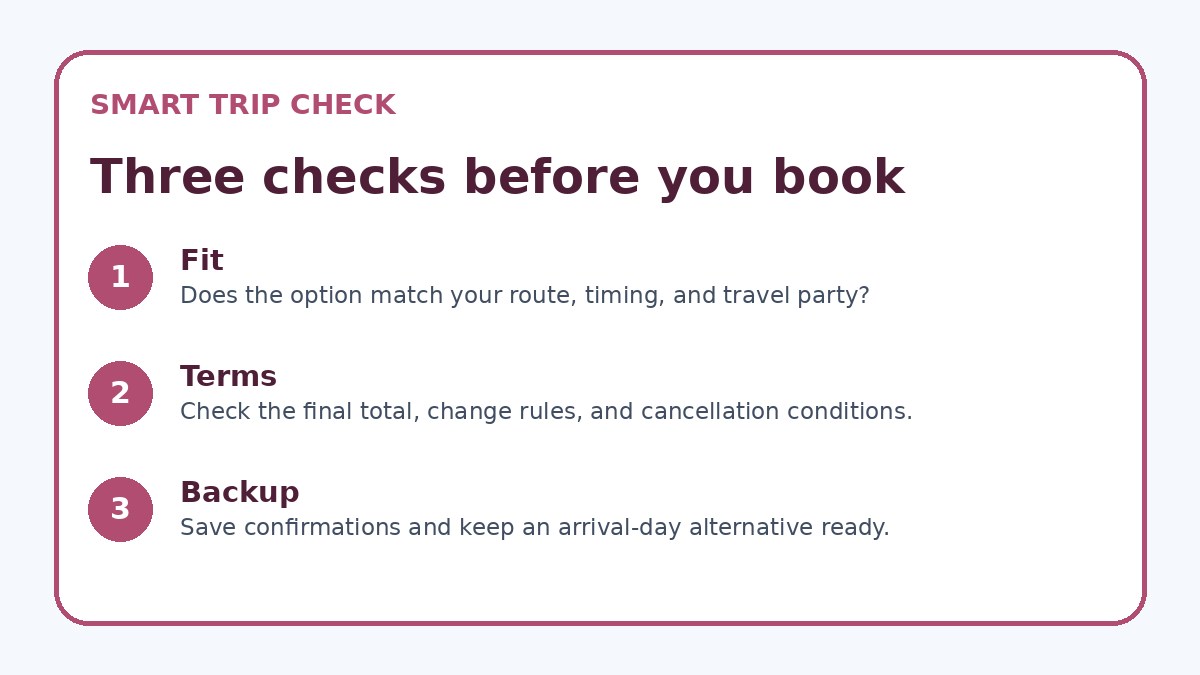
Cost comparisons between packaged and separate bookings are rarely straightforward. A package can look cheaper once you factor in bundled transfers or promotional rates, but separate elements may be priced competitively during sales or when using loyalty points. Crucially, compare the cancellation and change policies for each approach: a package seller may allow changes with one penalty schedule, while separate bookings mean multiple refund and change rules you must follow.
When assessing risk, think about who handles disruptions. With a package, the seller is often responsible for resolving issues between included elements; with separates, you’ll likely need to contact each supplier. Before you book, verify how delays, rebookings, or missed connections are handled in the provider’s final booking page. Also check whether travel insurance covers the mix of suppliers and whether the policy requires you to use specific transfer providers for coverage to apply.
Before you book
- Decide your top three priorities (dates, neighborhood, must-see activities) before comparing offers.
- If considering a package, check the provider’s delay and missed-connection policy on the final booking page.
- When building separate bookings, allow generous connection margins for transfers, immigration, and baggage.
- Compare total landed cost including transfers, baggage, taxes, and local transport estimates.
- Confirm cancellation and change penalties for each supplier and write down emergency contact numbers.
- Consider travel insurance and confirm it covers multi-supplier itineraries and the activities you plan to book.
How to compare options and make the final call
Start by listing your priorities: firm travel dates, preferred neighborhood, airline loyalty, activity flexibility, or minimal planning time. Gather apples-to-apples totals: include baggage fees, airport transfers, surcharges, and estimated local transport costs. Use the package supplier’s cancellation terms and compare them to the aggregated terms of separate bookings. If you use a third-party to compare availability, such as Trip.com, treat the site as a search tool and confirm terms on each provider’s final booking page.
Next, test a hybrid approach: book your non-negotiables (for example, your preferred flight or must-stay hotel) and package the rest through a bundled deal if it genuinely simplifies logistics. For first-time visitors, that compromise often balances peace of mind with personalization. Finally, make sure you can contact each provider easily—save emergency phone numbers and the booking reference for each element so you’re prepared if plans change.
Frequently asked questions
Will a packaged deal protect me if my inbound flight is delayed?
It depends on the package terms. Some packages include protected connections and handle rebookings or transfers if an included flight is delayed; others do not. Always read the provider’s final booking page to see whether they guarantee connections, what compensation or re-accommodation they offer, and any time windows that qualify for protection. If protection is crucial, consider booking refundable or flexible flights and a package that explicitly states covered delays, or buy travel insurance that covers missed connections.
Can I combine loyalty points or airline status with packaged deals?
Often you can still earn airline miles for the flight component of a package, but accrual rules vary by airline and fare class. Hotel loyalty credit and elite benefits may depend on whether the booking is made through the hotel directly or via a third-party package. Verify on the airline’s and hotel’s program pages whether package fares and third-party bookings qualify for points or elite benefits, and check the package provider’s final booking details so you know how the reservation will appear to the loyalty programs.
How should I evaluate neighborhood choices in Kuala Lumpur when using a package?
Look closely at the included hotel’s neighborhood description and nearby transit options before booking. Kuala Lumpur neighborhoods differ: KLCC gives quick access to the Petronas Towers and city-center attractions, Bukit Bintang is lively for shopping and nightlife, while Bangsar or Mont Kiara may offer quieter, residential stays. If the package shows only a hotel category without explicit location, ask the provider for a sample hotel name or a map on the final booking page, and confirm transfer times to the places you plan to visit.
Final planning note
For a first-time visit to Kuala Lumpur, the right approach depends on how much control you want versus how much planning you want to hand off. Packages can compress the planning workload and centralize help if you prefer not to juggle multiple suppliers. Separate bookings give you granular control over flights, neighborhoods, and loyalty benefits but require attention to coordination, connection margins, and differing cancellation rules. A hybrid—locking in must-have elements and using packages for the rest—often fits first-time travelers who want structure without surrendering all choices. Whichever route you choose, verify terms on the provider’s final booking page and keep contact details and confirmations handy.
Continue planning
Check current options and final conditions
Use the provider page to confirm live availability, the final total, cancellation terms, and every condition that matters to your trip.
This evergreen planning guide was created with AI-assisted drafting and a structured quality review. It does not display live prices, schedules, availability, visa guidance, or provider rankings. Verify current details before booking. Some links are affiliate links; we may earn a commission at no additional cost to you.