Practical answer first: for most first-time visitors to Macau, a package that bundles flight, hotel, and a ferry or arrival transfer is the simplest way to get started—packages reduce planning friction and consolidate support if something goes wrong. Choose separate bookings if you value flexibility, want to craft a custom itinerary across Macau’s neighborhoods, or expect to change dates. Both approaches can save money or cost more depending on timing, refundable options, and add-ons like shows or day trips. This article explains the tradeoffs you’ll face—what to compare, which details to verify on provider booking pages, and how to decide based on your travel style, budget certainty, and appetite for planning. Use the guidance to make a confident choice, and check current availability and conditions (for example on Trip.com) before you finalize any reservation.
What a typical Macau package includes and why it matters
Many Macau travel packages marketed to first-time visitors combine transportation (flight or ferry), a hotel night or nights, and sometimes a transfer or attraction voucher. The appeal is immediate: one confirmation, a single customer-service contact, and a bundled price that can feel reassuring when you’re navigating arrival from neighboring regions. For travelers who want to minimize decision-making and reduce the risk of missed connections, packages can shave hours off planning time and lower stress at arrival. Remember though that the convenience of one-stop booking also concentrates your dependency—if any single component is delayed or cancelled, the ripple effects matter.
When evaluating a package, don’t assume each component uses the cheapest option. Verify exactly which flight times, cabin classes, hotel room types, and transfer details are listed on the provider’s final booking page. Look for whether the package includes taxes, baggage, and ferry or bridge crossing arrangements if arriving by land or sea. Because provider terms change, confirm cancellation policies, change fees, and the name of the entity responsible for customer service. If a package adds attraction vouchers, check redemption windows and whether guided activities require separate reservations.
How separate bookings give control—and where that control costs you
Booking flights, hotels, and transfers separately gives you freedom to choose arrival times, neighborhoods to stay in, and room types that match your priorities. You can mix budget and splurge nights, pick a boutique guesthouse near Senado Square, or select a larger resort on the Cotai Strip, depending on your plan. Separate booking is ideal if you want to balance gambling, culture, and day trips to Coloane or Taipa at your own pace. It also makes it easier to extend or shorten one part of your trip without touching unrelated reservations.
That control comes with overhead: more confirmations to manage, a higher chance of mismatched arrival and check-in windows, and varied cancellation rules across suppliers. You must check visa requirements and transit logistics if you book a ferry or cross a border independently, and you’ll be responsible for coordinating transfers between arrival points and hotels. When comparing separate options, build in time buffers for connections and verify baggage allowances, transfer meeting points, and whether hotels offer early check-in or hold luggage for late arrivals.
| Approach | Best for | Tradeoff to check |
|---|---|---|
| Package booking | Travelers who want convenience and a single support contact | Less flexibility and harder to swap single elements without penalties |
| Separate bookings | Travelers who want control over hotels, timings, and neighborhood choices | More planning time, more confirmations, and potential coordination risk |
| Hybrid approach (package + add-ons) | Those who want a core of convenience plus some bespoke choices | Requires careful layering to avoid duplicate fees or calendar clashes |
| Flexible separate bookings with refunds | Uncertain itineraries where changeability matters most | Refundable rates often cost more up front and may reduce apparent savings |
Cost, flexibility and risk: how to compare the real value
Price comparisons should go beyond headline fares. A package may appear cheaper because it locks in inventory or gives bundled savings, but fees for nonrefundable elements, seat selection, or extra luggage can change the outcome. When examining separate bookings, total the flight, hotel taxes, local transfer costs, and optional extras like shows or day tours to get a realistic comparison. Also compare refundability: a slightly higher-cost option with flexible changes may be worth it if your plans are uncertain.
Assess risk in plain terms: what happens if a flight is delayed, a hotel overbooks, or a ferry is cancelled? Packages frequently include assistance or rebooking support, which can reduce the time you spend resolving problems. With separate bookings, you’ll deal with each supplier individually. Decide how much time and stress you’re willing to accept for potential savings. No matter which route you take, note provider contact details, understand who issues refunds, and check the final booking pages for exact change and cancellation fees before committing.
Before you book
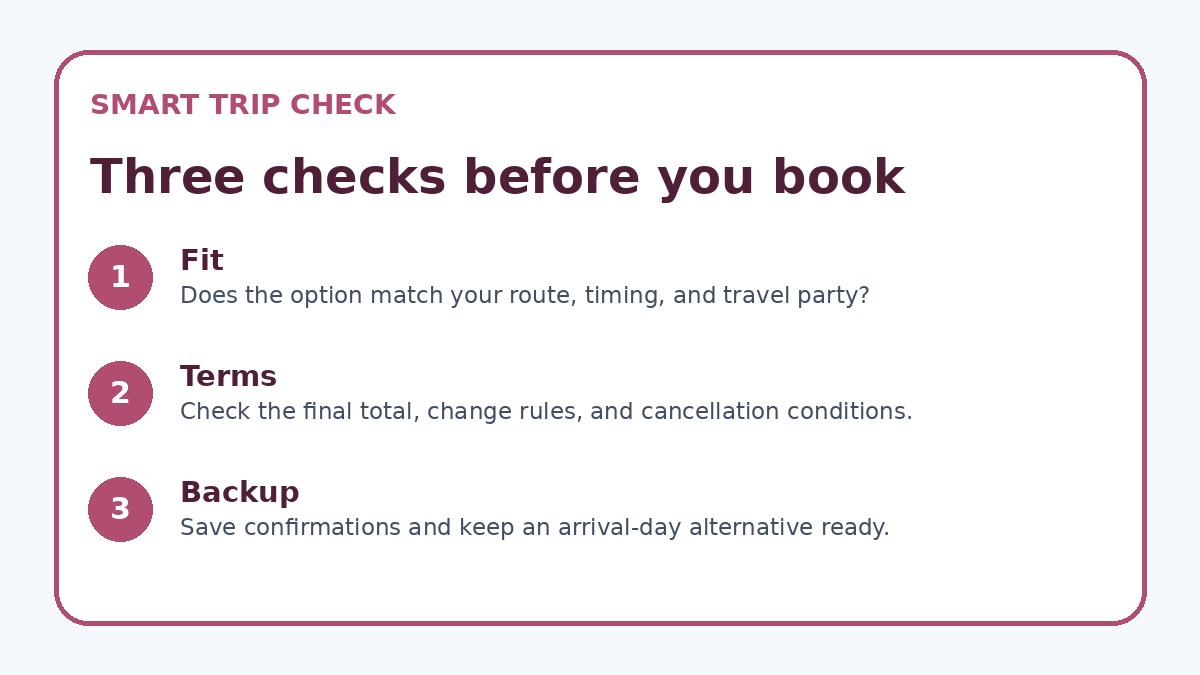
- Compare total landed cost: add flights, hotel taxes, transfers, and likely extras before choosing a package or separate bookings.
- Read the cancellation and change policy on the provider’s final booking page and note any nonrefundable components.
- Verify exact arrival and transfer details (ferry terminal, pickup point, or airport transfer meeting place) before you travel.
- Confirm baggage allowances and seat selection rules for flights included in packages or booked separately.
- Check hotel check-in and luggage-hold policies if your arrival time is early or late relative to standard check-in.
- Collect 24/7 customer support contacts for each booking and save confirmations in an accessible folder or app.
Deciding factors for first-time visitors from Northeast Asia
Travelers from Northeast Asia often value short travel times, straightforward border crossings, and clear transfer arrangements. If you prefer minimal transfers and a single-point-of-contact, a package that includes ferry or coach transfers and hotel pickup can be especially convenient. Packages that consolidate transport and lodging reduce the need to navigate local transport and unfamiliar pickup points on arrival. First-timers who prioritize ease and have limited time in Macau typically benefit from a bundled itinerary that focuses on central attractions.
If cultural exploration, dining choices, or neighborhood immersion are priorities, separate bookings may be better. They allow you to choose accommodation close to specific sites—historic Macau Peninsula neighborhoods, Taipa village, or the Cotai Strip—and to schedule local tours or restaurant reservations independently. Whichever option you select, verify schedules on provider booking pages (ferry times, transfer pickup points, and hotel check-in rules) and consider using a comparison site—Trip.com can show current availability—before finalizing reservations.
Frequently asked questions
Are Macau travel packages generally cheaper than booking everything separately?
Not always. Packages can offer savings by bundling inventory, but headline prices may exclude fees or extras that appear later during checkout. To judge value, compare the total cost of equivalent flight times, room types, transfers, and attraction tickets if booked separately. Also weigh change and cancellation terms: a flexible separate booking may cost more up front but save money if plans shift. Always verify inclusions and restrictions on the provider’s final booking page before deciding to purchase.
If I pick a package and my flight is delayed, who helps rebook connections in Macau?
Assistance depends on the package provider’s terms. Many packaged deals include some level of customer support to help rebook internal transfers or find alternative accommodations, but the extent of that help varies. If reliable rebooking support is important, ask the provider what they will do in case of delays and where to reach them during travel. For clarity, confirm these details on the booking confirmation page and keep the contact information handy during transit.
How should a first-time visitor choose a hotel location in Macau when booking separately?
Decide what you want to prioritize—historic streets and local eateries on Macau Peninsula, quieter colonial neighborhoods on Taipa, or large integrated resorts on the Cotai Strip. Map distances to attractions you plan to visit and estimate transfer times from likely arrival points. Consider whether you prefer being within walking distance of nightlife or near specific casinos or museums. Check hotel cancellation policies and whether they offer luggage hold or flexible check-in, and verify these details on the booking page before confirming.
Final planning note
Choose a package if you want to minimize planning, consolidate support, and reduce the hassle of coordinating transfers on arrival. Opt for separate bookings if you value customization, want to stay in particular neighborhoods, or plan a flexible itinerary that includes local dining and cultural sites. A hybrid strategy—buy a reliable transfer and a comfortable core hotel, then book activities and additional nights separately—often brings the best mix of convenience and control. Before you confirm, compare total costs, read cancellation and change rules on the final booking pages, and save supplier contact details so you can act quickly if plans change.
Continue planning
Check current options and final conditions
Use the provider page to confirm live availability, the final total, cancellation terms, and every condition that matters to your trip.
This evergreen planning guide was created with AI-assisted drafting and a structured quality review. It does not display live prices, schedules, availability, visa guidance, or provider rankings. Verify current details before booking. Some links are affiliate links; we may earn a commission at no additional cost to you.