Quick practical answer: if this is your first trip to Lisbon, choose Baixa/Chiado for central walking access to main sights, Alfama for historic atmosphere and views, Bairro Alto/Principe Real for nightlife and restaurants, or Belém if you want museums and riverfront gardens. Pick based on whether you prefer walking convenience, authentic neighborhoods, quieter daytime museums, or lively evenings. Below I explain the tradeoffs—transport, noise, and hilliness—and what to check on hotel pages before you book. Look for explicit details about elevation, exact distance to the nearest metro or tram stop, whether they list check-in/out policies and on-site luggage storage, and any parking or accessibility notes. You can compare current availability and property details on booking sites like Trip.com, but always verify the facts shown with the hotel’s own confirmation or property page before finalizing.
Baixa and Chiado: easy walking distance to the essentials
Baixa and Chiado form Lisbon’s most convenient central area for a first visit. Streets are flatter here compared with the older hilltop neighborhoods, and main sights—Praça do Comércio, Santa Justa Lift, and important museums—are all within easy walking distance. This area has a dense cluster of shops, cafés, and public transport nodes including several metro stations and frequent tram routes. For travelers who value being able to step out and reach historic sites, restaurants, or a riverfront walk without changing transport modes, Baixa/Chiado often minimizes wasted time and keeps logistics simple.
Tradeoffs are practical: because of the centrality and tourist demand, hotels may feel compact or busier in common areas. Expect more daytime and early-evening foot traffic, and occasionally street noise. If noise or room size matters, filter your searches for properties that specify noise-reduction measures, higher floors, or inner-courtyard rooms. Always confirm the hotel’s exact address and the nearest metro or tram stop on the property page, and check whether the hotel lists elevator access—many older buildings have stairs only.
Alfama: authentic streets, viewpoints, and fado
Alfama is the oldest district and gives a strong sense of Lisbon’s layered history: narrow lanes, tiled façades, and viewpoints over the Tagus River. Staying here keeps you close to São Jorge Castle and several miradouros (viewpoints), and it’s ideal if you want evenings spent in intimate fado houses or mornings wandering local markets. The neighborhood’s character is its main draw: the feeling of being inside a centuries-old quarter rather than in a reconstructed city center. For photographers and cultural-first travelers, Alfama’s streets reward slow exploration and frequent discoveries.
However, Alfama’s charm comes with logistical tradeoffs. The area is steep and maze-like, so many streets are only accessible on foot; suitcases and mobility needs can be challenging. Public transport access is more limited—trams and buses run, but the nearest metro stations are a longer walk. Confirm stair access, elevator availability, and whether the hotel offers porter service or luggage drop on its booking page. If mobility or arriving late with heavy bags is a concern, weigh convenience against the atmospheric value of this neighborhood.
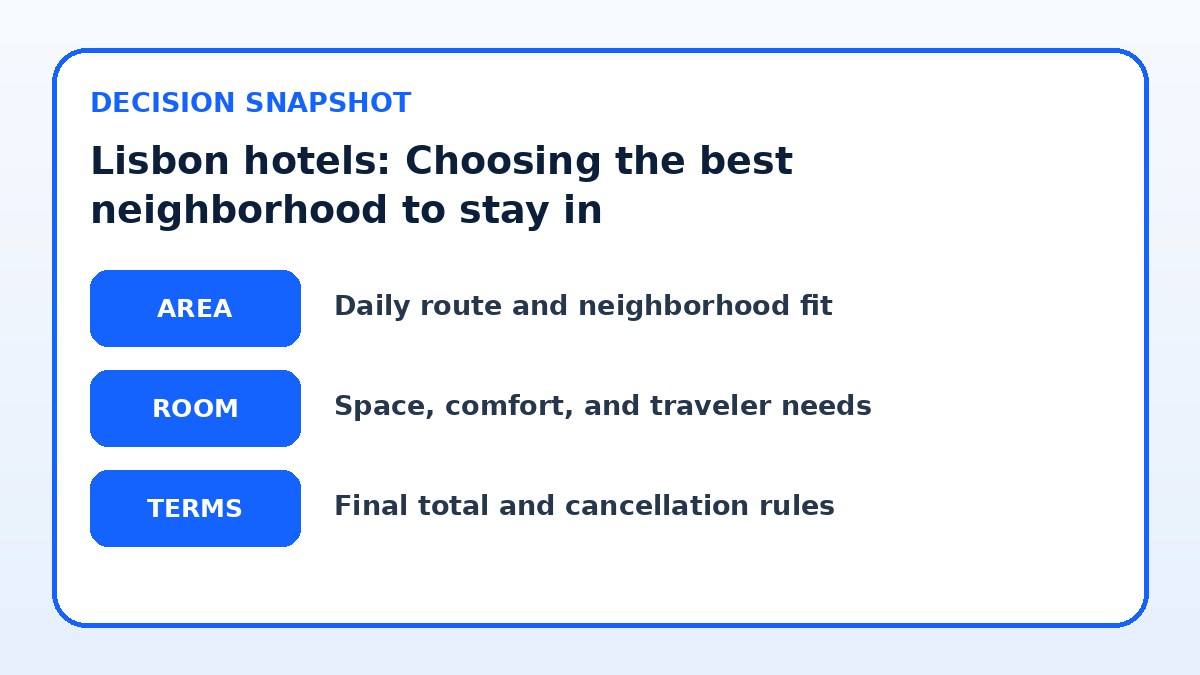
| Approach | Best for | Tradeoff to check |
|---|---|---|
| Central (Baixa/Chiado) | First-time visitors who prioritize walking to sights and simple transit connections. | Smaller rooms and busier streets; verify elevator access and specific distance to metro stops. |
| Historic (Alfama) | Travelers wanting atmospheric streets, viewpoints, and authentic evenings. | Steep, narrow streets and limited direct public transport; check luggage assistance and stair access. |
| Social (Bairro Alto/Príncipe Real) | Foodies and nightlife seekers who want restaurants and bars on their doorstep. | Noisy nights and hilly terrain; confirm soundproofing and elevator availability. |
| Riverside (Belém) | Museum-goers and those preferring quieter riverside walks and parks. | Farther from downtown nightlife and some attractions; check transit links and tram access. |

Bairro Alto and Príncipe Real: nightlife, dining, and green pockets
Bairro Alto and Príncipe Real are joined in many travelers’ plans because they offer a lively food and bar scene, boutique shopping, and pretty garden squares. During the day Príncipe Real feels quieter, with parks and independent shops, while nights in Bairro Alto come alive with bars and late dining. If your trip is centered on sampling Lisbon’s restaurants, rooftop bars, and an active nightlife, these neighborhoods give you immediate access. There are several boutique hotels and guesthouses that emphasize design and location near key dining streets.
The main tradeoffs here are noise and hilliness. Bairro Alto’s nightlife can be loud into the early hours; check whether a property specifies soundproof windows or inner courtyards. Streets can also be steep and uneven, so look for hotels that note elevator access or room locations on lower floors if stairs are a problem. Transit connections are decent but often require a short walk down to Chiado or a nearby metro—verify distances to the nearest metro stop on the property page rather than relying on a map pin alone.
Before you book
- Confirm the hotel’s exact street address and pin it in a map app to measure walking distance to your top sights.
- Verify elevator availability or stair-only access on the property page if mobility or heavy luggage is a concern.
- Check whether the hotel explicitly lists soundproofing, quiet rooms, or inner-courtyard locations if noise is important.
- Compare listed nearest metro/tram stops and typical transit connections—don’t rely on a single map pin.
- Look for stated check-in and check-out policies, luggage storage options, and whether late arrivals are accepted.
- If you’ll drive, confirm on the hotel page whether private parking, nearby paid parking, or parking assistance is available.
Belém and riverside stays: museums and calmer days
Belém sits west of central Lisbon on the river and hosts major monuments: Jerónimos Monastery, the Belém Tower, and several museums. It’s an excellent base if your interests lean toward museum days, riverside promenades, and calmer afternoons away from central crowds. Hotel choices here tend toward larger properties or guesthouses with more outdoor space and simpler street layouts. The area is pleasant for families or travelers who prefer lower-stress walking and easy access to waterfront cafés and parks.
Distance is the practical downside: Belém is not in immediate walking range of Baixa’s core nightlife and some central attractions, so plan for tram, bus, or taxi rides to cross the river for evening activities. If you plan day trips by train from Cais do Sodré or want to be in the middle of nightlife, calculate transit times and frequency from your hotel’s location. On booking pages, verify how close the property is to the tram lines that serve Belém and whether the hotel lists shuttle, taxi booking assistance, or nearby transit stops.
Frequently asked questions
Which Lisbon neighborhood is best for seeing the main attractions on a short trip?
For a short first visit, Baixa and Chiado are the most practical bases because many of Lisbon’s top sights—historic squares, principal museums, and riverfront areas—are within easy walking distance. Staying here reduces time spent transferring between transport modes and keeps you centrally placed for day trips or catching trams. If you prefer quieter museum days instead, Belém concentrates major monuments but requires tram or bus rides to reach central nightlife and some attractions. Always verify exact walking distances on the property page and local transport options before booking.
Is Alfama worth staying in despite the hills and narrow streets?
Alfama is worth choosing if you prioritize atmosphere, viewpoints, and proximity to fado venues—its winding lanes and historic character are a major draw. However, practical considerations matter: many streets are pedestrian-only and steep, and hotels may have limited accessibility. If stairs or heavy luggage are a concern, filter for properties that mention porter service, luggage storage, or room location. Check the hotel’s description and contact the property if you need details about access or assistance on arrival.
How noisy will Bairro Alto be, and can I avoid late-night disturbance?
Bairro Alto is known for nightlife and late dining, so noise is common on weekend nights and can continue into the early hours. To minimize disturbance, seek hotels that describe soundproof windows or offer rooms facing inner courtyards rather than the main streets. Choosing a property higher up a side street or closer to Príncipe Real can also reduce noise. Confirm the hotel’s noise-mitigation measures on its booking page and, if quiet is essential, ask in advance about room placement and available quiet-room options.
Final planning note
Choosing where to stay in Lisbon for your first trip is about matching daily rhythm to neighborhood character. Pick Baixa/Chiado for easy walking and efficient sightseeing; choose Alfama to soak in historic atmosphere and fado; opt for Bairro Alto/Príncipe Real if restaurants and nightlife are central to your plans; or base yourself in Belém for museum-focused, quieter days. Before you book, verify key facts on the hotel’s own property page—address, elevator or stair notes, noise and room location details, check-in policy, and proximity to the nearest metro or tram stop. Use those specifics to compare options, and consider checking current availability on a booking site such as Trip.com as part of your research, but rely on the hotel confirmation for final details.
Continue planning
Check current options and final conditions
Use the provider page to confirm live availability, the final total, cancellation terms, and every condition that matters to your trip.
This evergreen planning guide was created with AI-assisted drafting and a structured quality review. It does not display live prices, schedules, availability, visa guidance, or provider rankings. Verify current details before booking. Some links are affiliate links; we may earn a commission at no additional cost to you.