Practical answer first: when traveling from Seoul to Bangkok with children, prioritize convenience if you value shorter door-to-door time and fewer connections; choose schedule flexibility if your family needs to adjust travel days, take advantage of nap schedules, or split the trip into shorter segments. For many families the best compromise is a single-connection option that departs at family-friendly times and keeps a reasonable layover for rest or a buffer against delays. If every hour counts—young infants, seniors, or tight onward connections—lean toward the most convenient routing even if change fees are higher. If you expect plans to shift or want lower-stress days in Seoul or Bangkok, pick a fare with flexible change policies and modest layover options. Below I’ll explain how to compare direct versus connecting flights, what “convenience” really costs, and a simple decision checklist tailored for family travel.
Direct vs connecting: what families should compare
Direct (nonstop) flights reduce the number of moving parts: fewer takeoffs and landings, no mid-journey terminal changes, and no need to re-check bags between carriers. For families this often means less time corralling children in crowded terminals, lower risk of missed connections, and simpler logistics at both ends. But direct flights may operate at more limited times, leave at inconvenient hours for young children, or be more expensive. Consider whether a nonstop lines up with nap or bedtime windows—saving a late-night arrival could outweigh a higher ticket price.
Connecting options can give you better time-of-day choices and sometimes easier fares or flexible tickets that let you change dates without hefty penalties. A single, well-timed connection with a comfortable layover (long enough to stretch legs, change diapers and grab a meal without rushing) can be a smart middle ground. Be cautious of tight connections that require moving between distant terminals or re-clearing security; those add stress and risk missed flights. Always compare total travel time, not just flight durations, and check whether baggage transfers are guaranteed or require self-transfer.
Timing and airport logistics that affect family convenience
Departure and arrival times matter more with kids than adults: mid-morning departures often align with rested children and avoid overnight hotel needs, while late-evening flights can help kids sleep through long stretches of flight time. Consider airport transfer time on both ends: how long will the drive or train be between your accommodation and the terminal? Factor in typical Seoul traffic if traveling from the city or how early you’ll need to leave for immigration lines. Smaller windows between check-in and departure increase family stress, so give yourself buffer time for stroller checks and restroom breaks.
Also examine airport facilities for families—play areas, family lanes, nursing rooms, and baggage-friendly elevators—when choosing between terminals or airlines. If a connection requires changing terminals in a foreign airport, verify whether that transit is straightforward or involves buses and additional security. When comparing options, imagine the full sequence of actions from leaving your accommodation to reaching the arrival hotel; family convenience is the sum of those small frictions, not only flying time. Check current terminal maps and family amenities on airline or airport pages before booking.
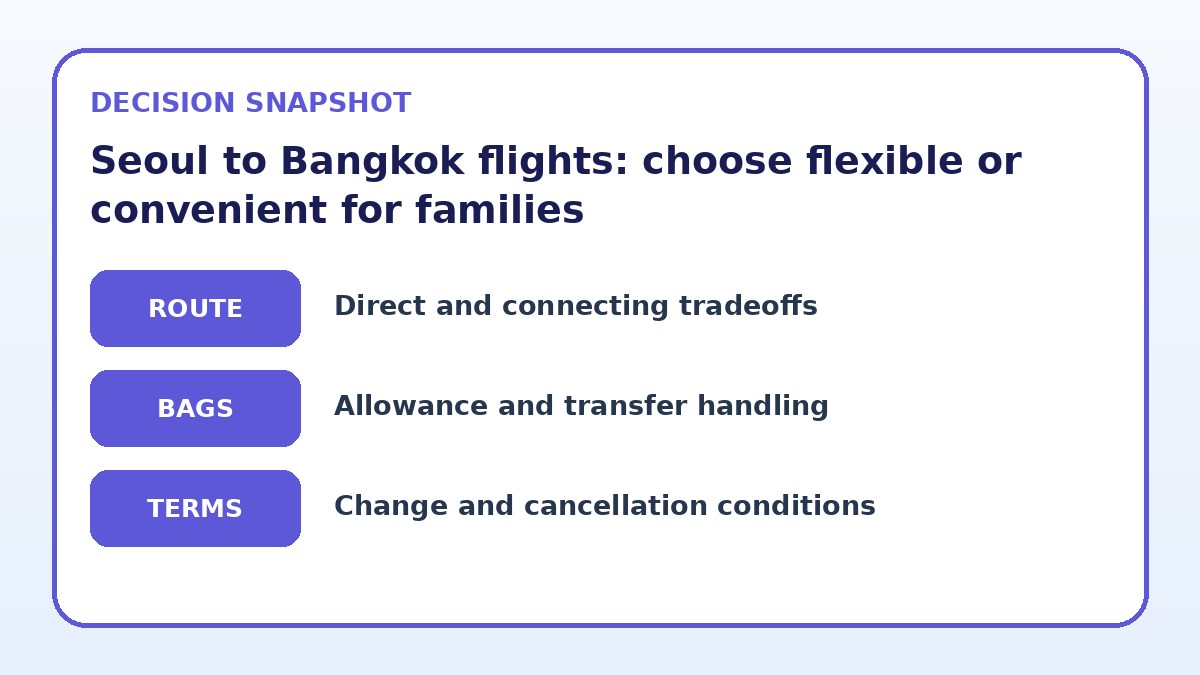
| Approach | Best for | Tradeoff to check |
|---|---|---|
| Prioritize convenience (fewer connections) | Families with infants, tight schedules, or limited patience for airport time | Higher fares, less flexible change options, and fewer departure times |
| Prioritize schedule flexibility (changeable fares) | Families with uncertain plans who may need to change dates or extend trips | Longer total travel time and more time in transit or layovers |
| Balanced single-connection approach | Families who want a compromise between time savings and adaptability | Requires careful selection of layover length and transfer complexity |
| Split the trip with an overnight stop | Families who want to break travel into manageable segments to reduce fatigue | Adds accommodation and transfer logistics; increases total trip duration |
Fare rules, seat choices, and baggage—hidden levers of convenience
Ticket price alone doesn’t determine convenience. Look closely at fare rules: ability to change dates with low fees, ticket reissue policies, and how refunds are handled. Families often need flexible rebooking options if a child falls ill or plans shift. Compare seat selection costs and whether bulkhead or bassinet seats are reserved for infants—these options greatly affect onboard comfort. Also confirm how many checked bags are included; paying per bag can quickly erode any apparent fare savings if you have strollers, car seats, or extra luggage for children.
Think about what you need at booking, not later. Confirm whether onboard meals accommodate children or special diets and whether priority boarding is available to settle kids in early. If you rely on a stroller to the gate, confirm the airline’s policy for gate-checking and how it’s returned upon arrival. When provider-specific facts like seat maps or baggage limits could change, verify them on the airline’s final booking page and re-check conditions before you travel. Trip.com can be used as one place to compare current availability and rules, but always confirm directly with the airline before finalizing a plan.
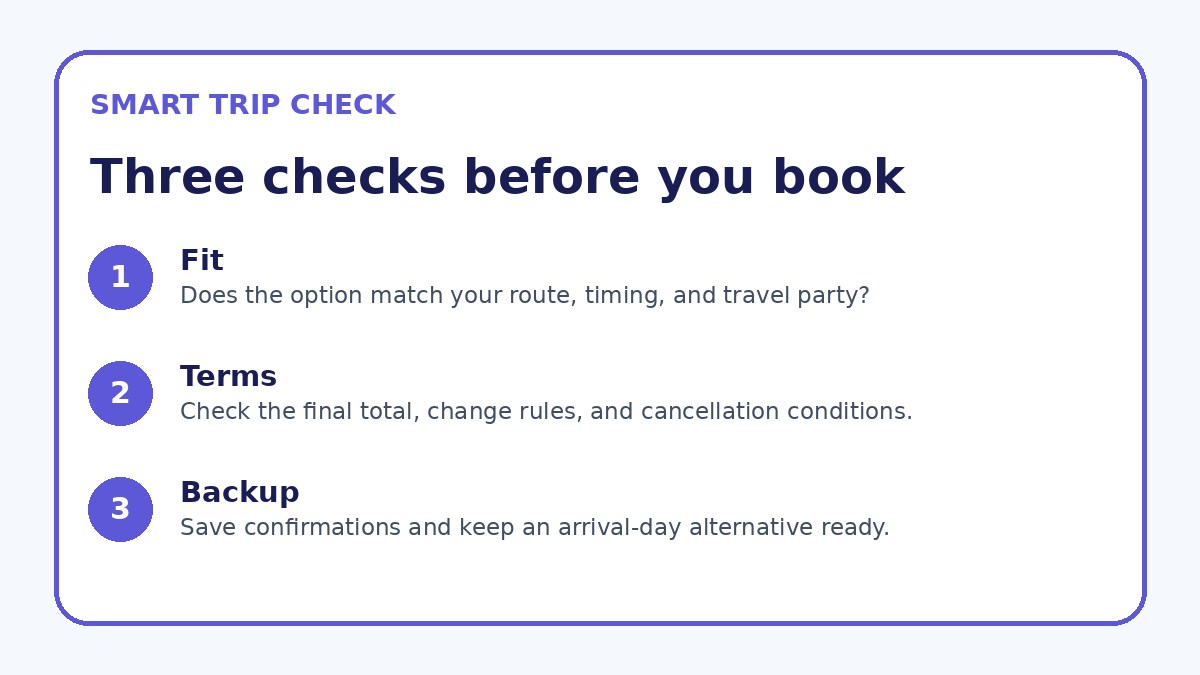
Before you book
- Compare total door-to-door travel time for each itinerary, including transfer times and expected airport transit from your home and to your hotel.
- Verify fare change and cancellation rules on the airline’s final booking page before paying, noting any family-friendly travel protections.
- Confirm baggage allowances and stroller/car-seat policies for each fare class to prevent unexpected fees at the airport.
- Choose flight times that align with your child’s sleep and meal routines to reduce onboard disruptions and manage energy levels.
- Select seats and request bassinets or bulkhead seating early, and re-check seat maps immediately after booking for changes.
- Plan realistic layovers: allow time for restroom breaks, meals, and stroller access; avoid tight terminal changes when possible.
Practical tradeoffs to guide your family’s decision
If speed and minimizing transitions are your priority—for example with infants or elderly relatives—choose the most convenient routing: fewer connections, straightforward transfers, and perhaps a slightly higher fare to avoid long layovers. The tradeoff is reduced flexibility and often less favorable change rules. Convenience saves time and anxiety but can cost more and leave you with less ability to alter plans without penalties. For short family trips where every hour counts, that tradeoff is often worth accepting.
If you need flexibility—open dates, potential stopovers, or the ability to reschedule without expensive penalties—opt for fares with generous change policies and consider connections that let you split the journey into manageable segments. The tradeoff here is longer total travel time and more logistical complexity on travel days. Use connections intentionally: plan an overnight break in a family-friendly city if the trip would otherwise be grueling, and verify that layover durations are realistic for strollers and bathroom breaks. Your family’s tolerance for airport time should be the deciding factor.
Frequently asked questions
Should I always choose a nonstop Seoul to Bangkok flight for family travel?
Not always. Nonstop flights reduce handling and transfer stress, which is valuable for families with infants or limited tolerance for airport time. However, nonstop schedules may depart at inconvenient hours, be more expensive, or have limited availability. If a nonstop forces a very late arrival or departure that disrupts children’s sleep, a well-timed single-connection flight could be less stressful overall. Compare total travel time, departure/arrival windows, and fare rules before deciding.
How long should a layover be when traveling with young children?
Aim for a layover long enough to comfortably complete the arrival process, handle stroller or baggage transfers, eat, and let kids move around—often 90 to 180 minutes for international connections depending on the airports involved. Avoid very short connections that increase the risk of a missed flight, and avoid excessively long waits that exhaust small children. Check terminal transfer times and whether you must clear security or immigration when choosing the minimum safe layover.
What booking details most affect family convenience beyond the ticket price?
Key details include baggage allowances, seat selection and availability of bassinets, the airline’s policy on gate-check strollers, priority boarding options, and change/cancellation rules. These items determine how smoothly airport and onboard routines go and how easily you can respond to unexpected changes. Always verify those specifics on the airline’s final booking page, since policies and fees can differ by fare class and change over time.
Final planning note
For families traveling Seoul to Bangkok, there is no single correct choice—only the right balance for your circumstances. If minimizing transitions and total travel time is crucial, prioritize the most convenient routing even if it costs a bit more. If dates might change or you want more departure choices, choose flexible fares and manageable connections. In most cases a single-connection itinerary timed for family routines offers the best compromise: fewer disruptions, better departure windows, and more reasonable rebooking options. Before you book, compare door-to-door times, verify baggage and seat rules on the airline’s final booking page, and use the checklist above to ensure your chosen option fits your family’s tolerance for airport time and schedule risk.
Continue planning
Check current options and final conditions
Use the provider page to confirm live availability, the final total, cancellation terms, and every condition that matters to your trip.
This evergreen planning guide was created with AI-assisted drafting and a structured quality review. It does not display live prices, schedules, availability, visa guidance, or provider rankings. Verify current details before booking. Some links are affiliate links; we may earn a commission at no additional cost to you.