If you’re travelling solo between Melbourne and Adelaide, the practical question isn’t only how to get there but how flexible your ticket needs to be. Choose rail, coach, driving, or a mixed plan depending on how important free changes, refunds, or same-day rebooking are to your schedule. Rail often gives a relaxed onboard experience and predictable boarding points; coaches are typically cheaper but can have stricter change rules; hiring a car or rideshare gives the most control but shifts the risk to you. This guide focuses on ticket flexibility—how easy it is to change or cancel, how luggage and transfers affect decisions, and what to prepare if disruptions happen. Read the quick comparison, then use the section checklist and FAQ to make a confident, door-to-door plan suited to a solo traveller’s needs.
Terminal fit and door-to-door practicality
Where a service departs and arrives matters as much as the ticket terms. Trains and coaches usually use central terminals; that can make transfers to inner-city accommodation quick and predictable if you’re staying near the CBD. By contrast, some long-distance coach or private shuttle services may use suburban depots or require a short transfer, which affects both time and the physical effort of managing luggage. If you plan to travel straight from a station to an airport or a particular hotel, map the final stop to your first- or last-mile options and account for walking or rideshare time.
For solo travellers, door-to-door practicality includes safety and convenience: busy terminals often have staff and clear signage, while isolated depots may feel riskier late at night. If you need to make a same-day connection—say, arriving in Adelaide then catching a regional bus or a domestic flight—pick the service whose arrival terminal is known to have reliable onward transport. When comparing tickets, factor in the cost and availability of the short transfer leg; a slightly more expensive ticket that arrives at a better-connected terminal can be faster and less stressful overall.
Choose the end-to-end journey plan
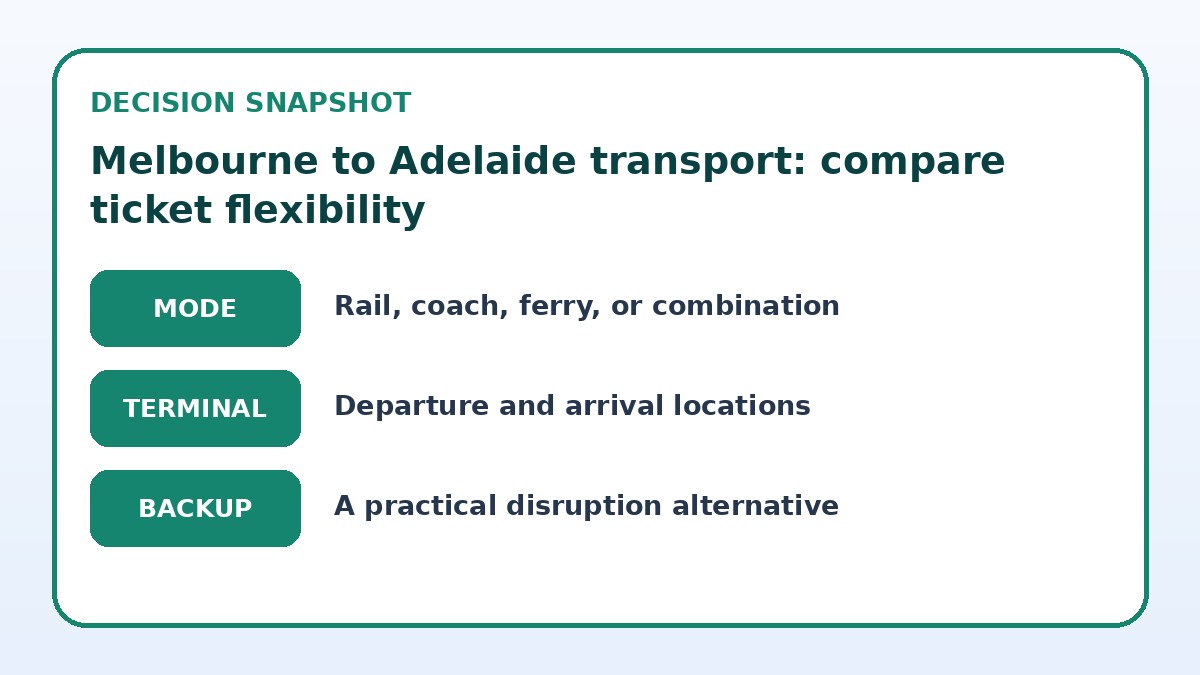
| Journey approach | Best for | Friction to check |
|---|---|---|
| Book the cheapest single-mode ticket (coach or discounted train) | Solo travellers on a tight budget with fixed plans | Lowest flexibility: likely stricter change/cancel rules and possible luggage fees or inconvenient terminals |
| Buy a flexible fare on a single operator (refundable or change-friendly ticket) | Travellers who prioritize stress-free rebooking | Higher upfront cost but simpler on-the-day changes; still limited if you need to reroute across different modes |
| Mix modes for door-to-door speed (train plus short drives or coach links) | Solo travellers who need better terminal fit and quicker last-mile connections | More flexible routing but more booking complexity; each segment may have different change rules |
| Drive or hire a car for full control | Those who value schedule freedom and direct door-to-door travel | You assume all disruption risk and costs; fuel, parking, and fatigue replace ticket change fees |
Check live intercity options
Look beyond the ride itself and compare terminals, transfers, luggage, and arrival fit.
Luggage, transfers and friction points
Ticket flexibility isn’t only about refunds and rebooking—it’s also about what you’re allowed to bring and how you move between services. Some discount coach fares restrict large suitcases or add fees for checked luggage; trains may allow bulkier items but have limited storage that can be awkward at peak times. If your plan involves switching modes—train to coach, coach to rideshare—each transfer multiplies the chance of losing time or misplacing a bag. Solo travellers should decide whether to pack light to keep options open or accept a higher-fare ticket that includes luggage to reduce hassle.
Also consider the physical effort of transfers. A timetable with a tight 15–20 minute connection might be fine without heavy bags, but uncomfortable and risky if you’re hauling a suitcase across stations. When flexibility matters, prioritise tickets that either include luggage or permit easy, low-cost upgrades on the provider’s final booking page. Verify allowance details and whether the operator offers assistance for boarding or short portage, since those on-the-ground services vary and can change over time.
Timing flexibility: change, refund and same-day rebook policies
Read the fine print on change and refund rules before you buy. Some tickets allow free changes up to a set time before departure and offer travel credit instead of refunds; others levy a fixed fee or allow no changes at all. For solo travellers who may need last-minute adjustments, look for fare classes that permit same-day rebooking or flexible-date tickets even if they cost more initially. When comparing options, judge whether the extra cost for flexibility is cheaper than the likely expense and stress of scrambling if plans shift.
Beyond headline rules, check how changes are handled: can you modify booking online instantly, or does it require phone support that might be slow at peak times? Also verify whether the provider limits exchanges to specific ticket types or seat categories. If you’re considering mixed-mode journeys, confirm that a change to one leg doesn’t void discounts or require rebookings for every segment. Always note where to find the current provider policy—on the operator’s final booking page—and keep screenshots or booking references accessible for quick assistance.
Compare the practical alternatives
Use the final page to confirm what is actually offered on your dates and save a workable fallback.
Intercity travel checklist
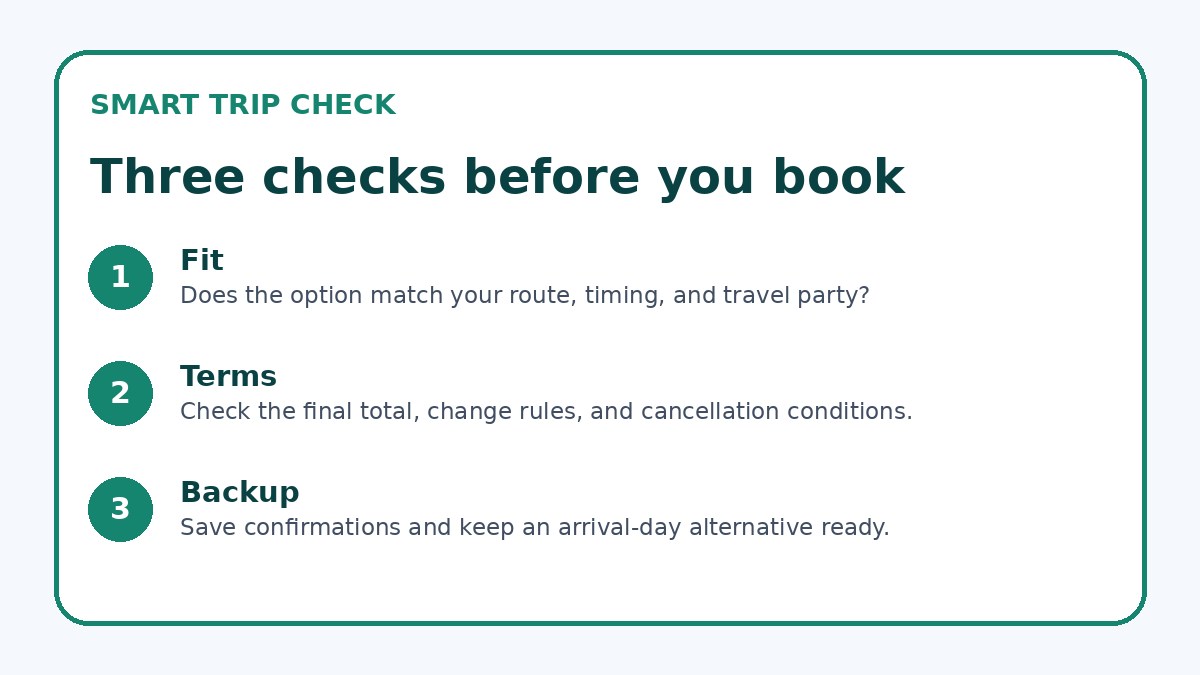
- Map the exact departure and arrival terminals and estimate door-to-door time including last-mile transport options.
- Compare change and refund rules on the operator’s final booking page, not just on comparison sites.
- Confirm luggage allowances and any on-the-day upgrade options before selecting a cheaper fare.
- Identify at least one same-day alternative service and note how to rebook or claim travel credit.
- Save booking references and screenshots of ticket terms on your phone for quick access during disruptions.
- Decide whether travel insurance or a flexible-fare upgrade better protects your specific itinerary and buy it if needed.
Disruption backup: practical, solo-traveller contingencies
Plan a concrete backup for delays or cancellations. A good disruption strategy includes at least two realistic alternatives: another scheduled service on the same day, or a nearby coach/train combination that reaches your destination via a different route. If you choose to drive yourself, identify safe public parking or trusted drop-off points at both ends and factor in fuel, tolls, and fatigue. For solo travellers, having a fallback that doesn’t require negotiating complicated returns or long waits alone is especially important—think from-door to door so you can arrive at your lodging without extra hassle.
Also prepare the documentation and tools to act fast: save provider contact numbers, booking references, and a screenshot of your ticket terms. Consider buying a flexible fare or travel insurance that covers missed connections if disruption risk is a major concern. If you rely on third-party comparison sites like Trip.com for initial availability checks, always confirm the final ticket terms on the operator’s booking page because policy details that affect refunds or rebooking authority can differ between resellers and the carrier.
Rail & Intercity Transport questions travelers ask
How do I compare flexible tickets across train, coach and car options?
Start by listing your non-negotiables: exact arrival time window, luggage needs, and how likely your plans are to change. For each mode, open the operator’s final booking page and read the change and refund policy line by line—look for free change windows, fees, and whether changes create travel credit only. Factor in terminal locations and last-mile costs. If comparing a car hire, include the cost and availability of fuel, parking and any excess or roadside assistance options. Use a common baseline (for example, ability to change the day of travel with a maximum one-hour wait) to see which option meets your needs most affordably.
If a service is delayed or cancelled, what immediate steps should I take as a solo traveller?
First, check the provider’s official channels for rebooking or refund instructions—many operators offer instant online rebooking for the next available service. Have your booking reference ready and use screenshots of your ticket terms when contacting support. If you need to shift modes, confirm whether your ticket permits separate refunds for unused legs. Evaluate door-to-door options quickly: can a rideshare or local taxi get you to an alternate terminal or a different scheduled service within a reasonable cost? If you bought travel insurance or a flexible fare, follow their claims process and keep receipts for any out-of-pocket expenses.
When is it worth paying more for a flexible fare on this route?
Pay extra for flexibility if your travel date or return time is likely to change, if you’re on a tight connection at the arrival city, or if missing the trip would cause substantial expense or inconvenience. Flexible fares are especially valuable for solo travellers without a companion to share logistics—changing a single booking can be faster and less stressful than managing multiple separate refunds and rebookings. Also consider the value of a better terminal fit or included luggage allowance; these practical benefits can outweigh nominal fare savings when measured door-to-door rather than ticket-to-ticket.
Final decision note
For solo travellers between Melbourne and Adelaide, ticket flexibility should be treated as a practical tool, not an abstract extra. Decide first how much unpredictability you can tolerate, then pick the approach that balances terminal convenience, luggage needs and rebooking ease. Cheap single-mode tickets can work if your plans are fixed and you travel light; flexible fares or mixed-mode plans pay off if you need to protect tight connections or a night arrival. Whatever you choose, verify the operator’s change and refund terms on the final booking page, save your confirmations, and have a clear backup so you can reach your door-to-door destination with minimal fuss.
Continue planning
Check current options and final conditions
Use the provider page to confirm live availability, the final total, cancellation terms, and every condition that matters to your trip.
This evergreen planning guide was created with AI-assisted drafting and a structured quality review. It does not display live prices, schedules, availability, visa guidance, or provider rankings. Verify current details before booking. Some links are affiliate links; we may earn a commission at no additional cost to you.