Practical answer first: most first-time visitors to Fukuoka do fine without a rental car. The city center and major tourist spots are compact and well served by efficient trains, subways, trams and buses; walking, cycling and public transit will cover Hakata, Tenjin, and the waterfront. Rent a car if your plan includes distant day trips (rural northern Kyushu, remote onsen, or island hopping with limited public transit), traveling with a lot of luggage or young children, or arriving late at night when transit is sparse. If you’re weighing convenience versus cost and parking hassle, this article lays out the tradeoffs and clear decision criteria so you can pick the option that matches your specific route, comfort level with left-side driving, and travel rhythm.
When a rental car helps your Fukuoka trip
A car becomes attractive when your itinerary extends beyond the urban core. If you plan multiple day trips to places like the remote northern coast, rural onsen areas, or small coastal towns where train connections require long transfers or limited schedules, a car saves time and lets you keep a flexible rhythm. Scenic drives in Kyushu are rewarding; having a vehicle allows you to stop at viewpoints, convenience stores or roadside attractions that public transit would skip. Also factor in group size — three or more people splitting rental and fuel costs often makes driving economical compared with individual transit fares.
Practical needs can also push you toward renting. Travelers with several checked bags, bulky outdoor gear, or those traveling with small children often find a car less stressful than juggling luggage on trains and during station transfers. Late arrivals or departures that miss the last train are another common reason: a booked car can be a reliable option when taxi supply is limited. Finally, if you enjoy spontaneous route changes and unplanned detours, driving removes the constraints of fixed schedules and lets you set your own pace through Kyushu’s countryside.
When to rely on public transport in Fukuoka
Fukuoka city itself is compact and easy to navigate without a car. The subway connects major neighborhoods, JR lines link Hakata and Tenjin and regional services reach nearby cities. For most museum visits, dining in Tenjin, shopping, or a short trip to Dazaifu Tenmangu shrine, public transport, walking and short taxis are simpler than locating parking and understanding signage. Frequent services, many English-friendly stations, and the affordability of day passes or IC cards make urban travel efficient for first-time visitors who prefer to avoid the stress of driving in unfamiliar conditions.
Traffic and parking are practical downsides to consider: rush-hour congestion, parking fees, and the time spent locating a spot can erase any convenience a car might provide within the city. If your schedule focuses on downtown sightseeing, evening dining around Nakasu, or riverwalks along the Naka River, you’ll likely save time and money using transit. Public transit also removes the need to worry about local tolls, expressway rules and the learning curve of driving on the left-hand side of the road.
| Approach | Best for | Tradeoff to check |
|---|---|---|
| No rental car (public transit and walking) | Travelers staying mainly in Fukuoka city and nearby attractions with reliable train and bus links. | Less flexibility for remote day trips; you may need careful schedule planning and occasional taxis. |
| Rent only for specific day trips | Visitors who want to explore rural onsen, coastal towns, or scenic routes without driving in the city itself. | Requires extra time to pick up and return the vehicle; add one-day rental fees and potential parking at origins. |
| Full-trip rental (entire stay) | Groups, families with children, or travelers with heavy luggage or long multi-stop road itineraries across Kyushu. | Higher total cost and city parking hassle; you must be comfortable driving and navigating local roads. |
| Hybrid: transit plus occasional taxis or private transfers | Visitors who prefer minimal driving but want standby flexibility for late nights or hard-to-reach locations. | Taxi or transfer costs can add up and availability varies by time and area. |
Practical tradeoffs: cost, convenience, and driving comfort
Cost is multifaceted: rental rates, fuel, expressway tolls, parking fees and optional add-ons like GPS or child seats all add up. Even when the base rate looks reasonable, daily parking in central areas and long-distance fuel or tolls for expressways can push total trip cost higher than using trains. On the flip side, the price-per-person can drop when several travelers share a vehicle. Before booking, create a simple cost comparison: estimate train fares for your planned routes versus a realistic rental-day budget that includes parking and tolls.
Driving comfort and rules are equally important. In Japan you drive on the left, signage can use kanji and katakana, and expressways have toll systems that may require an ETC card or cash. If you don’t feel comfortable navigating unfamiliar roads, narrow rural lanes, or reading local signs, the stress can outweigh the benefits. Factor in your experience with long drives, willingness to use GPS (confirm rental GPS or smartphone mapping that works offline), and readiness to follow local parking and traffic customs before choosing a car.
Before you book
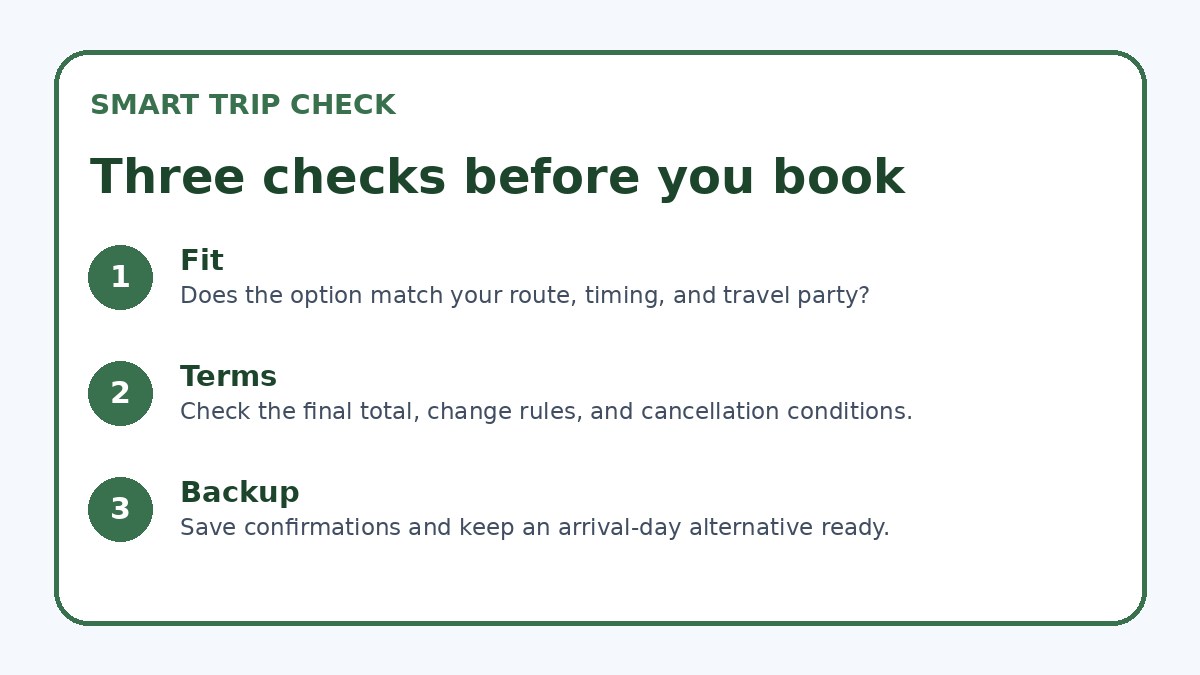
- Map every planned destination and mark whether public transit reaches it directly or requires long transfers.
- Estimate total transport costs for transit versus rental (include tolls, fuel, parking and rental extras).
- Confirm pickup/dropoff hours and locations and check if after-hours return is available on the booking page.
- Check insurance coverage details and what driving scenarios or drivers are excluded before completing checkout.
- Verify whether the rental includes or supports an ETC card, GPS language options, and child seats if needed.
- Ask your accommodation about parking availability and typical costs before committing to a full-trip rental.
How to decide before you book a rental
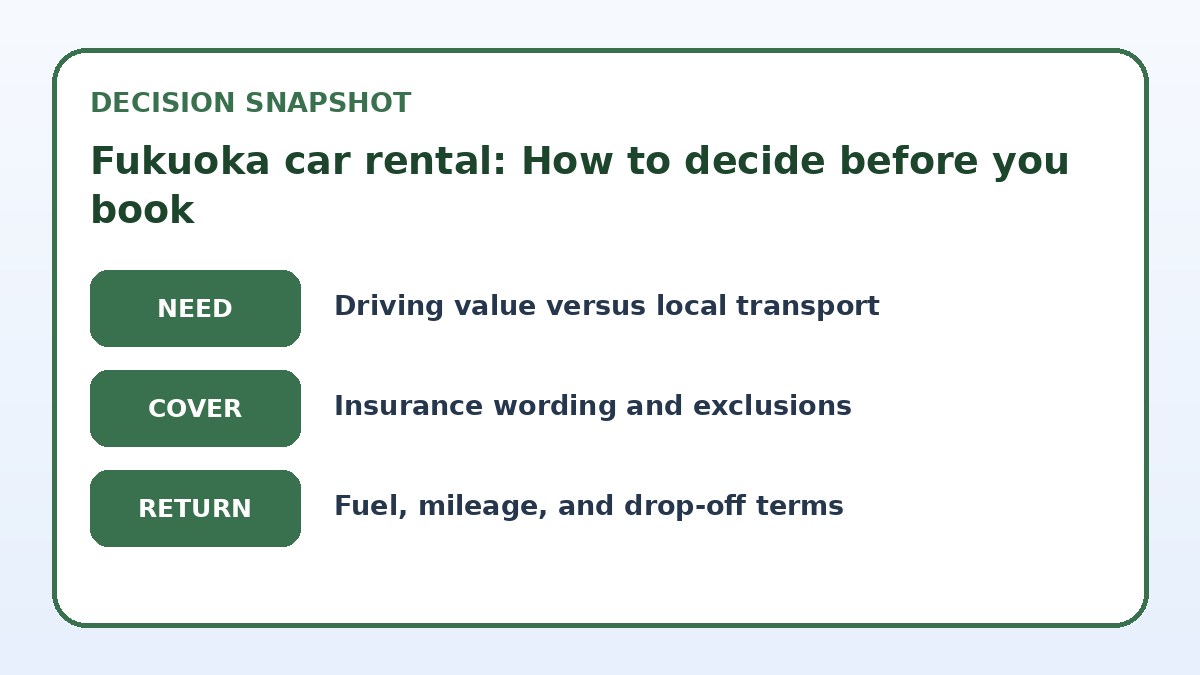
Start by mapping your itinerary day-by-day and marking locations that are not easily reached by train or bus. For each planned destination, check transit frequency and total travel time; if a public-transit route requires long transfers or leaves you with short windows to sightsee, a car might be worth it. Next, group the days into urban-focused and out-of-town days. If the majority of your time is spent in central Fukuoka, choose transit and consider renting a car only for specific days when you intend to explore farther afield.
Finally, verify logistics on the provider’s final booking page before you confirm: exact pickup and drop-off hours and locations, insurance coverage and exclusions, whether a credit card hold is required, fuel policy, permitted driving area, and any options for ETC cards or navigation language. If you decide to rent, reserve a vehicle with flexible pickup and drop times and confirm parking options at any accommodations you plan to use. When in doubt, a hybrid approach — mostly public transport with one or two rented days — often balances convenience and cost.
Frequently asked questions
Can I drive a rental car in Fukuoka with my foreign license?
Whether you can drive depends on your country of issue and the license documents you carry. Some travelers need an International Driving Permit (IDP) issued under the 1949 Geneva Convention, while others may require an officially certified translation of their domestic license. Rules differ by nationality and sometimes by rental company. Before booking, check the rental provider’s documentation requirements and confirm the exact license and translation they accept on the provider’s final booking page to avoid being refused at pickup.
Are toll roads and expressways required for typical day trips from Fukuoka?
Toll roads are common for faster long-distance travel in Kyushu, but many regional routes have free alternatives that are slower. Whether you need expressways depends on your destinations and priorities: tolls shorten travel time for distant coastal routes and mountain passes, while local roads serve nearby towns. When planning, estimate toll costs based on distance, consider driving time differences, and confirm whether the rental offers an ETC device to pay tolls conveniently; verify toll payment methods on the rental booking page.
How should I handle parking in central Fukuoka if I rent a car?
Parking in central areas often means paid lots or multi-story parking garages; street parking is limited. Check whether your hotel or accommodation provides guest parking and whether it requires advance reservation. For day visits, identify public parking near attractions and note typical operating hours. Since rates vary by location and time, confirm parking availability and expected costs in advance; when booking the car, ask the provider about advice for downtown parking to avoid surprises.
Final planning note
Deciding whether to rent a car in Fukuoka comes down to three questions: where exactly you will go, how many people and how much luggage you have, and how comfortable you are driving unfamiliar roads. For most first-time visitors focused on city sights and nearby excursions, public transport is simpler and more relaxing. Rent a car if your itinerary includes multiple remote destinations, you travel with a larger group or equipment, or you value the freedom of self-driving. If unsure, plan a hybrid approach: use public transit in the city and reserve a car for one or two specific day trips — that often delivers flexibility without unnecessary cost or stress.
Continue planning
Check current options and final conditions
Use the provider page to confirm live availability, the final total, cancellation terms, and every condition that matters to your trip.
This evergreen planning guide was created with AI-assisted drafting and a structured quality review. It does not display live prices, schedules, availability, visa guidance, or provider rankings. Verify current details before booking. Some links are affiliate links; we may earn a commission at no additional cost to you.