
If you’re planning your first trip to Fukuoka, the fast answer is this: choose a package if you want convenience and fewer booking steps; choose separate bookings if you want flexibility, finer control of timing, or customized neighborhoods and experiences. Both approaches can work for first-time visitors but they prioritize different things — packages reduce planning friction and may bundle airport transfers, while separate bookings let you mix airlines, pick specific hotels in Hakata or Tenjin, and book local rail or ferry connections on your own terms. Before you pick, decide what matters most: time saved or control gained, refund flexibility, and how confident you are juggling connections in Japan. Below you’ll find practical tradeoffs, a simple comparison table to match your priorities, detailed steps to shop each route, and a checklist of what to verify on final booking pages so you aren’t surprised at check-in, at the airport, or when switching carriers.
What a Fukuoka package typically includes and why it helps
Packages aimed at first-time visitors commonly assemble flights, a hotel, and sometimes an airport transfer or guided local tour. That simplifies planning because the seller handles connecting times, and one confirmation often covers most logistics. For travelers short on time or who prefer a single point of contact for changes, that convenience reduces the risk of missed connections and the stress of coordinating separate providers across different time zones.
Packages also group refund and change policies into one place, but that can be a double-edged sword: the package’s rules may be stricter or more restrictive than booking components individually. If a piece of the itinerary becomes unusable — a delayed flight or sold-out tour — you’ll be dealing with the package operator’s policies, so check exactly what they promise to cover for missed nights, transfers, or rebooking costs on their final booking page.
Why separate bookings give flexibility and how to manage them
Booking flights, hotels, and local transport separately gives you the freedom to select exact flight times, neighborhood-specific hotels like Hakata for transport convenience or Tenjin for nightlife, and the train or ferry options that match your pace. This route is often better when you want to combine a low-cost airline into Fukuoka with a JR rail pass or to allocate more budget to a particular hotel while economizing on the flight.
Separate bookings require more active management: you must compare baggage rules across carriers, allow buffer time between independent connections, and keep all confirmation numbers accessible. Create a single itinerary document with local arrival times, hotel check-in instructions, and transportation options from Fukuoka Airport or Hakata Station, and verify each provider’s change and refund conditions before finalizing reservations.
| Approach | Best for | Tradeoff to check |
|---|---|---|
| Pre-built package | Travelers who want a single booking process and bundled support for arrival logistics | Less flexibility to customize flights, hotels, or change single components without fees |
| Separate bookings | Travelers seeking control over schedules, neighborhoods, and specific carriers | Requires more time to coordinate connections, compare fees, and manage multiple vendors |
| Hybrid approach (package + add-ons) | Travelers who want a basic package but prefer to add or swap a hotel or activity | Can complicate refunds and change policies if the package provider restricts alterations |
| DIY with local bookings after arrival | Flexible travelers comfortable arranging transport and accommodations on short notice | Risk of limited availability on busy dates and fewer consumer protections pre-trip |
How to compare costs and value without relying on advertised rates
Don’t just compare headline prices. Break each option into components: base fare, taxes and fees, baggage, transfers, and any included extras such as breakfast or travel insurance. For packages, ask the seller for an itemized breakdown or check the provider’s final booking page to see what’s bundled. For separate bookings, add the same elements so you’re comparing apples to apples: the ticket price plus baggage fees, the hotel rate plus local taxes, and the cost of getting from the airport to your accommodation.
Factor in non-monetary values too: convenience, fewer confirmations, and a single customer service channel can save time and anxiety. Conversely, the ability to choose refundable fares, hand-pick a specific room category, or change a single component without touching the rest can be worth slightly higher nominal costs. Track the total outlay and the likely costs of any changes to see which approach truly offers better value for your trip style.
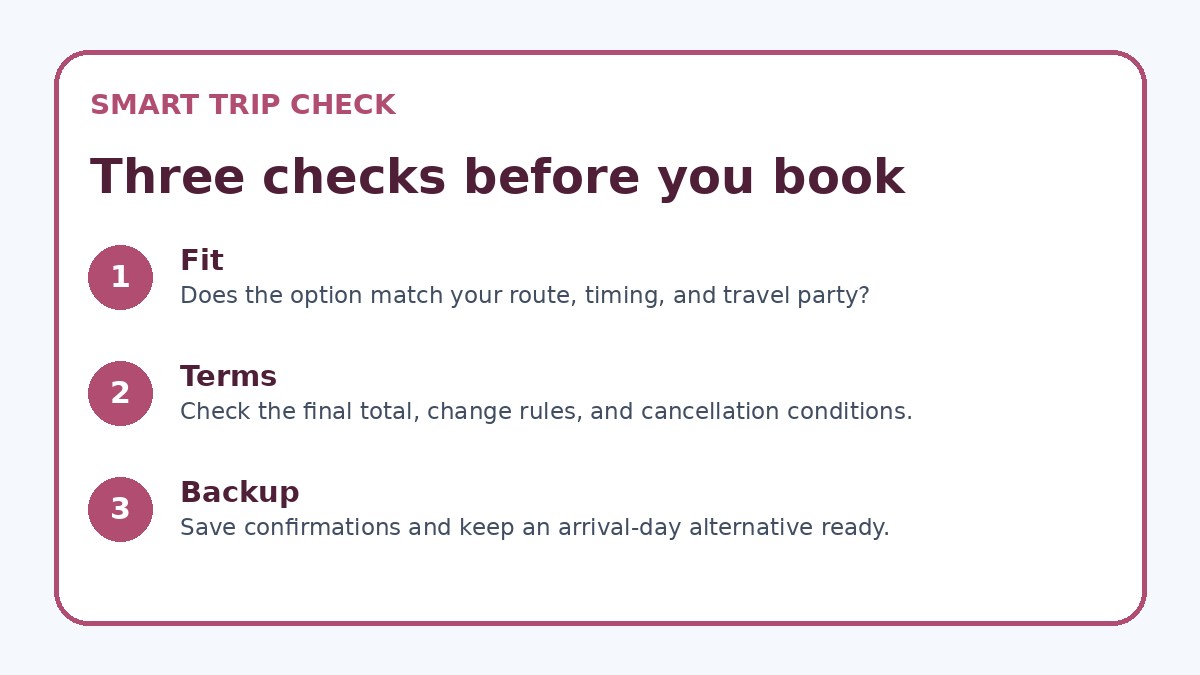
Before you book
- Confirm the full names and passport details used for reservations exactly match your travel documents.
- Compare baggage allowances and change/cancellation fees across each airline or package term.
- Ask the package seller for an itemized breakdown or view component totals when booking separately.
- Check hotel check-in and check-out times and whether early arrival or late departure is possible.
- Verify airport transfer details: meeting point, included services, and who to contact on arrival.
- Save final confirmations, screenshots of terms, and contact numbers for each provider in one accessible file.
Practical booking checks and what to verify before you pay
On any final booking page — whether a package portal or a direct airline/hotel site — verify explicit details: exact flight times and cancellation/change rules, baggage allowances and fees, whether airport transfers are private or shared, and precise hotel check-in policies. If a package includes rail passes or local tours, confirm voucher pick-up locations and expiry rules. For all bookings, make sure the name on reservations matches passports and that contact phone or email entries are correct.
Also check how changes are handled and who to contact locally in Fukuoka if something goes wrong. Note any blackout dates or time-limited extras, and confirm refund timelines and processing method. If you use a third-party seller, save screenshots of the final confirmation page and the terms that apply; when in doubt, open the provider’s direct booking page to cross-check seat assignment options, baggage rules, or hotel room descriptions before you finalize payment.
Frequently asked questions
Are Fukuoka packages generally better value than booking flights and hotels separately?
Value depends on what you prioritize. A package can be cost-effective if it bundles services you would otherwise buy individually and saves you time. However, separate bookings allow targeted choices — a specific hotel location, preferred flight times, or carrier — which can lead to better value for travelers who want those specifics. To decide, build a side-by-side total cost that includes baggage, transfers, and taxes for both approaches and weigh that against the convenience and cancellation rules each option offers.
If I book separately, how much buffer time should I allow between an international arrival and a domestic connection in Japan?
Buffer time depends on whether you stay with the same ticketing carrier and need to recheck baggage or change airports. If you must clear immigration, collect bags, and transfer terminals, allow several hours. When flights are on the same ticket or a package includes transfer protection, shorter connections may be safe. Always verify connection rules on the final booking pages and consider extra time for delayed international arrivals, possible long immigration queues, and surface transfers to domestic terminals or train stations.
Can a package operator help if a flight to Fukuoka is delayed or canceled?
Many package operators offer a single customer service channel that coordinates changes, but the extent of assistance varies by provider and the terms on their booking page. Some will rebook you or arrange alternative transfers, while others may pass through carrier-imposed fees. Before you book, read the operator’s disruption and refund policy on the confirmation page and ask explicitly how they handle re-routing and accommodation for missed nights so you know what to expect in a real disruption.
Final planning note
For first-time visitors to Fukuoka, the right choice depends on whether you value convenience or control. Packages reduce planning steps and centralize support, which suits travelers who want a simpler checkout and fewer logistics to manage. Separate bookings reward those who want to pick exact flight times, neighborhoods, or local transport options and who are comfortable managing multiple providers. Use the checklist above to verify names, baggage, transfer details, and refund rules on the final booking pages. If you’re unsure, a hybrid approach—starting with a basic package and adding or swapping components before final payment—lets you test conveniences while keeping options open. Finally, compare current availability and terms on provider pages or a comparison site such as Trip.com before you complete payment to ensure the details you rely on are accurately represented.
Continue planning
Check current options and final conditions
Use the provider page to confirm live availability, the final total, cancellation terms, and every condition that matters to your trip.
This evergreen planning guide was created with AI-assisted drafting and a structured quality review. It does not display live prices, schedules, availability, visa guidance, or provider rankings. Verify current details before booking. Some links are affiliate links; we may earn a commission at no additional cost to you.