If you and your partner are weighing Sydney to Melbourne flights, start by deciding whether you value a shorter total trip time or a lower fare. For most couples the primary tradeoff is route versus price: direct or single‑connection options save time and reduce connection stress, while multi‑stop or off‑peak routings can be cheaper but add complexity. Before searching, gather exact travel dates, full passenger names, contact details, loyalty numbers, and baggage needs. That makes comparing fare rules, seat availability and connection minimums easier. This guide covers routing choices, baggage and connection risk, schedule fit and fare conditions, with practical steps to plan a comfortable connection and what to verify on the airline or booking page before purchase.
See live routes for your exact travel day
Compare direct and connecting choices with the same baggage and traveler details.
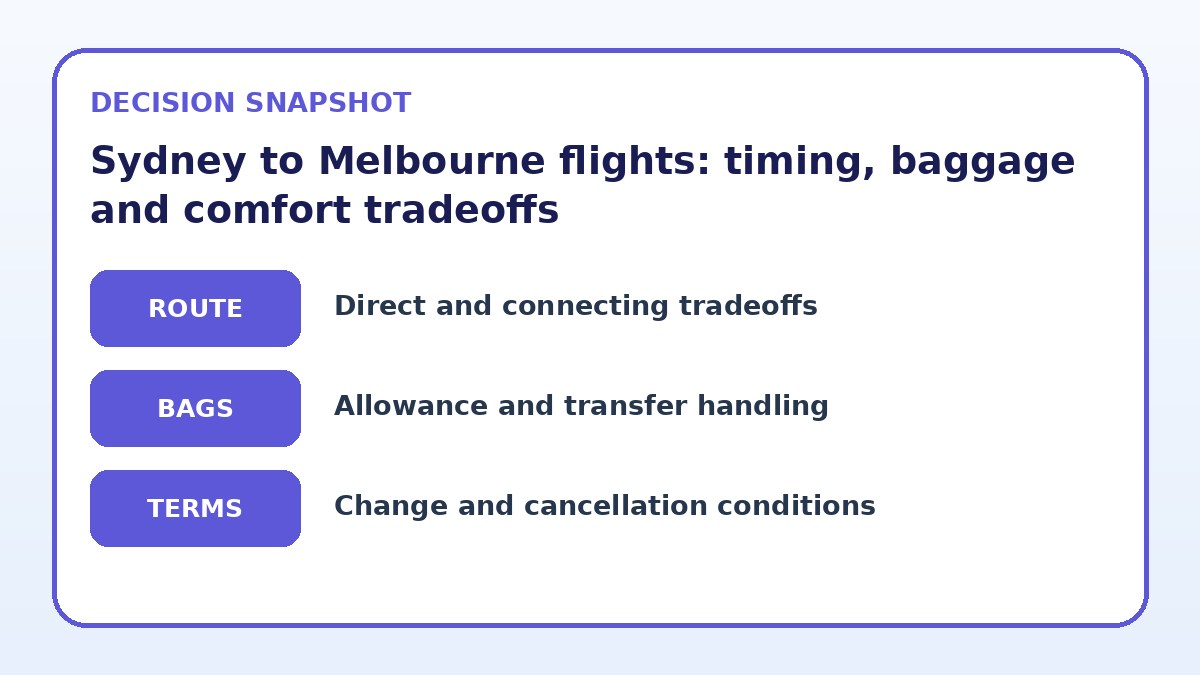
Routing choices: direct, single‑stop or multi‑stop
Couples should compare direct flights (if available) against single‑stop and multi‑stop itineraries by prioritizing how much time you want to spend in the air and how much time you can tolerate managing a transfer. Direct or single‑connection flights reduce the number of handoffs, simplify luggage handling, and lower the chance of missed connections; they can also cost more or depart at less convenient times. Multi‑stop routings sometimes offer lower fares or better loyalty accrual for parts of the trip, but they add complexity—more legs to monitor, more potential delays and longer cumulative travel time.
When comparing routings, map your door‑to‑door timeline: include transfers to and from airports, possible overnight connections, and buffer for delays. For couples traveling with different mobility needs or special equipment, fewer connections usually remove one more layer of planning. Use the exact travel dates and each traveler’s details to check available seat maps and operating days—these can affect whether a direct or single‑stop option actually suits your schedule and comfort goals.
Baggage and connection risk: what to protect and what to carry
Baggage rules heavily shape comfort for couples: if both of you want cabin bags, verify the permitted dimensions and number of pieces on each fare type. When itineraries involve separate tickets, checked baggage may not transfer automatically and you could need to collect and recheck it—raising the chance of missed connections and extra time on the ground. Plan which items you’ll keep in carry‑on (medications, important documents, a change of clothes) versus checked luggage, and keep essential items together so one person can access them quickly during a transfer.
To reduce connection risk, allow more time between flights than the bare minimum if you must change terminals or re‑check luggage. For couples who prefer low stress, consider paying for through‑checked baggage or picking a single ticket that covers all legs, and verify the airline’s minimum connection time on their booking page. If you’re comparing options online, note whether baggage fees, weight limits and transfer rules differ by fare class—these details directly affect comfort and the likelihood of needing to run between gates.
Compare flight-selection strategies
| Flight strategy | Best for | Risk to check |
|---|---|---|
| Shortest total travel time (direct or single‑stop) | Couples prioritizing convenience, fewer connection hassles and more usable time at destination. | Usually higher fares and potentially less flexible schedules or fewer late‑night/early‑morning options. |
| Lowest fare with more stops | Budget‑minded couples willing to trade time and comfort for a lower ticket cost. | Longer travel time, greater connection risk and more complicated baggage handling. |
| Flexible fares with free changes | Couples with uncertain plans who need the ability to modify dates without steep penalties. | Higher upfront cost; some flexible fares still exclude seat selection or lounge access. |
| Mixed‑ticket routing to combine loyalty benefits | Couples wanting to maximize miles, elite benefits or specific carrier amenities on part of the trip. | Can complicate re‑routing and baggage transfers; verify each carrier’s connection and rebooking rules. |
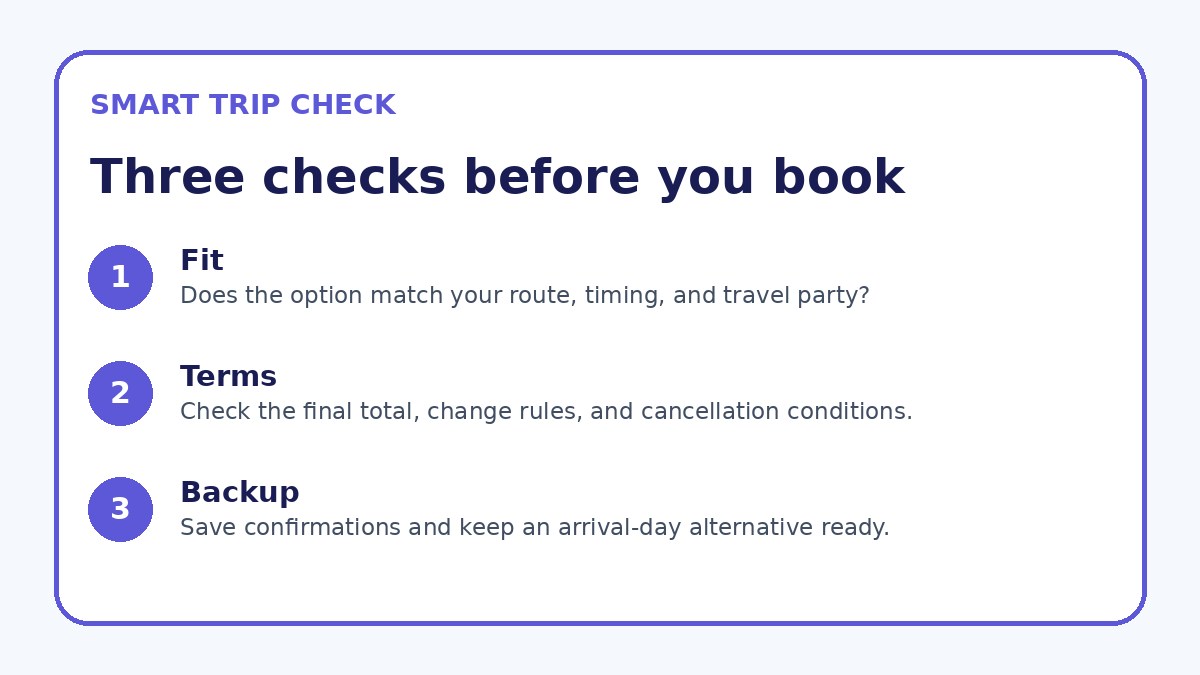
Recheck the complete itinerary
Confirm airports, connection handling, baggage, and change conditions before deciding.
Schedule fit and travel rhythm for couples
When planning for two, align flight times with the rhythm you expect on arrival: do you want to land in Melbourne with a full afternoon ahead, or prefer to travel overnight and wake already at your destination? Consider how jetlag, even across domestic time differences, and airport layovers affect energy and mood. Choose itineraries with realistic buffer time that let you use airport lounges, refresh between flights, or have a relaxed meal together—small conveniences can make a sequence of flights feel like a calm transition instead of a strain.
Also think about personal preferences: some couples prefer early departures to maximize daytime, others value leaving later for a more relaxed morning. If you have special plans—dinner reservations, events, or check‑in windows at a particular time—work backwards from those fixed points to determine acceptable arrival times. Keep in mind that connections around peak airport hours can be slower due to security queues; when in doubt, add an extra 30–60 minutes to your transfer estimate to maintain a comfortable pace.
Flight details to verify
- Collect exact travel dates, full passenger names as on ID, mobile numbers, loyalty program IDs and any special assistance needs before searching.
- Decide on a cabin‑bag versus checked‑bag strategy and check the baggage allowances for each fare and carrier on the booking page.
- Map door‑to‑door transfer times including airport transit and security; add a 30–60 minute cushion for comfort.
- Compare seat maps for the selected flights and reserve seats together if seat selection is not included with the fare.
- Read the fare rules for changes, cancellations and refunds on the carrier’s final booking page and note any waiver conditions.
- If using separate tickets or partners, verify whether baggage will be through‑checked and confirm minimum connection times with each carrier.
Fare conditions and what to verify before booking
Fare conditions determine your ability to change plans and how comfortable your travel will be if something goes wrong. Before booking, read the airline’s fare rules for baggage inclusion, seat selection, change and cancellation fees, and whether your fare includes through‑check for luggage on connecting flights. If your itinerary involves a mix of codeshares or separate tickets, double‑check whether the airline treats the entire journey as a single contract of carriage or if each leg is independently governed—this affects protections and potential refunds.
Use travelers’ exact dates and passenger details to confirm the final price breakdown, fees and any required travel documents on the provider’s booking page. If you rely on frequent flyer benefits or lounge access, verify those entitlements with the operating carrier rather than assuming they carry across partners. Trip.com can be used as one place to compare current availability and conditions, but always confirm the final fare rules and baggage policies on the carrier’s official booking page before you pay.
Flight Guide questions travelers ask
How much connection time should couples allow between Sydney and Melbourne flights?
Allowing extra connection time depends on whether you must change terminals, re‑check luggage or clear additional security. For same‑ticket itineraries without terminal changes, a comfortable buffer is typically 45–90 minutes; if you need to collect and re‑check bags or switch terminals, plan for at least 90–150 minutes. Add more time if either traveler has reduced mobility, if you’ll clear customs or if you prefer not to rush. Always confirm an airline’s published minimum connection time on their booking page and judge whether that minimum feels comfortable for your needs.
Should couples pick refundable or basic non‑refundable fares for this route?
Refundable or flexible fares suit couples whose plans may change, since they usually allow easier date changes with lower penalties, but they cost more upfront. Basic non‑refundable fares can be fine for fixed plans if you’re confident about dates and willing to accept change fees or restrictions. Consider the financial difference versus the value of flexibility for your trip: if schedule shifts would disrupt reservations or events at your destination, a refundable or flexible fare may be the more comfortable choice. Always inspect the carrier’s change and cancellation terms on the final booking page before purchase.
How can couples minimize the risk of lost baggage on connecting itineraries?
To reduce lost baggage risk, travel on a single ticket when possible so airlines will transfer checked luggage automatically. If you must book separate tickets, consider carrying critical items and a change of clothes in cabin bags and arrange longer connection times to collect and re‑check luggage. Use distinctive tags and an internal label with your contact details inside the bag, and photograph the baggage condition and tag at check‑in. Verify on the carrier’s booking or baggage information pages whether baggage is checked through on your exact routing and what compensation procedures apply if bags are delayed.
Final decision note
For couples planning Sydney to Melbourne flights, the key decision is whether to prioritize time and simplicity or to save money and accept more complexity. Start by choosing which of those two you value more, then gather exact dates and traveler details to compare routings, baggage rules and fare conditions. Favor single‑ticket itineraries if you want lower connection risk, and choose longer connection windows and seat reservations if comfort matters most. Before you pay, read the carrier’s final page for seat, baggage and change rules; if you want a quick comparison, Trip.com can show available options but always confirm terms with the operating airline.
Continue planning
Check current options and final conditions
Use the provider page to confirm live availability, the final total, cancellation terms, and every condition that matters to your trip.
This evergreen planning guide was created with AI-assisted drafting and a structured quality review. It does not display live prices, schedules, availability, visa guidance, or provider rankings. Verify current details before booking. Some links are affiliate links; we may earn a commission at no additional cost to you.