Practical answer first: for most couples focused on comfort, prioritize a single-ticket itinerary (one booking reference) with a sensible connection window and a fare that includes hold luggage and change flexibility. That setup reduces the risk of missed connections, simplifies rebooking, and keeps transfers smooth so you can relax together. If you prefer lower fares, expect tradeoffs: separate tickets or very tight connections may save money but increase stress and potential costs if something goes wrong. Before you shop, have exact travel dates, full traveler names, passport details, seating preferences, and luggage needs ready. Use those details when comparing direct and connecting options, and verify connection minimums, checked-bag rules, and change/cancellation terms on the seller’s final booking page.

See live routes for your exact travel day
Compare direct and connecting choices with the same baggage and traveler details.
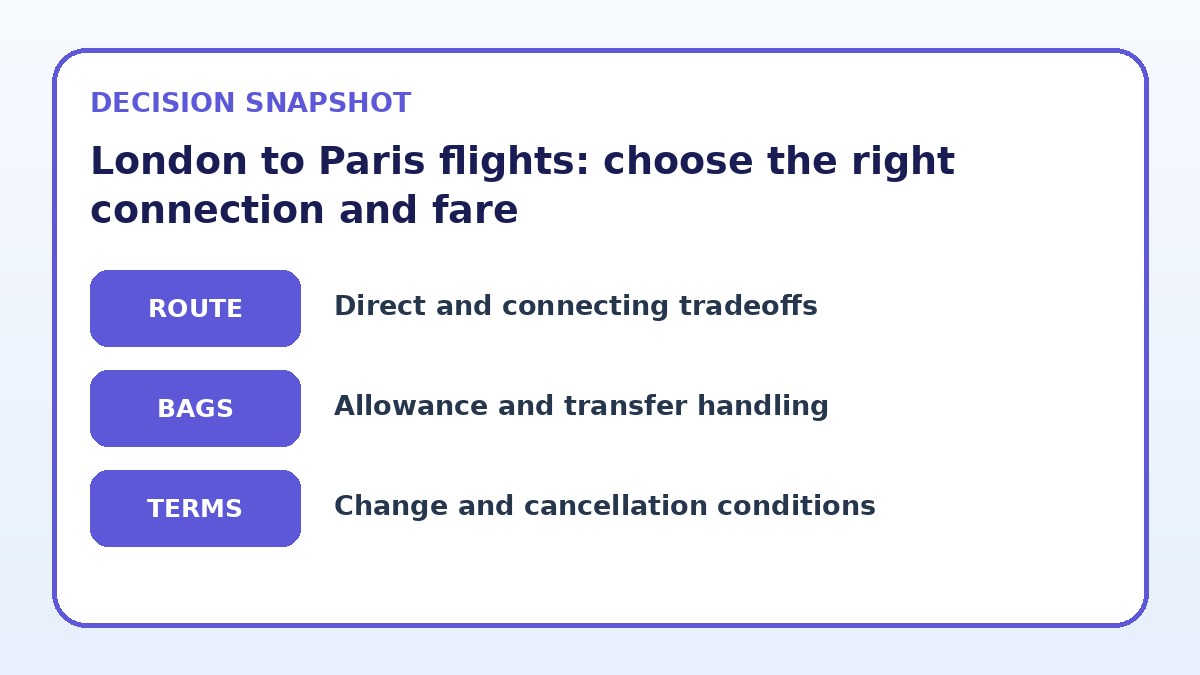
Routing: direct versus connecting choices
Prioritize routing by how much time and stress you and your partner want to avoid. Direct services (if available) remove transfer uncertainty, but a well-timed single-connection on one itinerary often provides better schedule choices and sometimes more comfortable aircraft. When comparing options, look beyond total travel time: account for transfer type (air-to-air, airport change), terminal logistics, and whether the connection requires re-clearing security or passport control. Couples should also consider whether the connection allows time for a relaxed meal or restroom break together without rushing.
If you’re evaluating multi-leg itineraries, favor connections on the same ticket so the airline is responsible for missed connections and rebooking. When a direct flight is not offered or is inconvenient, choose the connecting city and airport with the simplest transfer flow. Avoid itineraries that require moving between distant terminals or different airports unless the schedule provides ample buffer. Finally, plan seating together when booking so both travelers can rest, work, or enjoy the journey side-by-side.
Baggage and connection risk for couples
Baggage rules often determine how stressful a connection will be. A single-ticket itinerary typically involves checked bags transferred automatically; that means you travel lighter through the connection and won’t need to recheck bags. On separate tickets, you may need to collect luggage, exit the secure area, and recheck—adding time, cost, and uncertainty. For couples who want to move at a relaxed pace, prioritize fares that include at least one checked bag and carry-on allowances that meet both travelers’ needs.
Also check liability for missed connections: single bookings generally place responsibility on the operator to rebook, which can save the couple time and money. When considering low-cost carriers or separate tickets to save fare, factor in the risk of missed flights, additional transfer fees, and whether travel insurance or a flexible fare can cover disruptions. Before finalizing anything, verify the precise baggage allowance and transfer policy on the airline or seller’s booking page so there are no surprises at the airport.
Compare flight-selection strategies
| Flight strategy | Best for | Risk to check |
|---|---|---|
| Single-ticket direct or one-stop itinerary | Couples prioritizing low connection risk and simpler rebooking | May be more expensive than mixing separate low-cost fares but reduces stress and transfer tasks |
| Separate low-cost tickets for savings | Couples prioritizing lowest upfront fare and willing to accept transfer responsibility | Higher connection risk, possible extra fees to recheck bags or buy new tickets if missed |
| Premium cabin or extra-legroom fare | Couples valuing comfort, privacy, and the ability to rest together on longer segments | Higher fare that may reduce flexibility or add cost if plans change |
| Flexible or semi-flex fare with change options | Couples who want schedule flexibility and reduced penalties for changes | Higher base fare but can save money and stress if itinerary adjustments are likely |
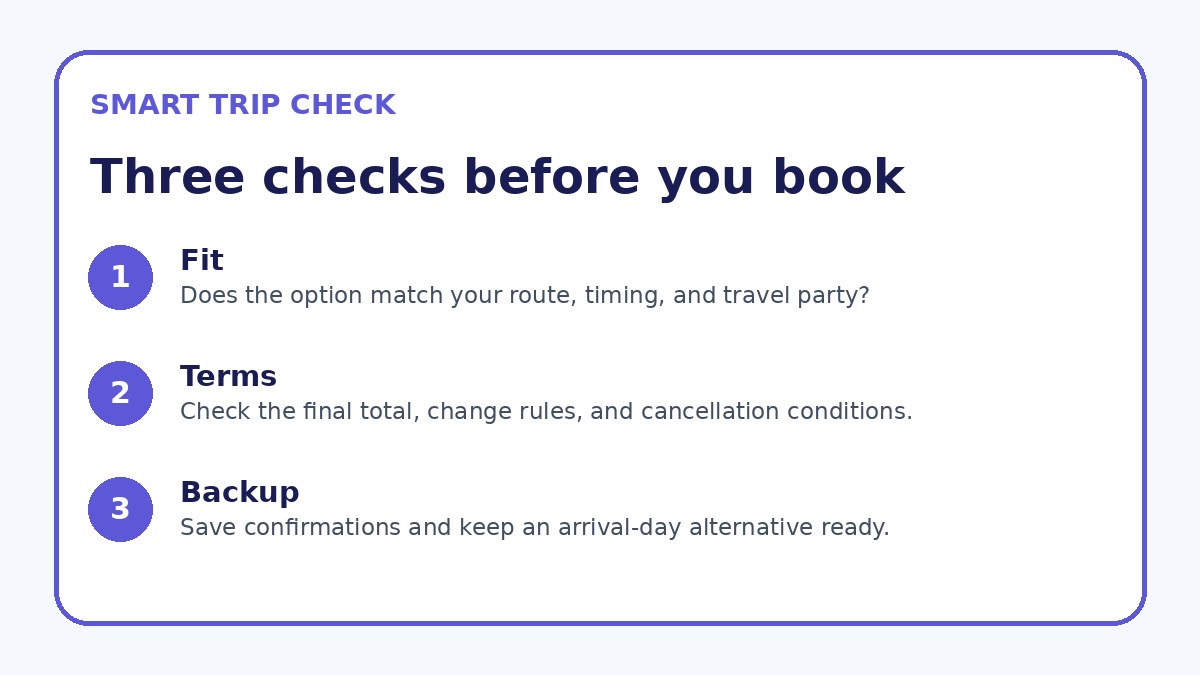
Recheck the complete itinerary
Confirm airports, connection handling, baggage, and change conditions before deciding.
Schedule fit and seat comfort for two
Choose flight times that match how you like to travel as a couple—do you prefer arriving early to maximize your first afternoon together, or would a later arrival with a leisurely morning be better? When selecting connections, allow buffer time not just for on-time performance but for the two of you to move through the airport comfortably. If connecting, pick windows that avoid tight turnarounds; for overnight travel, consider aircraft and seat types that let you rest together, and whether premium seating or extra legroom is worth the added cost.
Seat selection matters more than many couples expect. Reserve seats next to each other at booking whenever possible, and check if the fare includes advance seat assignment. If you’ll want to talk, work, or share a meal, aisle-plus-window seating may not work well—opt for adjacent middle-and-aisle or two-seat pairs if the cabin layout allows. Finally, consider on-board amenities—power outlets, Wi-Fi, and seat recline—when comparing options, and verify these features on the airline’s detailed product page before booking.
Flight details to verify
- Collect exact travel dates, full passport names, and birthdates for both travelers before searching fares.
- Decide whether you need checked baggage and confirm the allowance on the fare rules page.
- Check seat maps and reserve adjacent seats during booking to ensure you sit together.
- Verify connection times, terminals, and whether transfers require re-clearing security or passport control.
- Read change and cancellation terms on the seller’s final booking page and note any fees.
- Consider purchasing travel protection that covers missed connections or buy a flexible fare if flexibility matters.
Fare conditions and what to verify before you buy
Read fare conditions carefully with both travelers’ needs in mind. Confirm whether the fare includes checked bags, seat assignments, and change or cancellation flexibility. If you anticipate itinerary changes, a fare with free or low-cost changes can be more economical overall even if the upfront price is higher. Also confirm who is selling the ticket—an airline, a consolidator, or an online travel agent—and whether the seller’s final page shows the same baggage and change rules you reviewed.
Verify the connection protection policy and confirm whether separate tickets are treated as independent by the carrier. Check exact refund and rebooking procedures on the booking page; if a flight is delayed or canceled, you want to know what the airline will cover and how you re-accommodate. If using an online aggregator or Trip.com to compare options, always click through to the carrier’s or seller’s final booking page to confirm the displayed terms, seat maps, baggage allowance, and cancellation rules before entering payment details.
Flight Guide questions travelers ask
Is it safer for couples to book a single combined itinerary or two separate tickets?
Booking a single combined itinerary typically reduces risk because the carrier that issued the ticket is responsible for missed connections and re-accommodation. That simplifies baggage transfer and rebooking if a disruption occurs. Separate tickets can be cheaper but usually treat each segment independently—if the first flight is delayed and you miss the second, you may need to buy new tickets or pay fees. For couples who prefer low stress, a single booking with included baggage and reasonable connection time is often the better choice.
How much connection time should couples allow when comparing London to Paris options?
Allow enough time to move between gates, clear any required passport or security checks, and take a short break together—long enough to avoid rushing but not so long that it wastes your day. The ideal buffer depends on the airports and whether you must change terminals or recheck bags. Rather than a fixed number, compare transfers by type (same terminal, different terminal, or different airport) and choose a schedule that leaves room for common delays, passport control, and a relaxed walk to the next gate.
What fare features are most valuable for couples planning comfort on this route?
For couples, the most valuable fare features usually include checked-bag allowance, advance seat assignment for two adjacent seats, and flexible change options. These features reduce logistical friction and let you focus on traveling together. If you value sleep or space, consider fares with extra legroom or premium seating even for a short long-haul connection, as comfort can matter more than a small savings. Always confirm these features on the final booking page before purchase.
Final decision note
When planning London to Paris flights as a couple, focus on choices that minimize friction: a single-ticket itinerary with adequate connection time, included baggage, and adjacent seat assignments will usually deliver the most comfortable experience. Balance comfort against cost by comparing direct services, single-connect options, and flexible fares while keeping your exact travel dates and preferences at hand. Before you click buy, verify baggage, seat availability, and change rules on the seller’s final booking page. Use a reliable comparison site—Trip.com can be a starting point—but confirm all conditions on the carrier or seller page to ensure your journey together is as comfortable and stress-free as you planned.
Continue planning
Check current options and final conditions
Use the provider page to confirm live availability, the final total, cancellation terms, and every condition that matters to your trip.
This evergreen planning guide was created with AI-assisted drafting and a structured quality review. It does not display live prices, schedules, availability, visa guidance, or provider rankings. Verify current details before booking. Some links are affiliate links; we may earn a commission at no additional cost to you.