
If you’re bringing extra bags to Vancouver, the simplest practical move is to treat dates as a tool, not a constraint. Shifting departure or return by a few days — sometimes even a day — can change which fare bucket you're offered, which flights are routed through carriers with different baggage rules, or whether the same flight includes complimentary carry options that reduce checked baggage. Start with a flexible-date search across a range of five to seven days around your ideal travel window, and then layer in the baggage policy filters for each airline you consider. That approach gives you the best chance of finding combinations where the base fare plus baggage fees is lower than a rigid-date ticket, or where longer layovers let you rebalance luggage between passengers or opt for one-way carriers with friendlier allowances.
Why flexible dates matter when you have extra luggage
Airlines price inventory in fare buckets and adjust ancillary fees independently; a ticket sold on one date can sit in a different fare bucket a day later. For travelers with extra luggage, that means the cheapest net cost isn’t necessarily the cheapest fare. If a single checked bag is included on one flight but not another nearby in time, the flight with the higher base fare might still be less expensive overall once baggage fees are added. Flexible date searching reveals those subtle differences so you can pick a schedule that minimizes total out-of-pocket costs while keeping travel time and convenience acceptable.
Flexible dates also increase the pool of routing options. A different departure day could route you through a carrier or hub with more generous baggage allowances, or let you split the journey into two one-way tickets with two carriers — sometimes allowing a heavier bag on one leg where it’s included. Keep in mind that longer layovers can complicate baggage transfers and require re-checking luggage; always verify whether checked bags transfer automatically when comparing itineraries with connections.
How to structure searches to expose baggage-friendly deals
Begin with a calendar or flexible search tool that displays fares across several days. Look at total outlay rather than headline fares: add checked-bag fees, overweight/oversize surcharges, and any mandatory seat or booking fees that affect the final price. When possible, use fare-comparison sites to generate the initial grid, then click through to the airline’s booking page to confirm precisely which baggage allowance applies to the fare class shown. Remember that some comparison sites may not display optional or conditional fees, so the airline page is the authoritative source.
Run separate searches that vary only one element at a time: fix the departure date and shift the return, then fix the return and shift the departure. This helps isolate which leg is driving baggage-cost differences. Also test the effect of changing the origin airport (if you have options) or adding an extra transfer: a slightly longer itinerary might swap you onto a carrier with a more generous free allowance. Note every itinerary’s baggage policy wording — weight, piece limits, and whether fees are per segment — and write them down for direct comparison before invoice-stage surprises.
| Approach | Best for | Tradeoff to check |
|---|---|---|
| Shift departure date by 1–3 days | Simple calendar changes without altering route | May save on baggage but still limited by the same carrier’s rules |
| Change return date instead of departure | Round trips where one leg has different baggage pricing | Alters length of stay and may affect accommodation costs |
| Mix one-way tickets across carriers | Accessing different baggage allowances per leg | Higher transfer risk and potential need to re-check luggage |
| Accept longer layovers or alternate routing | Finding aircraft/alliances with more generous baggage policies | Adds travel time and increases chance of missed connections |
Tradeoffs to weigh: time, convenience, and hidden baggage costs
Saving on baggage sometimes comes with softer costs: earlier departures, red-eye flights, or longer connections. Decide how much extra travel time, risk of missed connections, or airport transfers you’ll accept to reduce baggage fees. For example, overnight stays en route or a longer layover can let you repack and redistribute weight among travelers, but those choices may introduce accommodation costs and more moving parts. Weigh the total outlay — money, time, and hassle — against the luggage savings to choose what truly benefits your trip.
Another common tradeoff is mixing carriers via separate one-way tickets. This can unlock different baggage rules but increases the risk you’ll need to reclaim and re-check bags if the carriers are not interlining. If making connections on separate tickets, plan for extra time between flights and confirm on the airline pages whether checked bags transfer automatically or if you must clear customs and re-check. When in doubt, opt for itineraries where bags transfer, or add travel insurance that covers missed connections when switching carriers.
Before you book
- Run a flexible-date search over five to seven days and export or note total fares including estimated baggage fees for each itinerary.
- Click through to the airline’s final booking page and copy the baggage allowance text for every segment you plan to book.
- Compare the sum of base fare plus all ancillary fees (checked, overweight, oversize, and per-segment charges) before choosing dates.
- If using separate one-way carriers, confirm whether checked luggage transfers automatically or requires re-checking through customs.
- Leave a buffer in your itinerary for connections if bags must be reclaimed; add travel insurance if changing carriers increases disruption risk.
- At check-in, ask the agent whether bags can be consolidated onto a single itinerary and have printed baggage rules available to reference.
Practical booking checks and last-minute options for luggage-heavy travelers
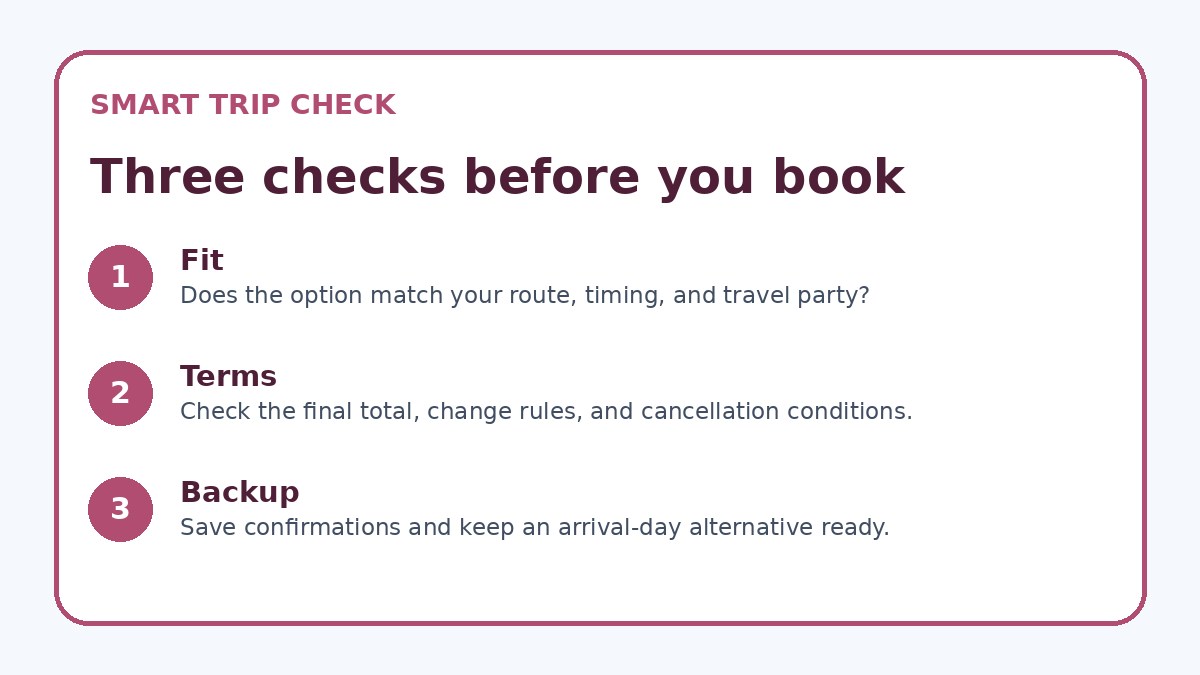
Before clicking purchase, confirm three things on the provider’s final booking page: the exact baggage allowance for each flight segment, fees for additional or overweight bags, and whether fees are charged per segment or per direction. Check how the carrier treats transfers through Canadian customs for arrivals into Vancouver — if you must clear customs and re-check bags, that affects connection time and may negate a lower baggage fee. Also scan the fare rules for change and refund policies; flexible dates might reduce baggage spend now but limit your ability to change plans later without penalties.
If the cheaper fare requires a tighter connection or an extra transfer, plan contingencies: pack essentials in a carry-on in case checked luggage is delayed, and consider purchasing a refundable or flexible seat for the most vulnerable leg. At the airport, ask ticketing agents about combined itineraries and whether they can consolidate bags onto a single ticket at check-in if you purchase separate legs. For additional comparison, Trip.com can be used to cross-check current availability and conditions, but always confirm baggage specifics on the airline’s official page before finalizing.
Frequently asked questions
How many days of date flexibility should I use to find better baggage deals for Vancouver?
Start with a five- to seven-day window around your ideal travel dates; this range usually exposes most weekend and weekday fare differences without creating an unwieldy search. If your plans are highly flexible, expand the window to two weeks to capture seasonal variations or lower-demand midweek flights. Always compare the total cost including baggage fees, not just the fare alone. Once you find promising dates, confirm the baggage allowance text on the airline’s booking page — that is the authoritative information for fees and weight limits.
Is it safe to book separate one-way tickets to save on baggage if I have heavy luggage?
Booking separate one-way tickets can produce lower combined costs or different baggage rules per leg, but it increases risk: carriers may not interline luggage, and if you miss a connection you might not be protected. If you pursue this strategy, leave generous connection buffers and confirm baggage transfer rules before purchase. Consider buying flexible fares for the most vulnerable segment or travel insurance that covers missed connections caused by delay. On the airline booking page, verify whether checked bags transfer automatically and whether customs procedures require reclaiming luggage.
What should I check on the airline’s booking page about baggage before I finish a Vancouver booking?
On the airline’s final booking page, verify the exact baggage allowance for each flight segment (number of pieces, weight per piece, and carry-on rules), fees for additional or overweight/oversize items, and whether charges apply per segment or per direction. Also check transfer policies: whether checked bags are interlined between carriers or must be claimed and re-checked, and any special rules for international-to-domestic connections arriving in Canada. Finally, read the fare rules for change and cancellation penalties so you understand the cost of switching dates later.
Final planning note
Bringing extra luggage to Vancouver doesn’t have to be expensive if you make dates work for you. Focus on total trip cost — base fare plus all baggage-related charges — and use a five- to seven-day flexible search to surface alternate routings and fare buckets that change baggage allowances. Verify everything on the airline’s final booking page, allow extra time for connections when bags might need re-checking, and weigh whether the time cost of a longer routing is worth the money saved. With careful comparison of dates, routing, and baggage rules, you can find an itinerary that balances your luggage needs against convenience and overall travel cost.
Continue planning
Check current options and final conditions
Use the provider page to confirm live availability, the final total, cancellation terms, and every condition that matters to your trip.
This evergreen planning guide was created with AI-assisted drafting and a structured quality review. It does not display live prices, schedules, availability, visa guidance, or provider rankings. Verify current details before booking. Some links are affiliate links; we may earn a commission at no additional cost to you.