Practical answer first: if you value simplicity, one-stop customer service, and a single booking confirmation, an organized package can be the faster way to get a complete Hong Kong trip booked. If you prize control over exact hotels, flights, budgets, and the ability to mix carriers, independent bookings (air, hotel, activities separately) usually give more flexibility and potential savings — at the cost of more time and responsibility when things change. For a first-time visitor, weigh how much time you can spend researching, whether you need on-trip support, and how confident you are handling changes like flight delays or accommodation swaps. Below you’ll find the tradeoffs, decision criteria, and a practical checklist so you can pick the approach that matches your comfort level and travel priorities.
What a package booking gives you
Package bookings typically bundle core trip components — at minimum a flight and a hotel, sometimes transfers and a sightseeing option — into one reservation. For a first-time visitor to Hong Kong, that can remove the need to compare dozens of hotels or navigate unfamiliar airport transfer options. The main practical benefit is administrative: one invoice, one customer-service channel, and a streamlined check-in process when the supplier coordinates arrival transfers or vouchers.
Packages can also simplify documentation: you’ll usually have unified travel documents and a single contract to review. That convenience is helpful when you prefer not to manage separate confirmation codes or when you want an operator to handle problems. Before you buy, check what’s included and what’s not — for example, whether airport transfers, baggage allowances, city-tour vouchers, or ticketed attractions are covered — and verify the provider’s final booking pages for exact inclusions and change/cancellation rules.
What separate bookings give you
Booking flights, hotels, and activities separately gives full control over each element. You can pick a specific airline and seating option, choose a hotel on your preferred street or neighborhood, and book individual experiences at times that suit your schedule. For first-time visitors who want to prioritize location — say staying in Tsim Sha Tsui, Central, or Causeway Bay — separate hotel selection is usually the best way to ensure you get precisely the neighborhood and room type you want.
Independent bookings also make it easier to chase loyalty points, use airline or hotel promos, or swap in low-cost carriers and boutique properties. That flexibility can reduce cost or increase quality, but it does mean you must coordinate arrival times and ground transport yourself. When planning separate bookings, compare cancellation and change terms across suppliers and verify baggage allowances, check-in policies, and refund rules on each provider’s final booking page.
| Approach | Best for | Tradeoff to check |
|---|---|---|
| All-in-one package | Travelers wanting convenience, single-point support, and less planning time. | Less granular control over hotel choice, flight options, and customization; check included services before booking. |
| Separate bookings | Travelers who want to customize hotels, airlines, and activities precisely. | Requires more research, coordination, and hands-on management of changes and connections. |
| Hybrid (mix of package + separate) | Travelers who want arrival security plus selective upgrades or special experiences. | Requires careful tracking of confirmations and understanding which supplier covers each part. |
| Self-managed but assisted | Travelers who book independently but use comparison sites or travel agents for guidance. | You gain advice and options but remain responsible for final bookings and policy verification. |
How to decide: three practical criteria
Start with your time versus control tradeoff. Ask how many hours you’ll spend researching: if you have limited time and want an easy all-in-one purchase, a package reduces decision fatigue. If you enjoy tailoring travel and can spend time finding the exact hotel, flight connection window, and attraction slots you want, separate bookings give better control. Also consider whether you need on-arrival support; packages often include local assistance which can be reassuring on your first visit.
Second, evaluate your tolerance for handling disruptions. Packages usually have a single customer-service channel that may help rebook internal legs, while separate bookings mean dealing with individual suppliers when a flight is delayed or an accommodation issue occurs. Finally, think about total trip cost and fees: packages sometimes include fees or convenience charges, while independent bookings can expose you to unbundled fees. Whatever you choose, review change and cancellation policies carefully on the supplier’s final booking pages and compare them side-by-side before paying.
Before you book
- List your priorities (budget, neighborhood, loyalty program, support) before searching so you can compare like-for-like offerings.
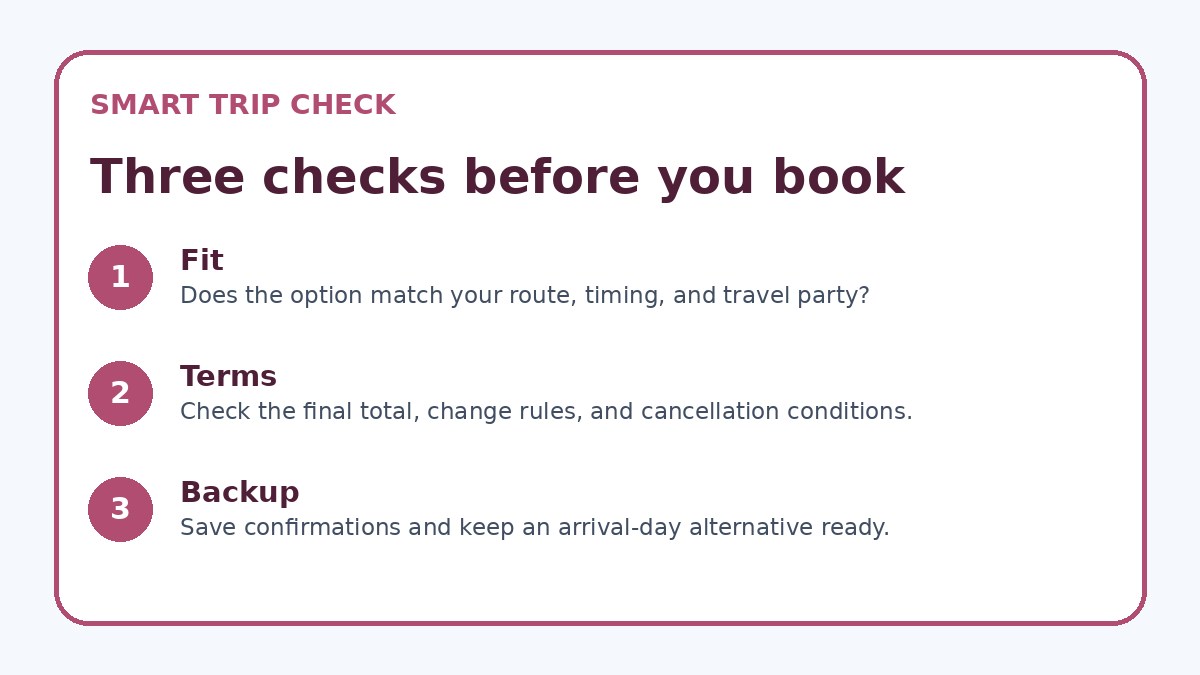
- Compare cancellation and change policies side-by-side on the final booking page for each supplier or package.
- Verify baggage allowances, transfer inclusions, and meeting-point instructions for any package or separately booked transfer.
- When booking separately, allow generous connection time between flights and between arrival and hotel check-in.
- Save all confirmations, local contact numbers, and emergency help details in one accessible place (email plus an offline copy).
- If you use a travel comparison site like Trip.com, cross-check the provider’s official page for exact terms before final payment.
Practical comparison and when to mix both
You don’t have to pick exclusivity. A common hybrid strategy is to buy a package for flights and basic hotel nights to lock in arrival logistics, while booking extra nights, special hotels, or unique experiences separately. That approach gives the safety of a coordinated arrival with the freedom to upgrade parts of your stay. For example, you might secure a mid-range package for core nights and add a boutique hotel for a splurge night booked directly with the property.
Mixing approaches also helps manage risk: if one supplier fails to deliver, your separately booked components remain independent and possibly easier to rebook. When you mix, keep organized records: separate confirmations, contact numbers, and a timeline of arrival and check-in times. Always verify transfer details, baggage allowances, and attraction voucher redemption instructions on the supplier’s final booking page so you know exactly how each piece links together during your trip.
Frequently asked questions
Can I mix a package for flights and a separate hotel booking in Hong Kong?
Yes — many travelers combine a package that secures flights and basic accommodation with separately booked nights at a preferred hotel. If you do this, confirm arrival logistics: who handles transfers, whether the package lists a specific hotel name or category, and whether the package arrival time matches your separately booked hotel check-in window. You’ll also need to manage separate cancellation and change policies, so review each supplier’s final booking page for exact terms and contact details before confirming.
How should a first-time visitor choose a Hong Kong neighborhood when booking separately?
Decide what you want to be near (malls and nightlife, historic sites, Hong Kong Island business districts, or inbound ferries to outlying islands). Research neighborhoods — for example, Kowloon for skyline views and markets, Central for nightlife and transport links, or Causeway Bay for shopping — and check travel times to the places on your must-see list. When booking, verify the hotel’s proximity to an MTR station, local transport options, and access to the neighborhoods you plan to visit by checking the provider’s final booking page and maps.
What documents and confirmations should I carry for mixed bookings?
Keep flight e-tickets, hotel confirmations, transfer vouchers, and activity receipts accessible both digitally and offline. Note provider contact numbers, pickup times and locations, and voucher redemption instructions, and screenshot or print any QR codes or reference numbers. If you booked through an agent or package, record their emergency contact details; for separate bookings, keep each supplier’s contact information. Always verify the specific pick-up points, operating instructions, and refund conditions on the final booking pages before traveling.
Final planning note
There’s no one-size-fits-all answer: choose a package if you want a less hands-on booking experience and a single support channel, or pick separate bookings if precise control over hotels, airlines, and activities matters more. For many first-time visitors, a hybrid approach balances the two — lock in arrival logistics with a package and tailor the rest independently. Whatever you decide, take the time to compare cancellation and change policies, verify inclusions on the provider’s final booking pages, and organize your confirmations and contacts. That preparation turns either approach into a smoother Hong Kong arrival and a more confident trip.
Continue planning
Check current options and final conditions
Use the provider page to confirm live availability, the final total, cancellation terms, and every condition that matters to your trip.
This evergreen planning guide was created with AI-assisted drafting and a structured quality review. It does not display live prices, schedules, availability, visa guidance, or provider rankings. Verify current details before booking. Some links are affiliate links; we may earn a commission at no additional cost to you.