Practical answer first: if you have more than two large suitcases, steep mobility limits (small children, mobility aids), or need door-to-door convenience after a long flight, a private transfer will usually save time and hassle. If you travel light-ish, are comfortable lifting bags onto platforms and through stations, or are prioritizing a lower out-of-pocket cost and flexible city access, Toronto's public transit can be a perfectly viable option. This article helps you weigh those tradeoffs by focusing on luggage load, physical effort, cost transparency, and time reliability. Read on to learn decision criteria you can use at booking time, what to verify on provider pages, and simple packing and pickup tips to make whichever choice you make run smoothly.
See current options before you compare the details
Availability and final conditions change. Open Trip.com now or keep reading for the practical comparison.
Assessing your luggage and mobility needs
Start by inventorying your luggage and any mobility equipment. Count checked suitcases, rolling carry-ons, garment bags, sports gear, and items that are heavy or oddly shaped. Note whether you’ll be traveling with strollers, infant car seats, or mobility aids that require ramps or elevators. Think about who will be handling the bags and how much lifting they can realistically do—two adults can manage several medium suitcases, but a single traveler or someone with limited mobility will find that much harder. This simple inventory narrows the choice quickly: more bulky items generally point toward private transport.
Also consider how much walking and stair-climbing you’re willing to do after a long journey. Public transit in Toronto can include walking between terminals and platforms, elevator waits, and carrying bags on and off trains or buses. If your itinerary includes a tight connection to another flight, an early check-in, or a late arrival when elevators might be crowded, count those factors against transit. Conversely, if you enjoy city transit or want to stop en route, public options give flexibility and the chance to see neighborhoods en route to your accommodation.
Comparing door-to-door time and reliability
Private transfers usually advertise direct, door-to-door service from airport terminal curb to your hotel or rental. That minimizes transfers, reduces walking with heavy bags, and simplifies arrival logistics—particularly late at night or with unpredictable weather. When booking, check the provider’s exact pickup point, whether the driver meets you inside the terminal (meet-and-greet), and what happens if your flight is delayed. Verify on the booking page how they handle wait time, flight tracking, and missed pickups so you’re not surprised at the curb.
Public transit reliability depends on schedules, service frequency, and how well the connections line up with your arrival time. Trains and airport buses can be fast and frequent during the day, but you should factor in the time to get from the terminal to the station, any transfers, and the need to haul bags across platforms. If time sensitivity matters—early check-in, business meeting, or a tight schedule—compare total door-to-door travel time estimates for both options rather than just looking at vehicle travel time.
| Approach | Best for | Tradeoff to check |
|---|---|---|
| Private transfer (car, shuttle, or prebooked taxi) | Travelers with many or bulky suitcases, groups, or mobility needs who value door-to-door convenience. | Higher out-of-pocket cost and reliance on booked pickup details; verify vehicle capacity and wait-time policies. |
| Public transit (train, airport bus, subway) | Light packers and budget-conscious travelers comfortable with walking and managing luggage on platforms. | More physical effort and possible transfers; check elevator locations and luggage handling requirements. |
| Hybrid: transit plus short taxi or rideshare | Those who want lower cost but need last-mile convenience to avoid carrying bags far on transit. | Requires coordinating multiple segments and may incur small additional fares; confirm suitcase compatibility with short taxis. |
| Meet-and-assist or porter services | Passengers needing extra help within the terminal who still want to use public transport or taxis. | May be an extra booking step and not available at all times; verify availability and where to meet the assistant. |
Ready to check the option that fits your plan?
Use your exact dates and traveler details so the provider page can show the current total and conditions.
Cost tradeoffs and what to verify before booking
Cost is often decisive, but it’s not only about the headline fare. For private transfers, confirm vehicle size (can it accommodate your luggage?), whether the rate is per vehicle or per passenger, and what fees apply for additional bags or long waits. Make sure the booking page shows cancellation and change policies, and whether taxes or airport surcharges are added at checkout. If you consider rideshare apps or taxis, look for luggage-related vehicle class options and the provider’s stated baggage policies on the final booking step.
With public transit, check ticketing rules: whether airport-to-city fares require a special ticket, if contactless bank cards are accepted, and how to move luggage through stations. Factor in any last-mile costs—short taxis, e-scooters, or local transit you might need after the main ride. If you’re comparing trip providers online, you may use Trip.com to see current availability and wording, but always confirm critical details—vehicle capacity, pickup location, and baggage policy—on the operator’s official booking page before you commit.
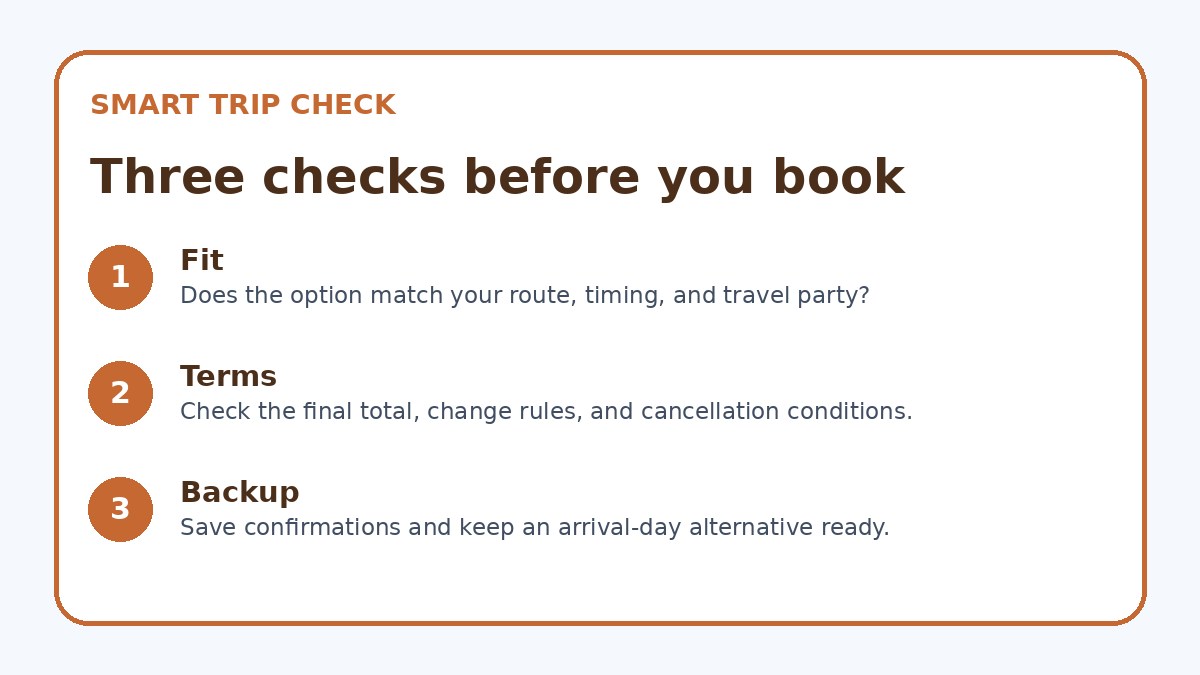
Before you book
- Count all checked and carry-on bags and list any oversized or fragile items before choosing transport.
- On the provider’s booking page, confirm vehicle size, luggage allowance, and whether the price is per vehicle or per passenger.
- Note terminal exit names, curbside pickup points, and elevator locations on an airport map before you land.
- If using transit, check route maps for transfers and identify elevator/stair locations between platforms.
- Keep digital copies of booking confirmations and have the driver’s contact information readily available on arrival.
- Pack a small day bag with essentials so you can leave larger suitcases locked or stored if you’ll be moving around the city.
Packing, pickup, and smooth-arrival tips
Pack with handling in mind: use luggage with wheels, straps, and clear tags; distribute weight so items are easy to lift; and keep essentials in an accessible carry-on. For private transfers, have the booking confirmation and terminal arrival area noted on your phone, and be ready to contact the driver if needed. If you expect to need assistance moving heavy bags inside the terminal, check whether porter services are available at the airport and confirm how to locate them. For a meet-and-greet, keep your phone on and ensure the driver has accurate contact details.
If you choose public transit, scout entry/exit points on maps and note elevator locations in advance. Time your arrival to avoid rush hours when trains and elevators get crowded—this is particularly helpful when moving bulky bags. Allow extra time for potentially slow elevator service and for walking between platforms and outdoor stops in inclement weather. Finally, have a backup plan (a taxi rank or a rideshare app ready) in case the transit option proves impractical on arrival due to unexpected delays or lack of elevator access.
Frequently asked questions
Is it worth prebooking a private transfer to avoid terminal hassle?
Prebooking a private transfer removes the uncertainty of locating a vehicle after a long flight and ensures the driver knows your arrival. It also lets you request an appropriately sized vehicle for your luggage. Before you book, check the provider’s terms on wait time allowances, flight-tracking policies, and how they handle delays or missed pickups. If meet-and-greet service is important, verify whether the driver meets you inside the terminal and where that meeting point will be—these specifics are usually listed on the final booking page.
Can I take public transit with large suitcases in Toronto?
Yes, public transit systems generally allow luggage, but practical comfort depends on size and the stations involved. Some airport-to-city routes require walking between terminal exits and platforms; elevators are not always immediately adjacent and can be busy. If you have several large suitcases, carrying them through stations and onto trains may be tiring and slow, especially during peak periods. Look up station layouts and elevator locations in advance, and plan for extra time or a short taxi for the last mile if needed.
How do I choose between a taxi, rideshare, and private shuttle for a large group with extra baggage?
For groups, begin by confirming each option’s vehicle capacity and baggage rules on the booking page. Taxis and rideshares offer flexibility but may require multiple cars for large luggage loads unless you specifically request a larger vehicle. Private shuttles or prebooked multi-passenger transfers can often accommodate groups and multiple suitcases in a single vehicle—confirm how many large bags fit and whether the rate covers luggage. Also verify pickup logistics so the driver can access the correct terminal curb with your group.
Final planning note
Choosing between public transit and private transfer in Toronto depends mainly on how much luggage you carry, who’s handling it, and how much walking or waiting you’re willing to do. Private transfers simplify the arrival process and reduce physical strain at the cost of a higher fare and reliance on pickup details. Public transit is budget-friendly and integrated but requires more physical handling and planning around station access. Use the checklist to prepare, verify specific baggage and pickup rules on the provider’s final booking page, and consider a hybrid approach if you want to balance cost and convenience.
Continue planning
Check current options and final conditions
Use the provider page to confirm live availability, the final total, cancellation terms, and every condition that matters to your trip.
This evergreen planning guide was created with AI-assisted drafting and a structured quality review. It does not display live prices, schedules, availability, visa guidance, or provider rankings. Verify current details before booking. Some links are affiliate links; we may earn a commission at no additional cost to you.