Practical answer first: for most business travelers, choose the option that minimizes station-to-meeting uncertainty — usually a direct high-speed train if your meetings are central, or a flight only when time on the ground is tight and you can reliably solve last-mile transfers. Prepare the travel day by confirming departure and arrival points, allowing buffer time for security or border checks, packing work essentials in a carry-on that fits your chosen mode, and pre-booking any ground connections and seat reservations you need. This article helps you compare tradeoffs, create a realistic timeline, and make the small pre-trip decisions that preserve energy and productivity on the travel day.
See current options before you compare the details
Availability and final conditions change. Open Trip.com now or keep reading for the practical comparison.
Deciding between train and air for Paris to Amsterdam
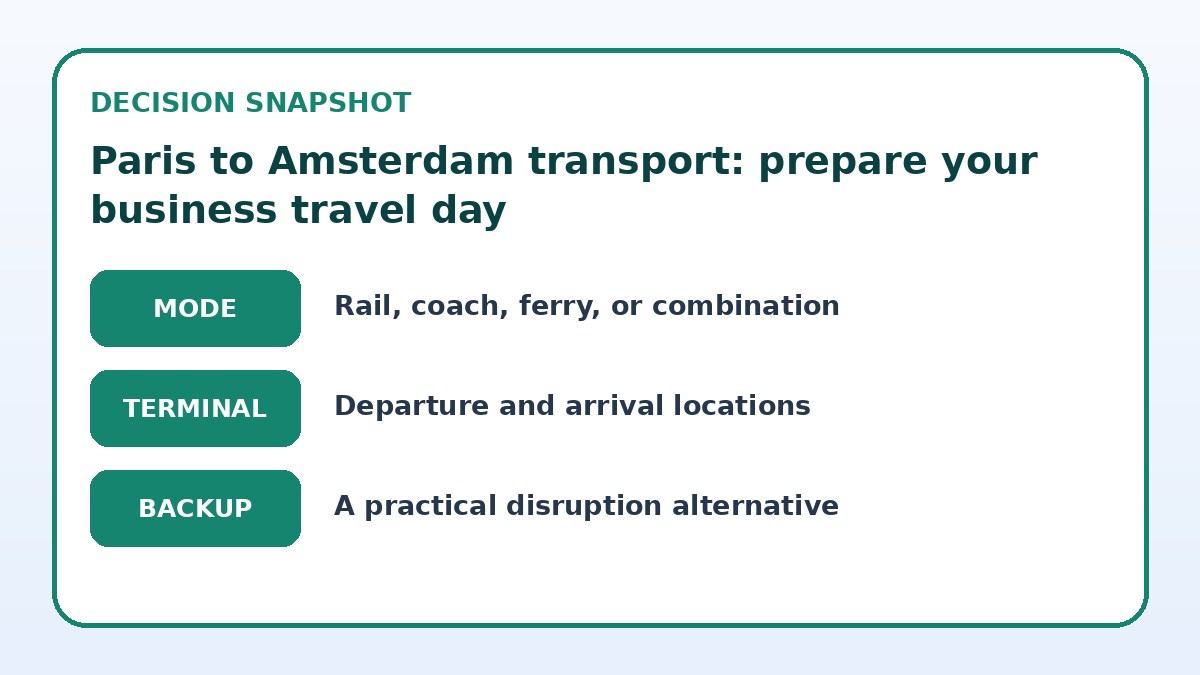
Start by mapping where in Paris and Amsterdam you actually need to be. High-speed trains typically arrive in central Amsterdam stations, which can be a direct advantage for meetings in the city. Flights usually land at airports outside the city centers and require additional transfers. For a business traveler, that last-mile time and unpredictability—rush hour traffic, transfer waits, or airport security—often outweighs any small difference in journey time. When comparing options, check how close each departure and arrival point is to your first and last meeting and factor in reliable taxi or public-transport journey times, not just travel duration between origin and destination.
Next, compare the soft productivity factors: on-board Wi‑Fi quality, seat comfort, and the ability to work without interruption. Trains often let you spread documents on a table and move to a café car; airports offer lounges and quiet spaces if you have lounge access. Also consider how luggage and formal wear behave: trains are easier for carrying a garment bag or laptop case without repeated security checks. If your travel day includes multiple quick meetings, prioritize the option that keeps you mentally fresh and logistically simple rather than shaving a few minutes off the scheduled travel time.
Create a realistic timeline for the travel day
Build your timeline from the arrival appointment backward. Include fixed times (meeting start, check-in time) and variable blocks (security, boarding, transfers). For trains, include time to get to the station, ticket validation or seat reservation checks, and any expected station security lines. For flights, add check-in, security, possible passport controls, and transfer from the airport to your meeting location. Use calendar alerts: one at departure from your hotel, one for leaving the transport hub for the meeting, and another as a final reminder to close laptops and be ready to disembark.
Factor in buffer windows for unexpected delays: a 15–30 minute buffer for urban transfers and at least 30–60 minutes for airport-related processes is prudent for most business travelers. If you must be reachable during transit, flag your calendar with a short status message or an assistant contact who can handle immediate issues. Decide before you travel whether you’ll accept rescheduling in case of significant delays or if you will book a later alternative proactively. That decision affects how conservative your buffers should be and whether you want immediate rebooking protections on your ticket.
| Approach | Best for | Tradeoff to check |
|---|---|---|
| Direct high-speed train | Central meetings and avoiding airport transfers | May be slightly longer door-to-door if your start or end points are far from stations |
| Flight with airport transfer | When ground travel is constrained and absolute fastest airborne time is needed | Adds uncertainty from security, baggage, and airport-to-city transfer times |
| Mixed approach (train to nearby hub then short flight) | Complicated itineraries where train links a convenient airport | Introduces an extra transfer and scheduling complexity to manage on the travel day |
| Flexible refundable booking | High-importance meetings where missing or rescheduling is costly | Higher upfront cost and sometimes stricter rules for rebooking windows |
Ready to check the option that fits your plan?
Use your exact dates and traveler details so the provider page can show the current total and conditions.
Pack, power, and presentation: get meeting-ready en route
Assemble a travel kit that keeps you productive and presentable. Essentials include a slim laptop or tablet with a charging cable, an easy-access portfolio for printed materials, a compact garment bag or travel steamer for business attire, and noise-cancelling earbuds. Keep chargers and a portable battery in an external pocket for quick access; place critical documents—boarding pass, tickets, ID—where you can reach them without unpacking. If you need to freshen up before a meeting, a small toiletry kit and wrinkle-release spray can make a big difference when you have limited time on arrival.
Think about in-transit work: download presentations offline, snapshot important emails, and set devices to low-power or airplane mode as required. If you expect to take calls, test mobile reception options along the route and identify a quiet corner in the station or a lounge where you can dial in without distractions. Also plan for contingencies: a printed copy of meeting directions, local contact numbers, and a backup charger or SIM/eSIM option if international roaming may be unreliable. These small preparations reduce stress and avoid last-minute scramble before client-facing moments.
Before you book
- Confirm exact departure and arrival station or terminal names and add travel time to and from each in your calendar.
- Reserve a seat or buy a ticket that matches your preferred work environment (window seat, table, or lounge access).
- Pack a carry-on with chargers, portable battery, business documents, a compact garment bag, and essential toiletries.
- Set up calendar alerts for departure, transfer, and arrival times plus a contact for in-transit disruptions.
- Download presentations and critical files offline and make printed copies of meeting directions and key contact numbers.
- Verify and screenshot the provider’s final booking page showing cancellation rules, baggage policy, and identity requirements.
What to verify before you finalize bookings
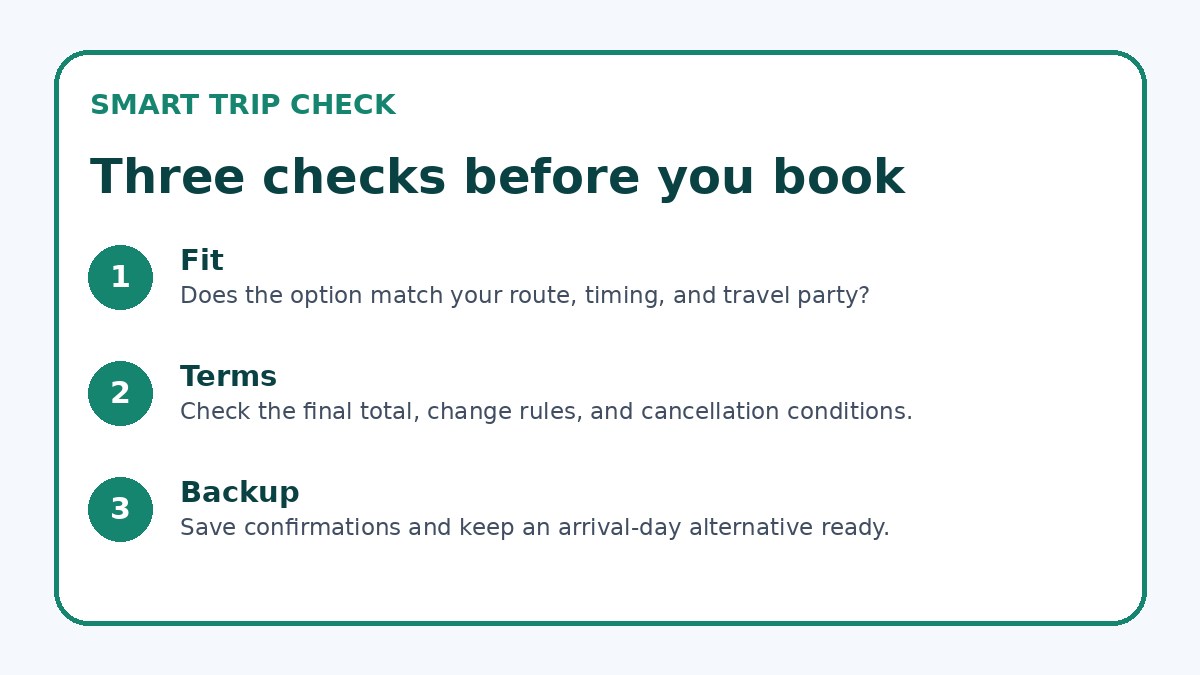
Before you buy, verify the departure and arrival locations shown on the provider’s final booking page: station names, terminals, and any required transfers. Check cancellation and change terms so you know your flexibility if meetings or flights shift. Confirm whether seat reservations, luggage allowances, or lounge access need separate purchase. If a provider lists connections, verify if the option is labeled direct or connecting and whether a minimum connection time is recommended by the operator. For current schedules and availability you can also compare conditions on Trip.com, but always treat that as a starting point and confirm on the carrier or operator site.
Also check boarding procedures and identity requirements: whether ID or passport checks are completed at departure, whether printed or mobile tickets are preferred, and if any special entry or exit formalities apply for cross-border rail travel. For flights, confirm check-in opening times and whether online check-in saves you time. Finally, review refunds and rebooking policies closely if your itinerary contains tight business commitments; knowing the penalty structure helps decide whether to pay for a flexible ticket or accept a stricter budget option.
Frequently asked questions
How much buffer should I allow when traveling from Paris to Amsterdam for a morning meeting?
Aim for at least 30 minutes buffer from arrival to your meeting if you’re arriving at a central station and 60 minutes or more if arriving at an airport outside the city. Buffer needs depend on whether you need to change transport modes, collect luggage, clear customs, or travel during rush hour. If you rely on taxis, add expected city traffic delays. For high-stakes meetings, plan a larger buffer and a backup transfer so you can rebook or take an alternate route without panicking.
Can I work reliably on the train between Paris and Amsterdam?
Yes, many business travelers find trains reliable for focused work: they typically allow laptop use, have power outlets in many carriages, and offer a steadier environment than buses or taxis. Wi‑Fi availability varies by operator and carriage; assume intermittent connection and download anything you need offline. If you require confidentiality, choose a quiet carriage or a seat with a table, and use noise-cancelling headphones. Bring a portable battery in case outlets are unavailable or occupied.
What should I check about tickets and policies before booking?
On the final booking page, verify exact departure and arrival places, whether the journey is direct or connecting, seat reservation requirements, and baggage rules. Review cancellation and change fees, rebooking windows, and any lounge or priority boarding options you may need. Confirm identification requirements for cross-border travel and whether mobile or printed tickets are accepted. If you have specific timing constraints, check how the operator handles missed connections or delays and whether they offer assistance or alternatives.
Final planning note
Preparing the travel day for Paris to Amsterdam transport boils down to reducing uncertainty: pick the route that keeps you closest to your meetings, build buffers into your calendar, and pack to stay productive and presentable. Verify departure and arrival points, ticket terms, and any seat or lounge reservations on the provider’s final booking page so you know what is guaranteed and what might change. Plan a primary and backup transfer strategy, download or print critical materials, and set alarms for key milestones on travel day. The few extra minutes you spend planning will pay back in calm, control, and better performance at your business appointments.
Continue planning
Check current options and final conditions
Use the provider page to confirm live availability, the final total, cancellation terms, and every condition that matters to your trip.
This evergreen planning guide was created with AI-assisted drafting and a structured quality review. It does not display live prices, schedules, availability, visa guidance, or provider rankings. Verify current details before booking. Some links are affiliate links; we may earn a commission at no additional cost to you.