
If you’re flying from Bangkok to Phuket for the first time, the practical choice many travelers face is whether to take a direct flight or build a longer connection that prioritizes comfort. For most first-time visitors who want a low-stress transfer, aim for a single-bag itinerary with a 60–120 minute minimum for domestic-to-domestic connections, or longer if you prefer extra buffer for delays, meals, or airport lounges. Decide first if you value minimizing total travel time, avoiding tight connections, or adding a relaxed stopover in Bangkok for sleep or sightseeing. From there, compare schedules, aircraft types, seat pitch, baggage rules, and flexible change policies. This article walks you through tradeoffs, step-by-step checks to make before you book, and practical on-the-ground tips to make your Bangkok to Phuket flights comfortable and predictable.
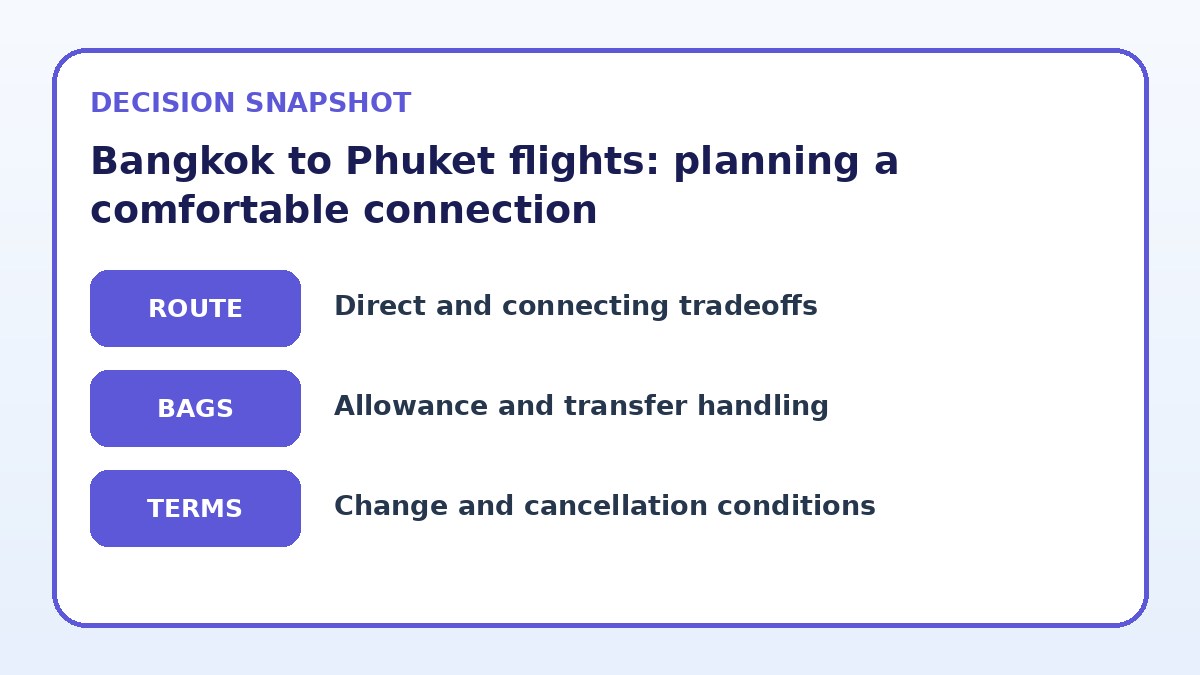
See current options before you compare the details
Availability and final conditions change. Open Trip.com now or keep reading for the practical comparison.
Direct vs connecting: pick the comfort strategy that fits
A direct flight from Bangkok to Phuket is straightforward: one takeoff, one landing, and no gate-to-gate transfers. For first-time visitors, that simplicity reduces stress because you don’t need to worry about missing a tight connection or navigating another boarding area. However, direct options can vary in aircraft size and seat comfort; on short domestic hops airlines sometimes use smaller planes with denser seating. If restful seating is essential, check whether the flight uses an A320-family or similar narrowbody, and look for options to buy extra legroom or a preferred seat.
A connecting itinerary adds variables but also advantages. A longer connection can let you rest in an airport lounge, have a proper meal, or even leave the terminal for a short walk or hotel rest if immigration rules and time permit. Connections can also open more schedule choices, letting you avoid red-eye departures or arrive at a preferred time. The tradeoff is exposure to delay risk and the need to confirm whether baggage transfers automatically; when booking a connection especially on separate tickets, plan for generous buffer time and verify transfer rules on the carrier or booking platform.
How to compare flights for a comfortable long-haul connection
Start by listing candidate itineraries with total door-to-door time, number of connections, and layover lengths. Don’t rely solely on price or total flight duration: note the airport terminals for each leg, whether baggage is checked through, and whether you’ll need to clear security or immigration between flights. For comfortable connections, prioritize itineraries that keep transfers within the same terminal or that have long, predictable layovers—generally at least 90 minutes for domestic transfers, more if you plan to use an airport lounge or leave the terminal for a hotel nap.
Next, compare comfort-related details: seat pitch and width, availability of extra-legroom or exit-row seats, and whether the airline offers inflight snacks or meals on the route. Also check ticket flexibility for changes and cancellations. When these provider-specific facts could change, verify change fees, baggage allowances, and lounge access on the airline’s final booking page before you buy. Trip.com can be a quick place to compare current availability and conditions, but always confirm critical rules with the carrier directly.
| Approach | Best for | Tradeoff to check |
|---|---|---|
| Book a direct flight | Travelers who prefer the simplest, fastest route with minimal transfer steps | May offer fewer schedule choices and limited in-flight comfort options on short hops |
| Choose a single-ticket connection | Those who want transfer protection and automatic baggage handling between legs | Often more complex routing and potentially longer total travel time |
| Build a long DIY layover on separate tickets | Flexible travelers seeking a low-cost stopover or an overnight rest in Bangkok | You assume full responsibility for missed connections and baggage logistics |
| Prioritize premium seats or lounge access | Passengers who value comfort, privacy, and a relaxed transfer experience | Adds cost and may not be available on all short domestic aircraft |
Ready to check the option that fits your plan?
Use your exact dates and traveler details so the provider page can show the current total and conditions.
Practical transfer timing and what to do during a long layover
Plan layovers to match your tolerance for risk and activity. If you’re risk-averse or traveling during monsoon months with higher delay probability, choose longer buffers—two hours or more. If you want to refresh, a layover of three to six hours gives time for a lounge session, a proper meal, or a short rest in a pay-per-use airport lounge or nearby transit hotel. Keep in mind immigration rules if you plan to leave the airport: you may need to show onward boarding passes and allow time for local travel.
During a long layover, prioritize low-effort ways to recharge: hydrate, eat a balanced meal rather than heavy street food, stretch or take a brief walk, and use a lounge if you have access or can buy in. Keep essential items in your carry-on—charger, a change of clothes, travel-size toiletries, and medications—so you can freshen up without retrieving checked luggage. Set calendar alarms for boarding times and routing changes and monitor the airline app to catch gate updates early.
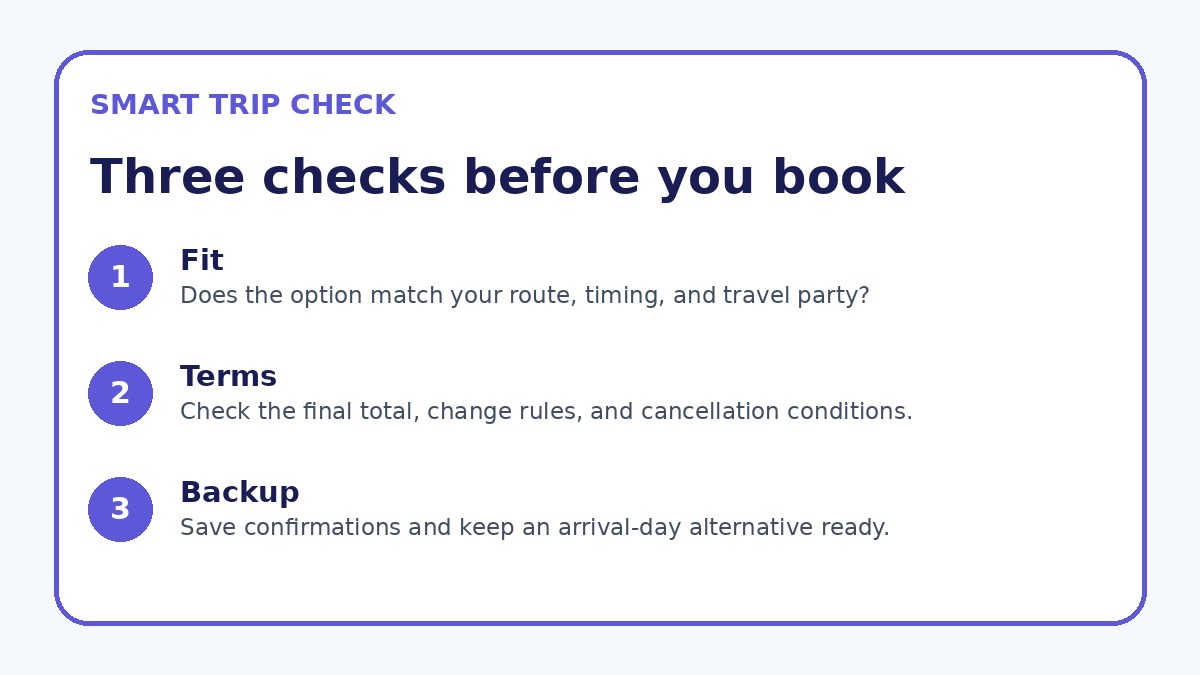
Before you book
- Confirm whether your booking is on a single ticket or separate tickets and verify baggage transfer rules on the airline’s final booking page.
- Choose a layover buffer appropriate to your risk tolerance—minimum 90 minutes domestic, longer if you plan to leave the terminal.
- Compare aircraft type and seat maps before selecting seats to ensure acceptable legroom for the short hop.
- Pack essential freshening items and charger in your carry-on to be ready during a long connection without accessing checked luggage.
- Verify terminal and gate information on the day of travel via the airline app and set alerts for changes.
- Arrange onward ground transport from Phuket in advance or confirm reliable taxi/ride-hailing options to avoid delays on arrival.
Booking logistics, luggage rules, and day-of-travel checks
Before you finalize a booking, verify baggage transfer rules, particularly when mixing carriers or using separate tickets. If the itinerary is on one ticket with the same alliance or interline agreement, checked bags are more likely to be transferred automatically. When traveling on separate tickets, assume you might need to collect baggage and recheck it—plan more time or avoid checking bags if possible. Also check seat selection and whether paid seats are refundable if you change plans.
On travel day, reconfirm flight status and terminal assignments, and arrive earlier than usual if you have checked luggage or need visa checks for leaving the terminal. For Bangkok departures, factor in surface transport time to the departure airport and potential traffic; for Phuket arrivals, consider how you’ll get to your accommodation—arrange hotel transfers or know taxi and ride-hailing options. Finally, keep digital copies of your itinerary, passport photo page, and any health documentation readily accessible.
Frequently asked questions
Is it better to book a direct Bangkok to Phuket flight or build a long connection?
Direct flights reduce the number of moving parts in your journey and are usually the easiest choice for first-time visitors who want minimal stress. A long connection, however, can be better if you prefer a relaxed pace, want to use an airport lounge, or need to wait for a specific arrival time in Phuket. Your decision should balance tolerance for delay risk, desire for comfort (seats, lounges), and whether you need flexibility to change plans. Consider ticket type, baggage rules, and total door-to-door time before booking.
How much transfer time should I allow when connecting in Bangkok?
For domestic-to-domestic connections within the same airport, many travelers choose at least 60–90 minutes as a minimum to clear security and move between gates. If you will collect and recheck bags, use different terminals, or plan to use a lounge or exit the airport, build in two hours or more. Also factor in traffic to the departure airport if you need to travel across the city, and when in doubt pick longer buffers to reduce stress.
What on-the-ground comforts should I prioritize for a comfortable connection?
Prioritize easy wins: guaranteed seat selection (extra legroom if needed), lounge access for a quiet space to eat and rest, and carry-on organization so essentials are immediately available. Hydrate and eat before boarding, and use a short layover to change into comfortable clothes or freshen up. If you plan to leave the terminal, check visa requirements and allow ample time to return and clear security. Verify lounge access and seat rules on the airline’s booking page before purchase.
Final planning note
Making a comfortable Bangkok to Phuket connection starts with defining what you value: speed, simplicity, or low-stress comfort. Direct flights are the simplest option; thoughtfully timed connections can add convenience and rest if you build in enough buffer time. Before you book, compare seat options, baggage transfer rules, and layover logistics; verify all provider-specific policies on the airline’s final booking page. On travel day, pack carry-on essentials, monitor flight updates, and give yourself margin for delays. With a few deliberate checks and the right layover strategy, your first trip from Bangkok to Phuket can be relaxed and predictable.
Continue planning
Check current options and final conditions
Use the provider page to confirm live availability, the final total, cancellation terms, and every condition that matters to your trip.
This evergreen planning guide was created with AI-assisted drafting and a structured quality review. It does not display live prices, schedules, availability, visa guidance, or provider rankings. Verify current details before booking. Some links are affiliate links; we may earn a commission at no additional cost to you.