
If you’re planning your first trip to Sydney and want to use flexible dates to improve options, start by deciding which parts of your plan are fixed and which can move. Prioritise immovable items—work leave, school schedules, key events—and treat flights, accommodation, and tours as negotiable within a window of a few days to two weeks. Use a mix of date-range searches, price calendars, and weekday-versus-weekend comparisons to reveal cheaper flight times and hotel stays. Keep in mind tradeoffs: shifting dates can lower fares but may change weather, event access, or transit schedules. Read the provider’s final booking page to confirm baggage rules, cancellation terms, and exact itinerary connections before you commit.
See current options before you compare the details
Availability and final conditions change. Open Trip.com now or keep reading for the practical comparison.
Which dates matter most for Sydney travel deals
Not every date affects price or experience equally. Flights and hotels typically respond to local demand spikes—weekends, public holidays, and major events in Sydney can push prices up. For a first-time visitor, the two most important levers are arrival weekday and length of stay. Arriving midweek often lowers airfares and avoids weekend hotel check-in spikes. Stretching a stay by just one night can shift you out of a high-demand pricing bracket; similarly, shortening or extending by a night may open cheaper flight itineraries or a better hotel rate.
Weather and daylight patterns also play a role, especially if you plan outdoor activities like Bondi walks or harbour cruises. If your dates are entirely flexible, compare early-week and late-week windows across months to see how seasonality affects costs. Remember that shifting dates may change tour availability and ferry or train timetables; always check the provider’s final booking page for exact departure times, cancellation policies, and whether connections are self-transfer or protected by the operator.
How to search smartly with flexible dates
Use a layered search approach: start with a broad calendar view to identify low-cost months or weekdays, then narrow to specific days for exact itineraries. Many flight search tools offer a one-month or flexible-date view; run those alongside hotel price calendars to spot matching low-cost clusters. Don’t rely on a single site—compare at least two booking engines plus the airline and hotel’s own pages because rates and rules can vary. Trip.com can be used as one comparison point but verify final terms on the supplier’s booking page before completing payment.
When exploring alternatives, keep a simple matrix: list candidate arrival dates down one axis and potential departure dates across the other, then note relative prices, number of connections, overall travel time, and cancellation terms. Factor in travel fatigue from long connections or late-night arrivals; a slightly higher fare with a direct or shorter connection may be worth it. For accommodation, check refundable rates and how length-of-stay discounts apply—sometimes the nightly average improves when you add a night because of weekly rate thresholds.
| Approach | Best for | Tradeoff to check |
|---|---|---|
| Shift travel by weekday (e.g., Tues–Thurs) | Travelers prioritising lower midweek airfare and quieter attractions | May reduce weekend entertainment options and some evening services |
| Move travel by a full week (off-peak month) | Those flexible on timing who want seasonally lower rates and fewer crowds | Changes seasonal weather and may close some seasonal attractions |
| Adjust only accommodation dates | Visitors needing fixed flight dates but wanting hotel savings | May require extra local transport or shorter touring days |
| Select refundable fares and rebook within window | People who need flexibility and want to chase last-minute savings | Refundable rates are typically higher until you rebook to a cheaper fare |
Ready to check the option that fits your plan?
Use your exact dates and traveler details so the provider page can show the current total and conditions.
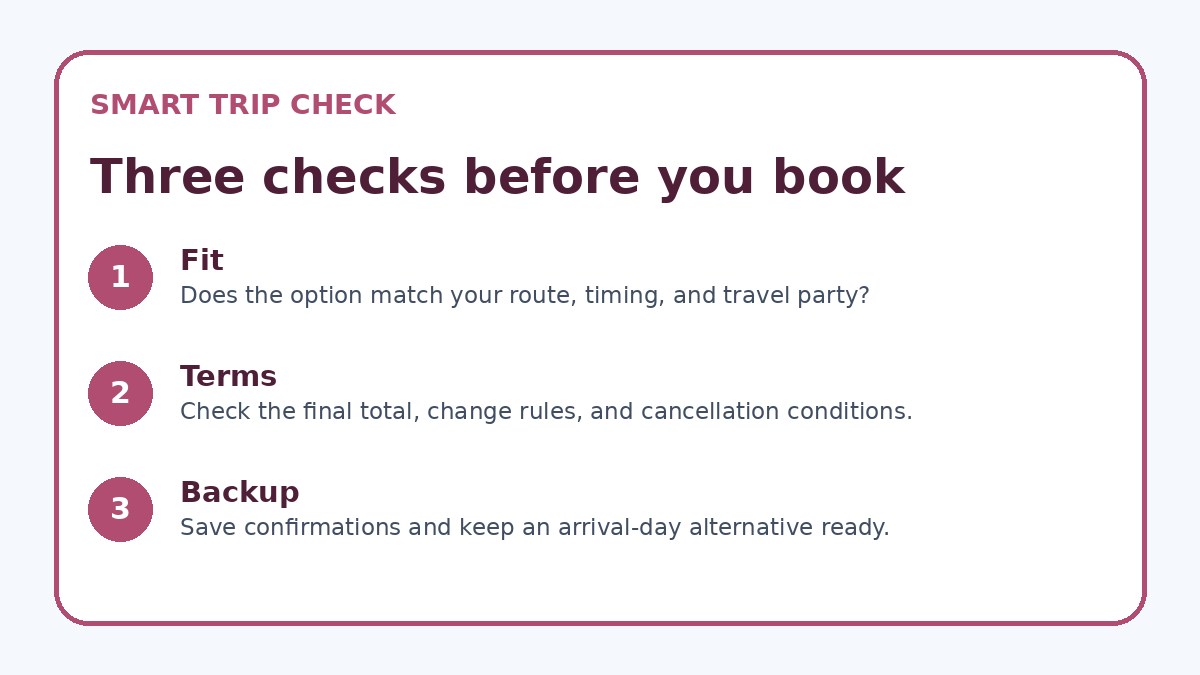
Tradeoffs: price vs convenience, weather, and events
Lower prices often require compromises. Cheaper flights may arrive late at night or involve extra connections, increasing the risk of missed transfers and fatigue. Cheaper hotels may be farther from the CBD or main sights, adding local transport time and cost. If you value waking up close to the Harbour Bridge or Opera House, you may accept a slightly higher nightly rate to avoid daily commuting. For first-time visitors, balance the extra cost against the time and energy saved; sometimes a modest premium is a better value overall.
Shifting dates to chase a lower fare can change the seasonal experience. Sydney’s shoulder seasons bring milder weather and fewer crowds, but some outdoor activities or harbour tours operate on different schedules off-peak. Also, major local events — festivals, concerts, or sporting fixtures — can add atmosphere but raise prices and demand. Before booking, check event calendars and read provider booking pages to confirm refundability, schedule guarantees, and any age or group-size limits that might affect your plans.
Before you book
- Decide which travel dates are fixed (work/school/events) and which you can move by 1–14 days.
- Run at least three flexible-date searches: two flight tools and one hotel calendar, and compare results.
- Compare total door-to-door time for each flight option, not just price, including connection lengths and overnight arrivals.
- Check cancellation, change fees, baggage rules, and seat selection details on the booking provider’s final page before paying.
- If you book refundable rates to hold space, set a calendar reminder to recheck prices and cancel or rebook within the allowable window.
- Confirm local transport and late check-in options for any arrival time that might be outside normal service hours.
Practical booking steps and what to verify on final pages
Once you pick a date window, lock in refundable or flexible options while you keep searching. Use holds where available, or book refundable fares if you expect to change dates. On every provider’s final booking page verify the exact flight times (including connection duration), baggage allowance and fees, cancellation and change fees, and whether the fare includes seat selection or loyalty benefits. For accommodation, confirm the nightly rate, cleaning fees, whether taxes are included, and the exact cancellation window. This prevents surprises when adjusting dates later.
Also check arrival logistics: if your flight arrives late, confirm transport options and hotel late check-in policies. For tours or timed attractions, verify the meeting point, transfer inclusion, and how rescheduling is handled. If you’re booking separate flight and hotel reservations, note whether the hotel requires a credit card pre-authorization or deposit. Keep screenshots or PDF confirmations and compare them before you make any date changes so you can assess penalties or savings accurately.
Frequently asked questions
How many days flexibility should I allow to find better Sydney travel deals?
Allowing a window of three to seven days either side of your ideal travel dates is often enough to reveal better airfares and hotel rates, while keeping connections and schedules manageable. If you can shift by a full week or move between shoulder seasons, you may see larger changes in availability and price, but that can also change local weather and event access. Use flexible-date search calendars and monitor rates for several days to spot patterns before committing.
Should I always pick the cheapest flight or hotel found in flexible searches?
Not necessarily. The lowest-priced option may have long overnight connections, strict change fees, or a distant location that adds transit time and cost. For first-time visitors to Sydney, factor in convenience—shorter travel time, simpler connections, central location, and refundable terms can be worth a modest premium. Verify baggage allowances, cancellation policies, and exact check-in rules on the supplier’s final booking page before choosing the budget option.
How do events and holidays in Sydney affect flexible-date planning?
Local events, school holidays, and public celebrations can sharply increase demand and shift prices for a few days. If you’re flexible, either avoid those high-demand windows or aim to arrive several days before or after them to capture lower rates and smaller crowds. Always check event calendars relevant to Sydney and cross-reference dates with your flexible search results; where event-related tickets are important, confirm availability and rescheduling rules on the final booking pages before locking the rest of your trip.
Final planning note
Using flexible dates is a practical way to improve flight and hotel options when visiting Sydney for the first time. The key is structured flexibility: know which dates you can realistically move, run layered searches across multiple tools, and always verify critical details on the provider’s final booking page—flight times, baggage, cancellation rules, and check-in policies. Balance potential savings against convenience, weather, and event timing to choose the plan that fits your comfort and priorities. With a short flexible window and a few precautionary holds or refundable bookings, you can often secure a better travel experience without unnecessary risk.
Continue planning
Check current options and final conditions
Use the provider page to confirm live availability, the final total, cancellation terms, and every condition that matters to your trip.
This evergreen planning guide was created with AI-assisted drafting and a structured quality review. It does not display live prices, schedules, availability, visa guidance, or provider rankings. Verify current details before booking. Some links are affiliate links; we may earn a commission at no additional cost to you.