If you’re planning to rent a car in Vienna with your family, the single most useful thing you can do is read the insurance wording on the booking page and rental agreement before you pay. Focus on three concrete items: the allowed drivers and any young-driver limits; the liability/excess amount (what you’d actually pay after a claim); and clearly listed exclusions such as driving on unpaved roads or leaving children unattended. That practical checklist lets you compare options quickly and avoid surprises at drop-off.
After the essentials, you’ll want to weigh tradeoffs: a lower excess often means higher daily add-ons or a mandatory third-party supplement. Your credit card may offer partial coverage, but many cards exclude certain vehicle types or require you to decline the rental company’s collision waiver. The sections below explain the common terms, how to read booking pages, what to confirm on the provider’s final page, and a simple decision checklist for family needs.
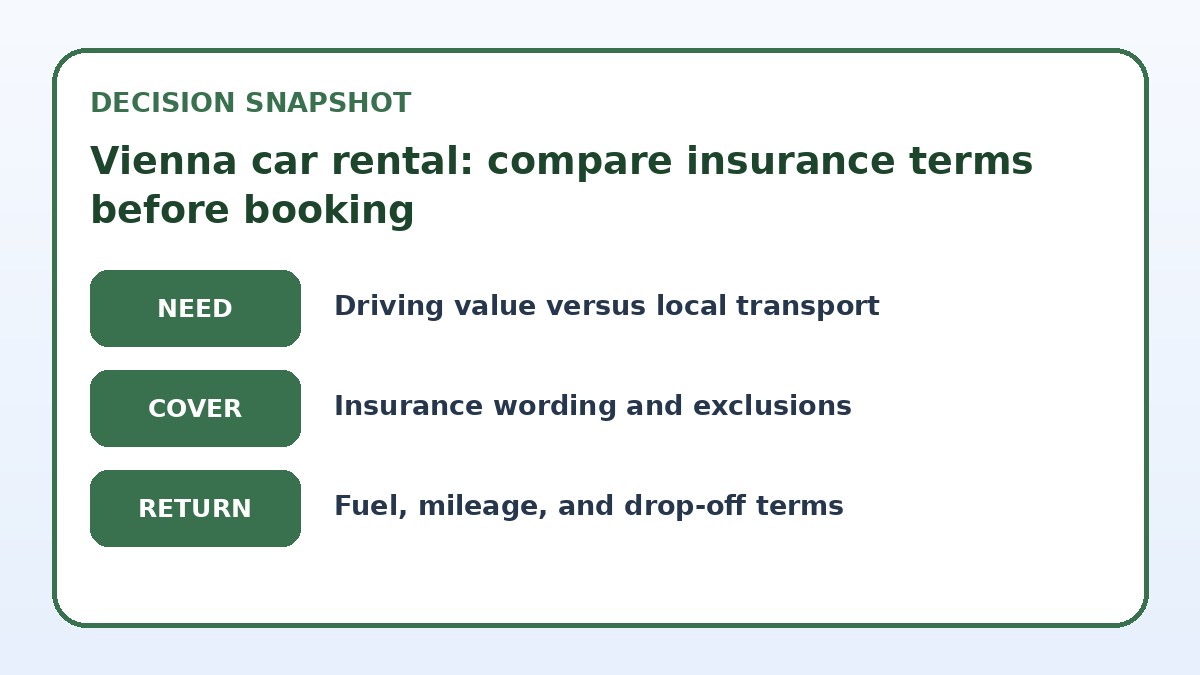
See current options before you compare the details
Availability and final conditions change. Open Trip.com now or keep reading for the practical comparison.
Key insurance terms families need to know
Collision Damage Waiver (CDW) or Loss Damage Waiver (LDW) reduces or removes financial responsibility for damage to the rental car. Many providers sell a ‘‘super CDW’’ that lowers the excess to zero but costs more per day. Third-party liability covers damage or injury you cause to others; its minimum level may be set by law, but the policy wording will show whether you need supplemental liability coverage for larger claims. Theft protection can limit your responsibility for a stolen vehicle but often excludes personal items and may require proof you locked and secured the car.
Excess (deductible) is the out-of-pocket sum you must pay if the car is damaged or stolen. Some polices list an administrative fee and a separate damage fee, so check the total potential charge. Personal Accident Insurance covers medical costs for people in the car, but many travelers rely on health insurance or travel insurance instead—verify whether children are covered under the rental’s policy. Roadside assistance may be included but with mileage, labor, or towing caps; confirm exactly what kind of breakdown service is promised.
How to read the booking page and rental agreement
On the booking page, scan for headline words then click through to the full rental conditions. Providers often summarize coverage but hide key limits in the terms and conditions PDF. Look for explicit statements about who is permitted to drive (age and license requirements), the excess amount, whether credit card holds will be taken, and whether optional waivers are refundable if you cancel. If a provider offers insurance bundles, open the bundle details and note whether the waiver eliminates excess fully or only reduces it.
When you pick up the car, the check-in staff will present the rental agreement—read the section labeled ‘‘insurance and liability’’ carefully before you sign. Verify whether child seats, roof boxes, or GPS units are excluded from coverage; damage to accessories is frequently charged separately. Ask the agent to initial any verbal promises and never rely on verbal assurances alone. If the agent shows different coverage than the booking page, ask for the provider’s written policy and compare it before accepting the vehicle.
| Approach | Best for | Tradeoff to check |
|---|---|---|
| Pay for super CDW through the rental company | Families who want minimal financial risk and quick claims handling at the desk | Higher daily cost; may duplicate credit card benefits and still exclude accessories or misuse damage |
| Rely on credit card rental coverage | Travelers with premium cards that document rental coverage and who accept limited exclusions | Often requires declining company CDW and may exclude certain vehicle classes, young drivers, or cross-border travel |
| Buy third-party travel insurance with car rental excess cover | Families seeking broader personal and travel protection including medical and trip disruption | Claims require paperwork and refunds can take time; you still pay the rental company at drop-off and claim later |
| Take minimal cover and accept higher excess | Budget-conscious families willing to manage small repairs and minor damage themselves | Higher out-of-pocket exposure in case of damage or theft; potential stress during a family trip |
Ready to check the option that fits your plan?
Use your exact dates and traveler details so the provider page can show the current total and conditions.
Common family-specific concerns and tradeoffs
Families often prioritize low excess and reliable roadside assistance over the cheapest daily rate. A zero-excess waiver reduces stress if you have small, active children who might leave doors open or spill items, but it raises the rental cost. Decide whether to pay the additional daily fee for a super CDW or rely on a comprehensive travel insurance policy to fill gaps. If you have a European breakdown plan or a credit card with car rental coverage, confirm they are accepted by the rental company and do not require you to decline the company’s CDW.
Young drivers and additional drivers are common pitfalls: many contracts levy high fees or outright exclude drivers under a certain age, and some require every driver to be named at pickup. If you plan to rotate driving with a partner, add them on the agreement. Also, consider whether you’ll make cross-border trips: insurers often limit coverage outside Austria or demand written permission; if you expect to drive into neighboring countries, verify territory limits and any additional fees before booking.
Before you book
- Confirm the exact excess/deductible amount and whether an optional waiver reduces it to zero on the provider’s final booking page.
- Add all intended drivers to the reservation and verify any young-driver surcharges or age limits in the rental terms.
- Check exclusions for accessories, child seats, roof racks, and unpaved-road damage, then request those exclusions in writing if unclear.
- Verify whether roadside assistance and towing are included, and note the emergency contact number and expected response time.
- If using credit card coverage, print or save the card issuer’s rental-coverage terms and confirm the rental firm accepts it.
- Confirm cross-border permissions and territory limits if you plan to drive outside Austria; get written approval for any international travel.
What to verify on the provider’s final booking page
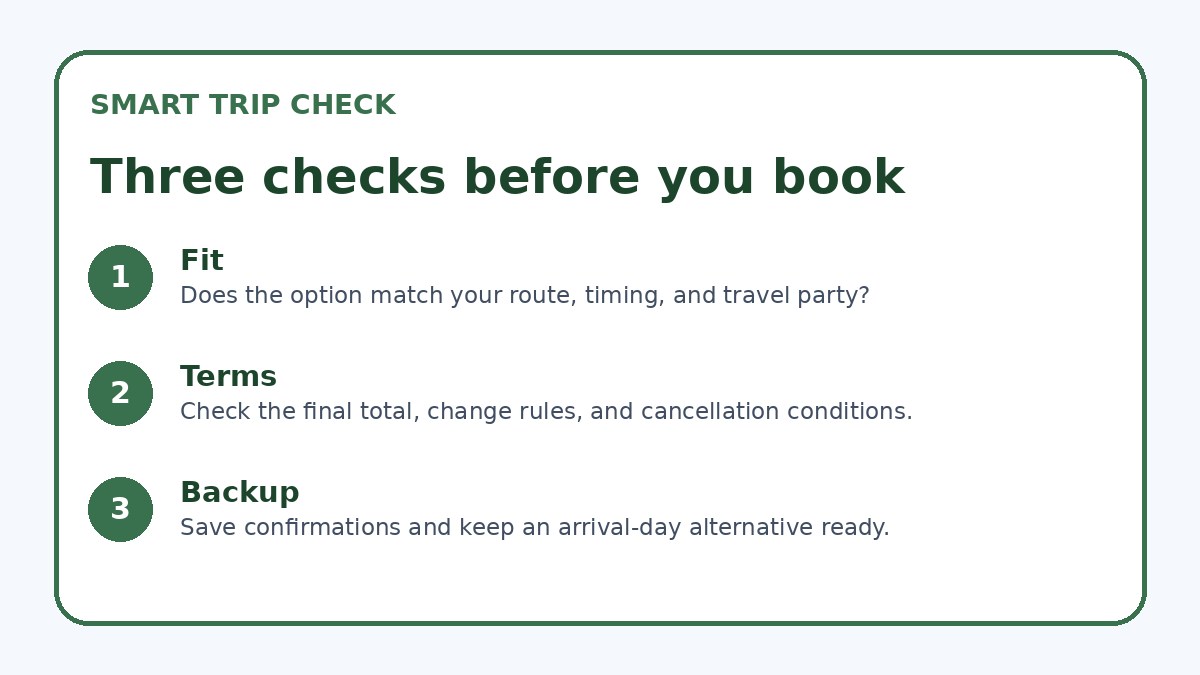
Before finalizing payment, confirm the following items on the provider’s final booking page: the exact excess amount and whether the quoted optional waiver reduces it to zero; which drivers are covered; the list of explicit exclusions; and the deposit or credit-card hold amount. If roadside assistance, theft protection, or towing are included, confirm the response time and contact number. Don’t rely on screenshots or third-party summaries—always click through to the supplier’s own terms and the PDF contract link.
If any ambiguity remains, email or call the provider and request the specific clause or a written confirmation that you can keep with your booking documents. When your credit card is used for cover, ask the provider whether they place a separate hold and check the amount and timing. Finally, make a short list of the three most important protections for your family—usually excess, liability, and roadside assistance—and ensure the booking page shows them clearly before you complete the reservation.
Frequently asked questions
Does my credit card usually cover Vienna car rental insurance?
Many premium credit cards offer secondary or primary rental-car insurance, but coverage varies. You must check the card’s specific terms for country exclusions, vehicle categories, and whether young drivers are covered. Most cards require you to decline the rental company’s CDW to activate card coverage, and some still expect you to pay the rental firm upfront and claim reimbursement later. Before relying on your card, save the issuer’s insurance policy wording and call their benefits helpline to confirm the exact requirements for Vienna rentals.
What should I do at pickup to avoid insurance surprises?
At the counter, request a clear explanation of the insurance line items and the total deposit or hold amount. Ask the agent to show where the excess is written in the rental agreement and confirm whether optional waivers remove it. Inspect the car carefully, take timestamped photos of any existing damage, and ask the agent to note them on the condition report. Get any verbal promises or exception approvals initialed on the contract, and keep a copy of the signed agreement and the agent’s name.
If a child damages the car, will standard cover apply?
Insurance coverage for damage caused by passengers, including children, depends on the policy wording and the circumstances. Many policies cover accidental damage regardless of who caused it, but some exclusions apply for negligence—such as leaving doors open, not using child restraints, or failing to secure keys. Check the rental terms for examples of excluded conduct, and ask the provider whether child-caused incidents are treated differently. If in doubt, consider a super CDW or travel insurance that explicitly covers accidental damage caused by family members.
Final planning note
For families renting a car in Vienna, the most practical approach is straightforward: read the insurer’s wording on the booking page, confirm the excess and named drivers, and ask about exclusions and roadside assistance before you pay. Lowering the excess with a rental-company waiver reduces immediate financial risk but comes at a recurring cost; relying on credit-card cover or third-party policies can save money but often adds paperwork and limitations. Use the checklist to verify the three priorities for your trip—excess, permitted drivers, and assistance—and keep documentation with you at pickup. If anything on the final booking page is unclear, get a written confirmation from the provider; that small extra step avoids the biggest headaches on a family trip.
Continue planning
Check current options and final conditions
Use the provider page to confirm live availability, the final total, cancellation terms, and every condition that matters to your trip.
This evergreen planning guide was created with AI-assisted drafting and a structured quality review. It does not display live prices, schedules, availability, visa guidance, or provider rankings. Verify current details before booking. Some links are affiliate links; we may earn a commission at no additional cost to you.