
If this is your first trip to Jeju, the single most useful hotel decision is where to base yourself relative to transport. Pick a hotel close to a transport spine you actually plan to use—airport shuttle, intercity bus stops, ferry terminals, or the main circular bus route—and you’ll save time, stress, and taxi fares. This article gives a practical starting point: which neighborhoods connect to which transport options, the tradeoffs to expect (quiet vs. convenience, sightseeing vs. evening life), and a short method to compare hotels on the booking page. Follow the quick checklist and the verification steps to confirm transfer options, luggage handling, and local bus stops on the provider’s final booking page before you commit.
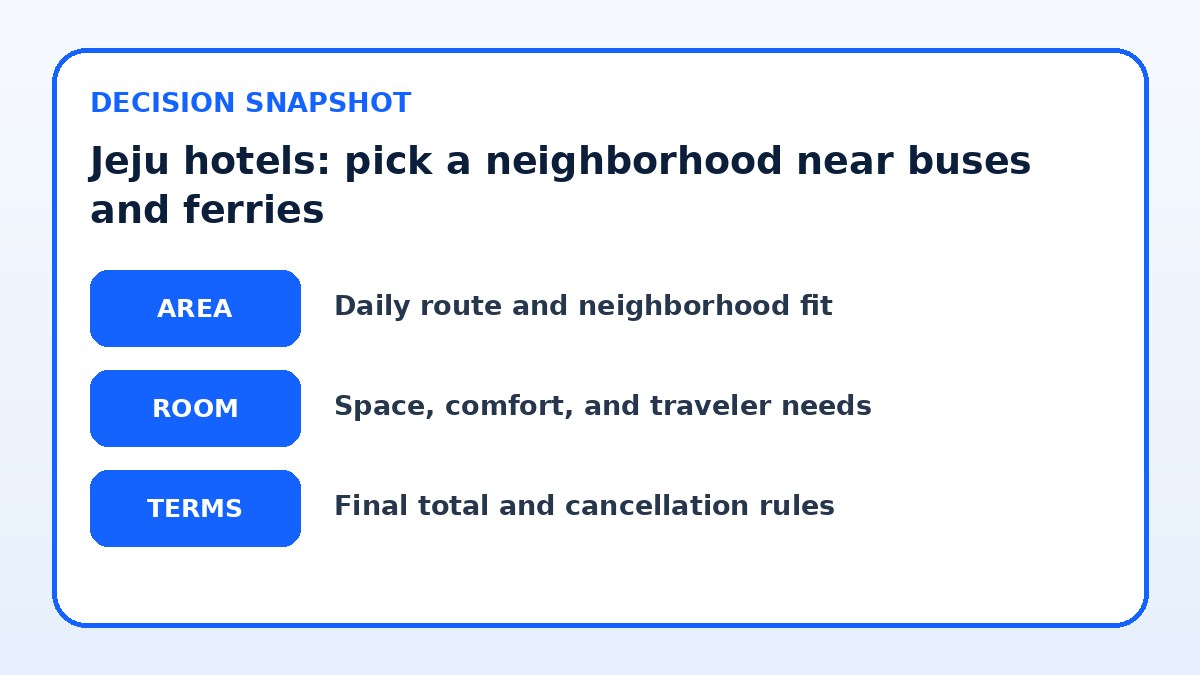
See current options before you compare the details
Availability and final conditions change. Open Trip.com now or keep reading for the practical comparison.
Which transport options matter for first-time visitors
Jeju’s main transport options for visitors are airport shuttles and taxis, intercity and local buses, ferries to nearby islands, and car rental. Each option changes how convenient a hotel feels. For someone who prefers not to drive, frequent local buses and the island’s circular routes make staying close to a main stop the priority. If you’re arriving or departing by ferry, proximity to the ferry terminal becomes the deciding factor to avoid early-morning transfers or heavy luggage walks.
Decide which transport you will actually use most of the time before you pick a neighborhood. Do you plan day trips that leave from Jeju City? Are you taking ferries to Udo or other islets? Will you join guided tours that include hotel pickup? The right hotel places you near the service you’ll depend on; that reduces wasted transit time and lets you use evenings for food and walking rather than commuting back and forth.
Neighborhood choices: tradeoffs and typical conveniences
Jeju City (especially around the airport and the eastern coastal area) is the most logical base if you value easy access to flights, airport shuttles, and multiple bus lines. Hotels here tend to be near intercity bus terminals and have straightforward taxi routes to the airport. Staying in the central city also means a range of dining and convenience options within short walking distance, which matters after a long flight or when you arrive late at night.
Seogwipo on the south coast is a better base if your itinerary focuses on southern attractions, waterfalls, and coastal walks. It has good local bus links and tourist routes but fewer direct airport shuttles; expect to use an intercity bus or taxi to reach the airport. Coastal or rural villages offer scenery and quiet but often require a car or multiple transfers, which increases travel time and complexity for first-time visitors who want simple, predictable logistics.
| Approach | Best for | Tradeoff to check |
|---|---|---|
| Stay near airport or Jeju City center | Arrivals, short stays, easy onward connections | Less scenic, more urban noise and fewer rural landscapes |
| Stay in Seogwipo or southern coast | Access to southern attractions and coastal walks | Requires longer transfers to the airport or some northern sites |
| Stay by ferry terminals | Day trips to Udo and nearby islets | Limited evening options and possibly fewer bus routes |
| Choose a quieter village or rural guesthouse | Scenic, peaceful stays and nature access | Often needs a car or multiple transfers; less public transit |
Ready to check the option that fits your plan?
Use your exact dates and traveler details so the provider page can show the current total and conditions.

How to evaluate hotels for true transport convenience
On the booking page, look past marketing language and check practical facts: walking distance to named bus stops or terminals, whether the hotel lists an airport shuttle and its pickup point, and if the property helps with taxi calls or luggage transfers. If the hotel mentions ‘near bus stop’ or ‘shuttle available’, check the hotel’s own site or contact them directly to confirm the exact stop name, schedule, and any service fees. The booking page should be your last check—verify details with the hotel or official transport providers before finalizing.
Also examine maps closely. Use the map view on the booking site to measure walking routes to the nearest transport stops and see whether those walks are along busy roads or easy sidewalks. If you rely on a shuttle, confirm the pickup location and whether it serves your arrival time. For hour-by-hour planning, cross-check the local bus timetables from the transport operator or the hotel, because frequency and first/last departures determine whether an area truly suits travelers without a car.
Before you book
- Confirm the exact name and location of the nearest bus stop or terminal on the hotel’s official site or by email.
- Ask the hotel whether an airport shuttle operates at your arrival time and whether reservations or fees apply.
- Measure walking routes from the hotel to stops using the booking site's map and a street map to check sidewalks and elevation.
- Verify how the hotel handles luggage and taxi reservations—request help if you have oversized bags or early departures.
- Check local bus timetables for your intended routes and note first and last departures for the days you’ll travel.
- Compare transport notes on at least two booking platforms and the hotel’s own page; resolve discrepancies before you pay.
Practical booking tips and what to verify before you go
When comparing hotels, filter results by the transport criteria that matter to you: proximity to the airport, ferry, or main bus routes. Use distance filters and map pins, and read recent guest comments specifically mentioning ease of arrival and departures. If you prefer evening flexibility, check that there are local food and convenience stores within walking distance so you won’t need late-night taxis after long days out.
Before you confirm a booking, ask the property five direct questions: exact name of closest bus stop, whether an airport shuttle runs at your arrival time, cost or reservation requirements for the shuttle, how they help with taxi calls and luggage, and the walking conditions between hotel and stop. If a site like Trip.com is part of your search process, use it to compare availability and user-submitted locations, but always verify operational details on the hotel’s official booking page or by contacting the hotel directly.
Frequently asked questions
Can I rely on buses alone in Jeju, or should I rent a car?
You can travel in Jeju without a car if your plans focus on key towns and major attractions served by main bus routes. Intercity and local buses link Jeju City and Seogwipo and reach many tourist sites, but frequencies vary and some scenic or remote spots have limited service. If you prefer maximum flexibility, early starts, or accessing secluded viewpoints and rural coastal roads, a rental car is convenient. Compare your itinerary against published bus timetables and the walking distances from your hotel to decide whether the extra cost of a car balances extra freedom.
How should I judge whether a hotel’s ‘near bus stop’ claim is practical?
‘Near bus stop’ can mean anything from 30 seconds to a 15-minute walk. Ask the hotel for the stop’s exact name and the most common route numbers that stop there. Then check a map to measure walking distance and look for pedestrian-friendly streets. Confirm the bus frequency for your intended travel times—if buses run only every 60–90 minutes where you plan to stay, a supposedly ‘near’ stop may still cost you time and missed plans. Always verify these points on the hotel’s official page or by messaging the property.
What transport checks should I do if I have an early ferry or flight?
For early departures, confirm the hotel’s recommended pickup points, pre-book an airport shuttle or taxi if offered, and ask whether the property can arrange a pre-dawn transfer. Verify the earliest bus or shuttle times for the day of travel and whether the hotel provides luggage storage if you must check out before departure. If public options are limited at that hour, budget for a taxi or arrange a private transfer through the hotel. Confirm any transfer booking and cancellation terms on the provider’s final booking page.
Final planning note
Choosing where to stay in Jeju is largely a transport-choice problem: match a hotel’s location to the transport spine you will actually use and you’ll avoid the biggest friction on your trip. For first-time visitors who do not want to drive, prioritize hotels with clear, verifiable access to frequent bus lines, airport shuttles, or ferry terminals depending on your itinerary. Use maps and direct questions to the property to confirm stop names, shuttle schedules, and walking conditions before booking. Compare notes across booking platforms and the hotel’s own site—Trip.com can be a place to check availability but always verify operational details with the hotel or official transport operators before you commit.
Continue planning
Check current options and final conditions
Use the provider page to confirm live availability, the final total, cancellation terms, and every condition that matters to your trip.
This evergreen planning guide was created with AI-assisted drafting and a structured quality review. It does not display live prices, schedules, availability, visa guidance, or provider rankings. Verify current details before booking. Some links are affiliate links; we may earn a commission at no additional cost to you.