If you’re traveling from Seoul to Hong Kong and want a comfortable long-haul connection, prioritize flight timing, seat choice, and a realistic layover buffer. For many first-time visitors, a connection that avoids overnight surprises and minimizes airport stress matters most: aim for a single-stop itinerary with a layover long enough to clear immigration if required, but short enough to avoid extra overnight accommodation. Choose seats with more legroom or a bulkhead if you’ll sleep on board, and consider whether the price justifies an extra hour of connection time or a premium seat. Before you book, check airline transfer policies, baggage-through options, and the arrival/departure terminals at both airports — these details determine whether a connection will be smooth or require extra ground time.
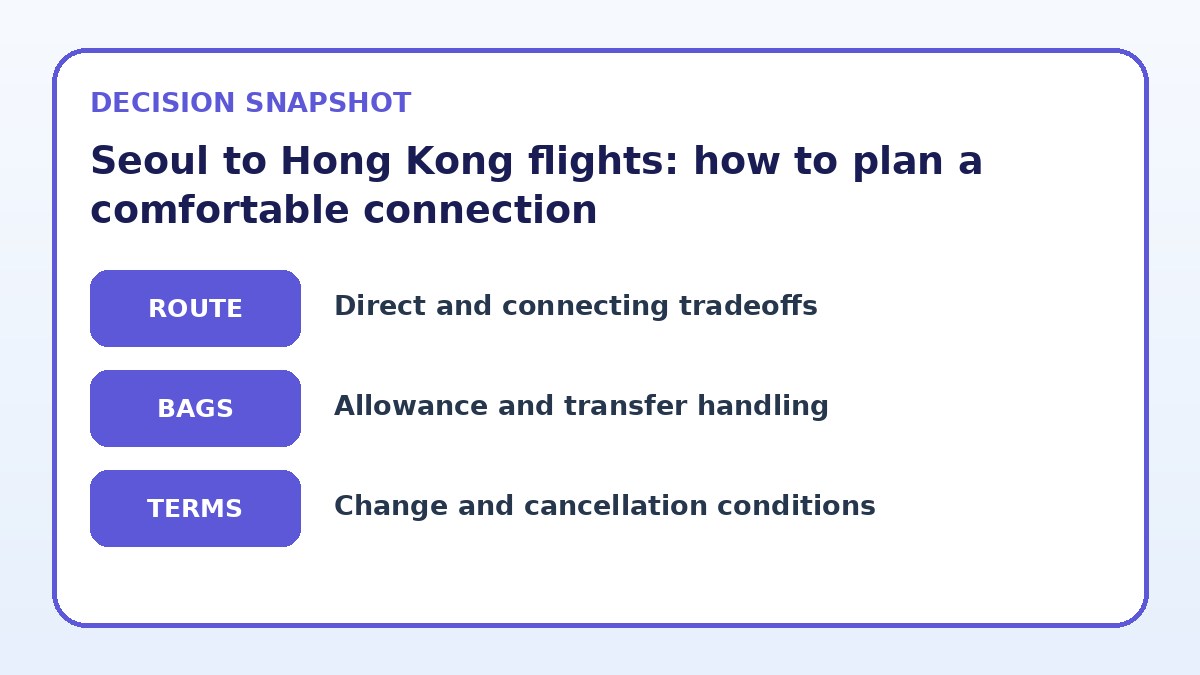
See current options before you compare the details
Availability and final conditions change. Open Trip.com now or keep reading for the practical comparison.
Choosing between direct and connecting Seoul to Hong Kong flights
Start by comparing direct and connecting options objectively. A nonstop is simplest when available: less chance of missed connections, no need to clear transfer security more than once, and fewer moving parts on travel day. But direct flights can depart at inconvenient times or carry a premium price. Many first-time visitors find that a single-stop itinerary with one well-timed connection balances cost and comfort. When evaluating connections, look at total door-to-door travel time, not just flight hours; factor in transfer waits, possible terminal changes, and ground transit to your accommodation.
For connecting itineraries, evaluate the transfer process at the connection airport. Does the connection require clearing immigration and customs? Will you need to recheck baggage and pass security again? These are the details that add minutes or hours. Also, inspect the arrival and departure terminal pairing—if transfers need an airport shuttle or a lengthy walk, add buffer time. Finally, consider how you handle disruption: a connection on one carrier with interline agreements typically simplifies rebooking, while separate tickets increase risk and require contingency planning.
Timing your flights for rest and minimal jet fatigue
Plan departure and arrival times around when you actually want to be awake at the destination. If you want to arrive in Hong Kong with a full day ahead, choose a flight that lands in the morning local time so you can check in and adjust to daylight exposure. For long-haul legs where sleep matters, book flights that align with your regular night sleep. If the connection forces you to stay awake through the night, consider upgrading to a seat with better recline or an exit-row bulkhead to improve comfort.
Avoid back-to-back tight connections that eliminate any chance to rest between flights. A mid-length layover can be an opportunity to stretch, eat, and reset, but anything longer than six to eight hours may lead to additional costs for lounge access or a day room if you need proper rest. If your itinerary includes overnight layovers, compare the benefit of a short hotel stay against the fatigue of airport sleeping; a clean, quiet room can be worth the expense for long-haul travelers who must perform soon after arrival.
| Approach | Best for | Tradeoff to check |
|---|---|---|
| Nonstop flight | Travelers who prioritize simplicity and minimize missed-connection risk. | May depart at less convenient times and often has fewer scheduling options. |
| Single well-timed connection | Visitors balancing cost and comfort with a planned buffer for transfer. | Requires checking transfer rules; longer total travel time than nonstop. |
| Budget-optimized multi-stop routing | Cost-sensitive travelers willing to accept extra travel time. | Higher risk of disruption and more complicated baggage and visa rules. |
| Premium cabin or seat upgrade | Those needing rest, extra space, or better in-flight service on long legs. | Increases ticket cost and may reduce flexibility on lower-fare tickets. |
Ready to check the option that fits your plan?
Use your exact dates and traveler details so the provider page can show the current total and conditions.
Practical seat, baggage and lounge choices for comfort
Seat selection is one of the most direct levers you control. For taller or larger travelers, exit row or premium-economy seats often deliver significantly more legroom. Window seats are best for uninterrupted sleep, while aisle seats suit travelers who move frequently. If you plan to work, choose seats with reliable power outlets and stable tray tables. Make your seat assignment as early as your ticket allows: the best available rows fill quickly, and last-minute changes often leave only standard seats.
Baggage policy will shape your transfer ease. Whenever possible, book itineraries that offer through-checked bags between legs; this saves time and reduces anxiety at intermediate airports. If you must collect and recheck, plan extra time and confirm where to do this at the airport. Consider lounge access for long layovers: lounges provide quiet space, showers, and food that can transform a tiring connection into a manageable break. If lounge access isn’t part of your ticket, check paid options or day passes from the airport.
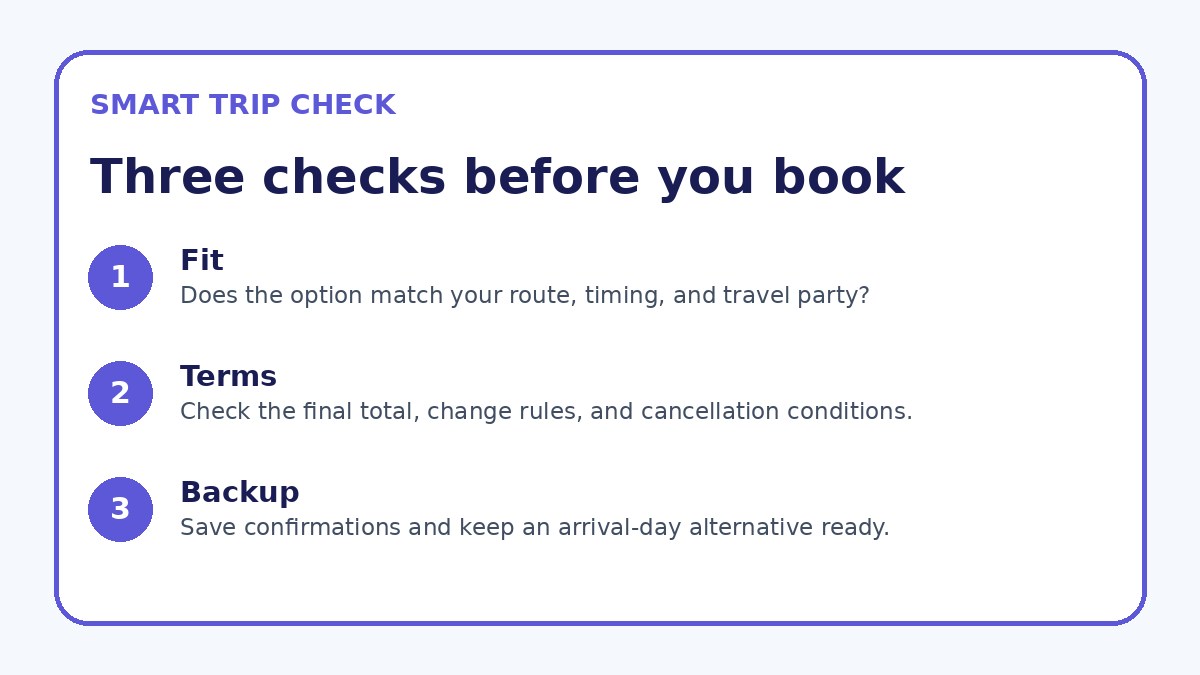
Before you book
- Confirm whether your itinerary includes through-checked baggage so you can avoid collecting and rechecking during the connection.
- Check exact arrival and departure terminals and research the inter-terminal transfer time at both airports.
- Verify whether you must clear immigration at the layover airport and check visa/entry requirements for transit if applicable.
- Reserve a seat with the legroom or position (window/aisle) that matches how you plan to rest or work on the flight.
- Arrange lounge access or a day room for layovers longer than three hours to ensure a comfortable break.
- Keep a contingency plan: note later flights on the same ticket or alternative routing in case of delay.
Transfers, visas and airport logistics to verify before booking
Before booking, find out whether your connection requires passing immigration at the layover airport. Some hubs allow airside transfers without immigration, while others require you to enter and exit the country. This affects how much transfer time you need and whether a transit visa is necessary. Verify the transfer rules specific to the carriers and airports on your itinerary—airlines’ booking pages or official airport sites list terminal transfer routes and whether interline baggage handling is provided.
Also confirm ground logistics at both Seoul and Hong Kong airports. Check which terminals your flights use, how long transfers between terminals take, and the available transport into the city. If you plan to use public transport or a private transfer upon arrival, verify pickup points and expected travel times during the time of day you’ll travel. Trip.com can be used to compare current availability and conditions, but always verify airline transfer rules, baggage allowances, and terminal maps on the provider’s final booking page before you commit.
Frequently asked questions
How much layover time should I allow for a comfortable Seoul to Hong Kong connection?
Aim for at least 90 to 120 minutes for a same-airport, airside transfer that doesn’t need immigration. If your connection requires passing immigration, collecting baggage, or moving between terminals by shuttle, add a conservative buffer of three to four hours. Also allow extra time for peak-hour congestion, long security queues, and potential delays. If you prefer less stress or plan to use airport lounges or services like showers, factor in additional time for those conveniences. Always check the carrier’s minimum connection time (MCT) for the specific route and terminal pairing before booking.
What should I check about baggage and airlines when booking a connecting itinerary?
Confirm whether both legs are on the same ticket and if the airline or alliance provides through-checking of your luggage; through-checked bags remove the need to collect and recheck at the layover. If you book separate tickets, assume you’ll collect and recheck unless the second carrier explicitly accepts interline transfer. Also verify weight and size allowances for both segments, because stricter baggage rules on one leg can lead to unexpected fees. Check the airline’s final booking page for exact baggage allowances, transfer policies, and whether your itinerary is protected in case of missed connections.
Is lounge access worth it for long layovers when traveling from Seoul to Hong Kong?
For many first-time visitors, lounge access is a worthwhile investment on longer layovers: lounges provide quiet seating, reliable food, charging points, and sometimes showers—features that significantly reduce travel fatigue. If your layover is under two hours and you’re comfortable remaining airside, a lounge may be less necessary. For layovers of three hours or more, or when arriving from a long overnight flight, the comfort and facilities can make the difference in how alert you feel on arrival. Check access rules and whether you can buy a pass or need a qualifying ticket or membership.
Final planning note
Planning a comfortable Seoul to Hong Kong connection is about controlling a handful of variables: layover length, seat choice, baggage handling, and terminal logistics. First-time visitors should prioritize a single, well-timed stop or a nonstop when available, select seats that match their rest needs, and confirm through-checked baggage to reduce hassle. Verify terminal pairings and whether immigration or rechecking is required; these operational details decide how much buffer you need. Use airline booking pages to confirm transfer rules, baggage allowances, and seat maps before you book, and consider lounge access or a short hotel stay if your layover is long. With a few targeted checks, you can turn a long-haul connection into a comfortable, manageable part of your trip.
Continue planning
Check current options and final conditions
Use the provider page to confirm live availability, the final total, cancellation terms, and every condition that matters to your trip.
This evergreen planning guide was created with AI-assisted drafting and a structured quality review. It does not display live prices, schedules, availability, visa guidance, or provider rankings. Verify current details before booking. Some links are affiliate links; we may earn a commission at no additional cost to you.