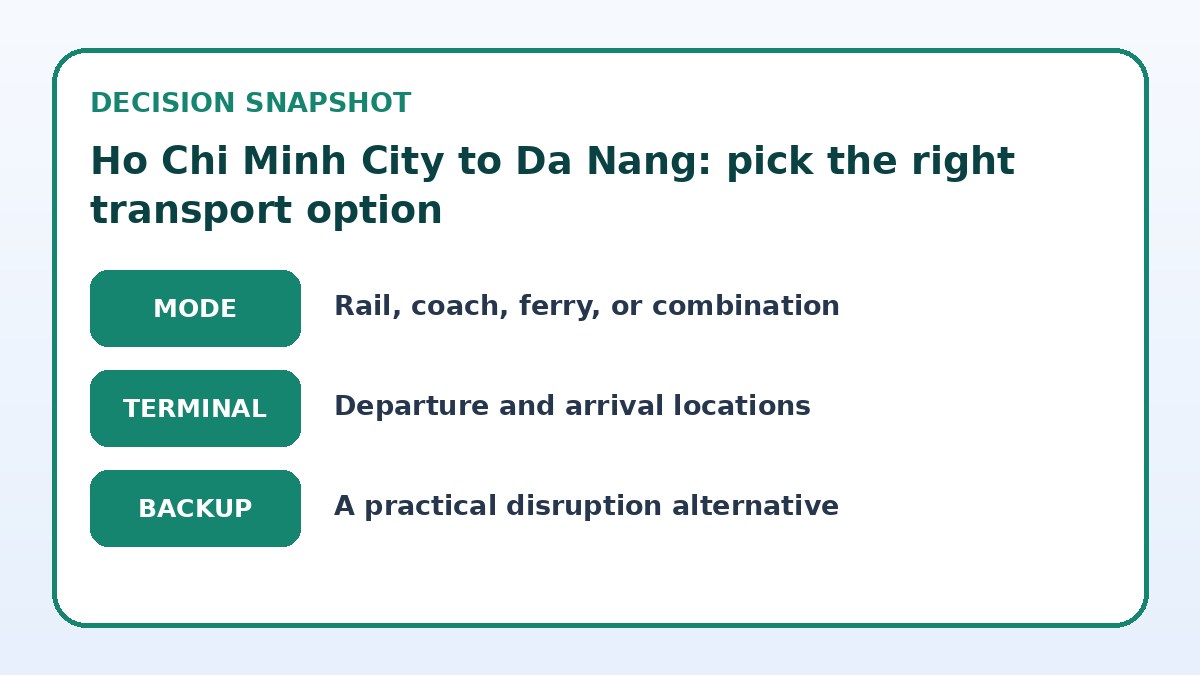
Practical answer up front: if you want comfort and coastal scenery with a relaxed pace, book a daytime or overnight train. If you must minimize travel time, consider a flight and then local transfers. Coaches are usually the lowest-effort overland option for budget travelers on a flexible schedule; ferries are only realistic as part of a multi-leg coastal trip and require careful planning. Which to choose comes down to three questions: how much time you have, how important comfort and scenery are, and whether you need a single ticket that handles transfers. Below I compare the main modes, explain tradeoffs for first-time visitors, and give specific checks to make before you buy tickets so you can match the route to your priorities.
See current options before you compare the details
Availability and final conditions change. Open Trip.com now or keep reading for the practical comparison.
Trains: what to expect and when they make sense
Vietnam’s intercity trains run along the north–south corridor and are a popular choice between Ho Chi Minh City and Da Nang for travelers who prioritize scenery and a comfortable overnight option. Trains commonly offer a range of accommodations from hard seats to private soft sleepers; for first-time visitors, a soft-berth cabin or a reclining seat with good luggage storage reduces hassle. Consider whether you prefer a daytime run with coastal views or an overnight service that lets you sleep and arrive refreshed. Remember that trains may not be direct in every instance: check whether the service is through or requires a connection.
Before you book, verify exact departure and arrival stations and how to get between a station and your Ho Chi Minh City or Da Nang accommodation. If you have mobility needs or much luggage, confirm platform access and carriage types on the provider’s final booking page. Also compare the total door-to-door time against flying plus transfers: a train can save time if airport transfers would be lengthy, but a flight may win when you prioritize speed. Trip.com can be a place to compare current availability, but always confirm details with the operator before finalizing.
Flights: fastest but check the full transfer picture
Flying is the quickest way to cover the distance, and it can make sense for first-time visitors with limited time or tight itineraries. When comparing flights, don’t focus solely on flight duration—account for check-in time, airport transfers, security, and possible baggage waits at both ends. Also weigh where the airports sit relative to your accommodations: a short flight can be undone by long city transfers, especially during peak traffic in Ho Chi Minh City. Compare direct and connecting flights; a single-connection itinerary might be cheaper but can add significant travel time and risk if connections are tight.
On booking pages, verify baggage allowances, checked luggage fees, and any transfer or shuttle services the airline or airport offers. If you plan to book separate tickets for domestic legs or use multiple carriers, check the provider’s policies for missed connections and whether a single ticket protection exists. For first-time visitors who dislike multiple handoffs, look for flight+transfer packages or prebooked airport taxis to reduce uncertainty. Always check the airline’s final page for up-to-date baggage rules and airport terminal details.
| Approach | Best for | Tradeoff to check |
|---|---|---|
| Train | Travelers who value scenery, overnight comfort, and fewer airport transfers | Slower than flying and may require checking station access and connections |
| Flight | Those who need the fastest door-to-door time and value schedule predictability | Airport transfers, check-in time and baggage rules can add to total travel time |
| Coach | Budget-minded visitors who accept longer road travel for simpler ticketing | Longer journey, potential for traffic delays and variable comfort levels |
| Ferry / boat | Travelers building a coastal, multi-leg itinerary who prioritize the sea experience | Requires careful planning, multiple transfers, and is rarely the quickest point-to-point choice |
Ready to check the option that fits your plan?
Use your exact dates and traveler details so the provider page can show the current total and conditions.
Coaches and minibuses: the budget, flexible option
Coaches are widely available and often the most budget-friendly overland choice between Ho Chi Minh City and Da Nang. They vary from large sleeper coaches to smaller minibuses; services differ in comfort, legroom, and the number of stops. Coaches can be appealing if your schedule is flexible and you prefer a single-seat booking without the formality of airports or rail tickets. However, long road travel can be tiring and affected by traffic, weather and the quality of rest stops, so plan extra recovery time on arrival if you choose this route.
When comparing coach operators, check the pickup and drop-off locations carefully—some companies operate from central terminals while others use private offices or hotels. Confirm how much luggage is included, whether the coach makes many stops, and the boarding process. If you’re booking a night coach, look for one with dedicated reclining or sleeper layouts and a clear cancellation policy. Use the operator’s booking page to confirm exact pickup points and any required ID or printed ticket rules before departure.
Before you book
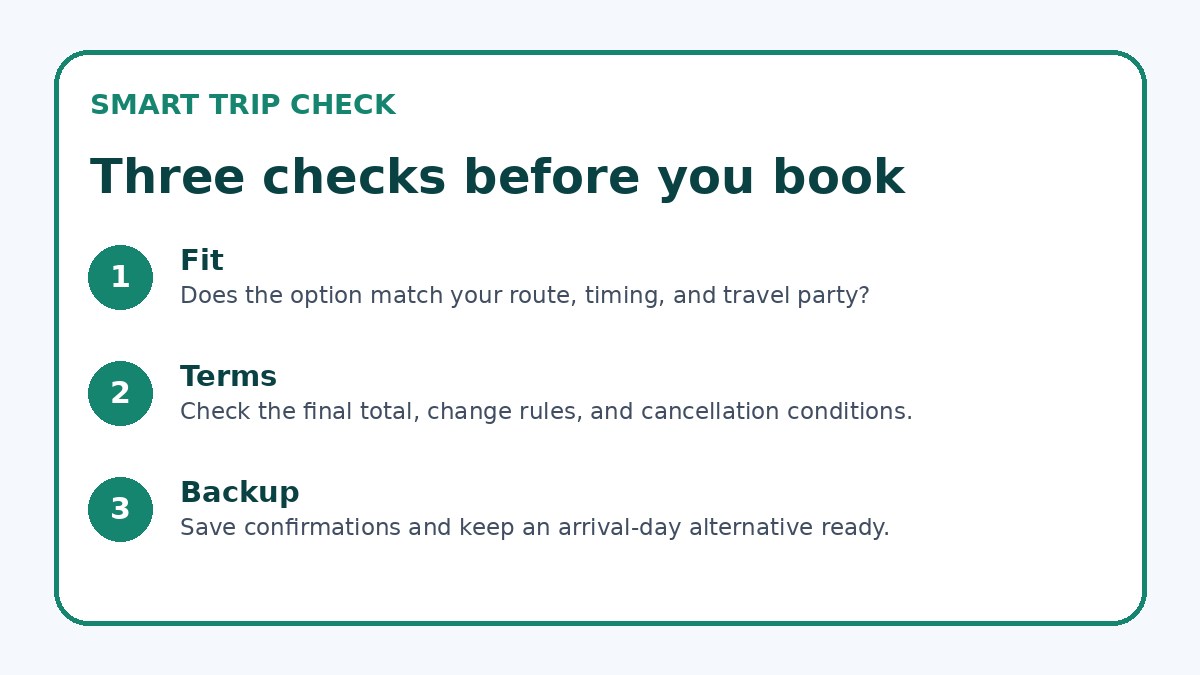
- Decide your priority: speed, scenery, comfort, or price—rank them to guide mode choice.
- Check whether your chosen service is direct or requires connections and how that affects total door-to-door time.
- Confirm pickup/drop-off locations and how you will get to them from your Ho Chi Minh City or Da Nang accommodation.
- Verify baggage allowances, carry-on rules, and any fees on the operator’s final booking page before paying.
- Look for clear cancellation, change and missed-connection policies if you’re booking separate legs or different providers.
- Book transfers or taxis in advance for arrival times that fall during local traffic peaks or late at night.
Ferry, private boat and mixed routes: niche but memorable
Traveling by sea between Ho Chi Minh City and Da Nang isn’t a simple point-to-point option; ferries and private boats are useful when you’re creating a coastal itinerary that includes island stops or experiential travel. These options require stitching together multiple legs—coach, train, and sometimes local launches—and are best for travelers who have flexible time and enjoy planning complex routes. Expect more logistical coordination: different operators, varying schedules, and a need to transfer between modes, often without a single-ticket guarantee.
If you’re tempted by a sea leg, map out the entire itinerary: how you’ll get from the city center to the pier, where luggage is stored, and contingency plans for missed connections. Verify vessel safety standards, boarding requirements, and exact meeting points on the provider’s final page. For most first-time visitors who want a straightforward move between Ho Chi Minh City and Da Nang, ferries are less practical than trains, flights or coaches—but they can be a rewarding choice when combined with planned coastal stops and extra travel days.
Frequently asked questions
Is it better to take the train or fly between Ho Chi Minh City and Da Nang?
That depends on your priorities. Choose a train if you want a relaxed trip with coastal views or an overnight berth that saves a night in a hotel. Choose a flight if your schedule is tight and you need the fastest possible transfer between cities. Compare the total door-to-door time for both options—include transfers and waiting—and verify schedules on the operator’s final booking page to make the right call for your itinerary.
Can I mix modes—like taking a coach to a port and then a ferry—and still keep luggage safe?
Yes, mixing modes is feasible but requires extra planning. Confirm luggage handling rules with each operator and whether transfers include assistance. Pack valuables in your carry-on and use sturdy, lockable luggage for sea and road segments. Allow generous transfer time between legs to avoid rushed connections, and keep digital and printed confirmations handy. If you’re unsure, choose operators that explicitly offer combined tickets or prearranged transfers.
What should first-time visitors check on booking pages before buying tickets?
First-time visitors should verify departure and arrival addresses, whether the service is direct, luggage rules, cancellation and change policies, and any required ID or printed documentation. Check boarding times and recommended arrival times, plus the operator’s contact details in case plans change. If you’ll need local transfers at either end, confirm whether the provider sells combined transfer+tickets or whether you should prebook a taxi separately. Always use the provider’s final booking page for these specifics rather than secondary summaries.
Final planning note
There’s no single right way to travel from Ho Chi Minh City to Da Nang—your best choice depends on time, comfort needs and the kind of experience you want. Trains offer relaxed coastal travel and make sense for visitors who prefer less fuss with airports; flights win when speed is paramount; coaches suit tight budgets and flexible schedules; and ferries fit only carefully planned coastal itineraries. Before you book, rank your priorities, check whether services are direct or require connections, and confirm pickup points, luggage policies and cancellation rules on the operator’s booking page. Use these checks to avoid surprises and choose the route that fits your trip’s rhythm.
Continue planning
Check current options and final conditions
Use the provider page to confirm live availability, the final total, cancellation terms, and every condition that matters to your trip.
This evergreen planning guide was created with AI-assisted drafting and a structured quality review. It does not display live prices, schedules, availability, visa guidance, or provider rankings. Verify current details before booking. Some links are affiliate links; we may earn a commission at no additional cost to you.