Practical answer first: for most first-time visitors, a direct daytime train or a fast rail connection with one change usually balances comfort, city-center arrival, and ease of luggage handling — choose coach if you need the lowest-flexibility, lower-ticket-cost option and expect a long journey; consider a flight only when time is very tight and you accept airport transfers; ferry-based itineraries are niche and involve extra land travel. Which is right depends on the rhythm you want (comfortable, cheap, fastest door-to-door) and how much fuss you’ll tolerate with transfers. Below I break down the main modes, the decision criteria to compare when booking, and the specific practical steps you should check on provider pages before you commit, including schedules, baggage rules, transfer times, and refund/exchange terms.
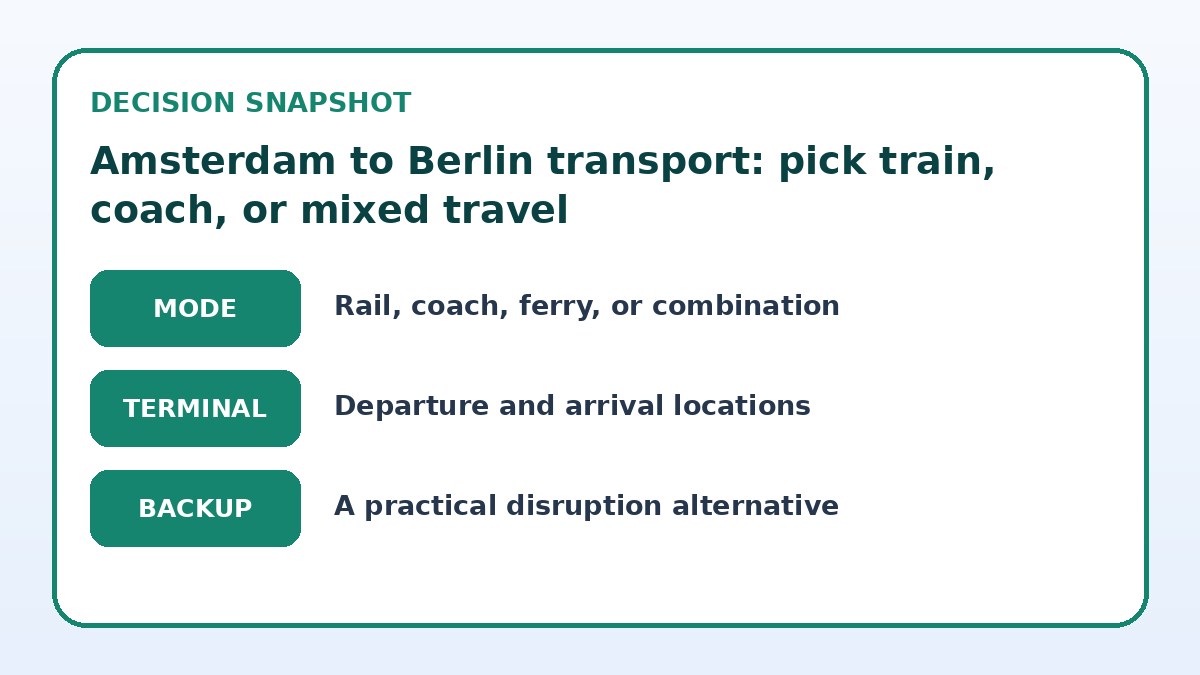
See current options before you compare the details
Availability and final conditions change. Open Trip.com now or keep reading for the practical comparison.
Train: comfort, city-center arrival, and what to check
Trains are attractive because they deliver you to city-center stations in both Amsterdam and Berlin, avoiding the extra transfer time and cost common with airports. For first-time visitors who value space to move, luggage flexibility, and predictable walking or taxi connections on arrival, daytime rail options are often the easiest way to travel. When comparing rail choices, look for direct services or connections with reasonable transfer windows to avoid rushed platform changes. If a connection is necessary, confirm minimum connection times on the operator’s booking page and allow at least 20–30 minutes to move between platforms or stations depending on interchange complexity.
Before you purchase, verify the ticket conditions on the provider’s final booking page: change and refund rules, seat reservation policies, and baggage allowances. Some tickets require paid seat reservations or have limited flexibility; others include a reserved seat automatically. Also confirm the exact arrival and departure station names — Berlin has multiple major stations and a slight difference in station can affect your onward journey. If you plan to travel during typical peak times or public holidays, consider reserving seats even when not strictly required.
Coach: budget option with longer travel time
Coaches can be the lowest-cost option but the price you save is balanced by a longer journey and fewer onboard amenities. If you’re traveling very light, on a tight budget, and you don’t mind reduced legroom and occasional rest stops, coach travel can make sense. Compare ride durations, the number and length of stops, and whether the coach operator allows flexible tickets or has strict non-refundable policies. Also check if coaches serve central stations or peripheral bus terminals that add to your transfer time and cost at each end.
On booking pages, verify seat type and available onboard facilities like toilets and Wi‑Fi, and read any small print about luggage dimensions, extra-charges for oversized items, and the operator’s stance on late arrivals. Because coaches can be delayed by road traffic, avoid tight onward connections when choosing this mode. If your plan includes a night coach to save hotel costs, ensure you are comfortable with sleeping in a coach and understand safety and security measures for belongings during overnight travel.
| Approach | Best for | Tradeoff to check |
|---|---|---|
| Train | Travelers prioritizing comfort, central stations, and fewer transfers | May cost more than the cheapest coach fares and sometimes requires reservations |
| Coach | Budget-minded travelers who accept longer travel times | Longer journey, fewer amenities, and possible peripheral bus terminals |
| Flight | Those needing fastest possible door-to-door time in specific scenarios | Airport transfers and baggage procedures can negate airborne time savings |
| Ferry + land | Travelers planning scenic detours or bringing a vehicle | Usually longer overall travel time and extra transfer complexity |
Ready to check the option that fits your plan?
Use your exact dates and traveler details so the provider page can show the current total and conditions.
Flights and mixed air-rail options: when they help
Air travel between Amsterdam and Berlin can be attractive if your time budget is extremely tight, but the overall door-to-door gain often shrinks once you add commute to airports, security checks, and possible checked-bag wait times. Flights can be sensible if you already have checked luggage policies suited to your needs, if cheap connections line up with your schedule, or when combined with longer itineraries beyond Berlin where aviation makes sense. If you consider flying, compare total travel time from your door in Amsterdam to your final door in Berlin rather than just the airborne time.
Carefully check the airport transfer options at both ends on the airline’s booking page: which terminal, typical transfer times to city centers, and recommended arrival time before departure. Low-cost carriers may use secondary airports or charge for carry-on/checked bags and seat selection; those extra charges can erase perceived savings. Also verify baggage allowances and refund/exchange rules explicitly on the carrier’s site, because third-party aggregators can have different policies or fees at booking.
Before you book
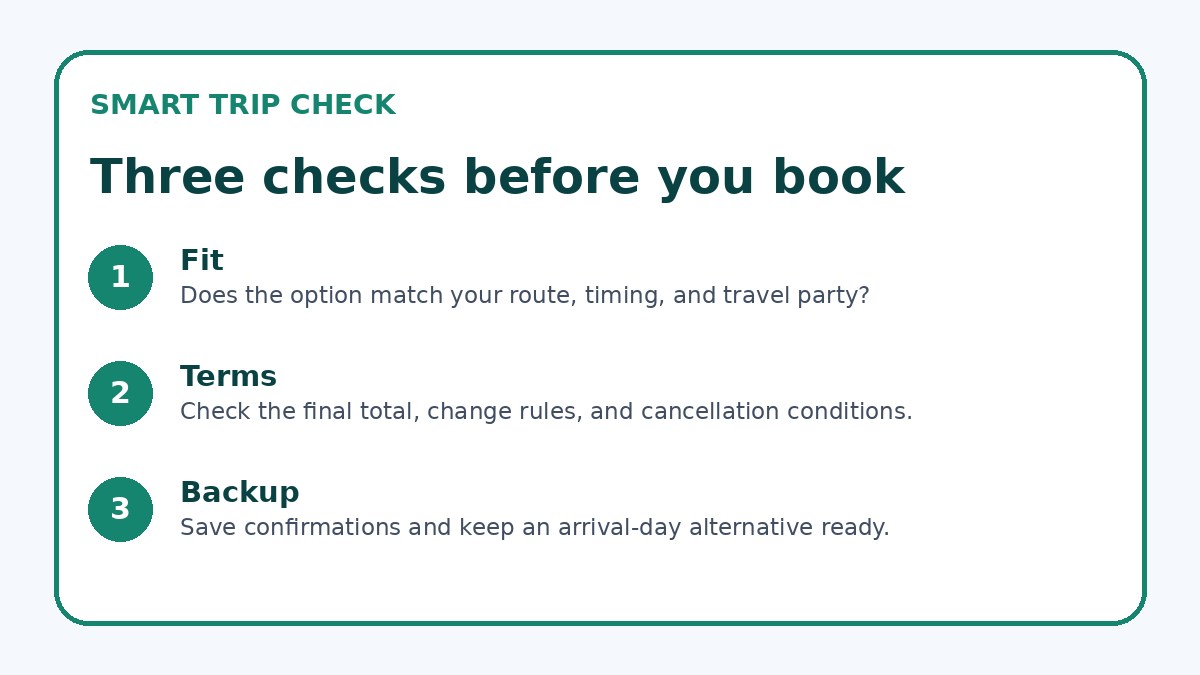
- Confirm final station or airport names and your preferred arrival neighborhood before booking any ticket.
- Compare door-to-door travel time (home to final destination) rather than only advertised journey time.
- Read the provider’s ticket conditions for refunds, exchanges, and whether seat reservations are required.
- Verify luggage allowances and any extra fees for large or multiple bags on the booking page.
- Allow buffer time for transfers between different modes or terminals when planning connections.
- Check cancellation/insurance options and document them before completing your payment.
Ferry and mixed-land sea routes: niche and scenic
Using ferries for Amsterdam–Berlin travel usually involves substantial extra land travel and is typically chosen for scenic value or if you’re combining the trip with a coastal route. Ferries might be meaningful if you’re touring the North Sea coast, bringing a vehicle, or building a multi-leg leisure journey that values the crossing experience. For first-time visitors strictly aiming to go from Amsterdam to Berlin, ferries rarely compete on time or convenience versus direct trains, coaches, or flights.
If you plan a ferry-inclusive itinerary, check exact departure ports and how far they are from Amsterdam and Berlin; verify the required transfer connections and their schedules on the ferry operator’s booking page. Note that vehicle ferries and passenger-only crossings have different boarding procedures and luggage handling policies. Also confirm whether the ferry crossing runs overnight or daytime and how it affects sleep, meals, and onward arrangements so you don’t end up with tight connections or unexpected overnight waits.
Frequently asked questions
Is the train usually faster door-to-door than flying between Amsterdam and Berlin?
It depends on your exact start and end points, but trains often beat flights on door-to-door time if both city-center transfers are short. Air travel has shorter airborne time but requires arrival at the airport well before departure, security checks, and transfer from the arrival airport to central Berlin. Calculate total door-to-door time — include travel to the station or airport, check-in/security, possible checked-bag wait, and final transfer in Berlin — to compare realistically. Use provider pages to confirm station names and recommended arrival times.
Can I take my bicycle or a car on these routes between Amsterdam and Berlin?
Rules for bikes and cars differ by mode and operator. Trains sometimes allow bicycles on certain services with reservations or additional fees; coaches usually restrict or require that bicycles be boxed and checked in. Ferries are suitable if you’re transporting a car, but this usually involves additional booking steps and port transfers. Always check the specific operator’s luggage and vehicle transport policies on their booking page before assuming you can bring a bike or car, and verify any required reservations, charges, or packing rules.
How should I pick between direct and connecting rail options?
If a direct rail service exists, it simplifies travel by removing transfer risk and usually requires less time negotiating stations. However, direct trains can sometimes be pricier or less frequent. Connecting options may save money or offer better departure times, but require comfortable transfer windows; aim for at least 20–30 minutes between connections, more if you must change between stations. Review platform transfer details, potential cross-station shuttles, and how luggage is handled on each leg on the operator’s site before choosing.
Final planning note
For most first-time visitors, trains strike the best overall balance between comfort, convenience, and city-center arrival when traveling between Amsterdam and Berlin. Coaches remain a valid low-budget alternative if you accept longer travel times; flights are useful in particular time-sensitive scenarios but rarely show clear time savings once airport transfers are included. Ferry-inclusive itineraries are niche and best for travel that deliberately includes coastal stops or vehicle transport. Before you book, compare door-to-door times, read ticket conditions on the provider’s final booking page, verify luggage rules, and factor in transfer buffers. Use comparison sites including Trip.com as a starting point, but confirm details on the operator’s website to avoid last-minute surprises.
Continue planning
Check current options and final conditions
Use the provider page to confirm live availability, the final total, cancellation terms, and every condition that matters to your trip.
This evergreen planning guide was created with AI-assisted drafting and a structured quality review. It does not display live prices, schedules, availability, visa guidance, or provider rankings. Verify current details before booking. Some links are affiliate links; we may earn a commission at no additional cost to you.