If you need a short, practical answer: prioritize convenience (direct flights, airport proximity, simple transfers) when travelling with young children or heavy luggage; choose more schedule-flexible options (earlier or later departures, refundable/changeable fares) if your trip involves unpredictable plans, school schedules, or connecting train tickets in Hokkaido. For many families the best compromise is a direct flight at a mid-morning or early-afternoon time with a fare that allows a single paid change—this reduces the chaos of tight connections while keeping options open for delays or last-minute plan changes. Below I explain the tradeoffs, how to compare itineraries, and what to check before booking so you can make a choice that fits your family’s tolerance for risk, cost sensitivity, and need for convenience.
Direct versus connecting flights: clarity for family logistics
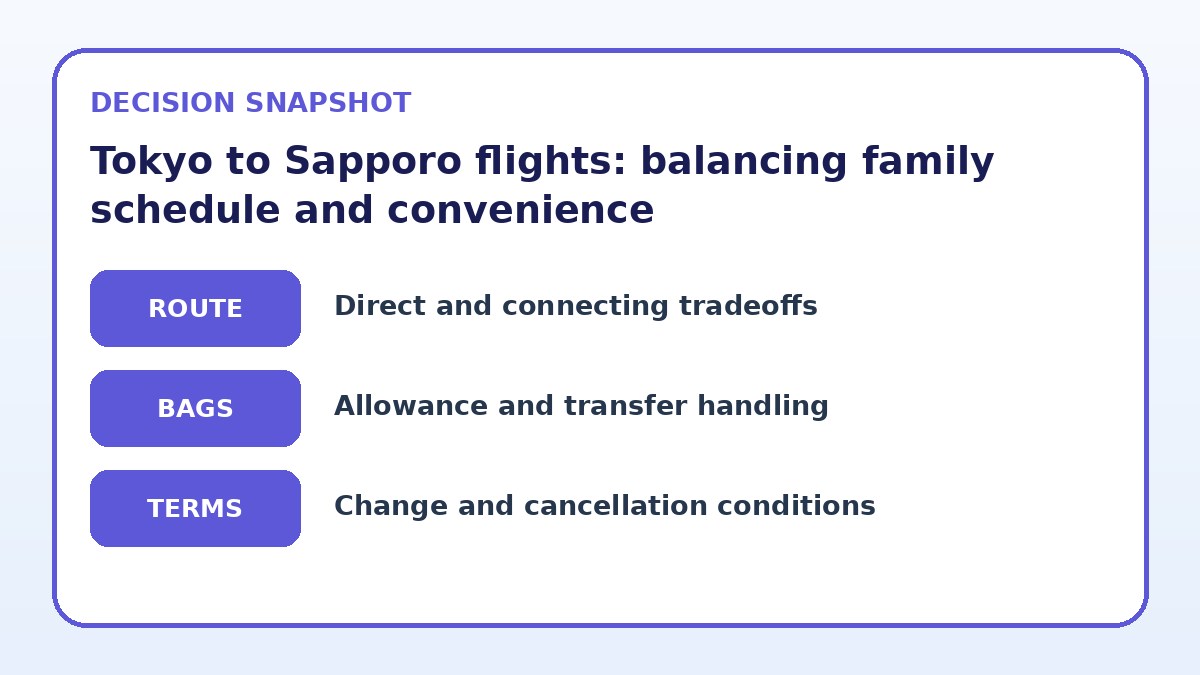
The main convenience tradeoff for families is whether to pick a direct route or accept connecting itineraries that may be cheaper or more widely available. Direct flights cut the number of handoffs—no changes of planes, fewer boarding processes, and lower chances of lost luggage—and that consistently feels simpler when you’re managing kids, car seats, or ski equipment. For families with infants, toddlers, or lots of checked baggage, this simplicity can save both stress and time once you factor in the physical effort of moving between gates or terminals during a connection.
Connecting flights may open up more schedule choices or lower fare buckets, which helps if you need a very specific departure time or are on a tight budget. But each connection adds a variable: delays cascade, layover terminals can require shuttle transfers, and children may get restless during waits. When comparing options, write down the realistic transfer window you need (including any extra time for bathroom, snacks, or stroller folding) and compare itineraries by total travel time and number of transfers rather than by ticket price alone.
Choosing departure times that work for family rhythms
Families must match flight times to sleeping and napping patterns. Early-morning flights can be convenient if children sleep on the plane, but they demand very early wakeups and potentially a stressful rush to the airport. Late-afternoon and evening flights avoid the early alarm but can upset kids’ bedtime routines and lead to grumpy arrivals in Sapporo. Mid-morning departures are often the pragmatic middle ground: they give time to get ready calmly, travel to the airport without dawn logistics, and still land early enough for daylight transfers.
Also consider how arrival time affects ground plans. If you’ll pick up a rental car, check office hours and whether an evening arrival adds extra steps. For families relying on trains or shuttles from the airport, look at the last service times. When you're comparing flights, write down your arrival-dependent plans—hotel check-in flexibilities, transport connections, or reserved activities—and choose a flight that maximizes the usable time at your destination while minimizing disruption to children’s schedules.
| Approach | Best for | Tradeoff to check |
|---|---|---|
| Direct mid-morning flight with flexible fare | Families prioritizing low-stress travel and predictable transfers | Usually higher base fare but saves time and reduces connection risk |
| Cheaper connecting flight with longer layovers | Budget-conscious families who can tolerate longer travel days | More time in transit and higher risk of delays or disruptions |
| Early-morning direct flight on a restrictive fare | Families who want the most daytime at destination and can manage early starts | Lower flexibility if plans change and early wakeups for children |
| Evening flight with included checked baggage | Families travelling with bulky gear or preferring to sleep on arrival | Possible impact on children’s sleep schedule and later ground transfers |
Fare flexibility, refunds and change policies for family peace of mind
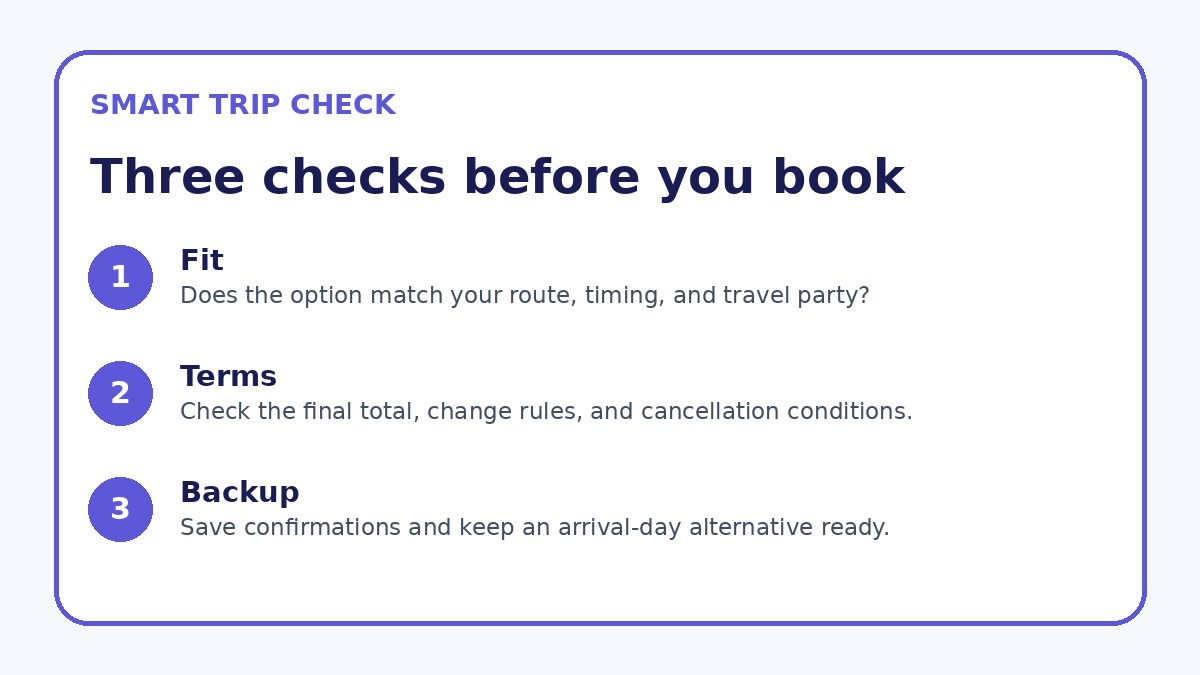
Families often benefit from fares that allow changes or refunds without punishing fees. Flexible tickets give you the option to shift plans around school events, illness, or unexpected weather disruptions, which is invaluable when a single family member falls sick. When examining fare rules, check the airline’s change fee policy, how much credit you receive if you cancel, and whether lower-priced 'basic' fares exclude carry-on or seat selection—those exclusions can create hidden inconveniences for families who need predictable space for strollers or want seats together.
Because airline policies change, verify all fare conditions on the carrier’s final booking page before you pay. Confirm exactly which add-ons are included, what happens if you rebook onto a different fare class, and whether family seating is guaranteed or only requested. A modestly higher flexible fare often outweighs the hassle and additional costs of last-minute changes when travelling with children.
Before you book
- Confirm which Tokyo airport (Haneda or Narita) works best for your neighborhood and factor in commute time to the airport when comparing itineraries.
- Compare total door-to-door travel time, including airport transfers, not just flight duration, to understand real family impact.
- Read the fare rules on the airline’s final booking page: change fees, refund terms, baggage allowances, and seat selection policies.
- Decide whether you need checked-baggage and sports-equipment coverage included or if paying upgrades later makes sense.
- Choose a departure time that aligns with your children’s sleep and meal routines and that leaves buffer time for airport formalities.
- Prepare a backup plan: identify later flights, transfer options, and hotel policies in case of delays or unexpected schedule changes.
Airport logistics, ground transport and luggage considerations
Convenience extends beyond the plane: airport terminals, check-in options, and transfer distances matter to families. Compare which Tokyo airport you’d use (Narita or Haneda) and the ground time to each—Haneda is typically closer to central Tokyo for most neighborhoods, which can shave off commute time and reduce pre-flight stress. At the Sapporo end, check whether you land at New Chitose Airport and what transfer options are available to your final stop (train, shuttle, rental car), because efficient ground links often determine whether an ideal arrival time is genuinely convenient for your family.
Luggage rules are pivotal when you have strollers, winter gear, or extra suitcases. Confirm how many checked bags are included for each fare and measure any oversize or sports-equip rules. If you plan to bring car seats or skis, check carrier policies about gate-checking or checked-equipment handling. Finally, balance convenience against cost: paying a bit more for a ticket that includes checked bags and seat selection can save both money and hassle compared with buying add-ons later.
Frequently asked questions
Should families always choose direct Tokyo to Sapporo flights?
Not always. Direct flights simplify logistics—fewer transfers, less chance of lost luggage, and fewer airport movements with children—but they can cost more or be offered at less convenient times. If you are traveling with infants, heavy luggage, or limited tolerance for disruption, a direct flight often makes sense. However, if you need a specific departure time or are on a strict budget, a well-chosen connecting itinerary with comfortable layovers can be a workable compromise. Compare total travel time, overnight requirements, and how much changing flights would add to your day before deciding.
How far in advance should families book Tokyo to Sapporo flights for flexibility?
Booking timeframe depends on your priorities. If flexibility is the top concern, look for fares that explicitly allow changes without large penalties and book as soon as you find one that meets your timing needs; flexible fare tiers are often available closer to departure but can sell out. If you prioritize seat selection (sitting together) or specific departure times, earlier booking increases your chances. Always verify the carrier’s change and refund rules on the final booking page before buying, because those terms determine how much real flexibility you’ll have later.
What should parents verify about airport transfers and ground transport?
Check which terminal your flight uses and how long it takes to get from that terminal to your hotel or train station. Verify the frequency and first/last times for shuttle buses or trains linking the airport to Sapporo city centers or your lodging, especially if you arrive late. If renting a car, confirm rental desk hours and whether child seats are available to reserve. Also check whether airport facilities—like family lanes, stroller storage, or nursing rooms—are available and whether any preboarding options exist for families to reduce gate stress.
Final planning note
Balancing schedule flexibility and convenience for families travelling from Tokyo to Sapporo is about choosing the mix of certainty and adaptability that suits your group. For many, a direct mid-morning flight with a fare that allows at least one reasonable change provides the best blend: simpler logistics, decent daytime arrival, and some protection against plan shifts. If budget constraints or timing necessities push you toward connecting flights, prioritize longer layovers and realistic transfer times. Before booking, always verify fare change rules, baggage allowances, airport terminals, and ground-transfer options on the airline’s final booking page, and consider a small premium for convenience when it will significantly reduce family stress.
Continue planning
Check current options and final conditions
Use the provider page to confirm live availability, the final total, cancellation terms, and every condition that matters to your trip.
This evergreen planning guide was created with AI-assisted drafting and a structured quality review. It does not display live prices, schedules, availability, visa guidance, or provider rankings. Verify current details before booking. Some links are affiliate links; we may earn a commission at no additional cost to you.