For most couples planning travel between Tokyo and Kyoto, the practical choice comes down to balancing time, comfort, and what you want to do on arrival. If you value speed and a stress-free door-to-door experience, high-speed rail combined with local transit inside the city center is often the simplest. If you have tight budgets or lots of luggage, highway buses or a low-cost flight with careful transfer planning can make sense. This article gives a direct recommendation up front, then walks through the tradeoffs—time, cost, luggage, romance and convenience—so you can pick the option that matches your priorities as a couple and know exactly what to check before you book.
The straightforward recommendation and why it fits most couples
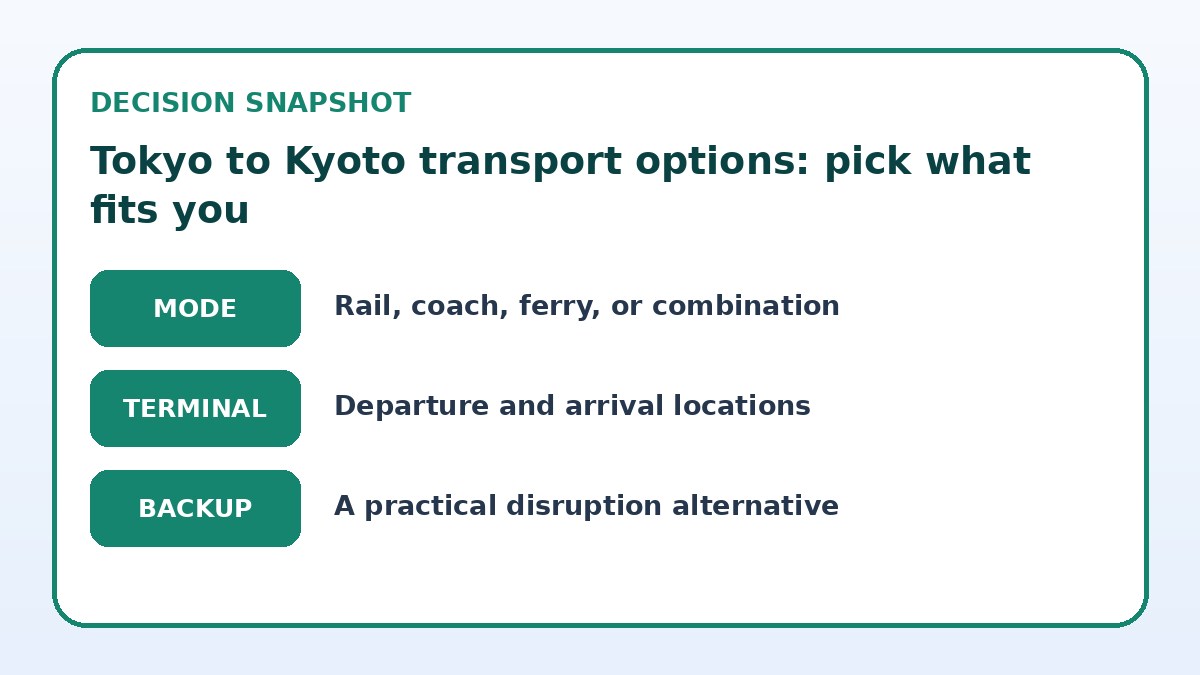
Practical couples who want a clear, low-stress choice should prioritize a direct high-speed rail option that arrives into central Kyoto. For many pairs this balances predictability, comfort and simple logistics: you depart from central Tokyo stations, relax in reserved seats, and arrive at Kyoto Station with good onward local transit options. Book seats together so you can sit side-by-side; reserved seating also avoids the uncertainty of standing or being separated when trains are busy.
This approach neatly handles luggage, avoids airport transfers, and gives you more usable time in both cities compared with early check-in or lengthy pre- and post-flight transit. It also minimizes the decision fatigue couples can feel while traveling: one booking that lands you in the city center makes planning the first evening much simpler. Later sections explain the tradeoffs and when the rail-first approach might not be the best fit.
When to pick budget buses or slower trains instead
Choose highway buses or slower regional trains if your trip is budget-driven and you can accept longer travel time. Buses often have lower ticket costs and overnight departures that double as a night’s accommodation, freeing daytime hours for sightseeing. Slower trains give scenic value and flexibility to stop at towns en route; for couples who enjoy unhurried travel together, that can be part of the experience rather than a compromise.
Before booking budget options, compare total door-to-door time and luggage rules. Some buses restrict large suitcases or charge extra; slower trains may require transfers that are tricky with heavy bags. Verify seat pairing policies and whether you can reserve adjacent seats—if you prefer sitting together, that requirement can outweigh small price savings.
| Approach | Best for | Tradeoff to check |
|---|---|---|
| Direct high-speed rail with reserved seats | Couples valuing speed, comfort, and simple city-center arrival | Higher ticket cost and less scenic en route experience compared with slower options |
| Highway bus or budget long-distance coach | Cost-conscious couples willing to travel longer for lower fares | Longer travel time, possible luggage limits, and fewer seat comfort guarantees |
| Regional or local trains with scheduled transfers | Couples who enjoy scenic travel and flexible stopovers | More transfers and potential for separated seats without reservations |
| Flight plus ground transfer | Couples needing specific departure times or combining distant side trips | Extra airport transfer time and additional logistics compared with rail |
When flights or mixed-mode travel make sense
Flying between Tokyo and the Kansai region can be worthwhile when one partner values speed and the other wants to combine nearby side trips, or when rail schedules don’t match your itinerary. Flights can be time-efficient for specific departure windows, but you must account for time to and from airports, check-in, security, and potential domestic transfers. For couples, factor in stress levels: dealing with airports together may feel less relaxing than a single-seat rail journey.
If you consider flying, compare total door-to-door travel time including airport transfers and luggage handling. Also check baggage allowances, seat-pairing options, and whether the carrier and connecting ground transport allow a smooth single-booking experience. When choosing mixed-mode travel, create a clear timeline for connections and build buffer time so delays don’t derail romantic plans or evening reservations.
Before you book
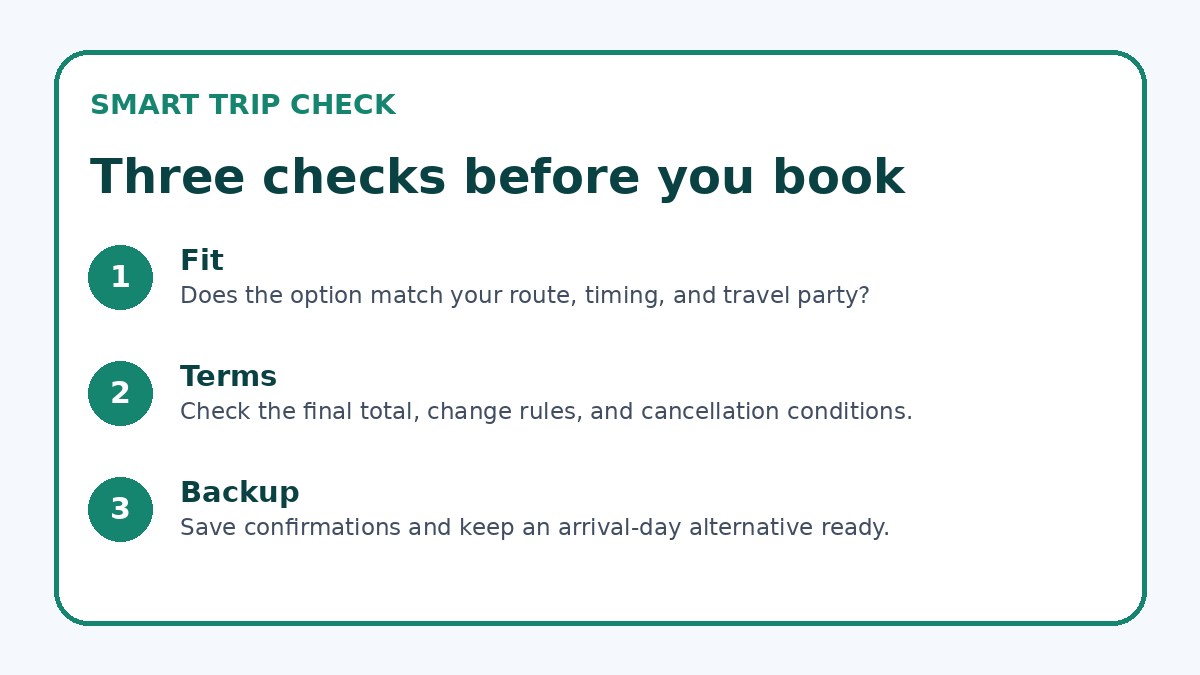
- Decide your top priority: speed, budget, comfort, or sightseeing, and write it down before comparing fares.
- Compare total door-to-door time, not just in-air or in-train duration, including transfers and local transit to your first Kyoto stop.
- Confirm seat reservation options and book seats together if adjacent seating matters to you both.
- Check luggage rules and size limits for each option; note any extra fees for oversize items before finalizing.
- Verify refund, change, and delay policies on the provider’s booking page so you know your flexibility.
- If you need connections, allow generous buffer time between services and note whether connections are on a single ticket.
Practical decision criteria couples should weigh
Make a short checklist of priorities before comparing options: how much time you can spare, tolerance for transfers, luggage needs, comfort preferences, and whether you want to arrive early enough for a planned dinner or event. Convert those priorities into concrete comparisons: total travel duration, how many times you’ll change vehicles, whether seats can be reserved together, and the proximity of arrival points to your first destination in Kyoto.
Also consider emotional factors: some couples prefer the ritual of a relaxed train ride together, while others want to maximize sightseeing time. Verify refund and change policies so you know your flexibility if plans shift. Finally, check current schedules and seat availability on provider pages (or Trip.com as a comparison tool) and confirm exactly what’s included before purchase: seat selection, luggage rules, and whether transfers require separate tickets.
Frequently asked questions
Can couples bring large suitcases on trains between Tokyo and Kyoto?
Trains commonly have space for luggage, but rules differ by service type. High-speed services often provide overhead racks and limited luggage space; newer trains may require advance notice or reservations for very large suitcases. Buses and low-cost carriers frequently impose stricter size or weight rules and may charge for oversized items. Always check the specific carrier’s luggage policy on its booking page before you book, and consider a luggage delivery service if you want a hands-free arrival.
Is it better for two people to book seats together in advance or try to find seats on the day?
If sitting together matters, reserve seats in advance: that guarantees side-by-side seating and reduces travel stress. Popular services can sell out, and finding adjacent seats on the day may be difficult, especially during peak travel times. For flexible, spontaneous couples who don’t mind splitting up briefly, day-of travel can work, but if the journey is part of a special occasion, pre-booking is worth the reassurance. Check whether the provider allows seat selection at purchase and whether any seat-assignment fees apply.
How do I compare total travel time for flight versus train options?
Don’t just compare scheduled air or rail duration—sum all elements: time to get to the departure point, recommended check-in or boarding window, actual in-transit time, luggage pickup, and transfer time to your final destination. For flights, factor in airport security and the time to reach downtown Kyoto from the airport; for trains, include walking time within stations and local transit at each end. Use provider timetables and mapping tools to estimate door-to-door duration, and add a safety buffer for connections or unexpected delays.
Final planning note
Choosing how to travel from Tokyo to Kyoto as a couple comes down to aligning your priorities with real-world tradeoffs. For most couples wanting a simple, comfortable journey with central arrival and minimal transfers, a high-speed rail option with reserved seats is the practical default. If budget, scenic travel, or a particular schedule drives your plan, buses, slower trains, or flights can be better fits—provided you check luggage rules, seat-pairing options, and total door-to-door time. Before booking, verify current schedules, seat availability and provider policies on the carrier’s booking page or a comparison site such as Trip.com so you make the choice that keeps your trip enjoyable from departure to Kyoto arrival.
Continue planning
Check current options and final conditions
Use the provider page to confirm live availability, the final total, cancellation terms, and every condition that matters to your trip.
This evergreen planning guide was created with AI-assisted drafting and a structured quality review. It does not display live prices, schedules, availability, visa guidance, or provider rankings. Verify current details before booking. Some links are affiliate links; we may earn a commission at no additional cost to you.