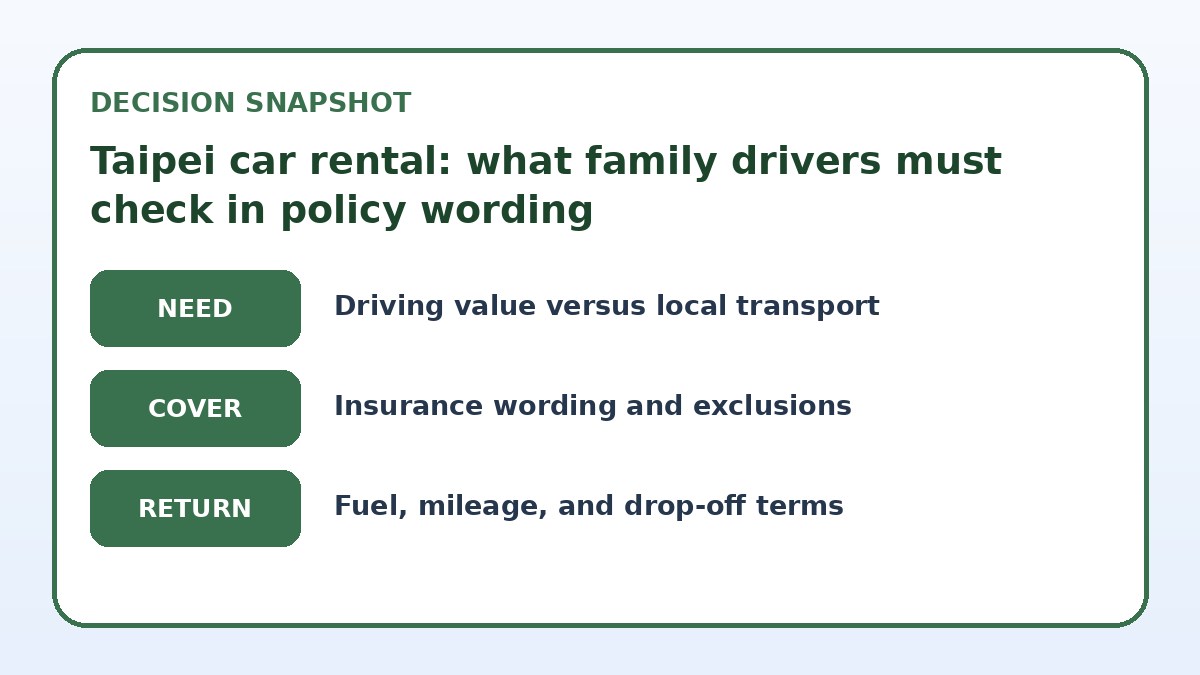
If your family plans to rent a car in Taipei, the single most useful thing you can do before booking is learn to read the insurance wording. Policies mix abbreviations, overlapping coverages, and exclusions that matter differently for families — think child seats, additional drivers, and driving on expressways. Start by identifying liability limits, collision coverage names (CDW, LDW, SCDW), who the policy covers to drive the vehicle, and exactly what counts as an excluded driver or excluded damage. Keep a short checklist and ask the rental company to point you to the exact clause if anything is unclear. Finally, compare what the rental company sells with what a credit card or third‑party insurer will actually pay—check those final booking pages or card benefit guides to confirm how claims are handled in Taiwan.
Key terms you’ll see and how they matter to families
Car rental insurance paperwork uses shorthand that’s easy to misread if you’re planning for children or multiple drivers. Collision Damage Waiver (CDW) or Loss Damage Waiver (LDW) limits your financial responsibility for damage to the rental car, but it isn’t the same as third‑party liability. Supplementary terms such as Super CDW (SCDW) reduce the deductible further; however, waivers rarely cover every situation — for example, damage to tires, windshields, or undercarriage may be written out unless specifically included.
Liability cover is separate and protects against damage or injury you cause to others. For families, this matters if you’re driving on busier roads or planning day trips where another vehicle, scooter, or pedestrian could be involved. Pay attention to per‑incident or per‑person limits, and whether the policy uses local law minimums or specifies a monetary cap. Also check whether certain activities (towing, racing, or designated off‑road routes) are excluded — that matters if you intend to pull a small trailer, use mountain roads, or take a heavy luggage load.
Named drivers, additional drivers, and age rules
Policies often require every driver to be named at pickup and sometimes to meet age restrictions. For families sharing driving duties, that means adding each person who might take the wheel to the rental contract; otherwise, a claim can be denied if the actual driver isn’t listed. Some companies charge an additional driver fee, while others include a spouse or domestic partner for free — the wording determines whether that spouse is automatically covered on the insurer’s side or only on the rental agreement.
Age restrictions matter for younger drivers and sometimes for older adults. Underage driver surcharges or flat exclusions are common in rental terms, and an insurer’s definition of ‘young driver’ can differ from the rental firm’s. If the family includes a fresh driver or teens who meet local licensing law but fall under the insurer’s excluded bracket, you’ll need to buy additional cover or name an older licensed driver as primary to keep everyone protected according to the policy wording.
| Approach | Best for | Tradeoff to check |
|---|---|---|
| Accept rental company CDW/SCDW | Families wanting straightforward on‑site cover and fewer claims hassles | Can be expensive and may still exclude tyres, glass, or interior damage |
| Rely on credit card rental insurance | Families already paying with a card that explicitly lists Taiwan coverage | Requires strict adherence to card terms and thorough documentation for claims |
| Buy third‑party rental insurance | Cost-conscious families who compare limits and deductibles closely | May reimburse after you pay out; check whether loss‑of‑use and admin fees are covered |
| Hybrid: minimal rental waiver + supplemental cover | Families wanting lower immediate cost but backup protection for gaps | More complex claims path; you must know which policy pays first and what each excludes |
Credit card cover and third‑party insurance: how to compare wording
Many travelers rely on credit card insurance or a standalone third‑party policy to avoid rental company waivers. But the credit card benefit description often contains strict conditions: you usually must decline the rental company’s CDW at pickup, pay for the rental with the card offering cover, and submit detailed documents for a claim. Wording will state exclusions like certain vehicle classes, timeframes, and territorial limits — verify that Taiwan/Taipei is explicitly allowed and that family‑specific factors like child restraint requirements don’t void the card cover.
Third‑party insurers vary in what they reimburse (actual repair cost versus market value) and whether they cover loss-of-use charges that a rental company may levy while the car is in the shop. When comparing, match the deductible amounts, exclusions for drivers, and the claim process timeline. The most pragmatic approach is to print or screenshot the specific benefit page or policy clause and compare it line‑by‑line with the rental company’s terms at booking and pickup so there’s no ambiguity when you file a claim.
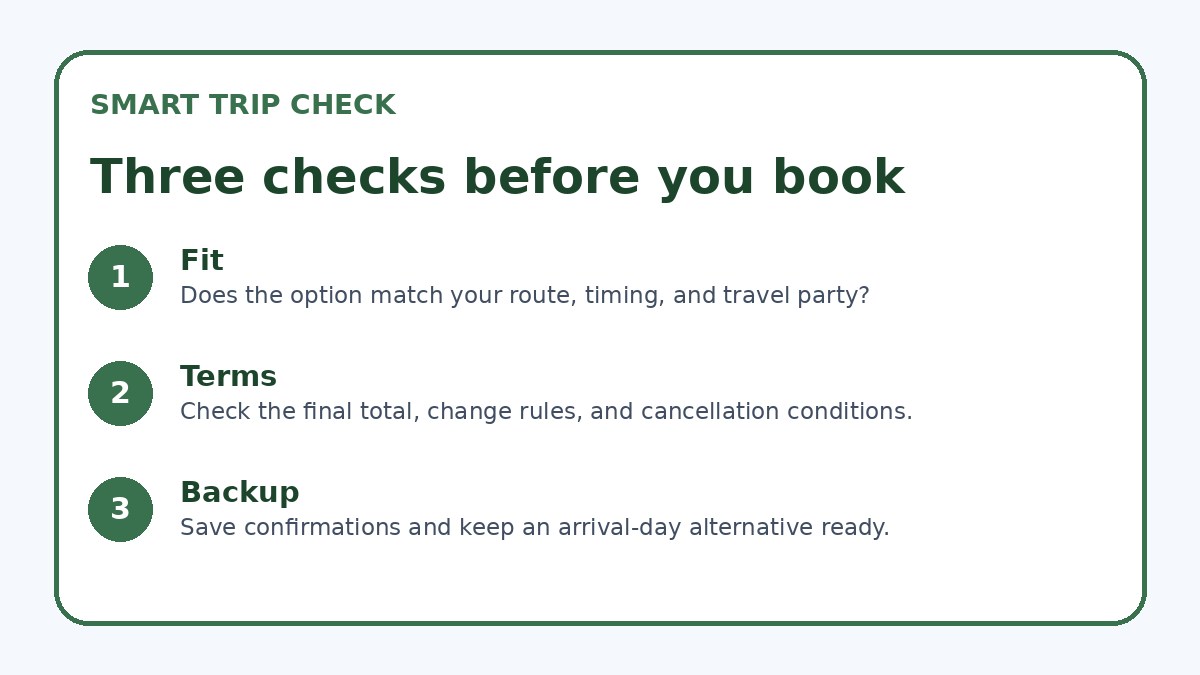
Before you book
- Ask the rental agent to point to the exact contract clause covering liability limits and get a photo or copy of that page.
- Confirm and add every potential driver to the rental agreement; record names, birthdates, and license numbers.
- Verify whether child seats are provided, whether their use is required by insurer wording, and whether damage to seats is covered.
- If using credit card cover, screenshot the card’s benefit page showing Taiwan coverage and required claim steps for car rentals.
- Read exclusions for tyres, windscreen, undercarriage, and roof damage; buy specific protection if those items are excluded.
- Request written confirmation about handling fees, loss‑of‑use charges, and the deductible amount you’d be responsible for after an incident.
Exclusions families often miss and how to avoid surprises
Common exclusions that catch families off guard include damage to accessories (GPS, roof racks, child seats), interior stains, and damage caused while driving on prohibited roads. If your itinerary includes mountainous, unpaved, or coastal roads, check the wording for geographic exclusions. Also read clauses about off‑airport or remote area pickups—some policies change cover levels depending on collection location or whether a vehicle crosses administrative boundaries inside Taiwan.
Another overlooked area is administrative or handling fees the rental company may enforce after an incident, such as loss‑of‑use charges while repairs occur. Policies sometimes state they won’t cover these unless you bought a specific extra. To avoid surprises, ask the counter agent to point to the exact clause that handles administrative recovery costs and whether the CDW or your third‑party cover will reimburse them. If the answer is unclear, insist on written confirmation or take photographs of the contract pages for later reference.
Frequently asked questions
Does Taipei require extra insurance for child seats or riders in cars?
Taiwan’s road‑safety laws require children to be secured appropriately, but whether an insurer enforces that in a claim depends on their wording. Many policies will deny a damage or liability claim if a child wasn’t restrained as required by law or the rental agreement. For families, that means you must both provisionally secure children as local rules specify and confirm the insurer’s wording: ask directly whether failure to use an appropriate child restraint could invalidate cover and whether the rental company offers approved seats and specific wording covering them.
If I decline the rental firm’s waiver, can my credit card guarantee cover everything?
Credit card insurance can cover collision damage in many cases, but it rarely mirrors the rental firm’s full protections. Cards typically impose exclusions for vehicle classes, location, and driver eligibility, and they often require you to decline the rental firm’s CDW at pickup. Importantly, the card’s coverage may still leave you liable for deductibles, loss‑of‑use costs, or administrative fees that the rental company charges. Before relying on a card, check the exact benefit wording for Taiwan, save screenshots, and be ready to provide full documentation if you file a claim.
What evidence should I collect at the rental counter to support a future claim?
Collect the signed rental agreement pages that show named drivers, selected waivers, and deductible amounts. Photograph and timestamp the vehicle from multiple angles before you drive away, including close‑ups of tyres, windscreen, and existing scratches, and keep photos of the mileage and fuel readings. Keep receipts for any child seats or extras the company provides. If you discuss coverage with a staff member, ask for the agent’s name and a written note or email confirmation describing what was agreed so you have both photographic and documentary evidence to support a claim.
Final planning note
Families renting a car in Taipei gain the most protection by reading insurance wording with specific family scenarios in mind: multiple drivers, child restraints, and local driving conditions. Start at booking by comparing the rental company’s stated waivers with any credit card or third‑party benefits you plan to use, and insist on written confirmation for anything the agent promises. Photograph contracts and the vehicle at pickup, add every driver to the rental agreement, and double‑check exclusions for tyres, windscreen, and loss‑of‑use fees. If you want to compare current rental availability and the exact contract text offered by companies, you can check a site such as Trip.com, but always verify clauses on the provider’s final booking page before declining or relying on cover.
Continue planning
Check current options and final conditions
Use the provider page to confirm live availability, the final total, cancellation terms, and every condition that matters to your trip.
This evergreen planning guide was created with AI-assisted drafting and a structured quality review. It does not display live prices, schedules, availability, visa guidance, or provider rankings. Verify current details before booking. Some links are affiliate links; we may earn a commission at no additional cost to you.