If you need to book Seoul to Jeju flights for a business trip, prioritize timing, airport logistics, and flexibility before you click purchase. Start by deciding which Seoul airport suits your schedule and ground connections, then check whether the fare you’re considering allows last-minute changes or refunds. Compare direct and one-stop options only if connections reduce total travel time without adding risk. Confirm baggage allowances, preferred seating policies, and what counts as a same-day transfer for missed connections. For final availability, flight times, and exact fare rules consult the airline or a current aggregator like Trip.com, and always read the carrier’s change and cancellation terms on the booking page before paying. The checklist below turns those priorities into quick, actionable steps so you can book with confidence and reduce the chance of a business disruption.
Pick the right Seoul airport for your schedule
Seoul is served by more than one airport; each has different ground-transport connections and typical travel times to central business districts. Before booking, map the airport options against where your meetings are in Seoul or Jeju. Consider surface transfer reliability at the time of day you’ll be traveling—rush-hour traffic can turn a short taxi into a long commute. If you have a tight morning schedule, an earlier ferry or bus from a particular terminal may be less reliable than a later direct flight from another airport.
When comparing flights, factor in the time needed for check-in, security, and last-mile transport at both ends. If you work from an office or hotel near a particular airport, that convenience can outweigh a small fare difference. Also check whether your company has preferred carriers or corporate contracts that route through one airport more often; those agreements may give you streamlined check-in or baggage benefits that matter on short business trips.
Direct versus connecting options: assess risk and reward
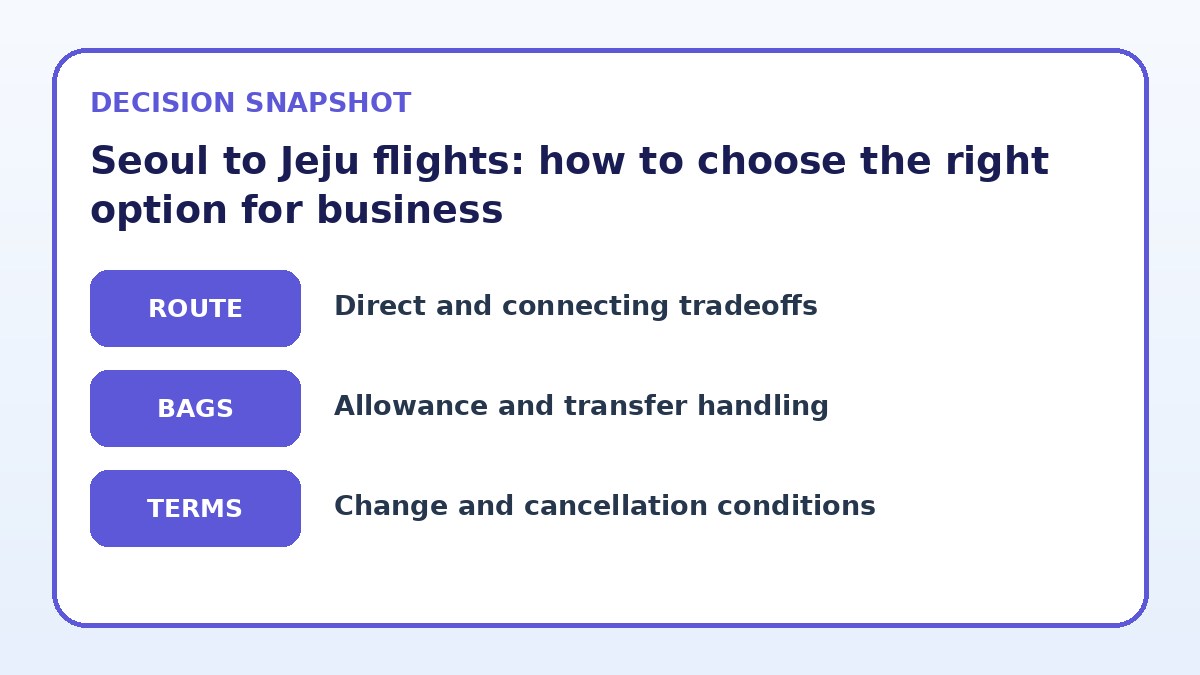
Direct flights are usually the simplest choice for business travel because they reduce the number of things that can go wrong. However, a connecting itinerary that departs earlier and arrives with a better margin for your meeting might be worth considering. When evaluating a connection, look at minimum connection times, the likelihood of delays on each leg, and whether both legs are on the same ticket—same-ticket connections usually protect you if the first leg is delayed and causes you to miss the second.
If a connection is on separate tickets, treat it as two independent trips and allow plenty of buffer. Confirm how baggage is handled: some connections require you to collect and recheck bags, which adds time and risk. For each option, ask whether the airline’s published schedules include realistic buffers and whether change policies give you an affordable way to shift to a later flight if your schedule changes unexpectedly.
| Approach | Best for | Tradeoff to check |
|---|---|---|
| Book the cheapest non-flexible fare | Travelers with fixed, definite plans and low tolerance for upfront fare increases | Saves immediate cost but offers little or no protection if meetings shift or flights change |
| Buy a flexible/change-friendly fare | Frequent business travelers or those with uncertain schedules who value adaptability | Higher upfront cost but reduces stress and potential disruption from schedule changes |
| Choose a direct flight regardless of price | Trips where arrival time reliability and minimizing risk of missed meetings matter most | Potentially pricier; sometimes sacrifices departure/arrival times or preferred airport |
| Opt for an earlier connecting itinerary | When an earlier arrival with transfer risk still beats later direct flights for your schedule | Adds connection risk and complexity; requires careful buffer planning and baggage checks |
Fare rules, flexibility and corporate policy
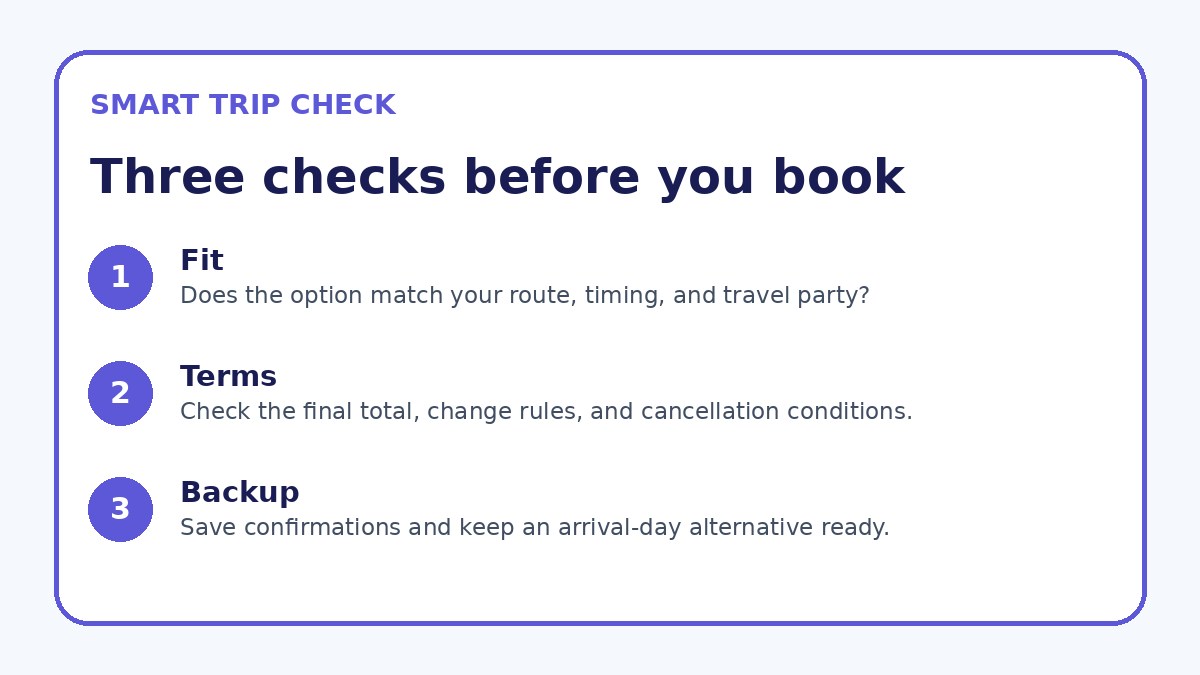
Business travelers should always compare fare rules, not just headline prices. Look for fares that permit changes with reasonable fees or offer refundable options if uncertainty is high. If your company reimburses travel, check corporate policy for acceptable fare classes and whether higher-fare, more flexible tickets are allowed. Evaluate the value of a refundable or changeable ticket against the potential cost of rescheduling a meeting or paying for a last-minute replacement flight.
Review the carrier’s baggage, seat selection, and frequent flyer benefits attached to the fare class so you don’t end up paying for essentials at the airport. Some business travelers prefer to pay a premium for a fare that includes checked baggage and confirmed seating to avoid check-in delays. When in doubt, export the exact fare rules from the booking page—change penalties, refundability, and baggage allowances—and save a screenshot or PDF for expense and travel-approval workflows.
Before you book
- Verify which Seoul airport (Incheon or Gimpo) fits your ground-transfer timeline and note typical travel time from your office or hotel.
- Compare direct and connecting itineraries by total door-to-door time and whether the connection is on a single ticket.
- Open the fare rules on the booking page and capture change, cancellation, and refund terms before paying; keep a copy for expenses.
- Confirm baggage allowance and seat assignment policy for the fare class so essentials aren’t charged at check-in.
- Plan your Jeju ground transfer: prebook an airport taxi, shuttle, or rental car and confirm pickup hours and cancellation rules.
- Check corporate travel policy and preferred carriers; if needed, select a booking option that meets company approval for reimbursement.
Ground transfers and arrival logistics in Jeju
Landing in Jeju is only half the trip—think about how you’ll reach hotels, meeting venues, or ports. Confirm whether taxis, shuttle services, or prearranged transfers are available from the airport at your arrival time. If you need a rental car, check local pickup hours and whether your driver’s license and insurance meet regional requirements. For evening arrivals, verify that services run late or build a cushion into your schedule to avoid stranded time.
Also consider where your meeting contacts prefer to collect you and whether a rendezvous at the airport is practical. If your itinerary includes multiple stops around Jeju, renting a car or arranging a dedicated driver might save time, but weigh that against parking availability and city driving conditions. For the final ground transit and any supplier-specific rules (baggage limits, vehicle types, cancellation terms), verify details directly on the provider’s booking page before confirming.
Frequently asked questions
Should I always choose a direct flight from Seoul to Jeju for business travel?
Not always. Direct flights reduce the number of failure points, which is valuable for tight business schedules, but they might not fit your timing or airport convenience. A well-timed connecting itinerary that departs earlier and arrives with an adequate buffer for meetings can be better in practice. Assess total door-to-door time and the risk of missed connections, check whether connections are on the same ticket, and weigh the fare rules. If flexibility is important, a refundable or change-friendly ticket can provide protection regardless of whether the flight is direct.
How much buffer time should I allow between arrival in Jeju and my first meeting?
Buffer needs depend on the time of day, your arrival terminal, and the type of transfer you’ll use. Allow extra time for baggage claim, ground transport variability, and unforeseen delays—especially when traveling during peak periods or bad weather. For short in-city transfers, a modest buffer may suffice; for meetings that require local driving or unfamiliar routes, add more time. If the meeting is critical, consider arriving the day before or booking a later slot that provides a comfortable margin.
What booking details must I verify on the airline’s final page before paying?
On the airline’s booking page, verify the exact flight times and airport codes, the fare rules (change fees, refundability), baggage allowances (carry-on and checked), seat selection policy, and whether the connection is protected on one ticket. Also check boarding requirements, ID rules, and any special assistance options you might need. If your trip is company-paid, ensure the fare class and receipts meet corporate policy. For current availability and live conditions you can cross-check an aggregator like Trip.com, but always use the airline’s page for final fare rules and commitments.
Final planning note
When booking Seoul to Jeju flights for business, the best decisions come from comparing time, flexibility, and logistics—not just the fare. Start by selecting the Seoul airport that aligns with your ground transport and meeting schedule, then weigh direct versus connecting itineraries by total travel time and risk. Read and save the fare rules so you understand change and baggage policies, and prebook ground transfers in Jeju to avoid last-minute scrambles. If your company has travel guidelines, confirm compliance before purchase. These steps turn booking into a controlled part of your itinerary rather than a source of stress, helping you arrive on time and prepared for the work ahead.
Continue planning
Check current options and final conditions
Use the provider page to confirm live availability, the final total, cancellation terms, and every condition that matters to your trip.
This evergreen planning guide was created with AI-assisted drafting and a structured quality review. It does not display live prices, schedules, availability, visa guidance, or provider rankings. Verify current details before booking. Some links are affiliate links; we may earn a commission at no additional cost to you.