If you and your partner are booking Sydney to Melbourne flights, the most important practical step is to compare change and cancellation rules before you pick a fare. Start by deciding how flexible you need to be—do you want the freedom to switch dates without hefty fees, or are you comfortable locking in cheaper, stricter tickets? For couples, mismatched preferences (one wants flexibility, the other wants the lowest fare) are common. Check whether the ticket allows free name or date changes, whether a voucher or credit is offered instead of a refund, and if any change fees apply per passenger or per booking. Always verify the exact conditions on the airline’s final booking page and on any booking platform you use (Trip.com can show current availability but always confirm policy text with the carrier).
Understand the basic policy types
Airlines typically sell a range of fare types: non-refundable, semi-flexible, and fully refundable or flexible. Non-refundable fares often have the lowest base price but charge fees for date or route changes; semi-flexible fares may allow free date changes for a modest fare difference, while refundable fares let you cancel for a refund, sometimes minus a small service charge. For couples, mixing fare types in one booking or buying different tickets can complicate refunds and changes—always note whether changes apply to the whole booking or to individual tickets.
Also learn what form of refund the carrier issues: cash, original payment reversal, or flight credit/voucher. Credits can be fine if your plans are likely to stay within the same airline, but they often carry expiry dates and blackout rules. If one partner needs to maintain strict refundability (for work uncertainty, health reasons, etc.), consider matching both tickets to the higher-flex option to avoid placing unequal flexibility burdens on the pair.
Fees, waivers and family-friendly options
Change and cancellation fees vary by fare, route and carrier policy. Some airlines temporarily waive fees for specific disruptions, but those waivers are not permanent and change often. For a couple, a fee-per-passenger model can double costs when changing a booking, so check whether an airline charges per person or per reservation. Also check whether the airline offers fee waivers for life events (bereavement, medical emergencies) and what documentation is required—those waivers may still impose fare differences rather than full refunds.
Look for family or companion policies that let one partner change without affecting the other, or allow free same-day changes for companion tickets. These are less common on short domestic routes but worth checking if one partner expects schedule uncertainty. If you often travel together, consider a fare bundle or loyalty status that reduces change costs; however, don’t assume status perks apply—confirm the exact benefits on the airline’s policy page before you rely on them.
| Approach | Best for | Tradeoff to check |
|---|---|---|
| Buy the cheapest non-refundable fares for both | Couples with fixed dates and low change risk | Lowest ticket cost but potentially high fees or no refund if plans change |
| Buy one flexible fare and one cheap fare | Pairs where only one partner may need flexibility | Lower combined cost but complex changes and possible unequal treatment |
| Buy two flexible or refundable fares | Couples with uncertain schedules or health/work risks | Higher upfront cost but simpler changes and clearer refunds |
| Buy cheaper tickets + travel insurance | Couples who want cost control with some protection | Insurance limits and exclusions may leave gaps compared with refundable fares |
How to compare direct and connecting options
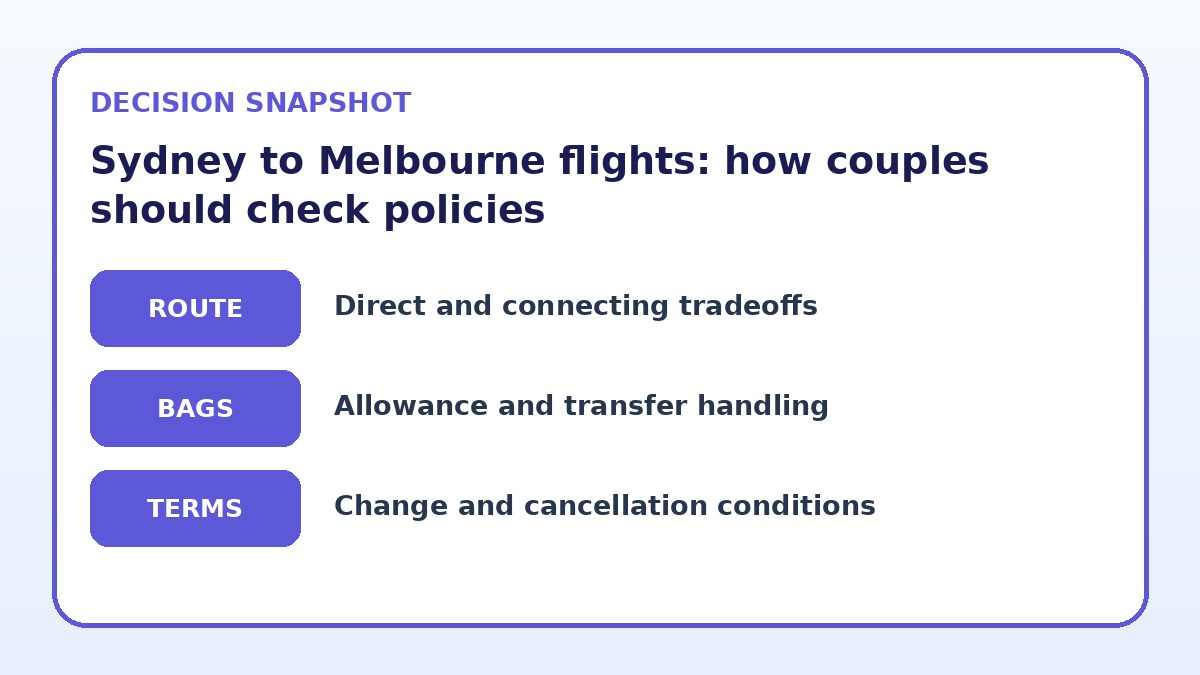
On the Sydney to Melbourne route many carriers operate direct services, but connecting itineraries also appear in search results. When comparing change and cancellation rules, treat connecting itineraries as a single contract if sold on one ticket: a change or cancellation may affect the entire journey and could incur higher rebooking fees. If you buy separate tickets for legs, changes to one leg won’t automatically adjust the other—this can fragment protection and may leave you responsible for missed connections.
Decide whether convenience or lower cost matters more. Direct flights reduce the risk of missed connections and simplify change processes because only one ticket is involved. Connecting options sometimes offer cheaper fares but can complicate refunds and rebooking, especially if each leg is on a different carrier. For couples, weigh whether you want both tickets to have identical flexibility; differing policies between legs or airlines can create awkward situations if one partner needs to change plans unexpectedly.
Before you book
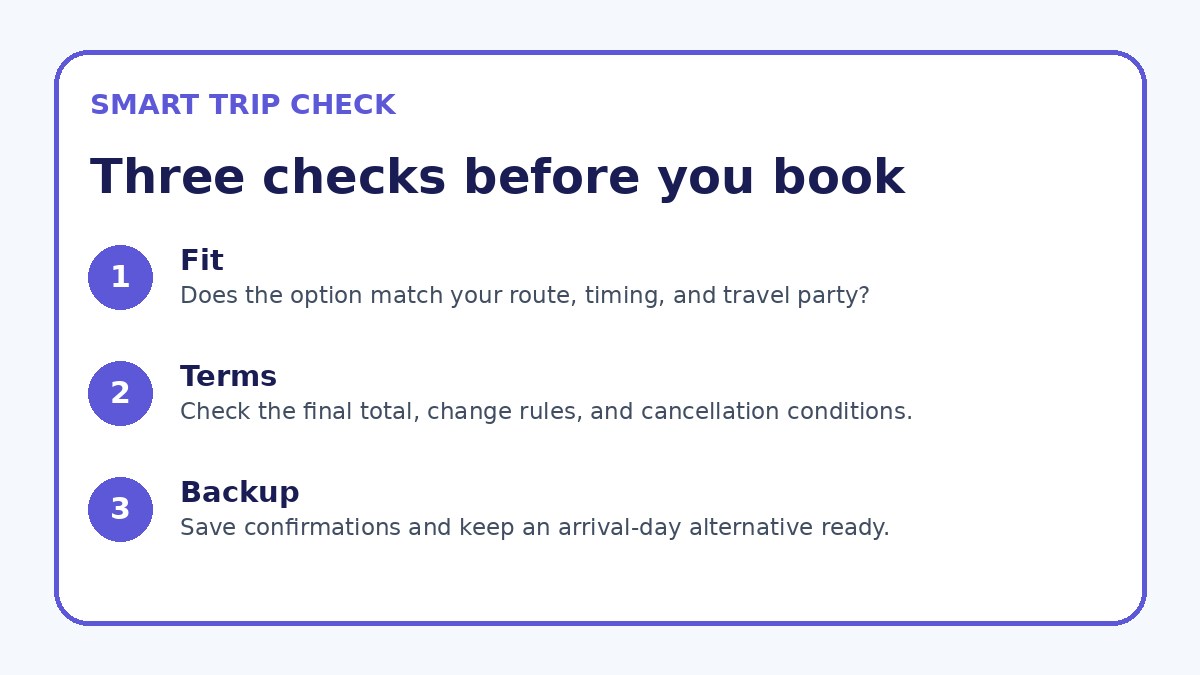
- Open the airline’s final booking page and read the full fare rules for change and cancellation before you hit purchase.
- Confirm whether change fees are charged per passenger or per booking and calculate potential total fees for both travellers.
- Check whether refunds are issued to the original payment method or only as travel credits and note any expiry dates.
- Compare refundable fares, flexible fare add-ons, and travel insurance quotes to find the best value for your risk tolerance.
- If you need to change plans often, consider booking identical fare classes for both passengers to simplify rebooking.
- Save a screenshot or PDF of the policy text and booking confirmation; it helps if you need to dispute a charge later.
Practical booking tips for couples
Book both passenger names on the same reservation when possible—this usually makes changes simpler and guarantees you sit together at check-in (subject to availability). If you must buy different fare types, note that changing a single passenger can alter the fare rules for the reservation and sometimes force reissue of the whole booking. Before finalizing payment, read the full fare conditions on the airline’s checkout page: look for change fee amounts, how fare differences are calculated, whether taxes are refundable, and what the carrier’s timeline is for issuing credits.
If flexibility is important but refundable fares are costly, compare adding travel insurance that covers trip cancellation for covered reasons versus paying for a more flexible fare. Understand insurance exclusions and claim processes before relying on it. Finally, keep screenshots or PDFs of the fare rules and booking confirmation; if a dispute arises, having the exact policy text from the booking page and time-stamped evidence of purchase will speed resolution.
Frequently asked questions
Can I change dates for only one passenger on a shared booking?
Often you can change only one passenger, but the airline’s ticketing rules determine whether changing one name forces a reissue of the entire reservation. Some carriers allow per-passenger modifications with separate fees; others treat the booking as a single contract and recalculate the whole fare. Always check the fare conditions on the airline’s booking summary before paying, and if necessary call the carrier to confirm how a partial change will be handled and what charges to expect.
Is it better for couples to buy two refundable tickets or one refundable and one cheap ticket?
There’s no one-size-fits-all answer: buying two refundable tickets is simpler and reduces the risk of disputes, which is valuable if both travellers face uncertainty. Buying one refundable and one cheap ticket can save money if only one person needs flexibility, but it can also complicate rebooking and lead to unequal outcomes. Weigh the cost difference against the likelihood and potential cost of changes. If the cost of two refundables is prohibitive, consider travel insurance as a middle ground.
What should we verify on the carrier’s page before confirming our Sydney to Melbourne booking?
Check the fare class, explicit change and cancellation fees, whether refunds are cash or vouchers, and any deadlines for free changes. Look for clauses about name corrections, same-day change policies, and whether seat assignments or ancillary purchases are refundable. Confirm whether any special waivers apply and whether fees differ for each passenger. If booking through an agent or aggregator (Trip.com or similar), verify the same policy text on the airline’s own checkout to ensure no discrepancies.
Final planning note
For couples flying Sydney to Melbourne, the key decision is how much flexibility you both need and how much you’re willing to pay to secure it. Compare fare classes side-by-side, check whether fees apply per person or per booking, and insist on seeing the carrier’s policy text before you pay. If one partner’s plans are uncertain, matching both tickets to the more flexible option reduces friction and the risk of unequal outcomes. Alternatively, pairing a cheaper ticket with targeted travel insurance can be a smart compromise—just read the exclusions carefully. Keep documentation of the fare rules and confirmations so changes or disputes are easier to resolve.
Continue planning
Check current options and final conditions
Use the provider page to confirm live availability, the final total, cancellation terms, and every condition that matters to your trip.
This evergreen planning guide was created with AI-assisted drafting and a structured quality review. It does not display live prices, schedules, availability, visa guidance, or provider rankings. Verify current details before booking. Some links are affiliate links; we may earn a commission at no additional cost to you.