
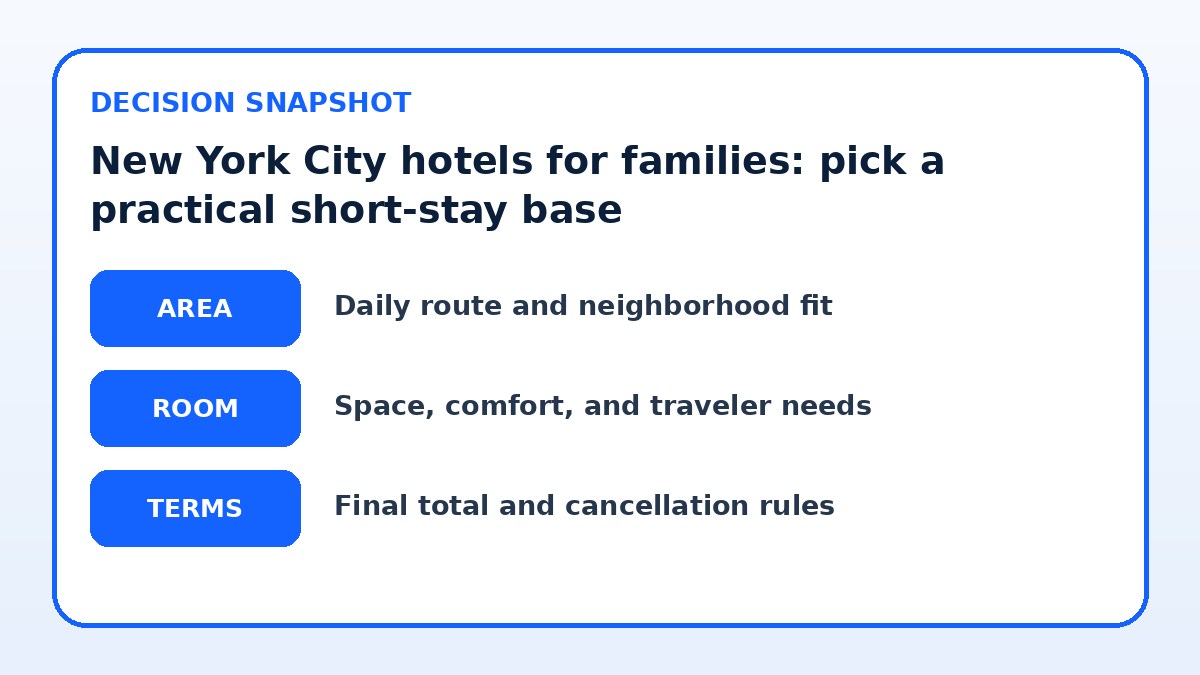
If you have only a few days in New York City with kids, pick a hotel that minimizes transit time and friction rather than chasing central prestige. Practical family bases are near subway lines, have straightforward luggage handling, and offer simple food options and space to regroup between activities. For a 2–4 night stay prioritize a hotel location close to the neighborhoods where you'll spend most time—museum row, Midtown attractions, or Lower Manhattan—and check room layouts to confirm an actual family-friendly setup. Think about evening routines: quieter blocks, nearby grocery or deli, and quick access to a laundromat or sink for unexpected spills. This article explains the tradeoffs among Midtown, Upper West Side, Downtown/Financial District, and Brooklyn Heights/Prospect Park, the questions to ask when booking, and practical checklist items to verify before you finalize a reservation.
Midtown: walkable to the icons, busy but convenient
Midtown Manhattan places you within walking distance of many classic sights—Times Square, Rockefeller Center, and several museums—so it often reduces the need for transfers when you have limited time. The concentration of subway lines and frequent buses makes reaching other parts of the city straightforward, which matters when you want to return quickly for naps or an early bedtime. Hotels here tend to vary from compact rooms to larger suites, so check room sizes and whether rollaway beds or interconnecting rooms are available if you need separate sleeping spaces for kids and adults.
Tradeoffs in Midtown include higher daytime noise and a busier streetscape that can tire younger children between activities. Streets are well lit and generally safe for families, but sidewalks can be crowded, which slows movement with strollers. If you prioritize walking to major attractions and minimizing transfers—especially on a trip of only a few days—Midtown is often the most practical tradeoff despite less neighborhood charm compared with residential areas.
Upper West Side: residential feel and family amenities
The Upper West Side offers a calmer, more residential base with easy access to Central Park and major family-friendly museums like the American Museum of Natural History. Tree-lined blocks, playgrounds, and delis make evenings easier when you want low-key dinners or a quick grocery run. Hotels here often present more apartment-style rooms or suites that suit families who need a little extra space to spread out for a short stay.
The downside is slightly longer rides to some Midtown landmarks and Lower Manhattan attractions, so plan which sites will fill your days before choosing this neighborhood. If most of your plans center on Central Park, the museums, or relaxed neighborhood time, the shorter internal travel and quieter nights can save energy and make the trip enjoyable for younger children.
| Approach | Best for | Tradeoff to check |
|---|---|---|
| Midtown | Walkable access to main tourist sights and minimal transfers | Busier streets, smaller rooms, and higher daytime noise |
| Upper West Side | Central Park access, museums, and quieter family evenings | Longer rides to Downtown and some Midtown attractions |
| Downtown / Financial District | Ferry and southern-attraction proximity with calm evenings | Less convenient for Midtown museums and Broadway |
| Brooklyn (Heights/Prospect Park) | Roomier accommodations and neighborhood life | Extra transit time to Midtown highlights |

Downtown & Financial District: compact and fast for southern routes
Staying Downtown or in the Financial District makes sense if your short visit includes ferries to the Statue of Liberty, Battery Park, or appointments in Lower Manhattan. Hotels here are near PATH trains and multiple subway lines that take you to Brooklyn, the waterfront, and transit hubs for regional travel. Many properties are compact but modern, and the streets are quieter in the evenings after business hours—often appreciated by families with small children who need calm nights.
You trade off immediate access to Midtown sights: expect a longer subway ride if you plan to visit museums or Broadway shows. Also check what family-sized rooms are offered; some downtown hotels specialize in business travel and have smaller standard rooms. If your short itinerary targets southern attractions or includes a ferry, this neighborhood can shave door-to-dock time and simplify logistics.
Before you book
- Confirm the room configuration (two beds, suite, or sofa bed) and whether a rollaway or crib is available before booking.
- Verify elevator access and whether the hotel can assist with stroller storage or luggage handling at arrival and departure.
- Check transit links: note the closest subway lines and whether a direct route serves your main planned attractions.
- Ask about early check-in or flexible check-out options if you have tight arrival or departure times with children.
- Locate the nearest grocery, pharmacy, and 24-hour deli on a map to simplify meals, snacks, and last-minute needs.
- Read the property’s final booking page for cancellation rules, extra guest fees, and any stated housekeeping or breakfast practices.
Brooklyn options: more space and neighborhood life
Brooklyn neighborhoods like Brooklyn Heights, Dumbo, and Prospect Park neighborhoods provide more living-room style hotel rooms and easy access to parks, playgrounds, and family-friendly cafes. You’ll likely get larger rooms or suites for the same money as a smaller Manhattan room, which is especially valuable for a short family stay that still needs an afternoon nap or space for strollers and gear. Ferry or subway connections to Manhattan are frequent; the experience of staying in a residential neighborhood can make mornings feel less rushed.
Travel time to Midtown attractions will be longer than staying in central Manhattan, and you should compare the convenience of a nearby ferry versus the subway for your planned itinerary. If your top priorities include space, calmer evenings, and a local neighborhood atmosphere, Brooklyn can be a practical base—just focus on properties near a reliable transit link to the areas you intend to visit most.
Frequently asked questions
How do I choose between a suite and two standard rooms for a short family stay?
For a short stay, prioritize sleep routines and family privacy. A single suite with separate sleeping areas can keep kids and parents together while providing space to spread items and settle quickly. Two standard rooms offer separate bathrooms and sleeping quarters but may complicate supervision and increase cost and coordination for check-in. Compare sleeping capacity, bathroom count, and whether the hotel charges for an extra room or for additional adults; verify room photos and the exact bed types on the hotel’s booking page before committing.
Is staying near a subway always the best choice for families with young children?
Proximity to a subway generally shortens travel time and reduces transfers, which is valuable when managing naps and short attention spans. But busy subway stations mean stairs and crowded platforms—consider whether a short walk to a quieter station or a hotel on a bus or ferry route might be easier with a stroller. If you prefer fewer stairs, confirm elevator availability at the station and at the hotel. For very young kids or large strollers, a slightly longer street-level route could be more manageable than a central but congested stop.
What should I verify about meals and breakfast when booking a family-friendly hotel?
Short trips benefit from simple meal logistics: check whether breakfast is included or available à la carte, whether there are nearby casual dining options for picky eaters, and whether the property has a small fridge or microwave. If the hotel lists complimentary breakfast, read the provider’s booking page to learn the hours, seating policy, and whether children are covered. Confirm nearby grocery or delivery options and whether the concierge can recommend family-friendly restaurants and arrange reservations when needed.
Final planning note
For a short family visit to New York City, choose the neighborhood that minimizes transit friction for your planned activities. Midtown keeps you within walking distance of many landmarks; the Upper West Side gives you proximity to Central Park and a calmer residential feel; Downtown is efficient for ferry and southern attractions; and Brooklyn offers more space and a neighborhood atmosphere. Before booking, confirm the exact room layout, nearby transit lines, and practical amenities such as elevators, nearby grocery stores, and breakfast options on the hotel’s final booking page. If you want to compare availability quickly, sites including Trip.com can show current options, but always verify room details and hotel policies directly before you finalize your stay.
Continue planning
Check current options and final conditions
Use the provider page to confirm live availability, the final total, cancellation terms, and every condition that matters to your trip.
This evergreen planning guide was created with AI-assisted drafting and a structured quality review. It does not display live prices, schedules, availability, visa guidance, or provider rankings. Verify current details before booking. Some links are affiliate links; we may earn a commission at no additional cost to you.