Start by choosing the neighborhood that will make your days simpler: prioritize easy transit links, a clear route to your top two sights, and walkable evening options. For a short solo stay in Hong Kong, a practical base is less about luxury and more about reducing daily friction—faster transfers from the airport or main station, nearby MTR lines or tram stops, and enough local shops and food choices so you can eat and buy essentials without detours. I’ll give the practical answer up front: choose one of three compact, well-connected neighborhoods—Central/Sheung Wan, Tsim Sha Tsui, or Wan Chai—if you want minimal transit hassle. If you prefer quieter streets and cheaper single rooms, look at Kowloon Tong or Prince Edward instead. Below I break down neighborhood fit, likely daily routes, room and solo-traveler needs, and the final booking terms you should verify before completing a reservation.
Check live stays in the areas that fit
Use your dates and party size to compare current rooms after you narrow the neighborhood fit.
Neighborhood fit: which area matches your short-stay priorities?
Match the neighborhood to how you’ll spend most hours. If your agenda is a mix of skyline views, quick ferry access to outlying islands, and some nightlife, Central or Sheung Wan gives compact walking routes and multiple transport choices. Tsim Sha Tsui sits on the Kowloon side with easy museum and promenade access; it’s convenient if you prefer being closer to the harbour and evening dining options. Wan Chai places you near convention venues and a steady flow of restaurants without the same tourist density as Central, which can matter for quieter nights.
If your priority is budget single rooms and proximity to markets, consider the older parts of Mong Kok, Prince Edward or Jordan—these neighborhoods often have smaller rooms and excellent street food but expect narrower streets and more foot traffic. For a short stay where rest matters, choose a neighborhood with good late-night transit or plenty of short taxi rides available rather than the absolute cheapest building. The right fit is a balance between the features you’ll use most during your stay and how much walking or transfer time you’re willing to accept each day.
Choose an area-selection strategy
| Area approach | Best for | Tradeoff to check |
|---|---|---|
| Stay in Central/Sheung Wan | Short sightseeing days with many MTR, ferry, and tram options | Higher foot traffic and typically smaller rooms versus being centrally located |
| Stay in Tsim Sha Tsui | Harbour views, museums, and walking along the waterfront | More tourist density and potentially longer travel to Hong Kong Island attractions |
| Stay in Wan Chai | Evening dining variety with steady transit access and fewer tourists | Not as many direct ferry links and can feel more businesslike in daytime |
| Stay in Mong Kok/Prince Edward (Kowloon) | Budget single rooms, local markets, and street food immersion | Narrow streets, heavier foot traffic, and sometimes noisier nights |
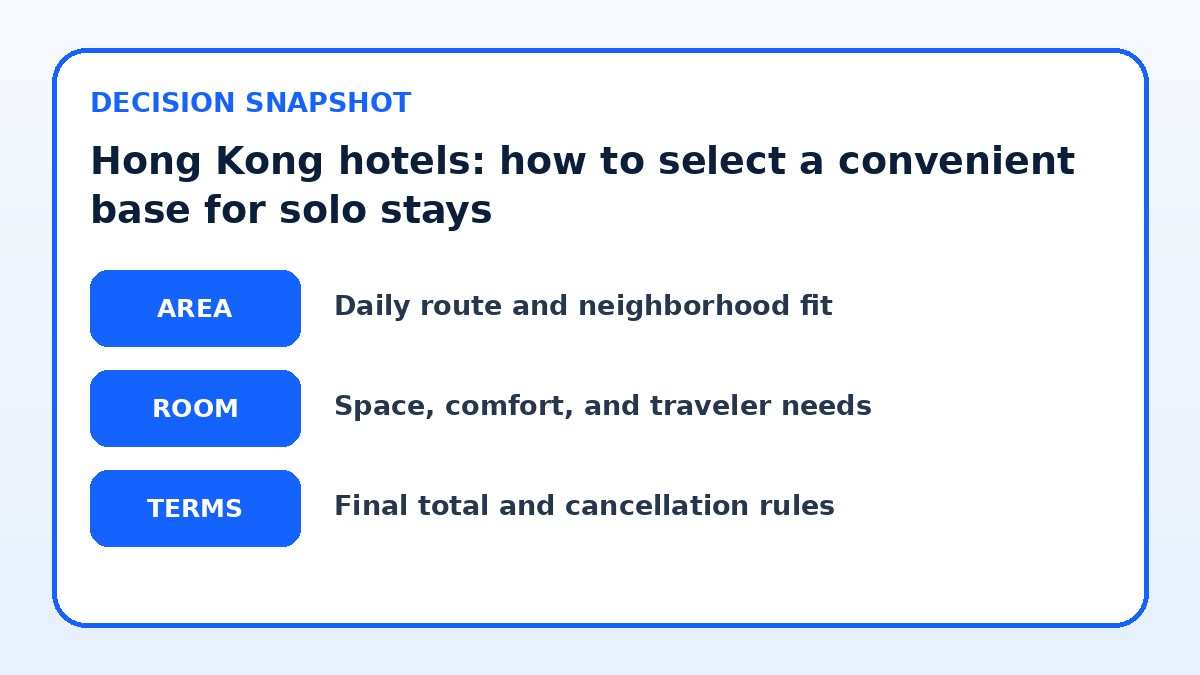
Daily-route friction: reduce commute minutes and decision stress
Think of each day as a chain of connections: hotel to first attraction, midday change of plan, evening return. A base on an MTR interchange or on a line with direct links to the airport express or major ferry piers significantly reduces friction. Central/Sheung Wan and Tsim Sha Tsui offer multiple onward options for sightseeing and evening plans, which means fewer last-minute route choices or reliance on taxis during peak hours. Map your top two destinations and check which neighborhoods sit roughly between them to minimize backtracking.
Also plan for simple grocery and dinner runs: neighborhoods with a convenience store or small supermarket within five to ten minutes’ walk remove the need for extra excursions when you’re tired. Consider how often you’ll cross the harbour—if that’s frequent, pick a side and keep most of your nights there. Finally, when you map transit, compare single-seat rides versus transfers; fewer transfers matter more than slightly shorter total travel time when you have limited days and want low stress.
Now compare like with like
Keep the same dates, guests, room needs, and cancellation preferences while you compare the final choices.
Room and solo-traveler needs: what to prioritize in a short stay
For solo travelers on short trips, the room is primarily a secure, quiet place to sleep and store carry-on luggage; you don’t need a large suite but do want a comfortable bed, good locks, and decent soundproofing. Request a room on a higher floor if safety or street noise is a concern, and always verify the bed configuration—single, double, or twin—on the booking page. If you need to work briefly, ask if the room has a desk or a table and confirm the reliability of Wi‑Fi directly with the property before you book.
Other practical details to check: private bathroom preference, luggage drop-in policy for early arrival or late departure, and whether the hotel accepts solo guests of your age or nationality if there are any special house rules. If you plan to store items or use lockers, ask about in-house storage and any charges. These points rarely change frequently, but always confirm them on the property’s booking page or by messaging the hotel; Trip.com is one place to compare current availability, but verify details on the provider’s page before you finalize.
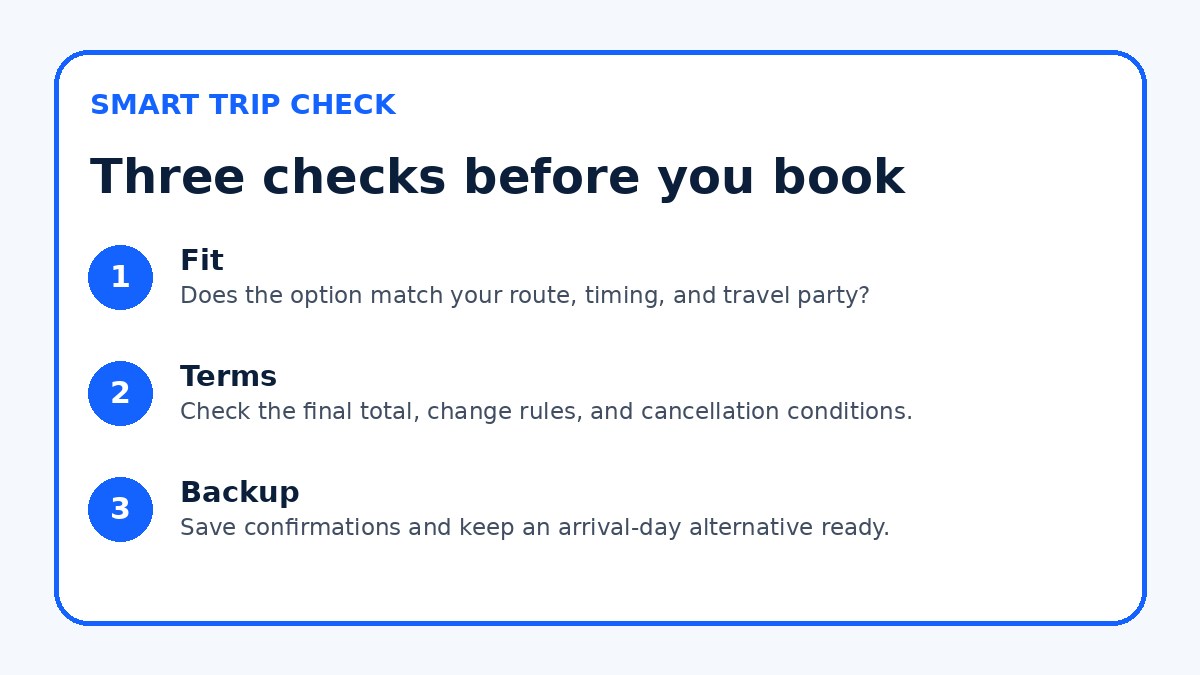
Hotel booking check before payment
- Map your arrival point and confirm which MTR line or airport link is closest to each shortlisted neighborhood
- Open the final room description and verify bed type, single-occupancy rules, and whether breakfast is included
- Message the hotel to confirm luggage drop-off for early arrival or late departure and any potential deposit holds
- Check the nearest MTR exit number and whether walking directions from that exit include stairs or lifts
- Read recent guest comments for mentions of noise, renovation, or unreliable Wi‑Fi and confirm these with the property
- Compare cancellation and prepayment terms on the booking page and note exactly what refund steps you must take if plans change
Final booking terms: what to verify before you click reserve
Don’t rely on memories from casual browsing — before booking, read the exact room description and cancellation policy shown on the final booking page. Check whether the rate includes breakfast, whether city or service fees are applied at check-in, and what form of payment is accepted. Look for clear statements about ID requirements, deposit holds on cards, and whether the booking allows single occupancy without extra charges; if anything is ambiguous, message the hotel or booking agent.
Also confirm transport details that affect arrival: which airport transfer options the hotel recommends, nearest MTR exit number for walking directions, and whether there is an accessible lift at that exit if you have heavy luggage. If you plan onward travel by ferry or bus, verify the nearest terminal and how long the walk should be from your chosen neighborhood. Finally, check guest reviews for recent mentions of noise or renovation, and verify any specific amenities you depend on — such as late check-in or paid luggage storage — on the property’s page before you commit.
Hotel Guide questions travelers ask
Which Hong Kong neighborhood best minimizes transit time for a 2–4 day solo trip?
If minimizing transit time is your priority, choose a neighborhood that places you on or near an MTR line serving your main arrival route and top attractions. Central/Sheung Wan connects well to ferries and many island sights, while Tsim Sha Tsui is ideal for museums and waterfront walks on the Kowloon side. For direct airport access, look at properties near the Airport Express stations or convenient MTR interchanges; confirm walking times and transfer counts on the transit app or the hotel’s directions page before booking.
Are small single rooms in Hong Kong usually safe and comfortable for solo travelers?
Many single rooms in Hong Kong are compact but safe, particularly in neighborhoods with steady foot traffic and visible businesses. To ensure comfort, check room photos and recent reviews, request a non-street-facing room if noise is a concern, and confirm locks and in-room safes with the property. If you have mobility needs or want more space for luggage, consider paying slightly more for a room with wider floor area—details you should confirm on the provider’s booking page before you finalize.
How should I balance neighborhood convenience with budget when I only have a few days?
For short stays, prioritize convenience over the lowest possible nightly rate because lengthy transfers or frequent taxi rides can eat up precious sightseeing time. Choose a slightly pricier neighborhood that cuts transfers or places you near evening food options to save time and stress. If budget is tight, pick a well-connected budget hotel in Kowloon or near a main MTR line rather than an isolated cheap property; always check the final booking terms for exact inclusions and any extra charges before you reserve.
Final decision note
For a short solo stay in Hong Kong, the decisive factor is how little daily friction you want. Choose a neighborhood that sits close to the transport links you’ll use most and has local food and shop options within easy walking distance: Central/Sheung Wan, Tsim Sha Tsui, or Wan Chai cover most short-trip priorities, while parts of Kowloon suit tighter budgets with tradeoffs in noise and crowding. Shortlist an area before you search hotels; then verify bed configuration, luggage policies, cancellation rules, and precise walking directions on the final booking page. Use the checklist to confirm essentials and compare current availability on a site like Trip.com if you want an additional inventory view, but always verify the property’s stated terms before booking.
Continue planning
Check current options and final conditions
Use the provider page to confirm live availability, the final total, cancellation terms, and every condition that matters to your trip.
This evergreen planning guide was created with AI-assisted drafting and a structured quality review. It does not display live prices, schedules, availability, visa guidance, or provider rankings. Verify current details before booking. Some links are affiliate links; we may earn a commission at no additional cost to you.