Practical answer first: for most first-time visitors, prioritize a rail-centric plan (shinkansen or limited express plus luggage-forwarding where needed) if you value speed and low transfer hassle; choose coach or combined coach+train only if you need a cheaper, simpler single-vehicle transfer from less central locations or overnight travel. The rest of this guide explains how to weigh terminal fit, luggage friction, timing flexibility, and what to do if your chosen link is disrupted. You’ll get concrete questions to ask before booking, a comparison of four planning approaches, and an end-to-end mindset so you can make door-to-door decisions—hotel locations, station access, transfers, and luggage handling—not just the ride itself. Where operator details matter (schedules, luggage limits, baggage-forwarding rules), verify them on the provider’s booking page or a trusted aggregator such as Trip.com before you lock in plans.
Choose your mode: rail, coach, ferry, or a combo
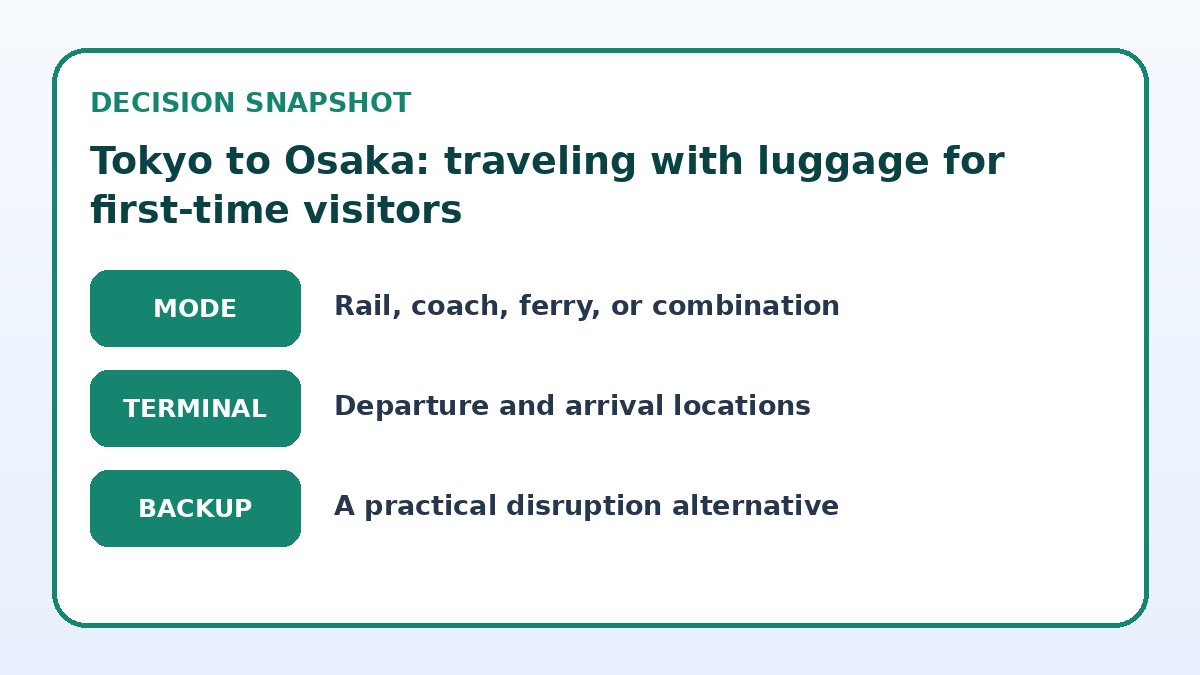
Match mode to where you start and finish in the city. Rail gives the most central-to-central connections and the fewest last-mile surprises if your hotels are near major stations. Coaches often run between terminals that may be a short ride from budget hotels and can be easier with large suitcases because boarding tends to be single-level with luggage bays. Ferries are niche for Tokyo–Osaka and only practical if you plan an extended coastal route; treat them as leisure options rather than fast practical links.
Consider combinations: a coach from a suburban hotel to a main terminal, then a shinkansen for the bulk of the trip, or local train to an express service. When mixing modes, map the terminal-to-terminal transfer, check luggage allowances at each leg, and add buffer time for baggage collection or storage. Always confirm final-mile accessibility—are taxi ranks, hotel shuttle stops, or short public-transport connections available at both ends?
Choose the end-to-end journey plan
| Journey approach | Best for | Friction to check |
|---|---|---|
| Direct rail-first plan (shinkansen/express) | Travelers prioritizing speed and minimal transfer steps between central stations. | Requires managing luggage on busy platforms and may need seat reservations or luggage checks for large items. |
| Coach-only plan | Travelers with oversized luggage or those staying near coach terminals who want fewer handoffs. | Fewer departure times and potentially less-central dropoff points can add last-mile taxi or transit rides. |
| Mixed-mode (local train/coach + express) | Those starting outside city centers who need flexibility and fewer taxi trips at either end. | More transfers increase the chance of baggage handling friction; check each leg’s luggage policy carefully. |
| Luggage-forwarding plus light travel | Sightseeing between cities without dragging suitcases—ideal for overnight stays and flexible itineraries. | Depends on forwarding pickup/delivery windows and hotel acceptance; requires a backup if delivery is delayed. |
Check live intercity options
Look beyond the ride itself and compare terminals, transfers, luggage, and arrival fit.
Terminal fit and luggage transfer friction
Evaluate how easy it is to move luggage through each terminal you’ll use. Major Tokyo and Osaka stations are large and can require walking between platforms, elevators, or escalators; if you have heavy suitcases, choose stations with clear elevator access and minimal platform changes. Bus terminals can be compact and simpler to navigate, but not all neighborhoods have direct coach access, which may add a taxi ride. If you plan to use airport connections, factor in the extra transfers and security lanes.
Luggage-forwarding (takkyubin) and hotel hold services can cut transfer friction. Forwarding services pick up from many Tokyo addresses and deliver to hotels in Osaka the next day, which is handy if you plan same-day sightseeing without dragging suitcases. However, forwarding windows, acceptable pickup addresses, and whether a hotel will accept delivery vary—verify these details on the forwarding company and hotel booking pages before relying on the service.
Timing flexibility and travel-day planning
Decide how flexible your schedule must be. If you need fixed arrival times for events or check-in windows, choose faster rail options with frequent departures and reserve seats when possible, or plan an earlier connection to allow a buffer. If your schedule is flexible and you prefer cost savings or night travel, coaches and late trains can make sense, but remember that fewer departures mean less room for disruption. Build at least 30–60 minutes of buffer for station transfers and luggage handling during peak hours.
Plan practical windows for luggage collection and hotel check-in. If you forward luggage to arrive the next day, make sure your sightseeing or local transfers end in time to pick up bags or check into the hotel. If you carry bags with you, confirm elevator locations, platform transfer times, and whether your inbound train has dedicated luggage areas. Always have a lightweight daypack with essentials in case baggage is delayed or forwarded to a different delivery slot.
Compare the practical alternatives
Use the final page to confirm what is actually offered on your dates and save a workable fallback.
Intercity travel checklist
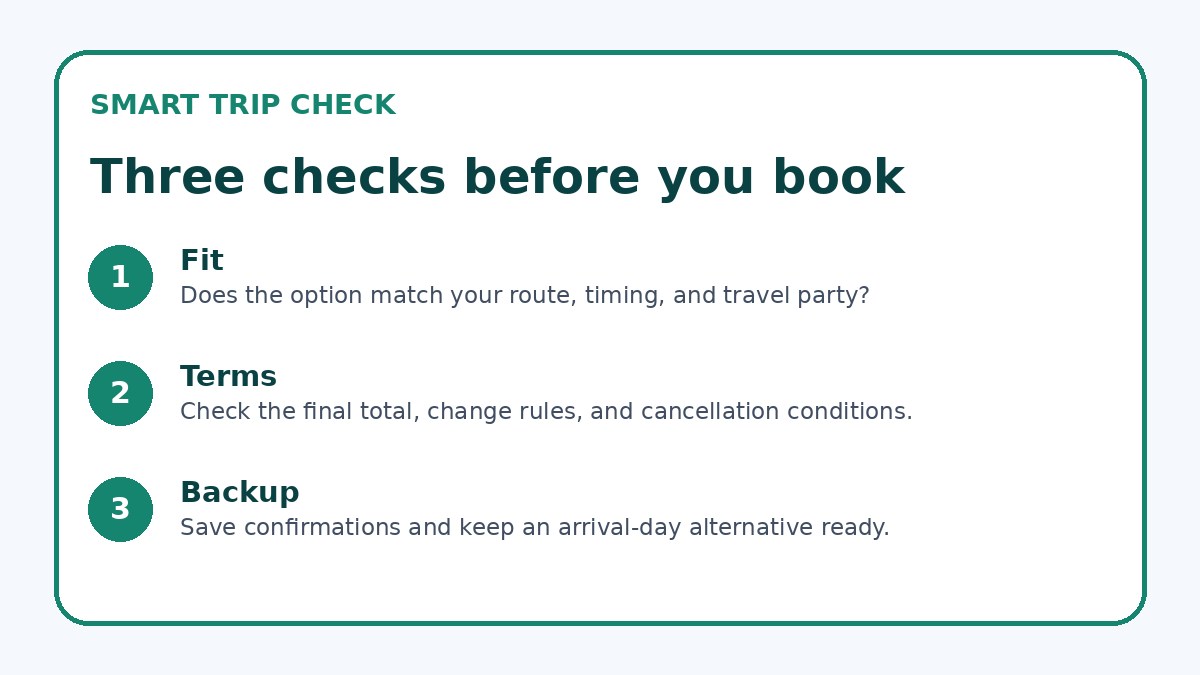
- Map exact station or terminal addresses for departure and arrival, and note elevator/escalator locations for each to plan transfers with luggage.
- Check luggage allowances and dimensions for each mode and the specific service before booking, then reconcile them with your suitcase sizes.
- If using luggage-forwarding, confirm pickup/drop time windows and whether your hotel accepts deliveries on your travel dates.
- Reserve seats or coach tickets when possible to reduce standing with bags and to secure overhead or luggage-bay space.
- Identify station luggage-storage options and confirm size limits and opening hours as a contingency for delayed delivery or early arrival.
- Save contact numbers and booking references for the train/coach operator, your hotel, and any forwarding service in one accessible place.
Disruption backup: alternatives and on-the-ground steps
Prepare a clear backup plan before you travel. Identify at least two alternative routes—an alternate train line, an express coach, and a taxi fallback you can afford for short hops. Save station maps and a local taxi app or number, and know where luggage storage is available near key stations. If luggage-forwarding is delayed, be ready to use temporary station lockers or paid storage services; confirm size limits so your suitcase will fit.
On the travel day, keep digital receipts, booking references, and contact numbers for your hotel and any forwarding service. If a primary service is disrupted, contact providers promptly to rebook or reroute your luggage and choose the fastest practical alternative given the time of day. If you consult live availability, use the provider’s final booking page (or Trip.com as a comparison tool) to confirm schedule updates, luggage rules, and any real-time notices before changing plans.
Rail & Intercity Transport questions travelers ask
Can I bring large suitcases on shinkansen and how should I stow them?
Shinkansen trains accommodate luggage but space and rules vary by service and carriage. Consider reserving seats that allow space above or behind seats for small suitcases, or choose designated luggage areas where available. If you have a very large suitcase, measure it and check the operator’s guidance on size limits and required reservations; some services may ask passengers with oversized items to reserve a seat in a carriage with extra space or to use station storage. Always confirm the latest luggage policy on the train operator’s booking page before you travel.
Is luggage-forwarding reliable for next-day delivery between Tokyo and Osaka?
Luggage-forwarding is a common and generally convenient option for intercity travel, but reliability depends on service windows, holidays, and hotel acceptance. Use a reputable forwarding provider, confirm pickup and delivery timeframes for your specific addresses, and ensure your hotel will accept a parcel on your arrival date. If you need the bag the same day or have tight schedules, keep essentials in a carry-on and plan a backup like station storage or a later direct transport option.
What should I do if my planned train or coach is canceled and I have luggage in transit?
First, contact the operator and your hotel or forwarding service to report the disruption and learn about rebooking or luggage handling options. If luggage was forwarded and delivery is delayed, ask the forwarding company for an updated delivery window and whether rerouting to your hotel is possible. If you are carrying bags and must change trains or switch to a coach, prioritize routes with fewer transfers or short taxi hops to limit additional handling. Keep digital booking confirmations accessible to speed up assistance from providers.
Final decision note
Choosing how to travel Tokyo to Osaka with luggage is an end-to-end decision: match mode to your hotel locations, luggage size, and timing needs rather than picking the fastest ride in isolation. Rail-centered plans usually reduce transfer steps between central stations; coaches work well when terminals align with where you’re staying or when you have oversized baggage. Luggage-forwarding can remove the physical burden but needs confirmed pickup/delivery windows and hotel cooperation. Before booking, verify luggage rules, station access, and forwarding terms on the provider’s final booking page. With a clear backup route and the right pre-checks, you’ll reduce stress and keep your itinerary flexible.
Continue planning
Check current options and final conditions
Use the provider page to confirm live availability, the final total, cancellation terms, and every condition that matters to your trip.
This evergreen planning guide was created with AI-assisted drafting and a structured quality review. It does not display live prices, schedules, availability, visa guidance, or provider rankings. Verify current details before booking. Some links are affiliate links; we may earn a commission at no additional cost to you.