If you’re visiting Rome for the first time, the single most useful habit when hunting Rome travel deals is to treat your travel dates as a variable, not a fixed constraint. Practical flexibility — moving your departure or return by a few days, shifting weekday versus weekend nights, or opening a one- to two-week window — often produces different flight routings, hotel rates, and package components that may better match your priorities. Start by locking down what cannot change (must-see events, work leave windows, nonrefundable commitments) and then experiment with nearby dates while holding traveler count and room type identical. This guide gives a rapid decision rule for when to bundle versus book separately, explains what to compare on provider pages, and lists the exact terms you must verify before committing money.

Test package value fairly
| Booking approach | Best for | Tradeoff to check |
|---|---|---|
| Package with flights, hotel and transfers included | Travelers valuing convenience and a simple single-responsibility contract | May lock you into nonrefundable timings or stricter change rules; check who operates each component. |
| Flights and hotel booked separately | Travelers who want control over fare families, loyalty benefits and selective flexibility | Requires more legwork to coordinate arrival times and transfers; potential for missed connections if schedules change. |
| Book flights first, then flexible hotel reservations | Those who prioritize securing specific flight times while keeping accommodation changeable | May lose bundled transfer savings and needs careful date alignment to avoid false savings. |
| Mix: package for transfers/tours plus independent flight booking | Travelers seeking included ground services with flight options or elite airline benefits | You manage multiple suppliers and must verify cross-provider rebooking responsibilities. |
Check current package and separate options
Use identical dates, travelers, room needs, baggage, and flexibility so the comparison stays meaningful.
What to compare before judging a bundle useful
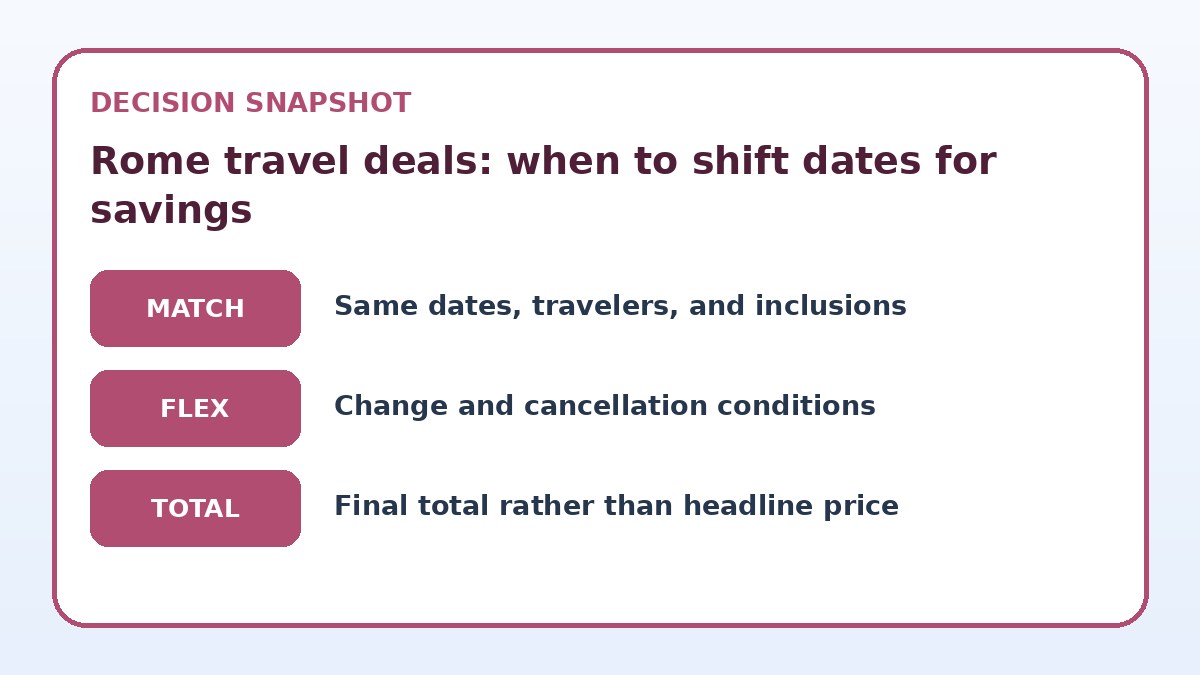
Before you decide a package is better, compare exact apples-to-apples details: the same outbound and inbound calendar dates, identical number of travelers, the same cabin class or fare family for flights, identical room type and bedding, and the same baggage and seat-selection conditions. If a package appears lower, double-check whether it excludes airline change fees, imposes stricter cancellation windows, or assumes promotional nonrefundable fares that won’t accept date changes. Also confirm whether included sightseeing, transfers or attraction entries are time-specific — shifting dates can void those inclusions even when the headline price stays similar.
Equally important is to verify optional extras and where responsibility rests. If a package bundles private transfer or skip-the-line tickets, read who operates them and any rebooking rules; sometimes a package operator ties you to a specific time and supplier whose rescheduling policies are harsher than booking components independently. Finally, when testing flexible dates, keep all elements identical except the dates themselves — that prevents false savings created by downgraded rooms or shorter connections being counted as a win.
Inclusions and flexibility: the real tradeoffs
A package’s convenience often comes from inclusions: transfers, a guided walking tour, or prebooked attraction entries. For first-time Rome visitors this can save time and simplify an itinerary. But inclusions are only valuable if their timing and rebooking rules match your flexibility needs. If an included tour is nonrefundable or locked to a fixed time, shifting travel dates to save on flights might make the whole package unusable or require buying an alternative activity independently.
When testing flexible dates, treat flexibility terms as part of the price. Compare cancellation windows, change fees, and the difference between refundable and nonrefundable components. A package that looks cheaper because it bundles several nonrefundable items can be riskier than separate bookings with refundable hotel nights and a changeable flight fare, especially if your schedule may change. Always scroll to the provider’s final booking page and save or screenshot the exact fare and cancellation rules before you commit.
Look past the headline total
Compare inclusions and change conditions before deciding whether a package is genuinely useful for this trip.
Deal comparison checklist
- Set a date window of at least three to seven days around your ideal travel dates and run side-by-side searches for each option.
- Lock the traveler count, room type, cabin class, and baggage allowance identical across comparisons to prevent false savings.
- Screenshot the final booking page terms for each option, including cancellation, change fees, and names of operating suppliers.
- If a package includes timed tickets or guided tours, confirm the ticket times and whether they allow date or time changes.
- Compare total out-the-door costs (taxes, resort fees, transfer surcharges) rather than headline prices shown earlier in search results.
- Check who to contact for rebooking or refunds for each component and note any required documentation or deadlines.
Traveler-specific value: how your profile affects the choice
Who you are — solo traveler, couple, family with young children, or someone needing accessible rooms — influences whether flexible dates help. Families often save most by shifting school-break travel by just a few days; a one-night shift can change rowdy weekend rates to calmer midweek options and reduce required connecting overnight stays. Solo travelers may prioritize a cheaper flight over the convenience of included transfers, while travelers with mobility needs should weigh the reliability and arrival-time guarantees of private transfers included in a package.
Also consider loyalty status and baggage needs. If you already have airline elite benefits or checked-baggage included with a fare class, a package that claims to include bags may be redundant. Conversely, if you need specific seat assignments, check that the bundled fare class permits seat selection or that the package operator will manage that on your behalf. Your tolerance for risk — whether you need fully refundable options — should drive how widely you search dates and whether you prefer bundling or booking components separately.
Final terms to verify on the booking page
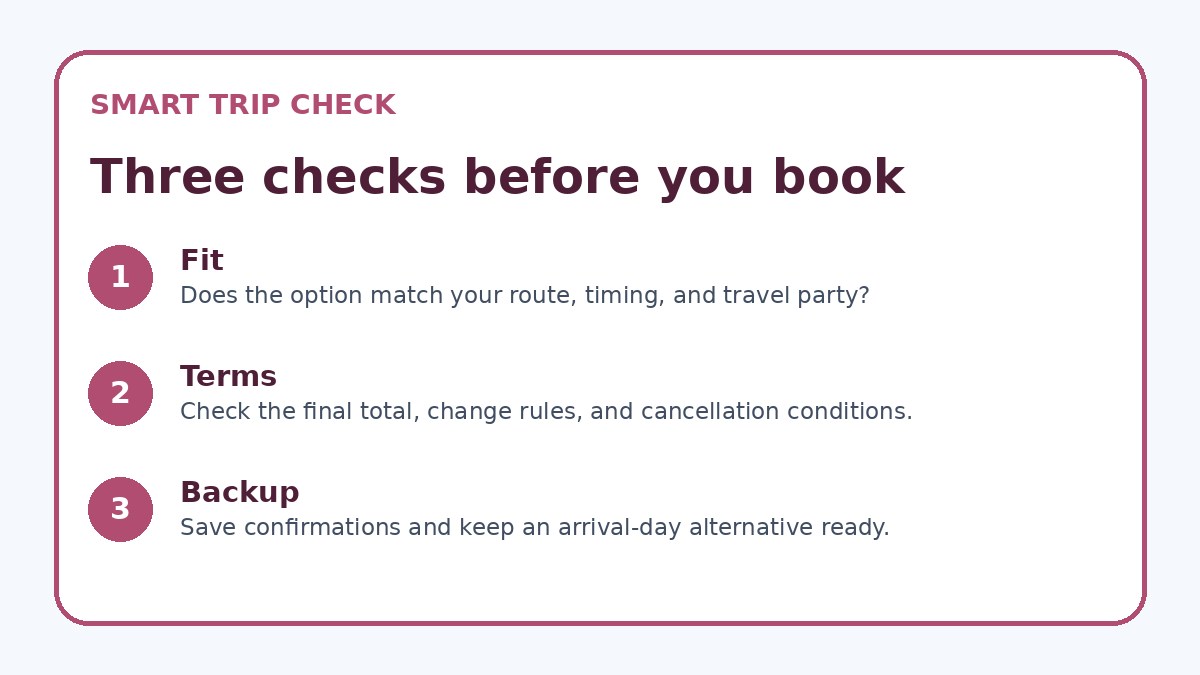
Before you click purchase, verify four things on the provider’s final booking page: the precise calendar dates and local arrival/departure times shown, the fare conditions (refunds, change fees, and how name corrections are handled), which supplier is operating included transfers or tours, and whether baggage, seat selection and taxes are truly included. If a package uses a promotional code or nonrefundable fare to reach its headline price, that condition will appear on the checkout terms and can invalidate date flexibility.
Also confirm who is responsible if one component is disrupted: does the package operator reroute you, or will you claim separately from the airline or hotel? Check the provider’s rebooking and refund contact details and any cut-off times for changes. If you’re comparing options on multiple platforms, take screenshots of these exact terms and compare them side-by-side so you’re comparing the same coverage, not just the same headline price.
Travel Deals & Booking Strategy questions travelers ask
How wide should my flexible date window be when searching Rome travel deals?
For most first-time visitors, start with a three-day window either side of your preferred departure and return dates; that’s often enough to expose different flight routings or cheaper weekday hotel nights. If your schedule is looser, expand to seven days to uncover more options. When you test windows, keep all other variables identical — same traveler count, room type and baggage — so you’re seeing only the effect of date changes and not different product mixes. If a festival or holiday is nearby, tighten your window to avoid sold-out nights.
When does bundling flights and hotels usually save money for Rome trips?
Bundling can be useful when the operator negotiates block rates for hotels and consolidates fares that include transfers or city tours beneficial to first-time visitors. It tends to offer the most value when your travel dates are rigid and you need door-to-door solutions like transfers timed to arrivals. However, always check whether the bundle’s fare classes limit refunds or changes; a small saving can vanish if you need to reschedule. Compare the total package terms against separate bookings with refundable hotel nights or flexible flight options to decide.
How do I avoid false savings when a package looks cheaper than booking separately?
False savings happen when the lower headline price results from downgraded inclusions, shorter cancellation windows, or less baggage and looser seat assignments. To avoid this, compare apples to apples: ensure the date range, traveler count, room category, cabin class, baggage allowance and included transfers or tickets match. Then read the final booking page to confirm cancellation, change fees, and supplier names. If the package requires nonrefundable timed tickets or blocks you into a single itinerary, the apparent saving could cost more in flexibility or additional out-of-pocket changes later.
Final decision note
For first-time visitors to Rome, making dates work for you is one of the best levers to improve value without sacrificing experience. Start by identifying immovable constraints, then experiment with a three- to seven-day flexibility window while holding traveler count and product specifics identical. When comparing packages and separate bookings, treat included services and change/refund terms as part of the price — convenience can be worth it, but only if it matches your flexibility needs. Before finalizing, verify the final booking-page terms for dates, supplier names, baggage and cancellation policies, and who handles rebooking. With that checklist, you can confidently balance cost, convenience and risk on your first trip to Rome.
Continue planning
Check current options and final conditions
Use the provider page to confirm live availability, the final total, cancellation terms, and every condition that matters to your trip.
This evergreen planning guide was created with AI-assisted drafting and a structured quality review. It does not display live prices, schedules, availability, visa guidance, or provider rankings. Verify current details before booking. Some links are affiliate links; we may earn a commission at no additional cost to you.