Pick the neighbourhood first: for a short business stay in Sydney, choose the area that minimizes door-to-meeting friction. If your schedule is tight—one to three nights—base your decision on where most meetings are clustered and how you'll travel between them, rather than chasing hotel prestige or sightseeing convenience. The most practical options are the CBD/Barangaroo corridors for central meetings, North Sydney for riverfront corporate campuses, the airport-adjacent suburbs for late arrivals or early departures, and Surry Hills or Pyrmont when evening client dinners matter. I’ll unpack the tradeoffs you’ll face—commute time, public transport reliability, evening dining, room layout and check-in flexibility—so you can short-list one area and book the right type of room without opening every listing first. By the end you’ll have an area choice and checklist to verify before you press confirm.
Check live stays in the areas that fit
Use your dates and party size to compare current rooms after you narrow the neighborhood fit.
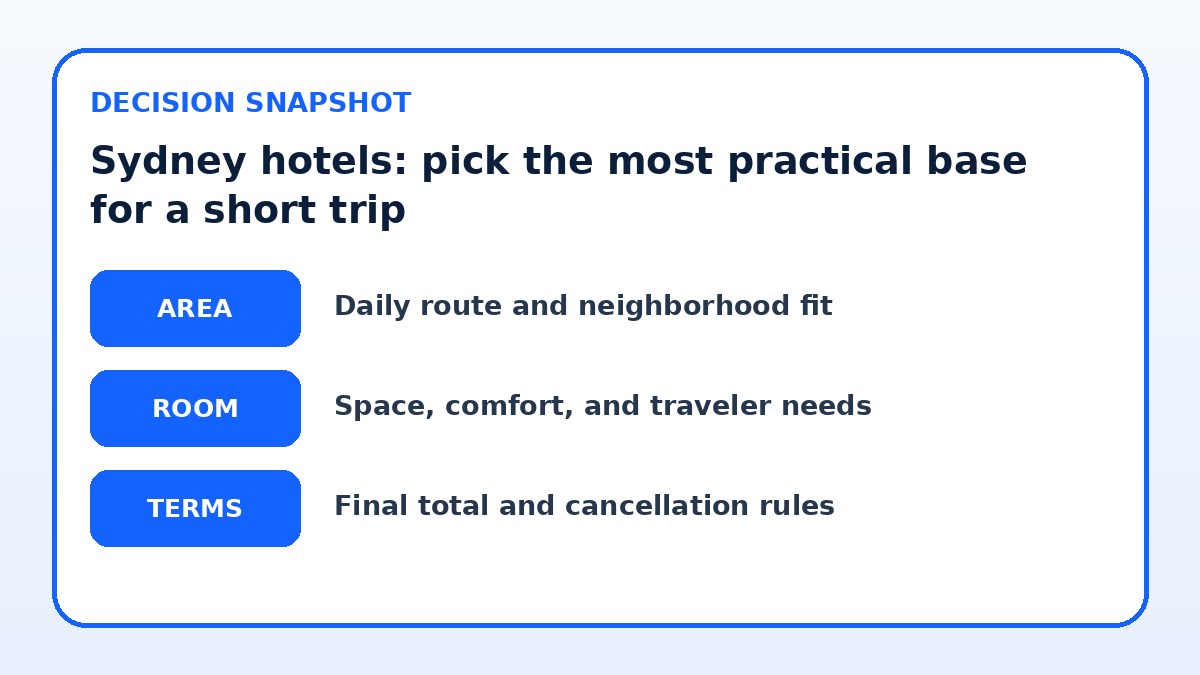
Neighborhood fit: which area matches your schedule and contacts
Start by mapping the addresses of your meetings and any evening venues. If more than half sit inside the CBD or Barangaroo, that area becomes the practical default: short walks or very short taxi rides keep transit time low. For a one- or two-night trip, being able to step out for a quick coffee or to refresh between meetings outweighs scenic river views or a boutique suburb vibe. Consider also whether clients expect you to host or visit them; hotels with meeting rooms or business centres can be useful if you need a backup meeting spot.
If meetings are split or you have a major appointment on the north shore, prioritize North Sydney. It’s often quicker to base yourself there than to cross the harbour twice a day. For itineraries dominated by arrivals and departures, hotels near Mascot and the airport let you recover sleep and simplify travel logistics. Finally, if post-meeting socialising is high priority, Surry Hills, Pyrmont or Barangaroo give the most dinner and drinks choices within walking range, reducing time lost to taxi queues late at night.
Choose an area-selection strategy
| Area approach | Best for | Tradeoff to check |
|---|---|---|
| Central CBD/Barangaroo | Maximizing walkable access to downtown meetings and short intra-city travel. | Higher street activity and less peace for late-night calls; typically busier arrival logistics. |
| North Sydney | Meetings north of the harbour and corporate campuses with easy river crossings. | Cross-harbour travel to central clients can add complexity and cost outside off-peak hours. |
| Airport/Mascot area | Very late arrivals and early departures when sleep and punctuality are priorities. | Longer daytime travel into the CBD and fewer evening dining options nearby. |
| Surry Hills / Pyrmont | Client dinners, agency meetings, and a lively after-work dining scene within walking distance. | May add 10–20 minutes to CBD meetings and can be noisier late at night. |
Daily-route friction: how transit affects a short stay
On a short business trip, small transit delays add up. Assess door-to-door friction: walk to tram, train or ferry stops; frequency of services during your meeting hours; and likely taxi or rideshare wait times at your hotel. The CBD has the densest network—walkable streets, frequent trains at Town Hall and Wynyard, and multiple ferry terminals nearby—so stay there if your daily agenda hops between short locations. Barangaroo and Pyrmont are handy for western CBD meetings but check pedestrian routes to railway stations if you rely on trains.
For North Sydney, factor in bridge traffic or ferry schedules for crossing to the CBD outside peak hours. Airport-area hotels minimize early-morning commute time but add friction if you need to reach inner-city clients during daytime traffic. If you expect to use rideshare services during evening hours, confirm typical wait times for your chosen area and whether the hotel has a designated pickup point—this often saves ten minutes at handover and avoids blocked kerbs or parking rules.
Now compare like with like
Keep the same dates, guests, room needs, and cancellation preferences while you compare the final choices.
Room and party needs: choose room types that match work patterns
Decide the room layout that supports your work. For video calls or concentrated work between meetings, ask for a larger desk, good natural light, and quiet floors away from street noise. If you sometimes host one or two clients in the room for quick debriefs, a suite or a room with a sitting area is useful—confirm whether the hotel permits brief client visits and if there’s a charge for extra guests. If you travel with a colleague, book a twin or double-bed room with clear bedding preferences to avoid last-minute changes.
Check essential amenities before booking: reliable and fast Wi‑Fi suitable for video conferencing, accessible power outlets near the desk or bed, and an iron or steamer for business attire. When overnight stays are tight, flexible check-in and check-out policies matter more than breakfast options; verify the hotel’s ability to hold luggage before check-in or offer late checkout if your flight changes. For health and productivity, consider a room with blackout curtains and adjustable climate control to maximize rest between meetings.
Hotel booking check before payment
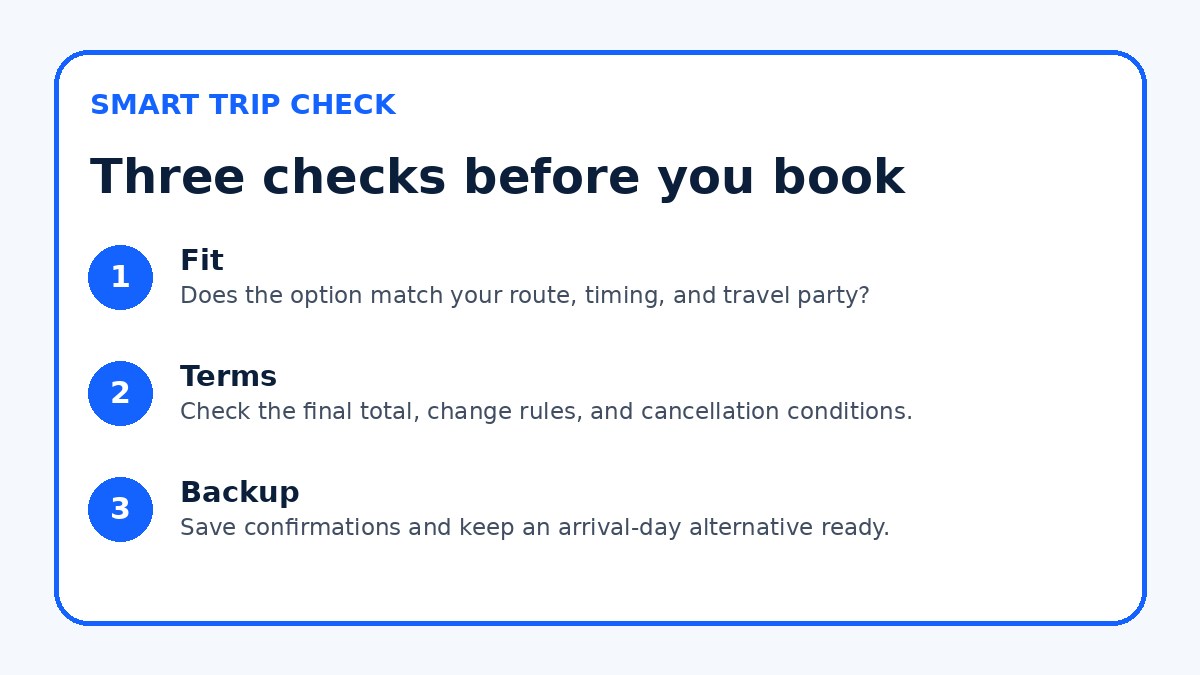
- Map all meeting addresses and mark which neighbourhood contains the majority of them before you start hotel searches.
- Confirm train, tram, ferry and rideshare access from the hotel during your exact meeting hours to estimate realistic door-to-door times.
- Request a room with a dedicated work desk, reliable Wi‑Fi, and accessible power outlets for uninterrupted video calls.
- Check the hotel’s change and cancellation policy on the owner’s booking page and note any fees or blackout dates.
- Verify whether the hotel offers early check-in, luggage storage, or late checkout options if your flight schedule is tight.
- Ask for an itemised invoice and the hotel’s policy on extra guests if you plan to host brief client meetings in your room.
Final booking terms: what to verify on the hotel page before you book
Before committing, check the hotel’s cancellation and change policy directly on the booking page, especially if your meeting schedule might shift. Confirm what extras are included—Wi‑Fi speed claims, gym access, breakfast options—and whether any amenities require advance booking or are temporarily limited. If you plan to expense meals, request an itemised receipt policy and whether the hotel can email invoices promptly after checkout.
Also verify transportation notes: whether the hotel publishes details about airport shuttles, rideshare pickup spots, or nearby train and ferry stations—and then cross-check those details against official transport operator pages. If you will use the hotel’s meeting rooms or business lounge, confirm booking windows, capacity limits, and any fees. For comparison shopping, you can check availability on sites like Trip.com, but always confirm the final terms and total charges on the hotel’s own booking page before finalising.
Hotel Guide questions travelers ask
Should I always pick a hotel inside the Sydney CBD for a short business trip?
Not always. A CBD hotel reduces walking and intra-city transit when meetings are centrally clustered, but if most of your appointments or a major client are on the north shore or near the airport, choosing a hotel closer to those locations saves time and stress. Balance proximity to meetings against evening plans and airport logistics. For many short trips the marginal convenience of CBD lodging is worthwhile, yet the correct choice is the one that keeps total door-to-door travel time smallest for your specific itinerary.
How much time should I allow for travel between neighbourhoods during peak hours?
Estimate conservative door-to-door travel time by adding buffer for walking to a station, waiting for a service, and potential traffic. In peak hours, a short CBD cross-street tram or train can still take 15–25 minutes when walk and wait times are included; bridge crossings from North Sydney to the CBD may be quicker by ferry but require schedule checks. For airport transfers, allow extra buffer for traffic or security; don’t rely on optimistic travel-time estimates—verify typical journey times for your exact travel windows using public transport schedules and rideshare apps.
What room features should I prioritise for productivity on a one- or two-night trip?
Prioritise a quiet room with a comfortable, well-lit desk and reliable Wi‑Fi that supports video conferencing. Ensure there are accessible power outlets near the desk and bed, and request a room on a higher or quieter floor if possible. If you’ll host brief client conversations, opt for a room with a separate seating area or consider a suite; check the hotel’s visitor policy. Also confirm flexible check-in/out options and whether the hotel can print or scan documents in case you need quick administrative support.
Final decision note
For a short business stay in Sydney, the most practical choice is the one that reduces cumulative travel time between your key points and supports your work rhythm. Start by mapping meetings and priorities—central CBD for tightly clustered downtown appointments, North Sydney for harbour-side corporate locations, airport-area for travel-focused schedules, and Surry Hills or Pyrmont when evening client dinners matter. After shortlisting an area, verify transit frequencies, room amenities you need for productivity, and the hotel’s booking terms on the provider’s page. With a clear neighbourhood decision and the checklist above, you’ll be able to compare live inventory confidently and book a base that keeps your trip focused and efficient.
Continue planning
Check current options and final conditions
Use the provider page to confirm live availability, the final total, cancellation terms, and every condition that matters to your trip.
This evergreen planning guide was created with AI-assisted drafting and a structured quality review. It does not display live prices, schedules, availability, visa guidance, or provider rankings. Verify current details before booking. Some links are affiliate links; we may earn a commission at no additional cost to you.